Published : 22 Feb 2026, 09:30 AM
Updated : 21 Aug 2026, 03:23 PM


The trade agreement Bangladesh signed with the United States after nine months of negotiation -- under the shadow of steep supplementary tariffs -- was meant to ease pressure on exports and steady a vital economic relationship.
Instead, it has opened a vigorous national debate.
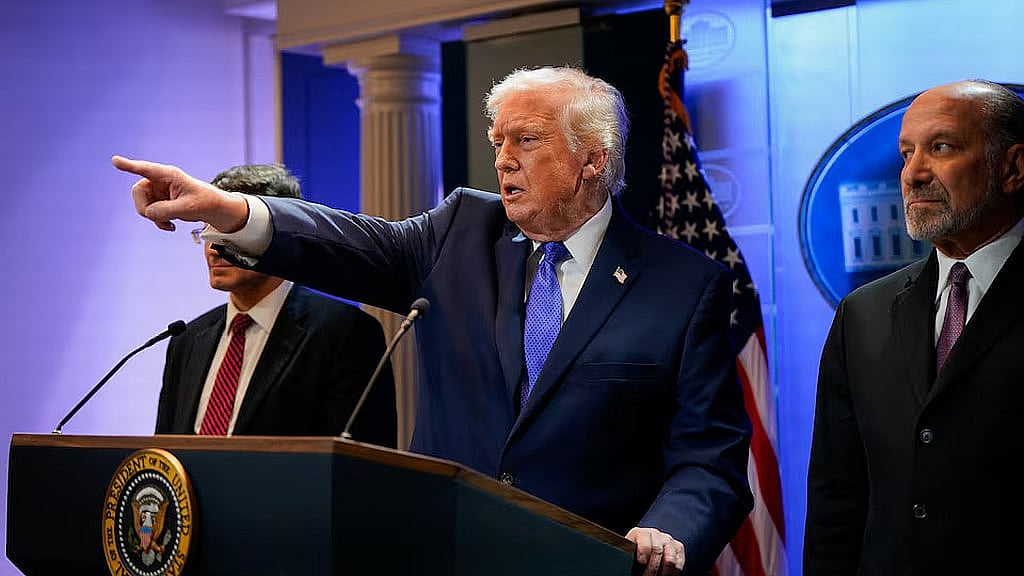
Economists, business leaders and policymakers are now calculating its potential gains and losses -- scrutiny that intensified after a major development in Washington: the US Supreme Court struck down the “reciprocal tariffs” imposed by President Donald Trump on several countries.
Soon afterwards, Trump moved under a different law to impose a new tariff -- first 10 percent and then raising it to 15 percent within 24 hours -- triggering uncertainty about the future of Bangladesh’s recently signed agreement with Washington.
Against this backdrop, Bangladesh’s new government plans to write formally to the United States seeking clarification about the status of the Dhaka–Washington trade deal signed during the interim administration just days before national elections.
Commerce Secretary Mahbubur Rahman told bdnews24.com that the letter could be sent by Monday.
Officials from the commerce ministry held a meeting on Saturday to determine their next course of action following the US court ruling.
The agreement -- known as the Agreement on Reciprocal Trade (ART) -- was signed on Feb 9, and with elections dominating the national conversation, public debate over the pact remained limited at first.
That has since changed.
As analysts and business leaders began examining the details, many concluded the agreement appeared unusually demanding for Bangladesh.
Some even suggested that the pact contained more political elements than purely commercial ones.
On Feb 17, the day the new government was sworn in, business leaders and economists at a discussion organised by the Bangladesh Chamber of Commerce and Industry urged the authorities to review the agreement.
One analyst argued that although the deal was framed as a means of expanding bilateral trade through “mutual benefits”, it was not favourable to Bangladesh and resembled “an imposed condition”.
Analyst Khondaker Golam Moazzem, research director at the Centre for Policy Dialogue (CPD), said that in light of the US Supreme Court ruling the government should consider scrapping it immediately.
He noted that the agreement had not yet created binding implementation obligations, meaning there was still an opportunity to reconsider it.
The interim government had promoted the pact as a major success, claiming it would benefit Bangladesh’s ready-made garment industry.
Yet exporters in the sector tell a more complicated story.
Officials said garments made with American cotton would enjoy zero tariffs in the US market.
Exporters say the reality is less clear: the exemption applies mainly to the additional supplementary tariffs and comes with several conditions.
Manufacturers remain uncertain about what proportion of cotton must originate in the United States and how the tariff concessions will actually work.
Some analysts also warn that small and medium-sized industries could suffer if the agreement is implemented fully.
Entrepreneurs in the poultry sector fear they may even be forced to abandon their businesses, raising concerns about food security.
Others take a different view.
They argue that as Bangladesh graduates from least-developed-country status to that of a developing economy, it will inevitably face new tariff barriers.
Bilateral trade agreements such as this, they say, could help overcome those obstacles and eventually pave the way for a full free-trade agreement with the US.
One economist pointed to the recently concluded India–European Union agreement as an example, arguing that Bangladesh will need similar deals not only with the United States but also with the European Union to remove tariffs and other trade barriers.
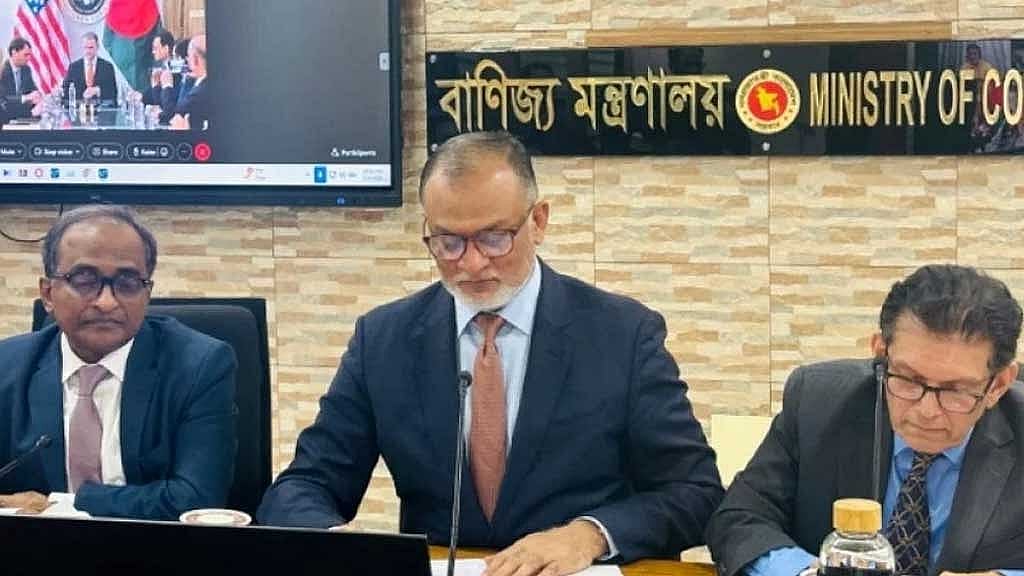
The commerce ministry oversees the agreement on behalf of Bangladesh.
Asked about its merits, Secretary Mahbubur insisted the pact was favourable.
“Because the cotton-specific deal was extremely favourable for us,” he said.
“Whatever people may say about the other issues, at that time we secured a very good agreement.
“The commitments being discussed -- such as labour standards or intellectual property rights -- are things we have already recognised in other agreements. For example, we accepted intellectual property obligations long ago through WTO commitments.
“So it is reasonable to say that the main trade deal itself was very favourable for us.”
The Deal’s Key Provisions
The agreement must be understood against the backdrop of tariff tensions between the two countries.
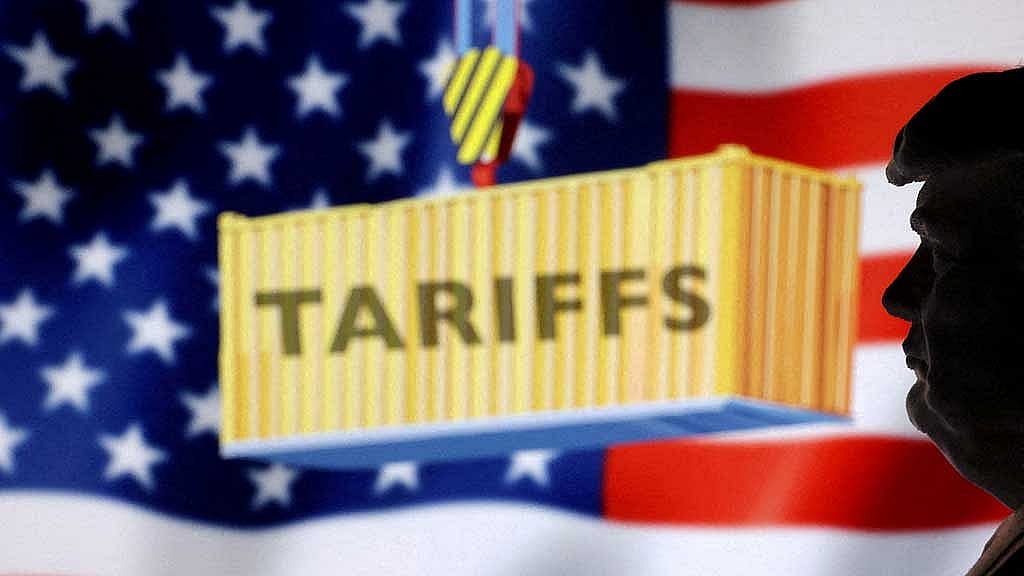
After returning to office for a second term, Trump announced sweeping tariffs on imports from more than 100 countries on Apr 2, 2025.
Bangladesh initially faced an additional tariff of 37 percent.
After negotiations, the rate was reduced to 20 percent and came into effect on Aug 1.
Since Bangladeshi products were already subject to a 15 percent duty, the total tariff reached 35 percent.
To reduce that burden, Bangladesh spent more than nine months negotiating with Washington.
During negotiations with Washington, the interim government pledged to increase imports of American goods -- including Boeing aircraft, wheat, soybeans and oil.
Those negotiations culminated in the Feb 9 trade agreement.
Under the deal, the supplementary reciprocal tariff on Bangladeshi exports to the US market fell by one percentage point -- from 20 percent to 19 percent -- bringing the overall tariff to 34 percent.
But the concessions came with significant commitments.
In return for American tariff relief, Bangladesh agreed not only to increase imports from the United States but also to open its market more widely to American products.
Under the agreement Bangladesh pledged to import $3.5 billion worth of US agricultural goods -- including wheat, soybeans and cotton -- over five years.
It also committed to purchasing $15 billion worth of liquefied natural gas (LNG) over 15 years.
Biman Bangladesh Airlines agreed to buy 14 Boeing aircraft.
Domestic poultry entrepreneurs fear that new import commitments could damage their industry.
The agreement states that Bangladesh will not impose barriers to imports of American meat, poultry, processed meat products, catfish and eggs.
It also commits Bangladesh to recognising the United States’ dairy safety system as equivalent to its own.

Another controversial provision extends beyond trade itself: Bangladesh must consider US interests when deciding what goods to import from other countries.
Under the agreement Bangladesh will gain zero-tariff access for about 2,500 products in the US market, including pharmaceuticals, agricultural goods, plastics, timber and wood products.
In return the Bangladeshi market will provide duty-free access to US goods across 7,132 tariff lines, or HS codes.
Analysts say these concessions could allow American products to dominate the Bangladeshi market, given the United States’ greater production capacity and product diversity.
Bangladesh’s principal benefit lies in its garment exports.
If clothing is manufactured using a specified proportion of US cotton or synthetic yarn, the supplementary tariff -- currently 19 percent -- will fall to zero.
The United States is the largest single market for Bangladesh’s ready-made garments.
Economists Divided
Economists are sharply divided over whether the agreement will ultimately benefit Bangladesh.
Moazzem of CPD argues that the pact undermines Bangladesh’s freedom of economic policy.
“It is an agreement that would ‘completely undermine’ Bangladesh’s economic policy autonomy,” he said.
“This is not merely a bilateral arrangement. It effectively imposes conditions on Bangladesh’s ability to conclude agreements with any other partner.
“So it cannot be pursued in this form. The government should take steps to reject it,” he said.
Moazzem argued that the agreement resembled an imposed condition rather than a conventional treaty.
“There is no clear mechanism under WTO rules through which this agreement could actually be implemented,” he said.
He believes the US Supreme Court’s ruling on tariffs provides grounds for reconsideration.
Because the agreement was tied to efforts to reduce the bilateral trade deficit through tariff measures, he said, the court decision could undermine its legal basis.
“Unfortunately, the agreement goes far beyond tariffs,” he said. “It includes agriculture, trade, intellectual property, services, oil and gas. That makes it extremely problematic.”
Under the agreement, he added, Bangladesh would have to ensure that US interests were not harmed before entering into other trade or investment agreements.
“That is not consistent with a normal bilateral trade agreement.”
Other economists see opportunity.
Zaidi Sattar, chairman of the Policy Research Institute (PRI), views the deal as a first step toward broader trade liberalisation.
“By 2035 we would move to zero tariffs with the United States,” he said. “That means we could eventually negotiate a full free-trade agreement.
“We have not been able to sign such agreements with anyone so far. But the United States has now effectively pushed us toward opening our trade regime,” he added.
Bangladesh, he argued, will also need similar agreements with the European Union -- particularly because India has already concluded one.
“Our tariff system is extremely high,” he said. “The global average tariff is around 6 percent, while our total tax on trade can reach 55 percent.
“That kind of restrictive trade regime holds back economic growth and discourages foreign investment.”
Business Leaders Voice Concern
Among business leaders, opinions are equally divided.
Shams Mahmud, managing director of Shasha Denims and a former president of the Dhaka Chamber of Commerce and Industry, says exporters still lack clarity about how the cotton provision will work.
“There are technical issues in obtaining this benefit,” he said.
“For example, there is no precedent where a country gained duty-free access to the US simply by using American cotton.
“And then there is the issue of value addition.”
He illustrated the complexity with a simple example.
“I might manufacture a cap. It has nickel plating, a fastening clamp and embroidery -- all from different countries. If only the cotton portion uses American cotton, does the product qualify?”
Labour costs could complicate matters further.
“Are wages calculated based on Bangladesh’s wage structure,” he asked, “Or based on American trade union expectations?”
“These issues remain ambiguous.”
Mahmud also warned against reliance on a single cotton source.
“If there is a crop failure in the United States or a natural disaster, prices could rise sharply,” he said.
“We cannot depend on only one supply source. That would threaten the entire supply chain,” he added.
He believes Bangladesh should continue negotiating bilateral trade arrangements while maintaining dialogue with Washington.
“We should say: your Supreme Court has declared the reciprocal tariffs illegal. Now let us discuss how to build closer economic ties.”
Food Security Fears
The poultry sector fears the agreement could destabilise the domestic market.
Khandaker Monir Ahmed, advisor to the Bangladesh Poultry Industries Association and its former senior vice-president, warned that the sector could face a crisis.
Two years ago, he said, the government set the farm-level price of eggs at Tk 10.58 each.
Today farmers receive only about Tk 7.50.
“If a farmer loses three taka on every egg, eventually he will stop production,” he said.
“Farmers will sell off their laying hens. Then we will face an egg crisis -- and that means a food security crisis.”
If American products capture the domestic market, he added, the government may need to subsidise local producers.
“Feed costs are already rising. If they increase further, farmers will close their farms.”
His conclusion was blunt.
“This agreement is a big disaster.”
Government Stands by the Deal
Despite the growing debate, the commerce secretary continues to defend the agreement.
“Our cotton-specific deal was extremely favourable,” Mahbubur said.
“And many of the commitments being discussed are things we already accepted under other international agreements.”
Still, the government now awaits Washington’s response.
The Supreme Court ruling has reopened the central question hanging over the pact: whether the Bangladesh–US agreement still stands -- or whether its future must now be renegotiated.