Published : 02 Sep 2026, 04:13 AM
Updated : 08 Sep 2026, 09:37 AM


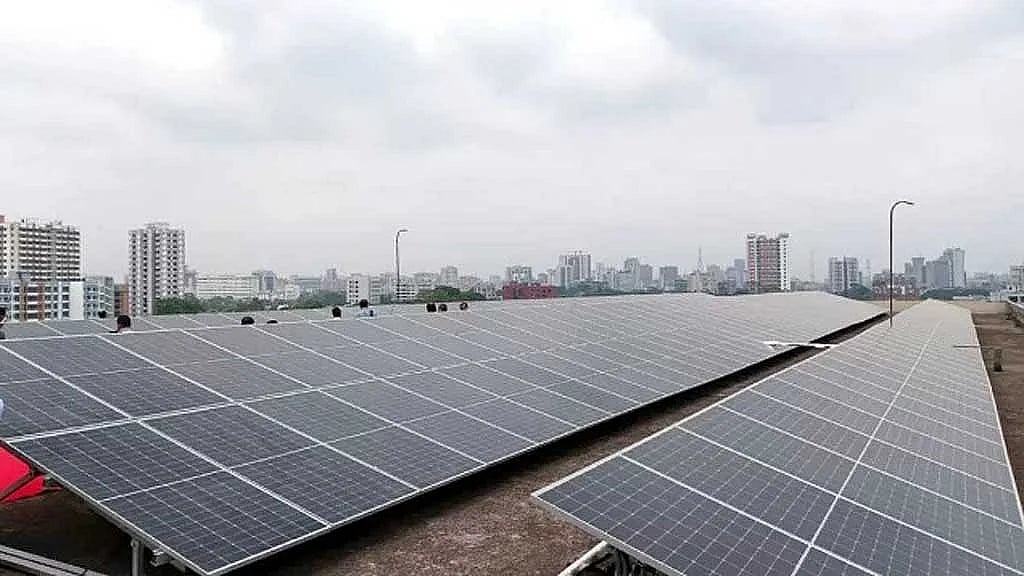
The government has announced a special incentive for households and businesses installing battery-based rooftop solar systems, offering cash for surplus electricity fed back into the national grid.
Under the scheme, announced on Tuesday, customers who set up such systems by Feb 28, 2027, will receive Tk 10.50 per unit for surplus power supplied to the grid after meeting their consumption needs.
The incentive will remain in effect until Feb 28, 2030.
The Power Division said the move was aimed at expanding renewable energy use and ensuring sustainable energy security.
Taking market rates and tender prices received by the division into account, the production cost of battery-based rooftop solar power has been capped at a maximum of Tk 8 per unit.
The government has added a 20 percent profit margin and an 11.25 percent premium on top of that cost, bringing the price to Tk 10.50 per unit.
Customers who manage to produce electricity at below Tk 8 per unit will be able to keep the savings as their own profit.
Under the Net Metering Guidelines 2025, customers must install rooftop solar systems and feed surplus electricity, after meeting their own needs, into the national grid, the division said.
Installation work must be completed by Feb 28, 2027, to qualify. Systems set up after that date will not be eligible for the incentive.
Power distribution companies will maintain records of customer data, including the number of units each customer supplies to the grid.
Incentive payments will be sent to customers' bank accounts every three months, and cannot be disbursed in cash under any circumstances.
Panels, batteries, inverters and meters used in the solar systems must meet technical standards set by the Bangladesh Standards and Testing Institution (BSTI) and the Sustainable and Renewable Energy Development Authority (SREDA).
Customers can seek policy support from the Power Division's one-stop service centre, as well as from district and Upazila offices of power distribution companies.
Customers on net metering use the solar power they generate first, with any surplus routed to the distribution grid and adjusted against their power bill.
The Power Division introduced net metering guidelines in 2018 and revised them in August last year, drawing on implementation experience.
SREDA data shows more than 4,490 net-metered rooftop solar systems were connected to the country's six power distribution networks by early 2026, with a combined capacity of around 214MW.
With land scarce for large-scale solar plants, the government is turning to unused rooftops on homes, factories and commercial buildings to expand solar generation.
The Renewable Energy Policy 2025 sets a target of sourcing 20 percent of electricity demand from renewables by 2030, rising to 30 percent by 2040.