Published : 10 Jun 2026, 05:37 AM
Updated : 08 Sep 2026, 11:23 AM


Bangladesh is entering a new fiscal year burdened by inflation that refuses to ease, persistent joblessness, weakening investment, energy insecurity and shrinking fiscal space -- a convergence of pressures squeezing the economy on multiple fronts.
Yet the government insists the response will not be confined to short-term stabilisation. Instead, it is framing a broader attempt to rebuild what it describes as a structurally weakened economy.
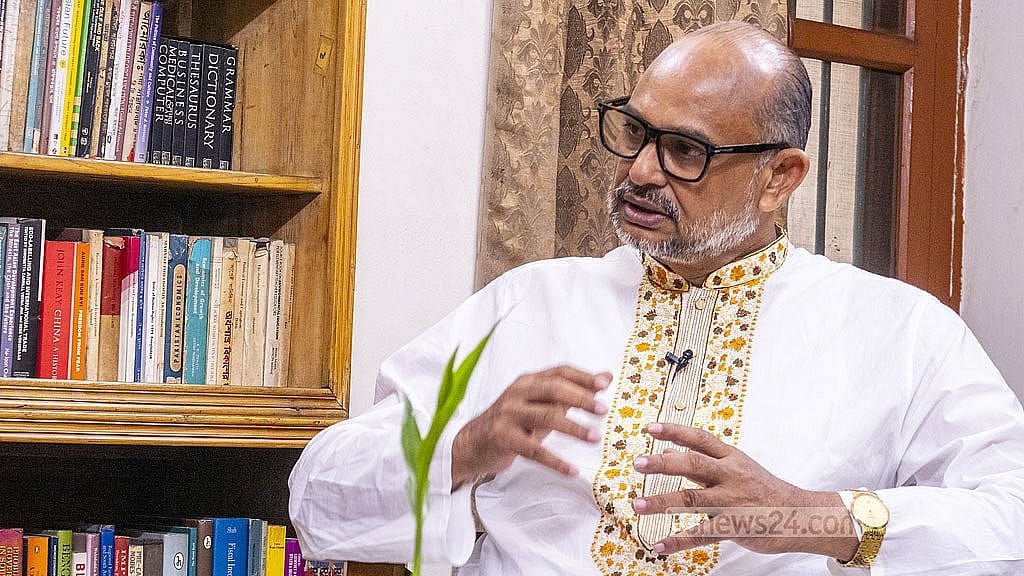
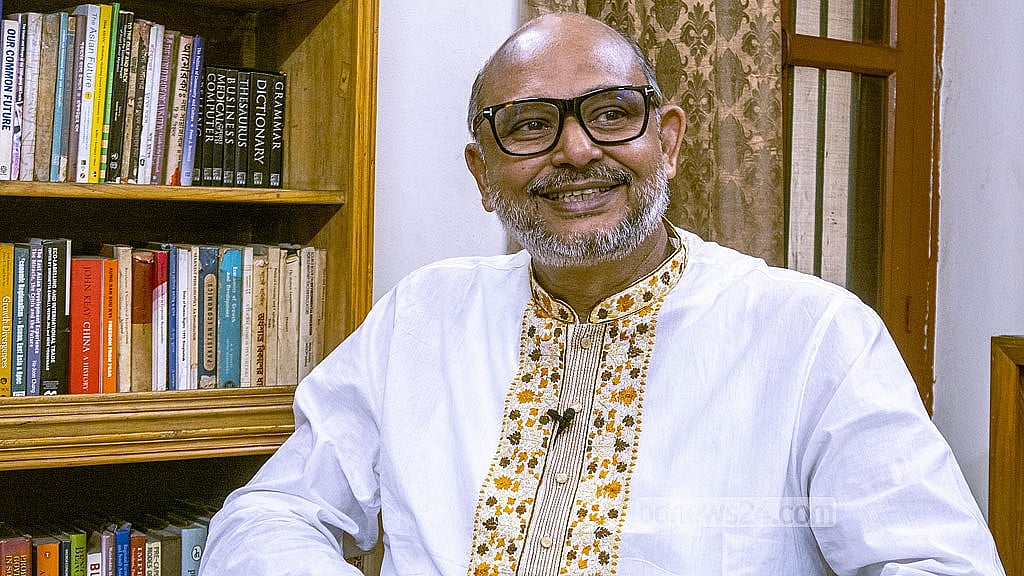
Finance and Planning Advisor Rashed Al Mahmud Titumir says the country has inherited “accumulated problems” that require not only recovery but reconstruction.
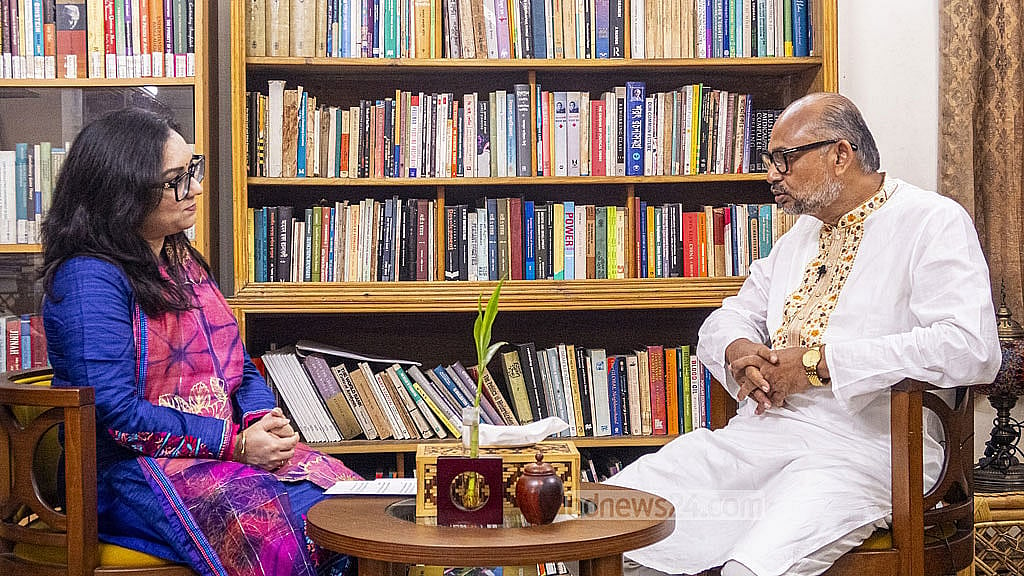
Speaking on bdnews24.com’s flagship discussion programme Inside Out, he outlined a policy vision that shifts the focus of economic success away from growth statistics alone towards what he called dignity, security and opportunity in people’s lives.
At the centre of that vision is one priority: jobs.
“Everyone asks the same question: how will employment be created? Because to live with human dignity, we need jobs,” he said.
‘Unfortunate Time’ and Inherited Crisis
Titumir said the current administration took office at a moment when longstanding vulnerabilities converged.
“We assumed responsibility at an unfortunate time. We were compelled to shoulder these inherited challenges.”
He said voters had placed trust in the BNP’s ability to manage those pressures, adding that the party had not denied the existence of crisis in its manifesto.
“Unlike the culture of denial in the past, we recognise the challenges and have set out how to address them.”
He said the government began implementation from its first cabinet meeting, prioritising immediate relief for distressed groups.
Agricultural loans of up to Tk 10,000, including interest, were waived for farmers, fishermen and livestock rearers.
Describing the inherited situation, he said: “We received an economy that was not just weak, but in intensive care across macroeconomic indicators.”
He outlined a three-stage framework for recovery: recovery, restoration and reconstruction. The first stabilises the economy, the second rebuilds confidence, and the third establishes a new growth foundation.
The government is replacing the traditional five-year plan with a Five-Year Strategic Framework for Reform and Development, he added.
From Safety Nets to Lifecycle Protection
A flagship initiative is the Family Card, designed to support low-income households hit by inflation. But Titumir rejects describing it as a conventional safety-net scheme.
Traditional welfare, he argued, assumes people fall into poverty and must later be rescued. The government’s aim, he said, is to prevent that fall.
He proposed a universal, lifecycle-based social protection system, covering citizens from birth to old age.
“This includes pregnant mothers, children, adolescents, youth, persons with disabilities, the elderly and widowed women,” he said.
Poverty, he added, is not only about income but also education, health, nutrition, security and opportunity.
Data over Politics
Titumir criticised past social protection systems for political manipulation.
“Those who should have been included were left out, and those who should not have been included were selected for political reasons.”
He said the Family Card programme uses a poverty means test scoring system to identify beneficiaries.
The programme is still in pilot form but will expand in the budget.
He also emphasised women’s empowerment as central, with the family used as the core unit of social protection design.
Farmers as Producers, Not Recipients
The Farmer Card initiative, he said, reflects a shift in philosophy: from subsidy dependency to production participation.
“For the first time, farmers have been formally recognised in this way. Banks went to them, opened accounts and issued Farmer Cards.”
The aim is to integrate farmers into formal finance while placing production at the heart of policy.
Inflation: Inheritance and Global Shock
Explaining inflation, Titumir cited two main drivers: inherited domestic price pressures and external shocks, particularly energy volatility in West Asia.
He said inflation was already entrenched before the current government took office.
He also alleged structural market distortions, saying influential groups had maintained high prices even when global rates fell.
Hinting at past governance, he said: “An oligarchic structure existed that sustained itself through power networks.”
Inflation, he added, persisted even during strong agricultural output, suggesting deeper market failures.
Market Distortions and ‘Price Makers’
Titumir argued Bangladesh’s markets have long been distorted, especially in imports.
“If markets worked properly, traders would be price takers, not price makers. In reality, they became price makers.”
He said similar distortions exist in energy and other sectors, and reforms are under way.
Production-led Inflation Control
Rather than relying solely on administrative controls, he said inflation must be tackled through domestic production.
He cited sunflower cultivation and rice bran oil as examples of import substitution.
“Domestic production reduces import dependence and stabilises prices,” he said.
It would also strengthen food security and ensure fair returns for producers.
Energy: Diversification and Strategic Reserves
Titumir said Bangladesh has long lacked a coherent energy security strategy, remaining overly dependent on imported fossil fuels.
“Gas exploration, reserves and diversification were not prioritised.”
He said global instability has exposed these weaknesses.
Energy policy, he argued, must shift to a diversified mix of fossil fuels, renewables and nuclear power.
Pricing should consider not only global markets but also domestic affordability.
He also called for stronger domestic gas exploration and expanded investment in BAPEX.
A strategic energy hub at Matarbari, alongside reserve capacity, was also proposed.
Solar manufacturing and electric vehicles, he said, could create jobs while reducing costs.
ADP Inefficiency and Reform
Titumir criticised the Annual Development Programme for chronic inefficiency.
He identified two issues: repeated project cost escalation and end-year spending rushes, which he called the “June syndrome”.
He also alleged politically driven project inflation.
“Even beyond the pillow scandal, there were such distortions everywhere.”
The government plans realtime digital dashboards to track project progress across ministries and agencies.
Operational spending will gradually decline, while development spending will rise.
He warned that GDP growth may fall to 4–4.2 per cent, describing it as too low.
Jobs through Industrialisation
Industrial revival is central to job creation, he said.
Private investment has fallen, factories have closed and unemployment has risen, particularly among youth and women.
He described declining female labour participation as “de-feminisation”, warning it undermines past economic gains.
The government aims to prioritise agriculture, pharmaceuticals, leather, electronics, toys and light engineering.
A Tk 600 billion package is planned to restart closed factories.
He also stressed policy coordination across fiscal, monetary and industrial frameworks.
Health and Education Overhaul
The government plans a UK-style primary healthcare model built around general practitioners.
Nearly 5,000 doctors and grassroots health workers will be recruited.
He highlighted severe staffing shortages even where infrastructure exists.
“There are ambulances without drivers and machines without technicians.”
District-level ICUs, dialysis centres and trauma units are planned.
In education, he noted a mismatch between skills and labour demand.
“We cannot find electricians, masons or carpenters.”
The future system, he said, will focus on skills, innovation and citizenship, alongside stronger research universities.
Education and health spending will rise towards 5 percent of GDP.
Debt, IMF and state vision
Titumir rejected what he called “debt addiction” under the previous government, claiming debt rose 322 percent.
He said reforms will be pursued under the elected government’s own framework, not externally imposed conditions.
He cited growing support from development partners, including potential $5 billion ADB assistance.
A New Development Philosophy
He described flagship initiatives including lifecycle social protection, industrialisation, national health reform, skills development and water management.
Climate policy, he said, must move beyond “victim narratives” towards adaptation and production.
Projects include the Teesta plan, Padma Barrage, river restoration, electric buses and mass afforestation of 250 million trees.
The overarching goal, he said, is a state where policy success is measured not only by growth, but by whether citizens can work, live securely and with dignity.