Published : 10 Feb 2013, 12:56 PM
Updated : 23 Apr 2022, 04:17 PM


The proposal would be approved on principle at the cabinet meeting, he told journalists in a briefing.
“The current parliament session will pass the bill,” he added.
Under current ICT regulations, the prosecution can only appeal if an accused is acquitted of charge(s).
The original ICT law of 1973 did not allow the prosecution to appeal. Later in 2009, during the current regime, the law was amended and the prosecution was allowed to appeal against acquittal.
The proposed changes now could allow both prosecution and defence equal rights for appeal, said a senior government official on condition of anonymity.
The proposal would allow disposal of hearing after appeal within 90 days (60 days on first phase, and 30 more days in the latter), said the Minister.
“Both sides would be benefited from the amendment. Not only prosecution, but also the defence can appeal after amendment,” he said.
The ‘complexity’ arose after the prosecution found no way to appeal for greater punishment to Jamaat-e-Islami Assistant Secretary General Abdul Quader Molla than the one already handed down by the ICT-2.
This constraint brought Section 21, Right of Appeal, of the International Crimes Tribunal Act in focus.
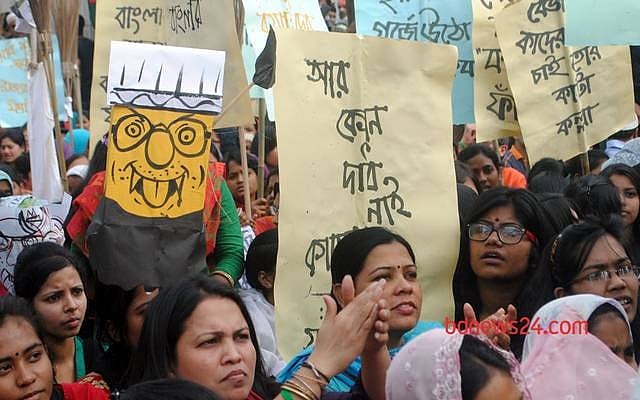
The decision comes amidst furious protests across Bangladesh against the life-in-jail verdict for Quader Molla – widely known as the ‘Butcher of Mirpur’, as people say the punishment is ‘too little’.
Junior Law Minister Qamrul Islam confirmed on Saturday that the government was mulling changes to the specific section of the ICT Act.
Section 21 of the International Crimes Tribunal Act says: (1) A person convicted of any crime specified in Section 3 and sentenced by a Tribunal shall have the right of appeal to the Appellate Division of the Supreme Court of Bangladesh against such conviction and sentence.
(2) The Government shall have the right of appeal to the Appellate Division of the Supreme Court of Bangladesh against an order of acquittal.
(3) An appeal under sub-section (1) or (2) shall be preferred within [thirty days] of the date of order of conviction and sentence or acquittal.
Five of the six charges were proved against Quader Molla, while he was acquitted in one.
Chief Coordinator of the tribunal Additional Attorney General MK Rahman said the ICT had accquitted Molla because the prosecution could not prove his involvement in the Ghatarchar massacre in Keraniganj conclusively.
Therefore, he said, the prosecution could now only appeal against this charge number 4 that related to the Keraniganj massacre.
He said the prosecution would only appeal seeking a review of that part of the verdict, possibly by taking recourse to Article 104 of the Bangladesh Constitution that assures 'complete justice'.
Rahman further said the prosecution might seek a Supreme Court order on the whole verdict after filing an appeal petition.
Ghatak Dalal Nirmul Committee Legal Affairs Editor Tuhin Ahmed said appeal could be made to lessen the punishment, but not to increase it.
Meanwhile, the defence has said they would appeal against the verdict for reduction of the life sentence handed out to Molla.