Published : 17 Jul 2026, 06:04 PM
Updated : 08 Sep 2026, 09:25 AM


The European Union and the Group of 77 and China have reaffirmed their support for a "smooth", "sustainable" and "stable" graduation for Bangladesh from the Least Developed Countries (LDC) category.
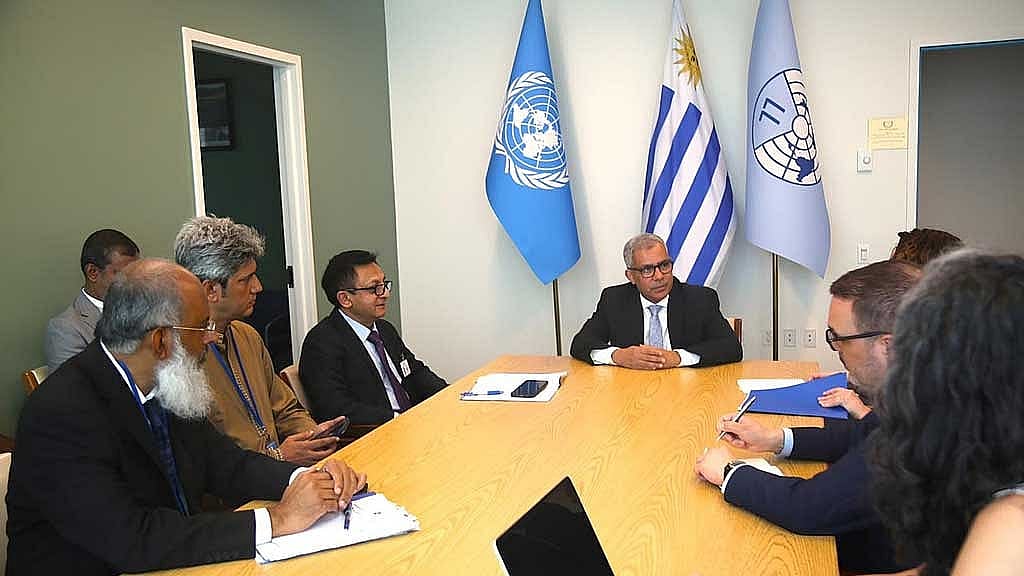
The assurances came during separate meetings at the United Nations headquarters between Commerce Minister Khandakar Abdul Muktadir and EU Ambassador Stavros Lambrinidis, head of the EU delegation, and Ambassador Laura Dupuy Lasserre, chair of the G77 and China and Uruguay’s permanent representative to the UN, the Ministry of Commerce said on Friday.
Muktadir told the envoys Bangladesh needed three more years to complete its graduation preparations, citing its ongoing economic and political transition, global uncertainty, energy-sector challenges and the need to see structural reforms through.
He also pointed to the government's commitment to strengthening governance, shoring up the financial sector, improving infrastructure, boosting domestic resource mobilisation, and building an investment-friendly environment.
Bangladesh was originally due to graduate from the LDC category in 2026, but the government has sought to push back the transition to November 2029 in view of changing circumstances.
The Ministry of Finance said on Jun 2 that the UN Committee for Development Policy had responded positively to Bangladesh's request to extend its preparatory period until Nov 24, 2029.
Bangladesh's graduation process began in 2018, with the preparatory period initially due to end in 2024 before the COVID-19 pandemic earned it a two-year extension.
Under the previous schedule, the country was set to exit the LDC category on Nov 24, 2026, before seeking a further extension.
As an LDC, Bangladesh currently enjoys duty-free, quota-free access to European markets, a benefit expected to lapse once it graduates to developing nation status.
Speaking on the meeting with the EU delegation, Muktadir said the proposed extension would help consolidate ongoing reforms, address infrastructure bottlenecks, sharpen industrial competitiveness, and ensure the graduation was “smooth, sustainable and irreversible”.
Ambassador Stavros praised the government's commitment to good governance and sustainable development.
He welcomed the start of talks on a Free Trade Agreement between Bangladesh and the EU, and reaffirmed the bloc's continued support for a smooth graduation, while stressing the importance of closer public-private partnerships through the transition.
According to the ministry, Ambassador Laura described Bangladesh’s case for extending the preparatory period as strong and well-founded and commended the government’s pragmatic reform agenda.
She reaffirmed the G77’s support for Bangladesh and proposed organising a special briefing for member states on the country’s LDC graduation strategy.
The Bangladesh delegation welcomed the proposal.
After the meetings, Economic Relations Division Secretary Md Shahriar Kader Siddiky described the meeting with the EU delegation as “highly productive”.
“The European Union has reiterated its continued support for ensuring Bangladesh’s smooth, sustainable and stable graduation from the LDC category,” he said.