Home
+
Published : 01 Oct 2024, 01:42 AM
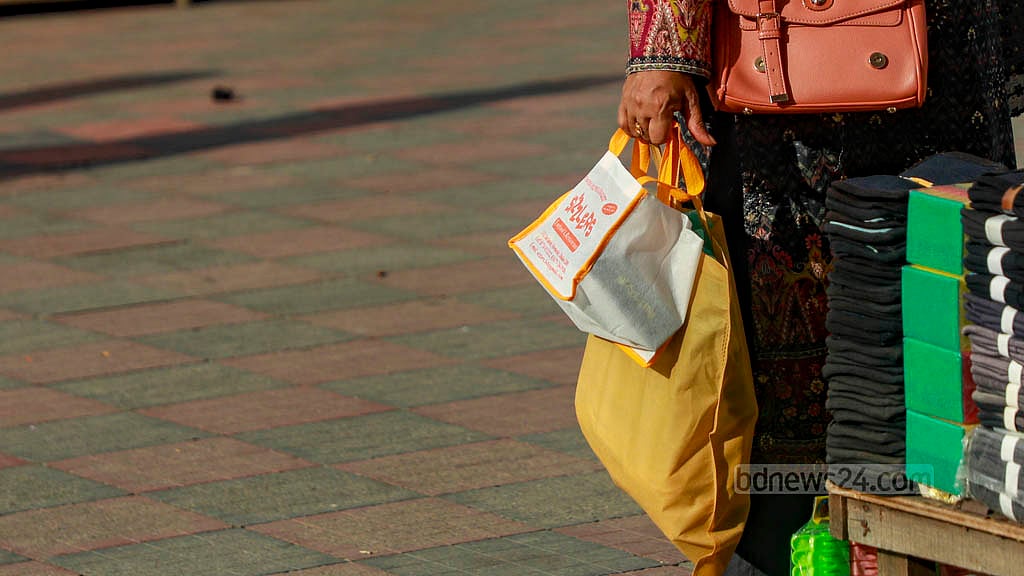
After a routine shopping trip to the superstore, Abul Bashar received his frozen goods in what seemed like an ordinary fabric bag, but in reality, it was made of polypropylene—a type of plastic. Unaware of the material’s true nature, Bashar was shocked to learn the bag's harmful impact on the environment.
Reflecting on the discovery, he shared his surprise: “It looks just like fabric, so I had no idea it was plastic. It's like wrapping old destruction in a new disguise. Using these plastic bags in a new form is nothing but deception!”
Besides superstores, these bags are also used in grocery and drug stores, added the resident of Mohammadpur in Dhaka.
Bashar, who relies on this superstore in Mohammadpur for his daily needs, became aware after catching the 'deception' of the plastic bags. “From now on, my shopping will be done with environmentally friendly bags,” he announced.
Monisha Hossain also had doubts about the plastic nature of polypropylene bags. She had been using them for a long time thinking they were made of thin fabric.
She said: “I think the bags are intentionally made to look like fabric; they are manufactured this way to increase their use in the market. I bring these harmful bags from grocery stores, drug stores, superstores, and shopping malls to my home.”
Environment, Forests and Climate Change Advisor Syeda Rizwana Hasan told bdnews24.com that polypropylene bags are not environmentally friendly. They are as harmful as polythene.
When asked about the proliferation of polypropylene bags in the market, she said: “Manufacturers of polypropylene bags can export them abroad if they want, but they cannot supply them to the domestic market."
POLY BAGS BAN FROM OCTOBER
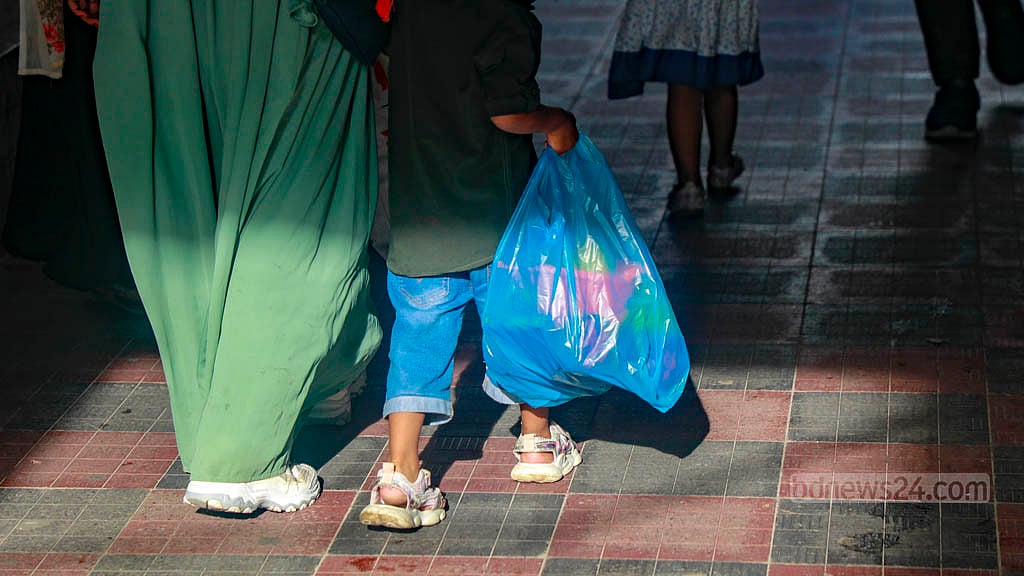
During a tour of several popular superstores in Dhaka, bdnews24.com observed that be it fish, meat, vegetables, fruit, rice, or lentils - fresh or frozen - they are being packed in polythene or polypropylene bags for the customers.
Many superstores hand over shopping bags made of polythene filled with groceries to customers. In several superstores, it has been seen that frozen foods, ice cream, yogurt, and other refrigerated items are given to customers in polypropylene bags.
Polypropylene bags are somewhat shiny. Due to their manufacturing, the white, red, and blue bags look quite like fabric bags. However, water-resistant polypropylene bags are made of plastic. So, no matter how they look, their harm is equivalent to plastic.
A salesperson at a superstore, Laboni Akhtar, told bdnews24.com: “Because they are water-resistant, we use polypropylene bags for wet packet foods.”
From the first day of October, superstores have been told not to keep or provide polythene shopping bags or polypropylene bags to customers, as per a directive issued by Advisor Rizwana on Sept 9.
Her ministry said that jute and fabric bags must be kept at the superstores or in front of them so that customers can purchase them first and then do their shopping.
From November, the government has announced a crackdown on the production, storage, transport, marketing, and use of polythene and polypropylene shopping bags in markets and manufacturing factories.
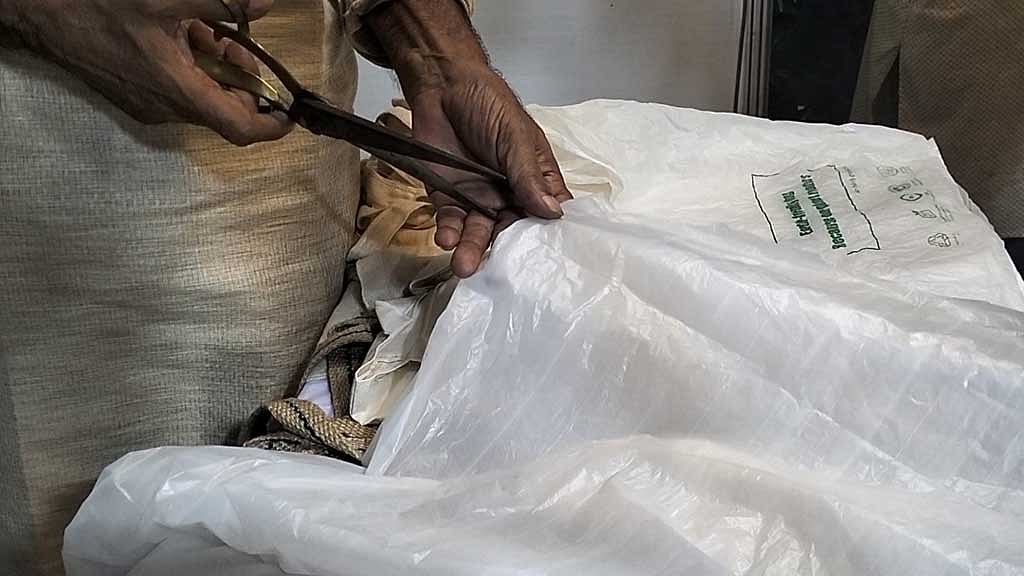
WHAT IS A POLYPROPYLENE BAG? WHY IS IT BANNED?
The bags commonly found in the market as non-woven PP bags or tissue bags are primarily polypropylene bags. They are more popularly known to consumers and businesses as tissue bags.
There are several types of tissue bags in the market, some of which are thin and appear quite glossy. These bags are extensively used in superstores, grocery stores, and pharmacies. They come in various colours including white, red, blue, and orange, and are very lightweight.
White single-coloured large bags with different handles, which are somewhat thicker, are also commonly seen. These bags are used in superstores for packing sold goods.
In shopping malls, thick non-woven (non-knitted) bags are given, which look like thick fabric bags but are also a type of tissue bag and cause the same type of environmental damage as polythene.
Many businesses promote these harmful plastic-made bags as environmentally friendly.
bdnews24.com recently discussed the harmful production process of tissue bags with Mohammad Durjoy, a sales officer at Sun Bag and Fabrics factory.
He explained that non-woven PP bags or tissue bags, also known as polypropylene bags, are made from polypropylene polymer. They are spun into long fluffy threads similar to cotton through heat and air.
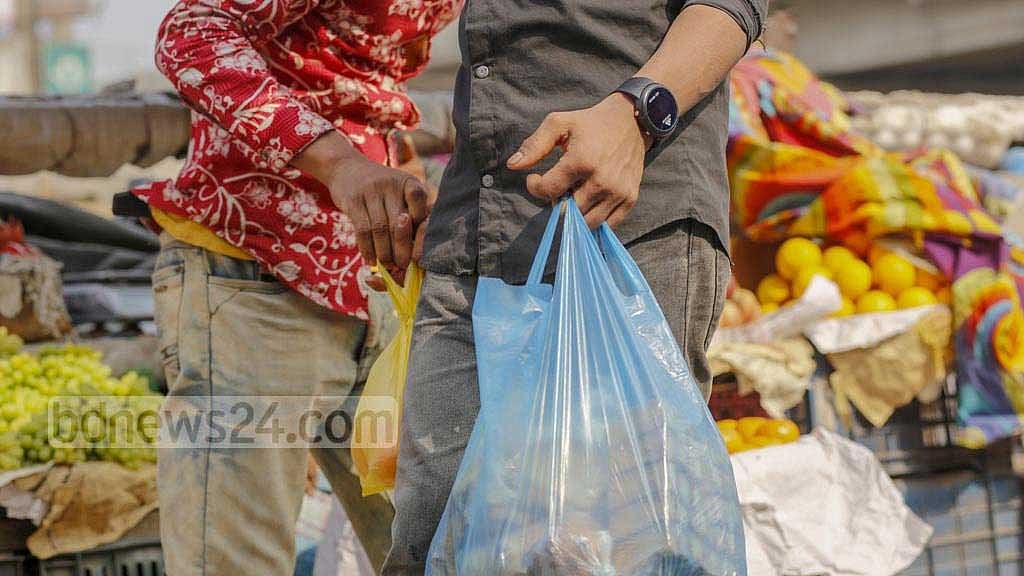
Then, these threads are pressed between hot rollers to create a flexible yet strong fabric that closely resembles the texture of woven textiles, making it look like a fabric bag.
Regarding the ban on polypropylene bags, Rizwana Hasan told bdnews24.com: “The primary material used in the production of polythene and polypropylene bags is plastic. Although the form of plastic used in polypropylene bags is somewhat different, these bags also harm the environment in the same way.
“These bags break down into small particles that enter our bodies through various means. Therefore, they have always been banned. Now, we are just taking measures to stop their use again.”
Rizwana, who has long been working on environmental issues, continued: “Any type of polythene bag and plastic, regardless of the form it is made in, does not decompose easily. After these bags are discarded, it takes about 400 to 500 years to mix with the soil, and even if they go deep into the ground, they actually destroy the natural layers of the soil. The chemicals in polypropylene bags destroy the soil organisms, plants, soil fertility, and agricultural productivity.”
Muntasir Mamun, the coordinator for the Bangladesh region of the International Coastal Cleanup, told bdnews24.com: “No matter how much they resemble fabric, these bags are essentially made from plastic. The edges and handles of these bags are sealed or bonded through heat and pressure. There is no weaving in these bags. All bags that are joined without weaving by melting them with heat are harmful.
“It is easy to understand that tissue bags are made from plastic because, without plastic, threads cannot be melted and bonded. If threads were used, there would definitely be weaving.'"

FACTORY AND PRODUCTION
Just like cheap polythene bags, the market has been flooded with polypropylene or tissue bags. However, these bags are not made in the same factories or machines that produce polythene bags. Different types of machinery are required to produce tissue bags.
Many traders operate their polypropylene or tissue bag business through social media platforms like Facebook pages and YouTube channels.
There is a tissue bag manufacturing factory called Sun Bag and Fabrics located in Kamrangirchar’s Huzurpara area. The owner of this factory posts videos on his YouTube channel about the materials, machines, and processes used in making tissue bags. He also secures orders from there.
Haji Enterprise is located on Islampur Road and has several stores. Customers can go to the stores and order bags as per their needs. They also take orders from videos posted on YouTube. Abid Trade International, located in Syed Awlad Hosien Lane, Nayabazar, produces tissue bags in their own factory.
Mohammad Durjoy, the sales officer at Sun Bag and Fabrics, does not know anything about the announcement of banning polypropylene or tissue bags in supermarkets from Oct 1.
When asked, he told bdnews24.com: “There was talk of banning this bag before, but it was never implemented.”
He claims that it is not as harmful to the environment as polythene, even though it is made from the same primary material. This bag easily tears and mixes with the soil.
According to Durjoy, the bags are cut in various GSM thicknesses using automatic machines. Rolls are also available from various factories (ranging from 30 to 150 GSM), which many purchase to make bags according to their wishes.
"Fabric made from plastic can also be purchased from factories. The primary material for making these bags is a type of granule, which is imported from China and some Middle Eastern countries,” he added.
The market for these bags has grown significantly.
Durjoy said, “There are over 800 factories only in Dhaka city, and our factory alone produces over 400,000 tissue bags each month.”
Advisor Rizwana has announced the ban on the use of polythene and polypropylene bags in three phases. In the second phase, from Nov 1, the use of polythene and polypropylene bags will be banned in raw markets, and operations will be conducted in polythene-producing factories to stop the production of these bags.
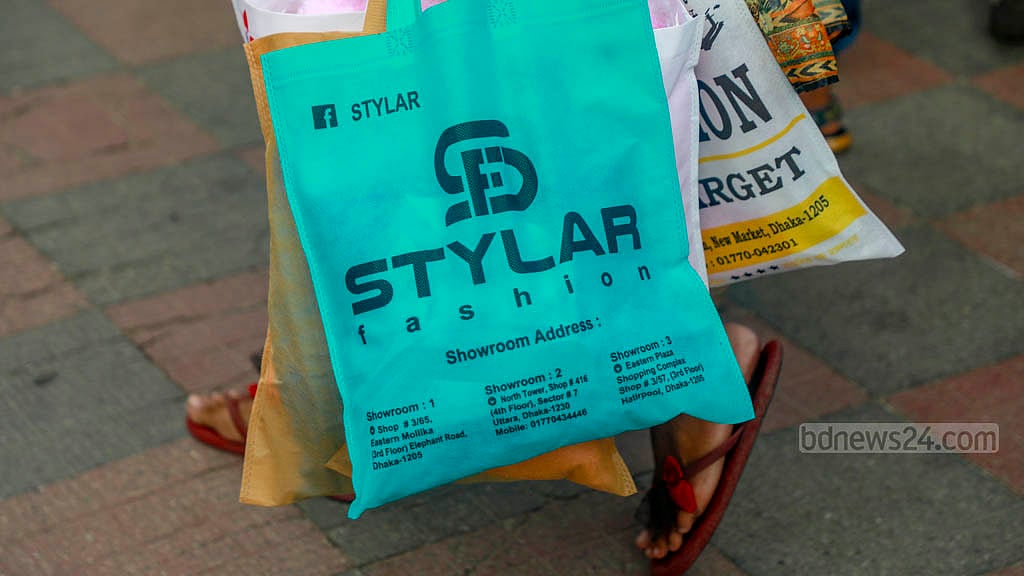
WILL ALTERNATIVES BE SUCCESSFUL?
Even though the use of polythene and polypropylene bags has been banned, the government has taken a slew of initiatives to ensure that alternative bags are available in the market.
The Bangladesh Jute Mills Association, along with 20 other organisations, is working to increase the supply of alternative bags, the government says.
Giving importance to both 'market monitoring' and 'alternatives,' the advisor told bdnews24.com; “Previous efforts to ban polythene were largely successful due to market monitoring. Work is also being done on alternatives to polythene. There has always been a clear alternative to polythene in Bangladesh. Now, jute, cloth, and paper are being considered as alternatives.
“Biodegradable bags that look like plastic or polythene are not currently being considered as an alternative.
Along with alternatives, strict enforcement of the law is also necessary, says Professor Shahidul Islam, Chairman of the Department of Geography and Environment at Dhaka University, who also serves as the vice-president of the Bangladesh Poribesh Andolon, or BAPA.
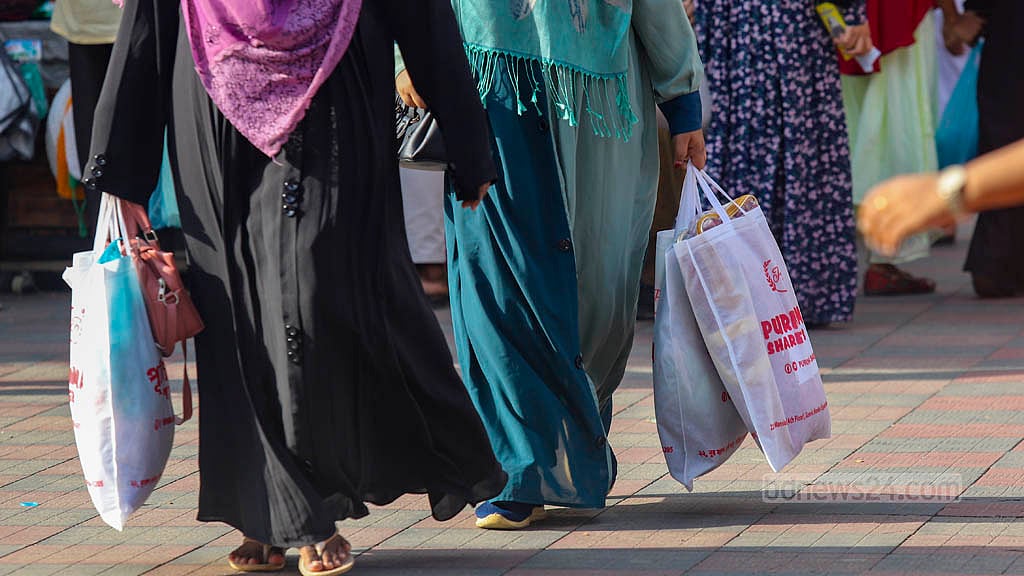
He told bdnews24.com: “Initiating permanent change will present challenges at first. However, if the law is enforced, people will themselves bring alternatives to the market. If we wait to create alternatives before enforcing the law, it will take much more time. Therefore, if both are pursued simultaneously, results will be achieved more quickly. Managing plastic can also reduce damage.”
On the other hand, Fahmida Khanam, the additional envirorment secretary, spoke about diverse and creative alternatives such as jute fabric bags, wax-coated paper, thick brown paper, and tin baskets.
“It is important that the alternative bags are easy to use and that the materials needed to make them are readily available in the market. This ensures that the cost of the bags will not increase."