Published : 13 May 2026, 07:11 AM
Updated : 21 Aug 2026, 03:43 PM


Drifting in a Deadlock
Prisoners of Hormuz: Stranded in the Gulf for months, the vessel remains a prisoner of war as the vital Strait of Hormuz gateway stays shut.
Sanctions sacrifice: A cut-price deal for safe passage was rejected by Dhaka, prioritising “US relations” over a swift exit for the crew.
The rotation refusal: Unlike other nations, Bangladesh has ruled out rotating its exhausted sailors, forcing the original crew to stay indefinitely.
Survival on rations: Mariners face extreme psychological strain and rationed water while watching missiles strike within 200m of the ship.
Neutrality trap: Critics argue that a lack of balanced foreign policy with Tehran has left the nation’s seafarers and energy needs adrift.
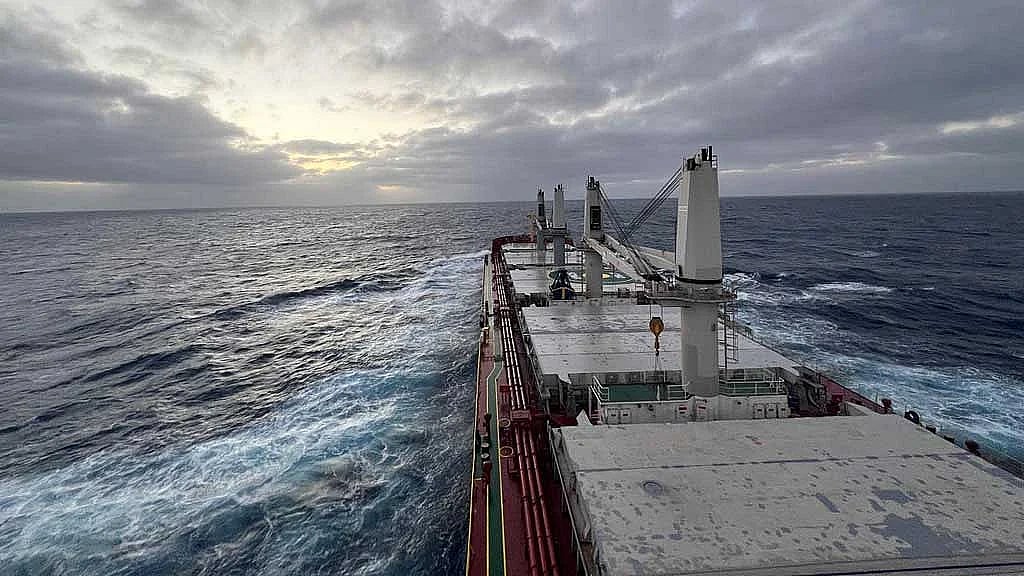
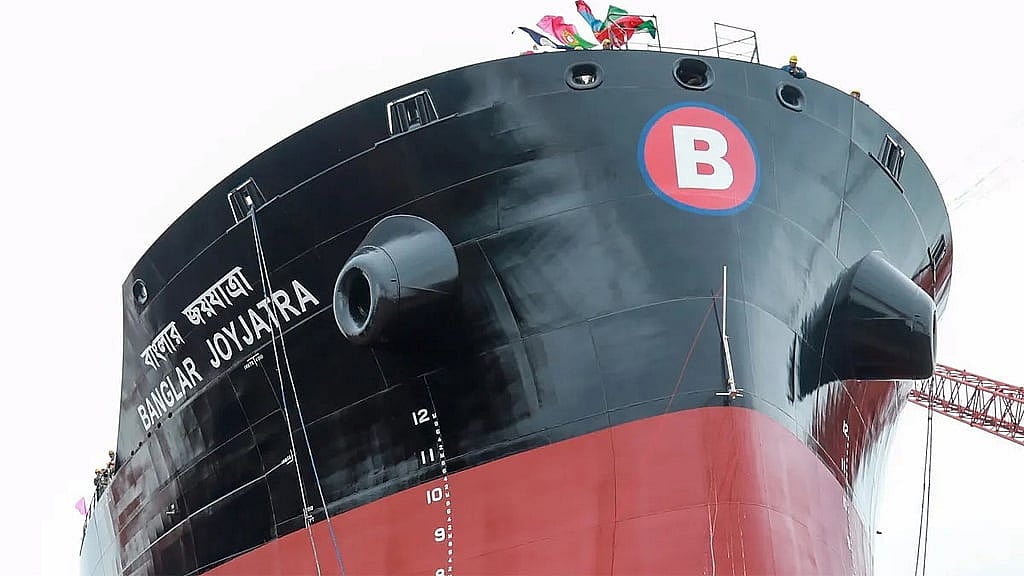
In the waters of the Persian Gulf, where missiles now streak across the night sky and commercial shipping routes have become corridors of fear, the Bangladeshi vessel Banglar Joyjatra drifts in a state of anxious suspension.
More than two months have passed since the United States and Israel launched attacks on Iran, triggering a conflict that has effectively paralysed maritime movement through the Strait of Hormuz -- the narrow gateway through which much of the world’s energy supplies pass.
Around 1,500 ships and an estimated 20,000 to 22,000 seafarers remain stranded across the region, waiting for safe passage.
Yet the 31 crew members aboard Banglar Joyjatra say their ordeal feels particularly bitter.
They have seen opportunities for escape disappear one after another, watching countries such as India and Pakistan send “relief crews” to replace stranded mariners.
The Bangladeshi sailors witnessed Russia rotate sailors home to protect them from the psychological and physical strain of prolonged deployment in a war zone.
But for Bangladesh’s seafarers, no such rescue appears imminent.
The deepest frustration centres on what many aboard describe as a missed opportunity -- an offer from Iran to allow the vessel to cross Hormuz in exchange for a toll payment of $578,000.
Crew members described the amount as comparatively modest because some “friendly” countries reportedly paid nearly five times more around the third week of April to secure passage.
“We had asked for a waiver, being an Islamic country,” said Bangladesh Shipping Corporation (BSC) Managing Director Commodore Mahmudul Malek, recalling discussions with Iran’s Revolutionary Guard Corps (IRGC).
“Money, however, was not the problem. The threat of US sanctions was what left us without an option,” he told bdnews24.com.
Foreign policy analysts say Bangladesh’s diplomatic positioning throughout the crisis left it trapped between competing powers.
According to them, Dhaka’s excessive caution over maintaining ties with Washington undermined opportunities to preserve professional and functional relations with Tehran at a moment when those channels were becoming critically important.
At least a dozen crew members whose contracts have expired have already sought repatriation. Even an additional $5-per-day “war wage” has failed to persuade them to extend their stay.
“We have to go back home. We cannot remain stranded for an indefinite period,” said Captain Shafiqul Islam.
Crisis Without Rotation
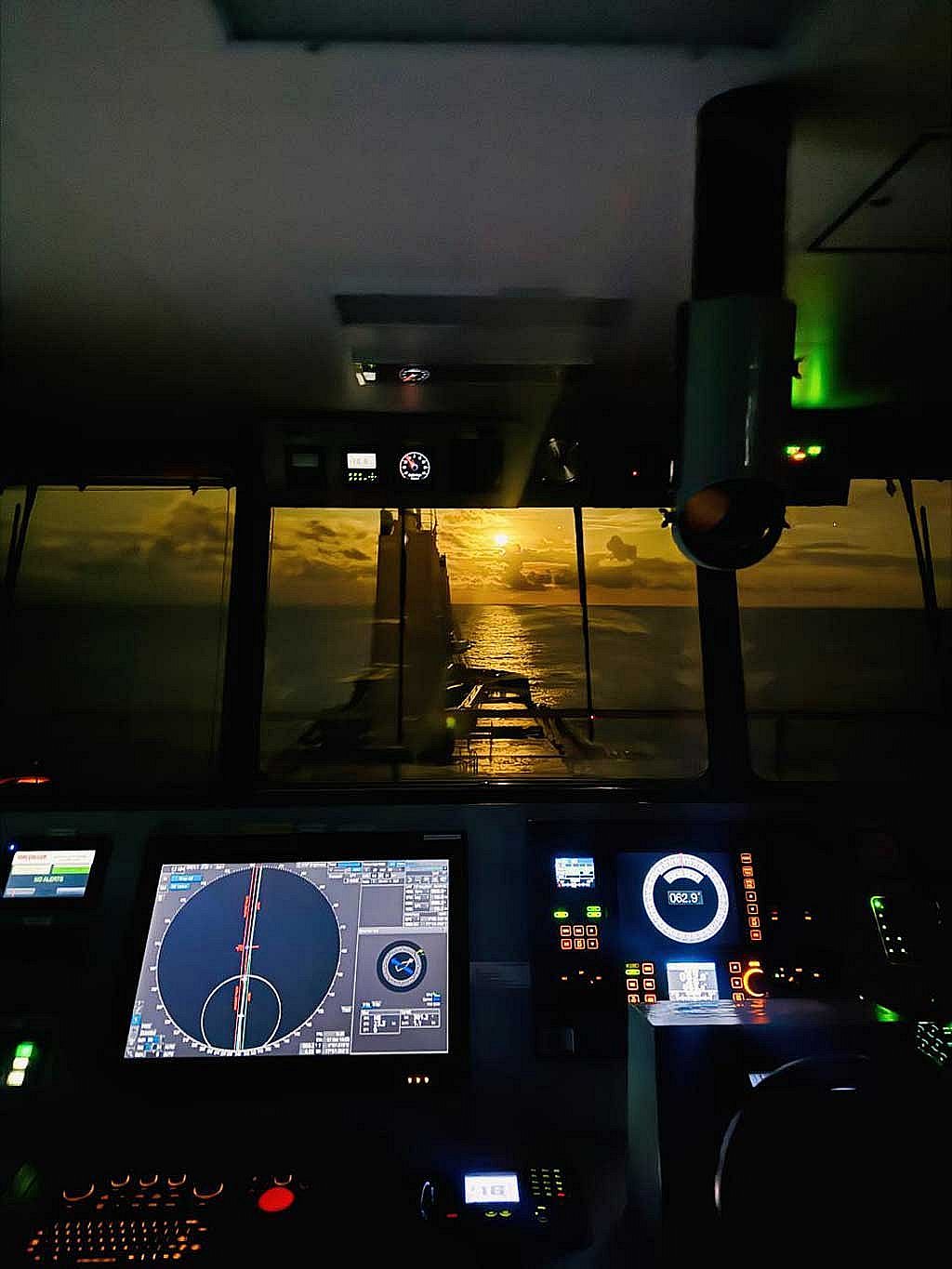
The contrast with other nations has deepened the crew’s despair.
Many countries are rotating seafarers out of conflict zones to reduce the mental and physical toll of extended deployment under wartime conditions.
Russia is among those sending replacement crews, while India and Pakistan have also arranged relief rotations for ships trapped in Gulf waters.
Bangladesh has chosen otherwise.
“We are doing everything at our disposal to get our crews and ship out of the crisis zone,” Mahmudul said.
“But sending reinforcement crews is not something we have in mind. We are not considering it as an option.”
The statement effectively means the current crew will remain aboard as long as the vessel stays stranded in the area.
Former diplomats and foreign policy experts warn that nobody can confidently predict where the crisis is heading. In the worst-case scenario, they say, instability in the Gulf could continue for years.
The war could end suddenly. But it could also harden into a prolonged geopolitical confrontation capable of disrupting everything from global fuel supplies to maritime trade routes.
Experts say Bangladesh should already have contingency plans in place -- not only for energy security, but also for rescuing stranded seafarers if conditions deteriorate further.
Living Under Missiles
A third of the ship’s crew have now spent nine months continuously at sea. Another 10 sailors have been away from home for seven months.
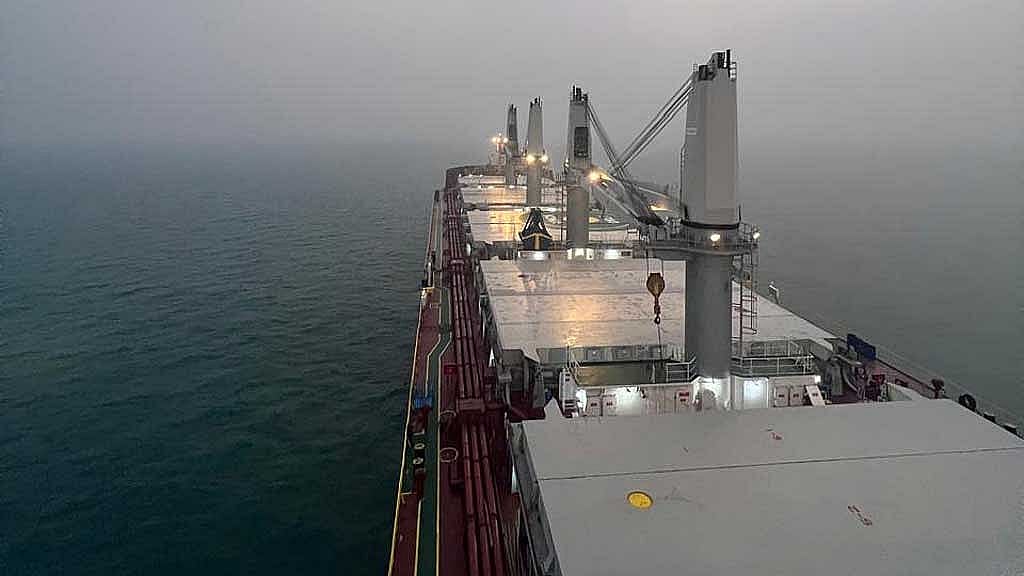
For two traumatic months, they have lived under the constant shadow of war.
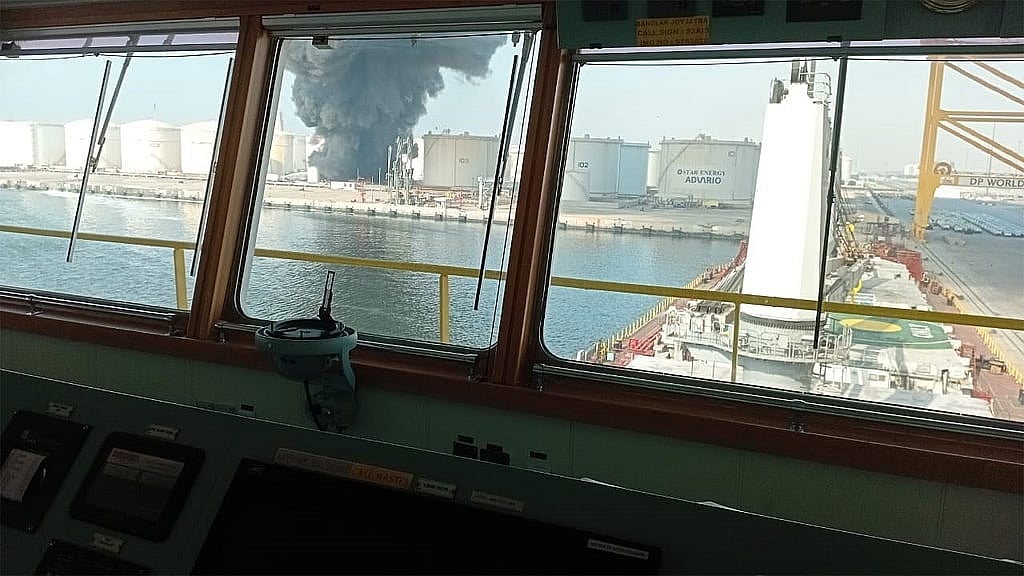
Crew members described watching missiles fly overhead day and night, with some projectiles landing frighteningly close to the vessel. One reportedly struck just 200m away.
The mariners who spoke to bdnews24.com by phone sounded composed, but many admitted the psychological burden had become unlike anything they had experienced in decades at sea.
“None has fallen sick yet. But we will if we are not rescued,” one crew member said.
“We cannot keep living in this situation forever.”
Under ordinary circumstances, seafarers commonly remain onboard ships for six to 10 months. But prolonged deployment beyond six months can create mounting health complications.
The crew described chronic back, neck and joint pain caused by repetitive labour and heavy lifting in confined spaces. Irregular shifts and night watches have disrupted sleep patterns, producing exhaustion and fatigue.
Motion sickness, dizziness and dehydration remain constant threats in rough conditions, while prolonged exposure to heat, saltwater and humidity can lead to skin infections, burns and respiratory problems.
The stress itself has become another invisible danger.
Several mariners said they had never before endured the experience of staring anxiously into the sky for hours, anticipating incoming missiles.
The Geography of Survival
Even anchoring safely has become a complicated strategic exercise.
The vessel must remain as close as possible to Hormuz in case passage suddenly opens. At the same time, the crew need access to GPS and mobile networks, though they say US signal jamming frequently disrupts communications.
Cost calculations also shape decisions.
Ships anchored beyond 12 nautical miles (22.22km) from shore may face additional charges imposed by coastal states, prompting crews to remain close to territorial waters whenever possible.
Technical limitations further complicate matters.
Banglar Joyjatra is equipped with a 270-metre anchor and cannot safely remain in waters deeper than 50m.
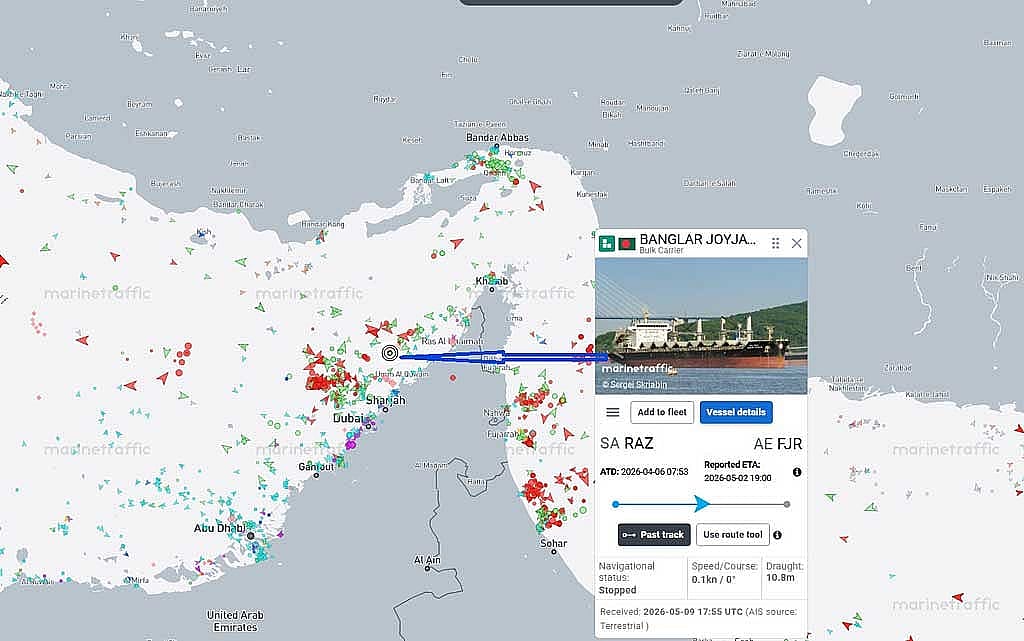
The ship is currently anchored roughly 40km off Dubai and Sharjah. But despite their proximity to the UAE, the Bangladeshi sailors know they cannot simply disembark there.
For many foreign mariners, the UAE has become the safest evacuation route. Sailors travel ashore by small boats before boarding flights home.
Bangladeshi seafarers, however, generally require humanitarian clearance or diplomatic intervention to enter the country.
Travelling to Saudi Arabia or nearby states to catch flights would require crossing 100 to 150 nautical miles (185.2-277.8km) through dangerous conflict waters.
A Voyage that Became a Nightmare
The vessel last left Mina Saqr in early May to purchase fresh water from Sharjah. The port lies 47 nautical miles (87km) from Iran’s firing line and 113km from Hormuz.
After taking onboard 190 tonnes of water, the crew heard a fresh IRGC warning stating that returning to their previous anchorage could place the ship directly within a firing zone.
The ship was forced to reposition on May 5.
If the war continues, the crew fear they may need to relocate again simply to secure water supplies. The captain said they have been stranded in those waters for over four months, since Jan 30.
Ordinarily, ships produce freshwater onboard using heat generated by their main engines. But because Banglar Joyjatra remains anchored rather than sailing, that system cannot operate.
Water consumption has now been cut in half. Bathing and other non-essential use have been restricted to just 30 minutes daily.
Under normal operations, the vessel consumes 12 tonnes of water each day. At least 40 tonnes must always remain reserved for emergency engine functions.
Chief Engineer Rashedul Hasan said food supplies could last another two months. Fuel reserves currently include 400 tonnes of heavy fuel oil and approximately 150 tonnes of diesel.
The vessel has already made three failed attempts to cross Hormuz -- once in March and twice in April.
Diplomatic Missteps
Media reports and official statements show Bangladesh began contacting Iran in mid-March seeking safe passage for energy shipments travelling from Qatar, Kuwait, Saudi Arabia and other Gulf suppliers.
In April, Foreign Minister Khalilur Rahman, Shipping Minister Shaikh Rabiul Alam and energy officials repeatedly claimed the problem had been resolved, including during the Antalya Diplomacy Forum in Turkey.
An Iranian embassy official said Bangladesh was eventually connected with the IRGC for negotiations despite Tehran’s displeasure over Dhaka’s early diplomatic response.
That response became a point of controversy.
One day after the US and Israel launched attacks on Iran, Bangladesh issued a statement condemning Iran’s retaliation as a violation of Gulf sovereignty, despite Tehran insisting it had targeted American military facilities.
The statement did not mention that the conflict itself had been initiated by the US and Israel.
Bangladesh also remained silent after more than 100 children were reportedly killed in the bombing of a girls’ primary school in Iran on Feb 28, the first day of the war.
“We missed an opportunity to make a professional and effective diplomatic move by failing to condemn the killing of children,” said former Dhaka University Prof Imtiaz Ahmed.
Foreign policy experts said Bangladesh, like many countries, initially assumed the US-Israel alliance would quickly dominate the war.
Instead, the conflict evolved into a prolonged and unpredictable confrontation.
Former ambassador Munshi Faiz Ahmed questioned whether Bangladesh could realistically expect cooperation from Tehran under such circumstances.
“How can we expect Iran to act friendly in this situation? How can Iran let other ships pass when its very existence is at risk?” he asked.
Experts also warned that even if Iran reopens Hormuz, some countries may still avoid crossing due to fears of ending up on a US sanctions blacklist.
“One lesson from this crisis is that maintaining relations with the US alone is not enough,” said maritime law and policy expert Saiyeed Jakaria Baksh Imran.
Hormuz remains Bangladesh’s only practical route for affordable energy imports, analysts said, arguing that overt alignment with one geopolitical bloc without maintaining diplomatic balance had endangered national interests.
“We need to strike a balance. We need to be neutral and ethical,” Jakaria said.
Foreign ministry spokesperson SM Mahbubul Alam declined to comment, citing his recent transfer from the West Asia desk.
Officials from Bangladesh’s power division and foreign missions have also not clarified the current status of negotiations with Iran.
“The communication got snapped somewhere along the line,” Mahmudul said. “The IRGC perhaps became too busy with the combat.”
For the crew of Banglar Joyjatra, the wider calculations of war and diplomacy feel distant. What remains immediate is the slow erosion of certainty at sea -- the waiting, the rationed days, and the unanswered question of when, or how, they will finally return home.