Published : 22 May 2026, 03:44 PM
Updated : 28 Aug 2026, 01:34 AM


A bus from Gazipur had just crossed the Amtali intersection signal in Mohakhali when it ground to a halt. Driver Salam said it would take at least half an hour just to clear the terminal.
The frustration was written all over his face when he spoke on Monday afternoon. "This half-hour wait is an everyday thing here," he said.
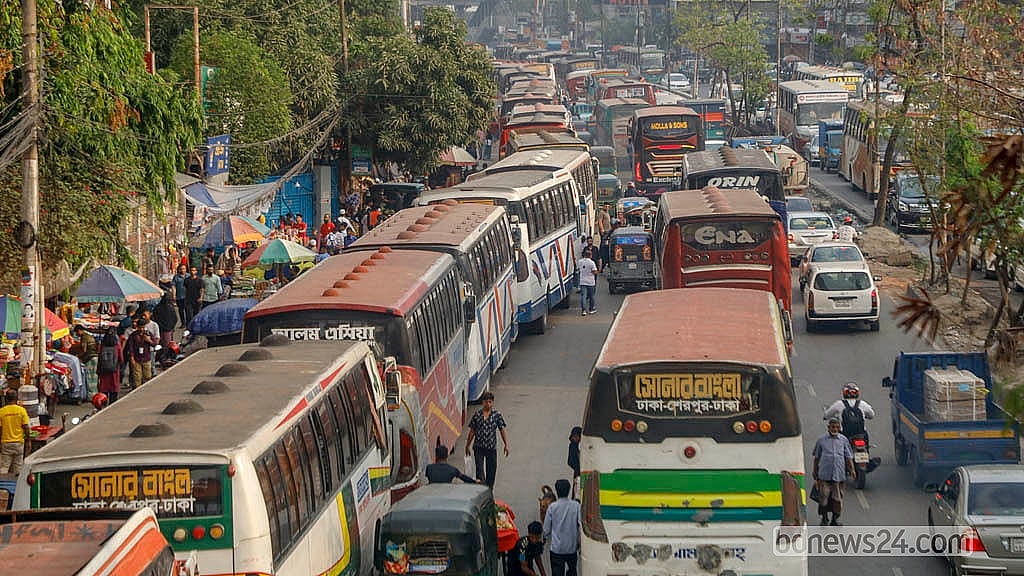
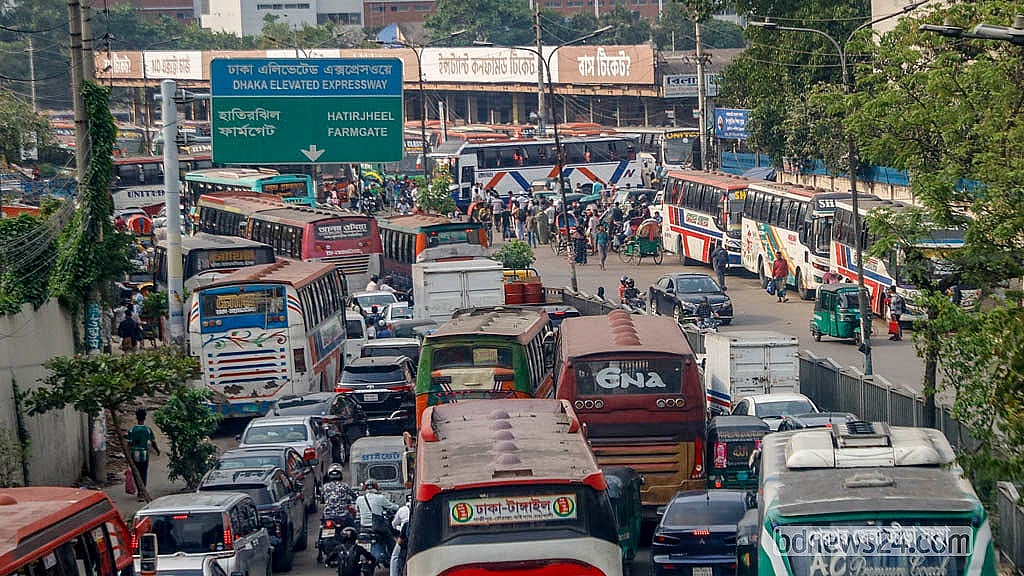
Rows of buses parked on both sides of the road in front of Mohakhali Bus Terminal have kept the stretch in a permanent gridlock. Buses stopping mid-road to pick up passengers make things consistently worse.
Against this backdrop, police have taken up the AI camera installation plan, while the terminal relocation idea is also gaining ground.
Dhaka Metropolitan Police (DMP) Additional Commissioner Md Anisur Rahman said AI cameras needed to be rolled out quickly at key points across the capital, with Mohakhali Bus Terminal now topping that list.
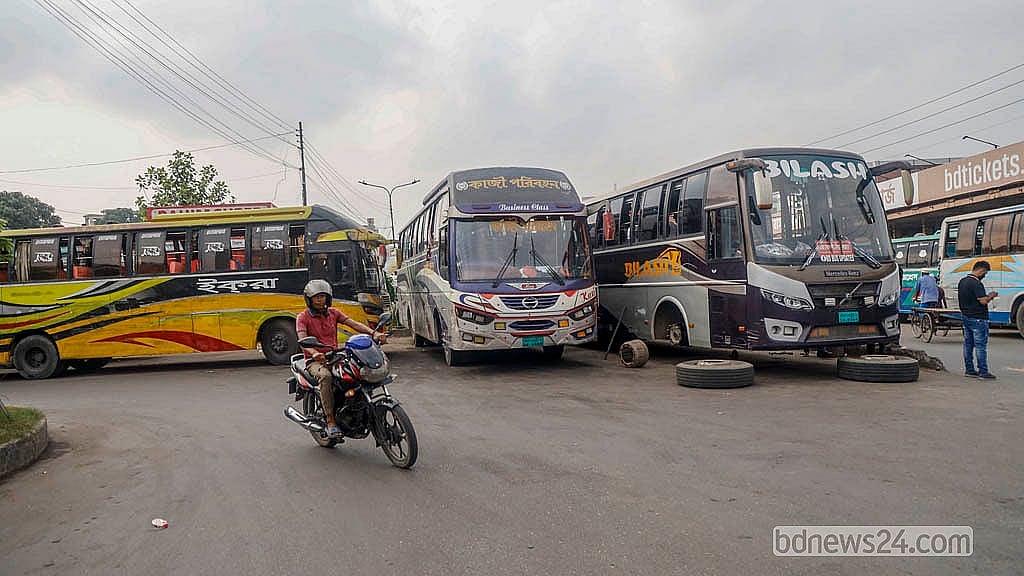
"We simply cannot control Mohakhali Bus Terminal. It has become a very serious problem for us.”
"The uncertainty in front of the terminal is not hard to fix -- it just takes some will. There are too many buses for the space, and all sorts of problems, but a solution is possible. That is why AI cameras are going in," he added.
AI cameras have already been installed at 30 major intersections in the capital, programmed to detect violations of the Road Transport Act 2018.
Police call these PTZ cameras, short for Pan-Tilt-Zoom, an advanced surveillance system that can be operated remotely to pan, tilt and zoom from a distance.
The cameras photograph vehicles caught breaking six categories of traffic rules, capturing number plates, with footage stored on servers at the DMP Headquarters' Traffic Technical Unit (TTU).
The system is linked to the Bangladesh Road Transport Authority's server, allowing instant identification of vehicle owners.
Cases are filed against owners by TTU staff reviewing the footage, with notices automatically dispatched by post through the e-traffic prosecution software.
Anisur said installation around the terminal had already begun and could go live by Sunday.
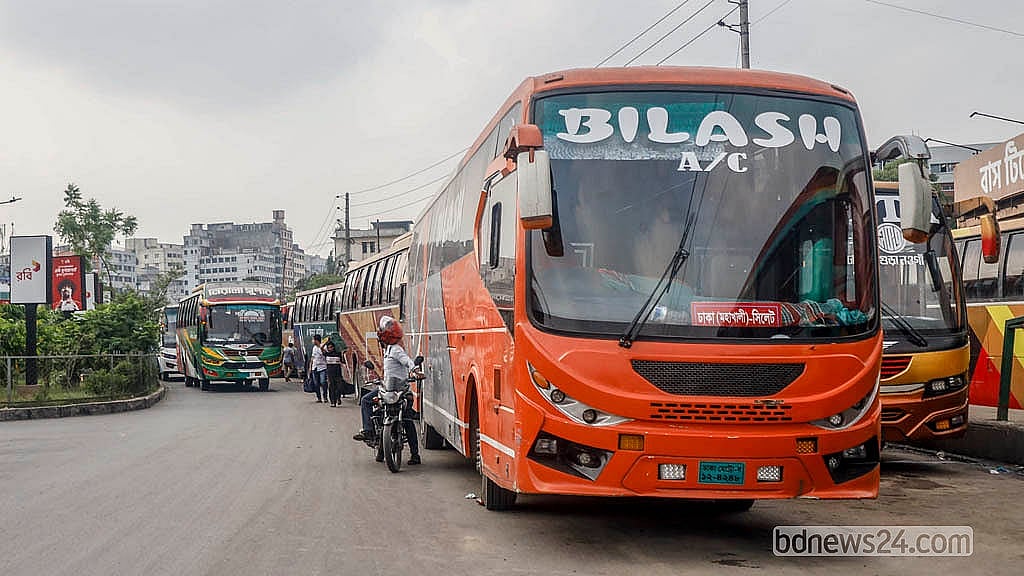
He also pointed to fuel stations in front of and north of the terminal as another source of congestion, with buses queuing to refuel regularly eating up an entire lane.
"A separate lane has been marked for fuelling. No bus or vehicle is allowed to stand on the road outside that. Violators will be identified by AI and prosecuted. We believe this will bring significant results," he added.
Earlier Measures Fail
Built in the 1980s, the terminal has over the decades become one of Dhaka's worst congestion flashpoints.
Multiple attempts to fix the problem have come and gone without result.
After the July Uprising, a gatekeeping system was introduced requiring buses to board passengers inside the terminal and leave with gates locked, with no pick-ups allowed between the terminal and stops at Railgate, Amtali, Chairman Bari, Sainik Club and Kakoli.
The rule held for a few days before things slipped back to normal.
Dhaka Road Transport Association leader Abul Kalam Azad said long-distance passengers simply did not want to travel to the terminal, preferring to board from roadside stops and bargain fares with conductors.
With fewer passengers inside, gate-locking became unworkable. "Local buses picking up and dropping off passengers anywhere on the road was another reason the plan could not be put into practice," he said.
Around five years ago, 10 U-turns were formally opened at several points across the capital, including one in front of Mohakhali Bus Terminal, one near Tejgaon Nabisco intersection and one near BG Press in Satraasta.
A traffic police official on duty at the time said the city corporation built them without consulting police, and the U-turns ended up reshaping the gridlock rather than easing it. One was later closed by police.
Currently, one U-turn near Nabisco intersection remains open, along with a right U-turn for buses exiting the terminal and another in front of the terminal itself, with buses parked on both sides of the road in between, keeping the area in a permanent state of chaos.
Md Masud Rana, deputy commissioner of Gulshan Traffic Division, said no buses were currently standing on the road, with extra police deployed to enforce the rule.
"The buses that are stationary are mostly in line at the fuel pumps," he added.
High-Rise Terminal Or Relocation?
The terminal was built on 3.82 hectares of land acquired from the Roads and Highways Department. The area later expanded to 4.31 hectares in 2023.
DNCC Transport Department Assistant Manager for Mohakhali Bus Terminal Md Mehedi Hasan said the facility has been operating under the city corporation since 1984.
Azad, former Mohakhali branch president of the Dhaka Road Transport Association, said the terminal was originally intended for buses travelling towards Mymensingh and Tangail via Gazipur, Tongi, Sreepur and Bhaluka.
But buses now operate from Mohakhali to destinations across northern and south-eastern Bangladesh, despite separate terminals already existing at Gabtoli and Sayedabad.
Azad said many passengers travelling to northern districts now prefer routes through Ashulia or Tongi because of shorter travel times after the Jamuna Bridge opened.
Similarly, Sylhet-bound passengers often travel via Tongi from Mohakhali.
He said the growing number of routes operating from Mohakhali has sharply increased bus volume within limited space. The terminal’s layout also forces buses to spend extra time taking turns while exiting, contributing to congestion.
Azad believes relocating the terminal is now the only realistic solution.
“This is now a government decision. We are only operators,” he said.
DNCC official Mehedi said the terminal was designed for around 350 buses but currently handles more than 1,200.
Although the terminal area was expanded by one acre at the end of 2023, conditions have not improved, he said.
Some buses remain parked inside the terminal for long periods, leaving no space for others and forcing them onto nearby roads.
A rule limiting terminal parking to buses departing within eight to 12 hours has also failed in practice.
Mehedi said discussions are under way over demolishing the current two-storey terminal structure -- including ticket counters, passenger waiting areas and owner-worker offices -- and replacing it with a high-rise building to expand capacity.
According to him, relocation is the option gaining more traction. "The authorities are looking at a site at Diabari-Bhatuliya near the Purbachal and metro rail Uttara North station.
“There are also thoughts about moving the Tejgaon Truck Stand. But none of it has reached a final decision yet,” he added.