Published : 30 Jul 2026, 08:03 PM
Updated : 08 Sep 2026, 09:28 AM


Trapped in Cyber Scam Gulags
Modern slavery: Fake overseas jobs funnel Bangladeshi workers into heavily guarded cyber scam compounds
Bought and sold: Criminal networks trade migrants like commodities
Forced into cybercrime: Stories reveal a new form of human trafficking -- where organised crime profits by turning trafficked workers into tools of online deception
Home but not free: Survivors return with debt, trauma and legal battles
They left home carrying dreams of a better life.
Some saw online advertisements promising jobs abroad. Others trusted familiar faces who assured them of safe employment and good salaries.
But their journeys ended far from what they were promised.

Instead of offices and restaurants, they found themselves inside heavily guarded scam compounds in Cambodia, where they were treated as merchandise, transferred between criminal groups and forced to deceive strangers online.
Those who refused were beaten, threatened and locked away. Those who managed to escape returned not only with memories of abuse, but also with crushing debts and fears of the very people who sent them there.
Their stories reveal a growing form of human trafficking -- one where technology has created a new kind of exploitation, turning victims into unwilling participants in cybercrime.
New Face of Human Trafficking
Over the past few years, cyber scam centres have emerged as a major threat for migrant workers from Bangladesh and other countries.
Recruiters lure young people with promises of jobs in restaurants, data entry firms and technology companies. Once abroad, many discover that the promised employment does not exist.
Instead, they are taken to compounds where criminal networks operate online scams targeting people around the world.

According to the Bureau of Manpower, Employment and Training (BMET), 15,921 Bangladeshis travelled to Cambodia for employment in the past one and a half years. Many did not find the jobs they were promised. Some were confined in scam centres and forced into criminal activities.
A Cambodian crackdown on such facilities brought 583 Bangladeshi victims home in June. Most of them were between 18 and 34 years old.
A BRAC study found that 98 percent of returnees said they had been promised jobs but received none. Around 90 percent said they were forced into scams, while 88 percent said their movement was restricted.
“Eighty-six percent of them had their passports and documents taken away. 27 percent faced severe physical abuse and 38 percent suffered psychological abuse,” the study said.
Ahead of the International Day Against Trafficking in Persons on Jul 30, experts have described scam compounds as a modern form of slavery.
A BRAC official said the crime combines human trafficking, forced labour and cybercrime.
“Scam centres are a complicated form of this. It can be called modern slavery,” he said.
“Like the old system of slavery, a person from Bangladesh is held captive in a compound near the Thailand or Myanmar border and tortured so that he can scam an American or an Australian and take their money.”
The trafficking network now stretches across several countries, with recruiters, transporters, brokers and scam operators working across borders, he said.
“Four or five countries are getting involved here,” he said.
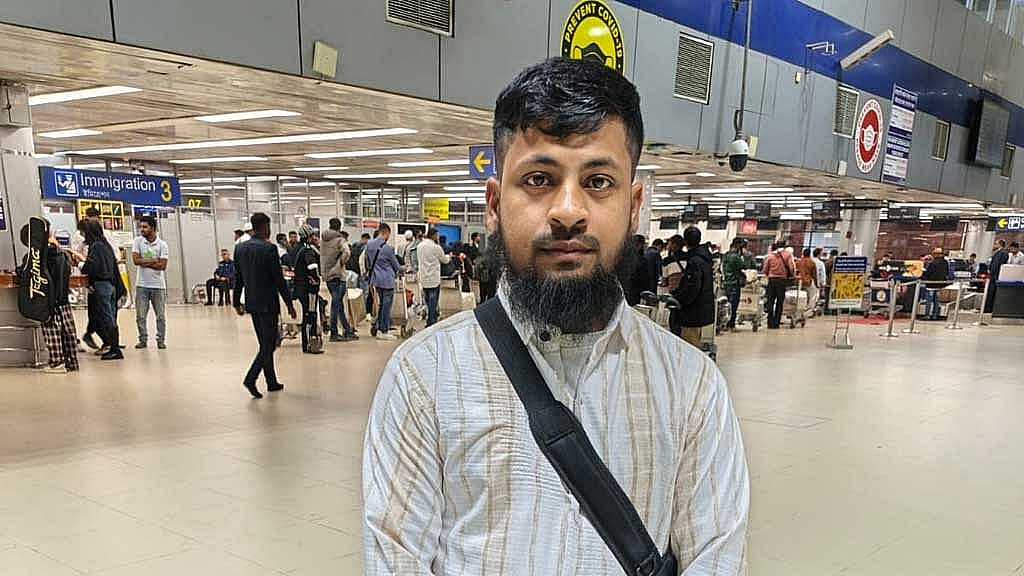
“Traffickers are advancing technologically to commit these crimes, but our law-enforcing agencies, government and administration are not moving at the same pace. The traffickers update themselves every day.”
The most disturbing part, he said, is that victims are often forced to become perpetrators.
“In cyber scams, the person who is taken there is himself a victim. Under torture, he is forced to make another person a victim. This is the biggest issue. That is why it is called modern slavery.”
Al-Amin: From Job Seeker to Captive
For Rajbari’s Al-Amin Mia, the nightmare began with a job advertisement.
He saw posts on Facebook and YouTube offering restaurant work in Vietnam and contacted a recruiting agency called MR International.
After several months of discussions, he was promised a job abroad in exchange for Tk 500,000.
But after collecting passports and money, the recruiters changed the plan.
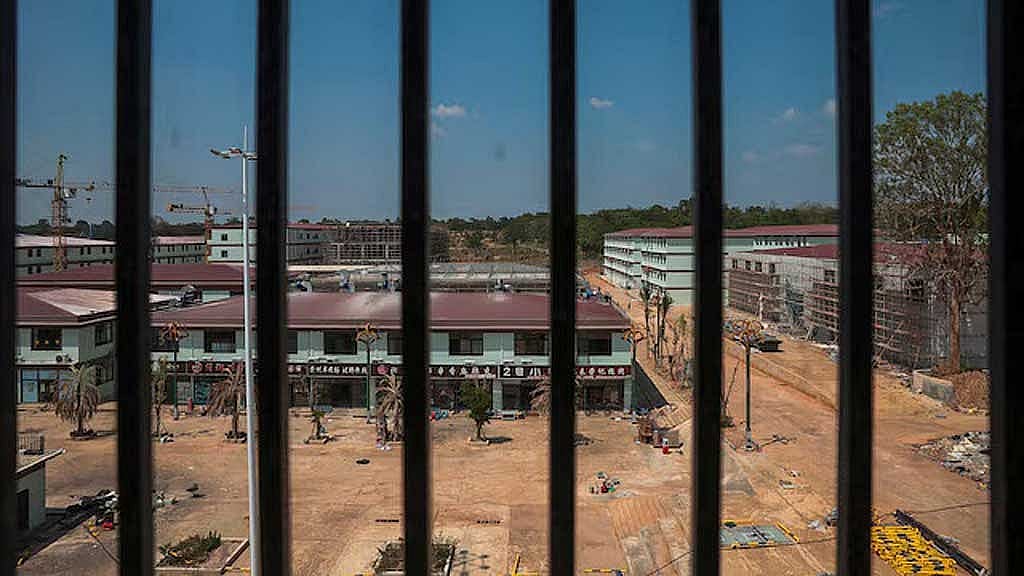
For months, Al-Amin was kept waiting as the recruiters repeatedly changed their promises, taking money while assuring him that his visa was on the way. When Vietnam was no longer possible, they offered a new destination: Cambodia -- a place they described as another opportunity.
“They said, ‘There is a country for you, Cambodia. If you want to go, it will be very good for you. You have your own company there. You will have to do data entry work.’”
He was given what he believed was an employment visa. Later, he discovered it was fake.
Before leaving Bangladesh on Nov 8, 2025, Al-Amin was told to carry $1,500 because he would need to show money in Cambodia.
The deception did not end at departure. It deepened at Phnom Penh Airport. His passport was taken, and only later did Al-Amin discover that the promised work visa was actually a tourist visa.
“You brought us saying one thing, gave us another thing in the country, and the visa became something else. What kind of treatment is this?”
His ordeal soon took a darker turn.
A Bangladeshi intermediary collected him at the airport, kept him for two days and then transferred him to a Chinese-run scam compound.
"I did not know then that I had been sold," Al-Amin said.
Inside the compound, the promised data entry job disappeared.
“After seeing the work, I realised this was not what they had told us. This was inhuman work -- deceiving people.”
Al-Amin said workers were assigned fake online identities to target wealthy victims, particularly elderly people in the United States.
The operation ran like an assembly line. Al-Amin created fake female profiles, built trust with potential victims and passed their phone numbers to specialist teams. Hackers at the end of the chain emptied bank accounts.

"The hackers would take everything -- whatever money was in the bank account."
Unable to continue, he refused.
“I said I could not do this work. I asked them to give me the hotel or restaurant job they had promised.”
The response was immediate.
“They said, ‘We bought you with money. Did we bring you here for free?’”
He was beaten and later forced to pay $1,500 to leave.
Even after escaping the compound, he was held again in an underground room where his passport was taken.
“They said, ‘Bring money from home, otherwise you cannot leave’.”
After borrowing more money, Al-Amin finally returned to Bangladesh in January.
But freedom came with another burden.
He had overstayed his tourist visa and had to pay around $760 in fines.
Mannan: Trapped by Someone He Trusted
For Mannan Chhaiyal of Shariatpur, the betrayal came from someone he knew.
A neighbour introduced him to a broker who promised a restaurant job in Cambodia. The offer seemed credible because the broker lived just minutes away from his home -- close enough to earn his family’s trust.
“He was just two minutes away walking distance from my house. I had no reason to distrust him,” Mannan said.
After completing migration formalities, Mannan travelled to Cambodia in December.
But the promised job never existed.
Instead, he was taken to a massive building with tight security.
“I saw thousands of people working there. There was a computer in front of every person.”
He was given a fake identity and instructed to find potential victims online.
Inside the compound, Mannan discovered a sophisticated fraud operation built on fake identities and psychological manipulation. Workers were trained to identify wealthy targets online, build relationships and lure them into fraudulent investment schemes, often using female models during video calls.
“When boys wanted to speak on video calls, female models were there to talk to them,” he said. “They would say, ‘I work on a website. If you join, you can earn well’.”
Mannan's refusal lasted only a moment. The consequences lasted weeks.
He told his captors the work was not what he had travelled for.
“I said, ‘This work is not for me. I did not come here for this’.”
The answer was chilling.
“They told me, ‘You have been sold to me’. They said they paid $2,085 for me.”

From that point, every failed target brought another punishment. Workers who could not deliver were denied food, beaten and confined. Mannan says he was locked in an underground room, assaulted with sticks and subjected to electric shocks.
“They hit me with sticks. They gave electric shocks to my neck and back.”
His release came not through negotiation but through a Cambodian police raid on the compound. With help from BRAC and the International Organization for Migration, he eventually made it home on Jun 13.
Home, however, did not mean freedom. It meant debt, uncertainty and the struggle to rebuild a life that had already been sold once.
Freedom, but No Escape from Debt
For survivors, returning home has not meant returning to normal life.
The money borrowed to travel abroad has become another source of suffering.
One survivor described living in hiding because of unpaid loans.
“I took money with interest. I took loans in instalments. I cannot even stay at home.”
“I have two sons, but I cannot keep them with me or protect them.”
“My monthly instalment is Tk 53,000. I am suffering in a way only God knows.”
Mannan faces a similar situation.
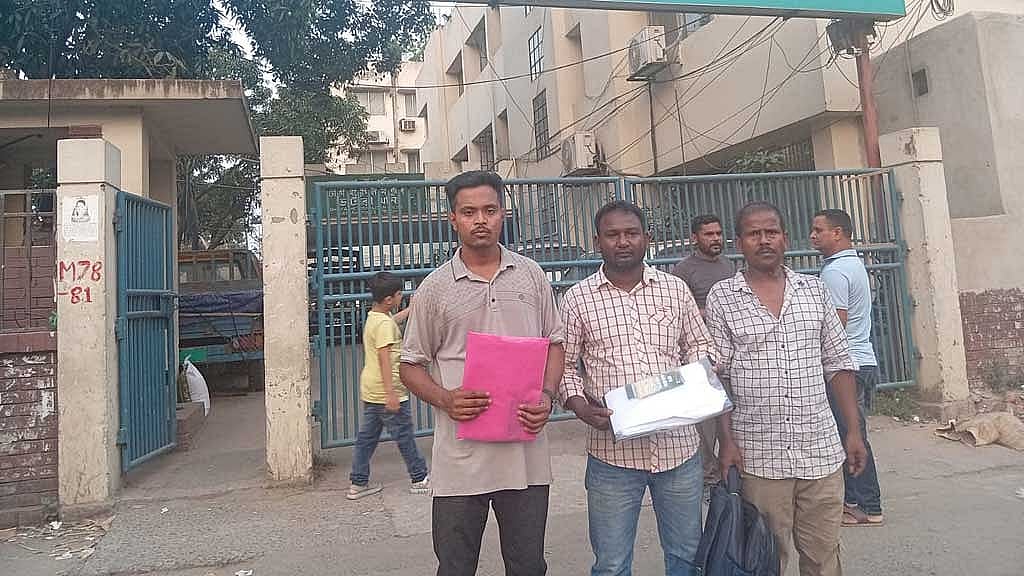
“My monthly instalment is Tk 35,000. It has been seven or eight months since I could pay anything.”
Alongside debt, he fears legal trouble after a counter-case was filed against him by people linked to the broker who sent him abroad.
“Forget getting my money back, my biggest worry is whether I will get justice,” he said.
Two of the survivors have filed cases against those they accuse of trafficking them. But several suspects remain beyond reach.
Escaping the compounds was never the end of the story.
Back in Bangladesh, the compounds are gone, but the trap remains. Survivors hide from creditors, fight court battles and fear the traffickers they accuse. They escaped captivity abroad, only to return home carrying debts, trauma and lives that are still waiting to be rebuilt.