Home
+
Published : 08 Jul 2026, 01:49 PM
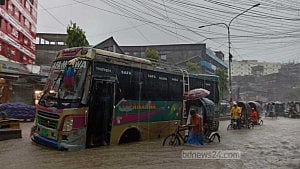
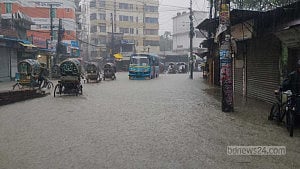
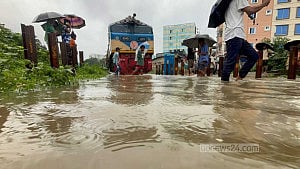
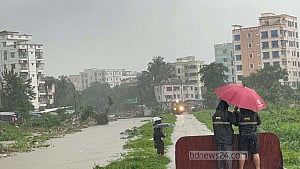
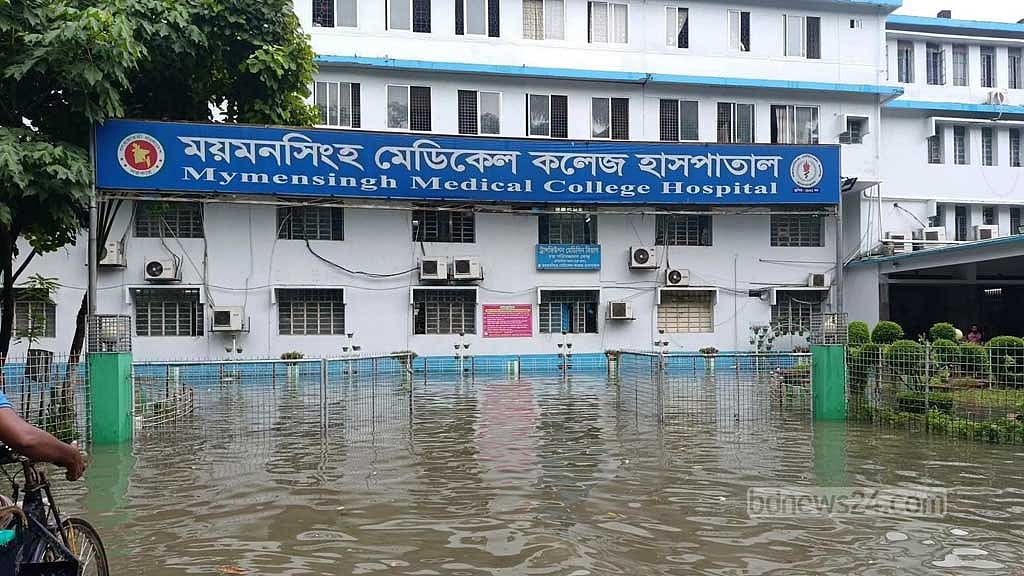
Continuous heavy rainfall has caused severe waterlogging in parts of Mymensingh city, leaving residents and commuters facing significant hardship.
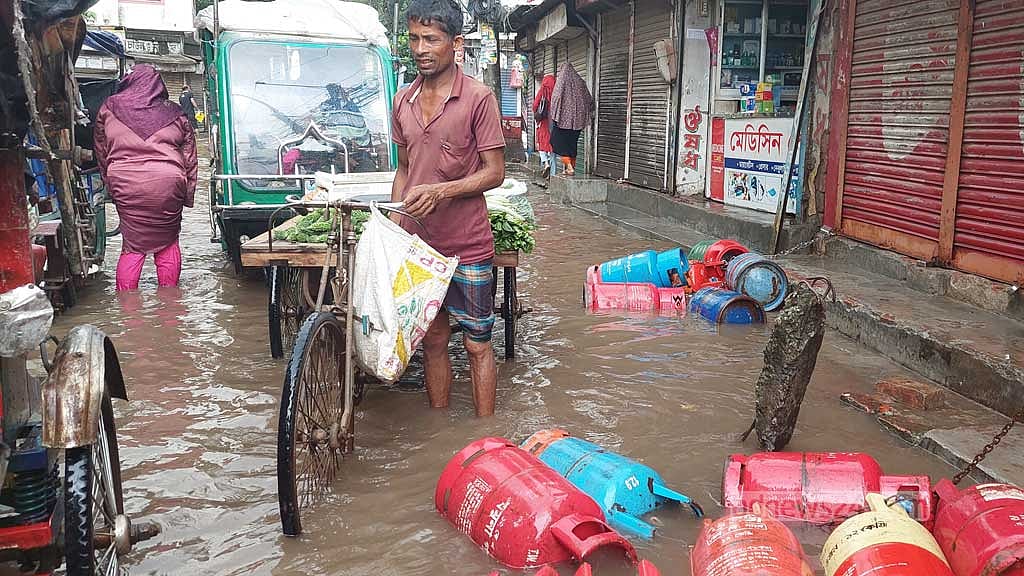
Many major roads, alleys, and low-lying residential areas have gone underwater, disrupting the daily lives of office workers, students, business owners, and pedestrians.
According to Anwar Hossain, head of the Bangladesh Meteorological Department's station at the Bangladesh Agricultural University (BAU), the district recorded 174mm of rainfall in just eight and a half hours, from 12:30am to 9am.
This is the highest rainfall recorded in Mymensingh district this year.
The relentless rain left knee-deep water in areas including Sankipara, Akua, Golkibari, Balashpur, Charpara, Khagdahar, Ganginarpar, Natun Bazar, District School Intersection, and Keowatkhali. Water also entered many homes, adding to residents' suffering.
In several locations, drains overflowed, causing dirty water to spill onto roads and making travel even more hazardous.
Abu Sayeed, a businessman from the Sankipara Rail Crossing area, said similar waterlogging had occurred in previous years and had happened again this time.
He blamed the recurring problem on poor drainage planning, encroachment on canals, inadequate maintenance of drains, and ongoing development work, which have prevented rainwater from draining quickly.
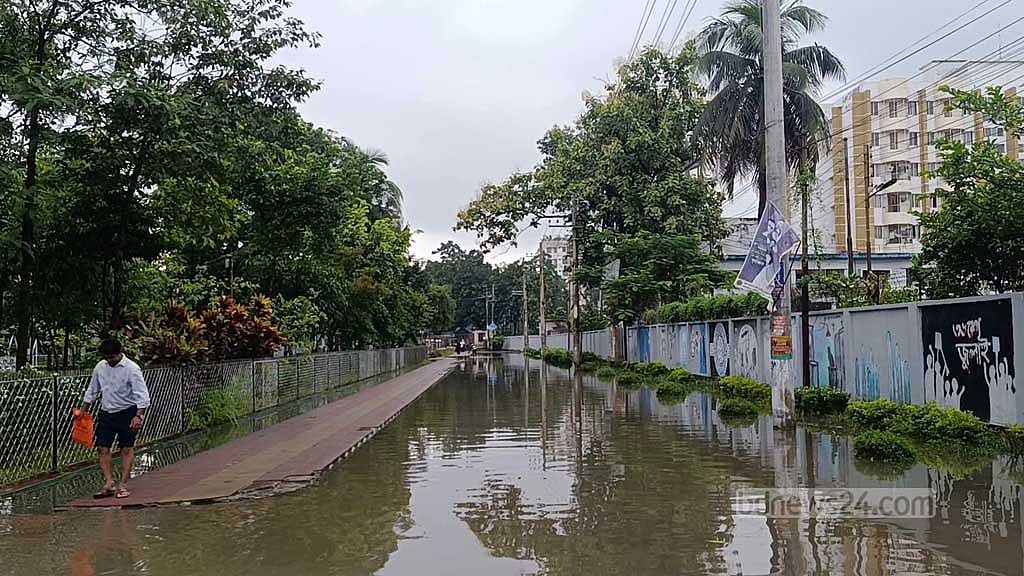
As a result, even moderate to heavy rainfall causes widespread waterlogging every monsoon season.
Hamida Akter, a resident of the Health Officer's Lane, said blocked drains prevented water from flowing away, causing floodwater to enter her home and damage furniture.
"We suffer like this every year during the rainy season. Even though we regularly pay our taxes, this is the condition we have to live with," she said.
Waterlogging at the Charpara intersection also created difficulties for patients travelling to the hospital.
Abul Bashar, who brought a patient from Jamalpur, said:"Because of knee-deep water on the road, it took more than an hour for the ambulance to cover just a few hundred metres to reach the hospital. Water had also entered the hospital premises, causing hardship for many people like me."
Imtiaz Ahmed, president of the Samaj Rupantar Cultural Association, said electric poles installed in the middle of drainage channels were obstructing the natural flow of water.
"Even light rainfall causes water to enter people's homes. Instead of only removing water temporarily, the authorities need a long-term plan to modernise the drainage system, restore canals, and ensure regular maintenance."
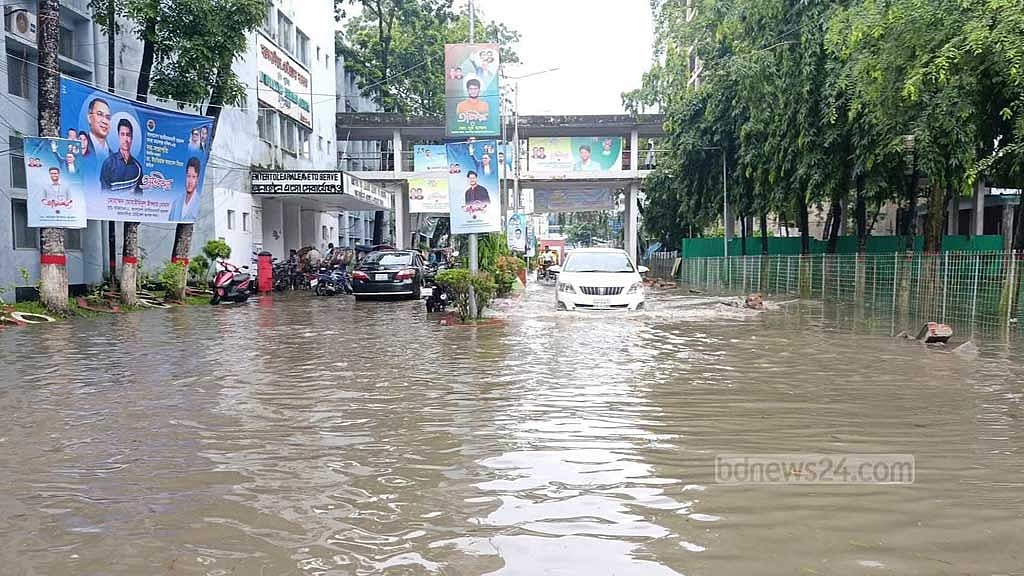
Yazdani Quraishi Kajol, president of the Mymensingh district chapter of the Citizens for Good Governance (SHUJAN), emphasised that properly planned drainage excavation is essential to solve the waterlogging problem.
"The way drains are currently being constructed seems to be for the sake of construction itself. It is not providing any real benefit to city residents."
Meanwhile, according to the Mymensingh City Corporation, a project worth Tk 6.29 billion was launched between 2021 and 2025 to improve roads, expand the drainage network, and enhance civic services. The project includes the construction of 322 kilometres of drains. However, despite the scheduled completion period having passed, only 55 percent of the work has been completed.
City Corporation Administrator Md Rukunuzzaman Sarkar said although heavy rainfall had caused waterlogging, water was receding quickly.
"I have been visiting different parts of the city since the morning. Most of the waterlogging is in residential lanes and alleys. This is mainly because owners of multi-story buildings are dumping garbage into the drains in an unplanned manner, blocking the drainage system," he added.