Published : 23 Oct 2025, 08:43 AM
Updated : 28 Aug 2026, 01:28 AM


Islami Chhatra Shibir’s sweeping wins in the central student union elections at Chittagong and Rajshahi universities after strong showings in Dhaka and Jahangirnagar have surprised many and sharpened questions about an ideological split on Bangladesh’s campuses.
Shibir had long held ground at Chittagong University but last won the central union, CUCSU, 44 years ago. In Rajshahi, despite a strong presence around the campus, it had not led RUCSU in recent memory.
Back-to-back victories on Wednesday and Thursday have raised fresh questions about what message this sends in a Bangladesh transformed by last year’s mass uprising.
Jahangirnagar University economist Prof Sharmind Neelormi says wins at Rajshahi and Chittagong were “not unexpected”, but Shibir’s rise at Dhaka and Jahangirnagar had been “off the radar”.
Despite sustained criticism of the Jamaat-e-Islami for its opposition to Bangladesh's independence from Pakistan in 1971, its student wing rebranded and fought to remain in campus politics.
For decades Shibir clashed with groups aligned to the spirit of the Liberation War and the left-progressive camp -- clashes that repeatedly spilled blood. During the Awami League’s decade and a half in power, Shibir could not operate openly on campuses.
Instead, critics say, it rebuilt by entering cultural bodies and, at times, by “infiltrating” the Chhatra League. That strategy, supporters and critics alike suggest, met a new reality after last year’s upheaval.
Academics and students -- including Dhaka University’s Prof Zobaida Nasreen, recent DU graduate Syed Rakib Hossain, and Prof Neelormi -- point to several drivers, including shifts in global politics as well.
These include: the failure to pass on to youth the Liberation War’s ethos, shared responsibility and role; fragmentation within left-progressive student politics; widespread anti-India propaganda; efforts, within today’s global context, to recast Islam as a “marginalised” faith; and the influence of international actors on domestic politics -- all of which, they argue, have tilted support towards Chhatra Shibir.
Some also cite a perceived “balance of power” instinct and Shibir’s welfare-style activity on campuses. Digital platforms, such as Facebook and YouTube, have further undercut older narratives, they say.
FOUR CAMPUSES, DOMINANT TALLIES
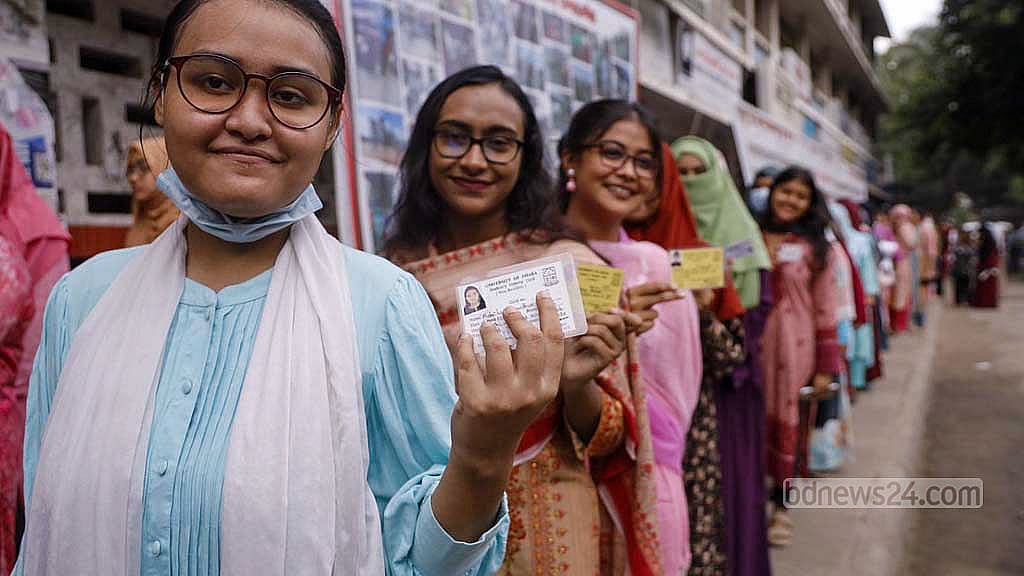
After nearly three decades, Rajshahi University’s RUCSU polls on Thursday delivered a landslide for Shibir-backed candidates as the combined student alliance it supported won 20 of 23 posts, including VP and AGS.
At Chittagong University, Shibir-aligned “Sampritir Chhatra Jote” won 24 of 26 CUCSU posts, including VP and GS.
Earlier, at Dhaka University’s DUCSU, Shibir’s “Oikyoboddho Chhatra Jote” took 23 posts overall, including VP, GS and AGS — and 9 of 12 secretary posts.
At Jahangirnagar’s JUCSU, Shibir lost the VP race but its “Samonnito Chhatra Jote” still captured 20 of 25 posts.
Across the contests, no single rival organisation stood up as a counterweight. The BNP’s student wing Jatiyatabadi Chhatra Dal failed to make headway while left groups struggled to hold the field. Where the DUCSU GS race stirred some interest, the left candidate still polled roughly half the Shibir tally.
SUPPORT FOR SHIBIR: ‘MULTIPLE FORCES’ AT WORK
Anthropologist Prof Zobaida cautions against reading the results as straightforward ideological endorsement.
“Various forces are at play,” she says. “It isn’t just madrasa education. Students outside madrasas may have their own interests. The long-familiar behaviour of mainstream student groups has also shaped perceptions.
“Alongside that, Shibir’s welfare politics, running programmes and initiatives, can draw people in without them fully grasping the implications. Think of Jamaat-Shibir coaching centres that keep students close. Those exist.”
She argues today’s generation often does not feel “ownership” of the Liberation War narrative.
“For me, the Liberation War is Bangladesh’s greatest achievement, but many young people don’t feel a strong sense of sharing in it. Repetition can make them feel it’s being pushed at them,” she says.
Shibir has long paired welfare activity with periods of coercion. In the 1990s and earlier, its coaching centres around Chittagong University were popular even as other groups mounted joint resistance against Shibir’s attempts to dominate by force.
So why the current support? Was it the years of operating covertly under the Awami League and building organisation by stealth? Prof Nasreen points to timing and information disorder.
“In the early post-war period, the spirit of 1971 dominated. Pride, the pain of repression and loss -- these lived in the student psyche,” she says. “Fifty-four years on, parents bear responsibility too. Many have not nurtured attention to that history. Online, misinformation about the war spreads widely, especially on Facebook and in group chats.”
WHEN FAITH BECOMES ‘MARGINAL’
Recent DU graduate Syed Rakib Hossain sees echoes of global polarisation.
“The ideological split globally is having an impact here,” he says. “In India, rising anti-Muslim sentiment has pushed Islam into a ‘marginal’ frame. Friends of India in Bangladesh, who championed democracy and secularism, see that. In reaction, young people here take up counter-ideas.”
He adds a local contradiction. “We loudly want democracy in India, but not as much at home. That, plus anti-Muslim narratives across the border carried by their ‘friendly’ parties here, shapes our youth.”
For some, decades of state-backed rhetoric around the Liberation War now feel stale.
“People saw 40-50 years of one set of ideals,” Rakib says. “Many used ‘spirit of the Liberation War’ as a shield. Young people, with phones in hand, cancel that instantly when they spot hypocrisy.”
Prof Neelormi offers a parallel reading: the post-1971 national story -- Bengali nationalism and secularism, under the Cold War’s Cuba–Russia shadow -- shaped one generation. Another came of age under the Gulf Wars, the 2008 financial crisis, and shifting ties with India.
“With Islam now cast as a ‘marginal identity’, young people have made it their own,” she says. “We also failed to convey the Liberation War’s collective responsibility. In celebrating single leaders and families, we erased the people’s shared role.”
As “global citizens”, she adds, many youths adopt an identity they perceive as marginal. “We also failed to present a clear, honest history. The two currents merged to produce this moment.”
A ‘BALANCE OF POWER’ INSTINCT?
With the Awami League forced from office on Aug 5 last year, Sheikh Hasina in India, leaders in hiding or jail, and the Bangladesh Chhatra League banned along with the party’s activities, national politics has been reshuffled.
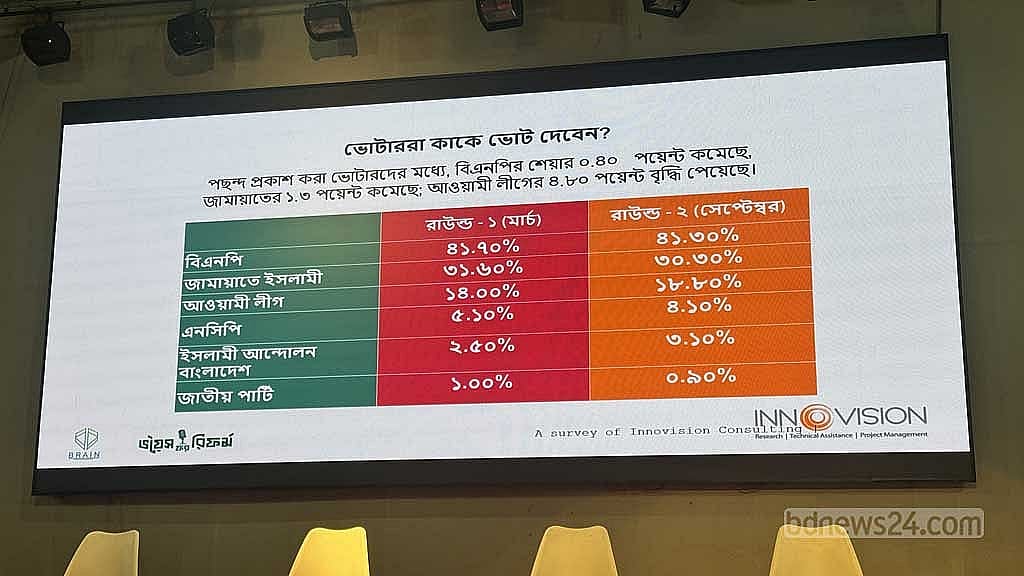
The BNP now leads one pole, with Jamaat-e-Islami close behind, and two distinct camps are forming.
Is campus support for Shibir a student calculation to “balance” power? Rakib thinks safety concerns weigh heavily.
“Many don’t care about ideology. They want security,” he says. “They fear that if Chhatra Dal takes over, hostel seats become a problem. With Shibir, they expect less chaos. Their past isn’t front-of-mind.”
Prof Nasreen disagrees. “You can’t assert BNP will surely win the general election,” she says. “Bangladesh is now following an international script. Whoever gains international backing could be brought to power -- the BNP, Jamaat. I see links between that and student union outcomes.”
Prof Neelormi also resists the “balance” framing. “I don’t think students chose Shibir to balance power. In every place they won by huge margins,” she says.
“At Rajshahi and Chittagong, this wasn’t "highly unexpected". But at Dhaka and Jahangirnagar, the surge was outside what we knew.
“It means those of us who teach couldn’t read our students’ minds. So we’re shocked.”