Published : 26 Mar 2026, 01:08 AM
Updated : 21 Aug 2026, 03:31 PM


The International Monetary Fund (IMF) has demanded a detailed roadmap from the newly elected BNP government, seeking clarity on how it plans to implement and sustain the financial sector reforms initiated by the previous interim government.
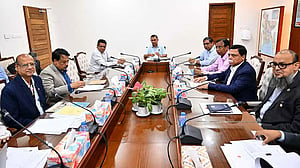
The call was made by Krishna Srinivasan, director of the IMF’s Asia and Pacific Department, during a meeting with Bangladesh Bank Governor Mostakur Rahman at the central bank headquarters on Tuesday.
IMF’s Resident Representative in Bangladesh Maxym Kryshko is scheduled to hold a follow-up meeting with central bank officials on Wednesday to discuss the specifics of the roadmap.
"They have asked for a report in the form of a roadmap, seeking a written concept of what will be done, when, and how," said Mohammad Shahriar Siddiqui, director of Bangladesh Bank.
Under former governor Ahsan H Mansur, the interim government had initiated the merger of five struggling private banks, launched investigations into long-standing money laundering allegations, and shifted to a fully market-based exchange rate.
A senior central bank official, speaking on condition of anonymity, noted that the IMF now wants to see if the elected government will maintain that trajectory, especially as defaulted loans have surged to 35 percent.
The meeting comes at a time when the government is grappling with new economic pressures.
Finance Minister Amir Khosru Mahmud Chowdhury recently said the government is seeking "additional funding" to mitigate the impact of the US-Israel attack on Iran, which threatens to drive up fuel import costs and deplete foreign exchange reserves.
The minister indicated that detailed negotiations regarding the terms and volume of this additional support would take place during the IMF's spring meetings in April.
Bangladesh has so far received $3.64 billion across five tranches of an expanded $5.5 billion loan package.
The sixth instalment and the remaining $1.86 billion were originally due last December but were delayed pending discussions with the elected government.
An IMF mission is expected to visit Dhaka in the second week of next month to evaluate the use of previously released funds and discuss the release of the sixth tranche.
If these talks are successful, Bangladesh could receive the next payout by June.
The IMF wants to see the government’s plans specifically for some key areas such as its plan to reduce the 35 percent default loan.
The IMF is also pushing the government to cancel tax exemptions. The organisation wants a monetary policy that helps businesses invest while keeping price hikes under control.
The IMF wants the central bank to be independent and its staff to be better trained.