Published : 12 Aug 2026, 07:51 AM
Updated : 08 Sep 2026, 09:32 AM


When global oil prices rose, some private power plants that normally imported their own furnace oil stopped bringing it in.
To keep electricity generation running, they turned instead to the Bangladesh Petroleum Corporation, or BPC, putting additional pressure on the state-owned supplier.
That experience now lies at the heart of BPC’s concerns as the government considers opening the import, storage, transport, distribution, and marketing of refined petroleum products to private companies.
BPC fears that private operators may readily import fuel when business is profitable, but scale back when international prices rise or dollars become scarce.
Demand for fuel, however, would not disappear. Bangladesh would still need petroleum products to run its transport system, agriculture, industries, and power plants.
And if private supply fell short, BPC argues, the government would ultimately be left to fill the gap.
The government says it has no plan to remove BPC and hand the entire fuel market to private companies. Its stated aim is to create a competitive market in which public and private suppliers operate side by side.
Power, Energy and Mineral Resources Minister Iqbal Hassan Mahmood Tuku told bdnews24.com that the government would continue importing fuel under the proposed system while private companies would also be allowed to do so.
The policy has yet to be finalised.
As the government moves towards framing rules for private imports, storage, transport, distribution and marketing of refined fuel, bdnews24.com asked BPC about the potential benefits and risks.
In a written response, the corporation acknowledged possible advantages but also identified several major concerns.
Allowing private companies to import and market refined fuel directly could, at first sight, diversify supply and reduce the government’s import bill and financing burden, BPC said.
But it could also create risks for energy security and push up fuel costs.
The Furnace Oil Experience
Private sector fuel imports are not entirely new to Bangladesh.
With no-objection certificates from BPC and the Energy Division, private power plants are already allowed to import furnace oil for their own use.
BPC says some of those companies have stopped importing when global fuel prices rose and instead sought supplies from the corporation.
In such circumstances, the government and BPC have had to supply subsidised furnace oil to keep electricity generation running.
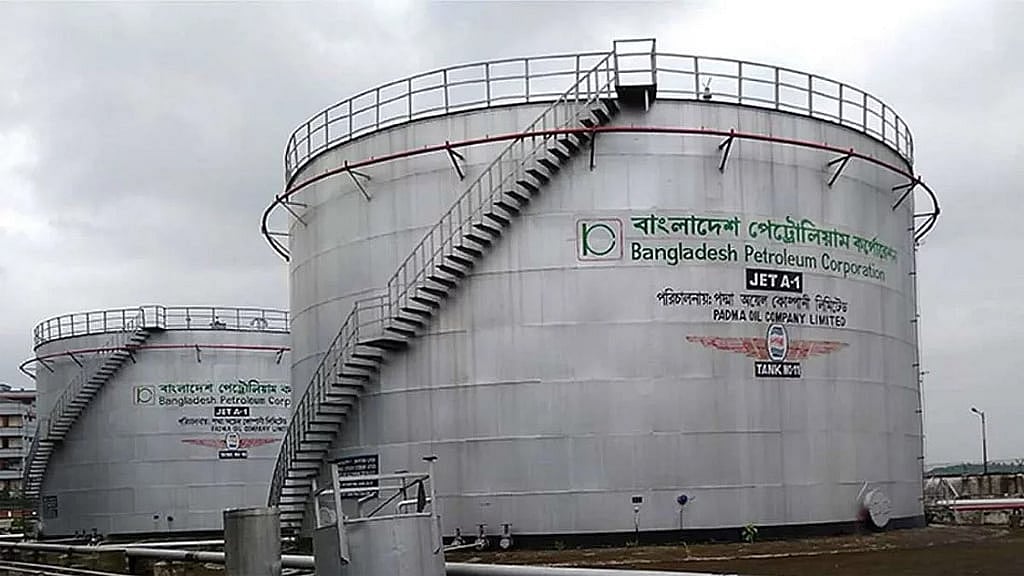
But the decision by a private power producer to import its own fuel or buy from BPC does not depend solely on international prices. Changes in commercial terms have also altered their behaviour.
In February 2025, the Bangladesh Power Development Board (PDB) cut the service charge for furnace oil imported directly by private power plants from 9.04 percent to 5 percent.
KM Rezaul Hasanat, then president of the Bangladesh Independent Power Producers’ Association (BIPPA) said at the time that with the lower rate, operators would prefer buying fuel from BPC rather than importing it themselves.
The Power Division also said BPC would supply the private plants if they stopped importing.
The estimated demand for furnace oil for private power plants was subsequently raised from 1,239,231 tonnes to 3,551,048 tonnes for the period from March to September 2025.
BPC was told to prepare to import as much as 500,000 tonnes a month.
But actual demand did not match the projection.
In March that year, PDB took only 70,000 tonnes of furnace oil from BPC.
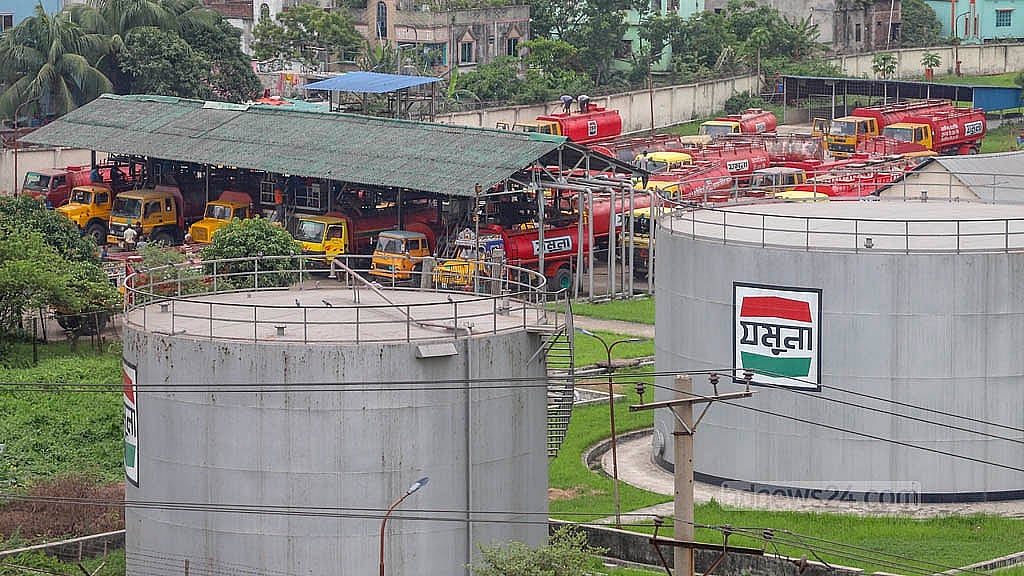
By mid-April, BPC’s storage facilities were close to full while more oil tankers were arriving. If the vessels could not unload on time, the corporation faced the prospect of demurrage charges for keeping ships waiting.
Officials involved with PDB said some private plants had initially indicated they would buy from BPC after the service charge was cut, but later resumed importing fuel themselves.
As a result, the power plants did not take anything close to the amount of fuel BPC had prepared to import for them.
The episode was not an example of private companies abandoning imports because global prices had risen.
But it did show how changes in commercial decisions by private operators could disrupt BPC’s national import and storage planning.
Some private power producers also questioned BPC’s furnace oil quality and purchasing terms.
They said importing fuel themselves allowed them to pay through letters of credit four or five months later, while purchases from BPC required immediate payment.
That experience raises a central question for the proposed policy. If private companies are allowed to import refined petroleum products, will they also be required to keep importing and supplying fuel when business conditions turn unfavourable?
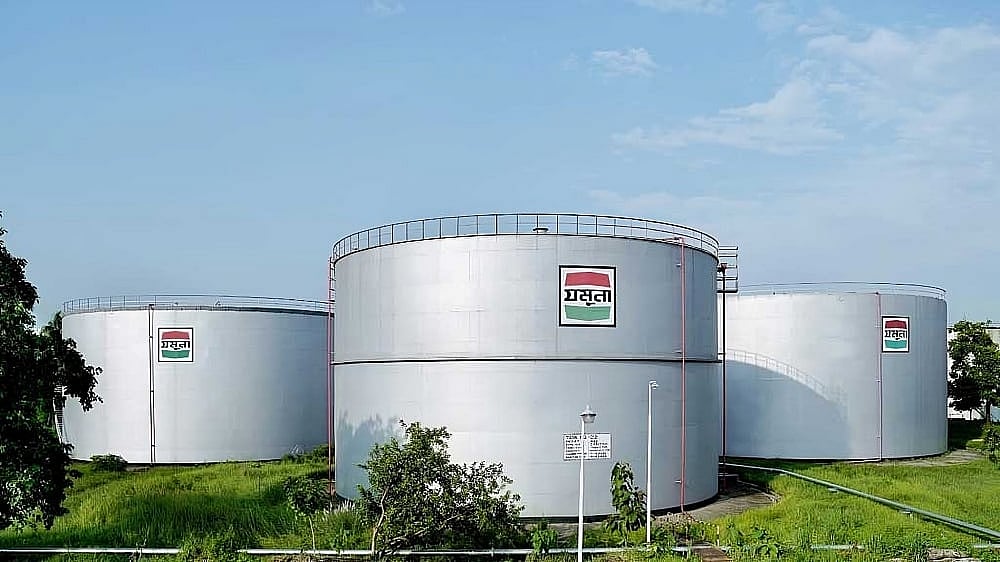
BPC sees dollar shortages as another risk alongside volatile international prices.
Bangladesh has faced that problem before.
During the foreign currency shortage in 2022, private furnace oil-based power plants struggled to import enough fuel. Some companies had difficulty repaying bank loans and opening new letters of credit because PDB had outstanding bills with them.
Fuel stocks at several plants fell because they could not import furnace oil according to their needs. BIPPA also reported dwindling stocks at the time.
BPC fears that similar commercial decisions by private importers during a future surge in global prices or a shortage of dollars could affect the wider national fuel supply.
Bangladesh’s experience, however, does not show that private imports are necessarily more expensive.
In October 2025, furnace oil imported directly by private power producers cost an average of about Tk 70 a litre.
At the same time, PDB was buying furnace oil from BPC at Tk 86 a litre.
Government To Stay in Market
Energy Minister Tuku rejects the suggestion that the government is planning to hand over the state-controlled fuel market to private companies.
He said the proposed system would allow private operators to import and sell petroleum products alongside state entities.
The government would not stop importing fuel itself.
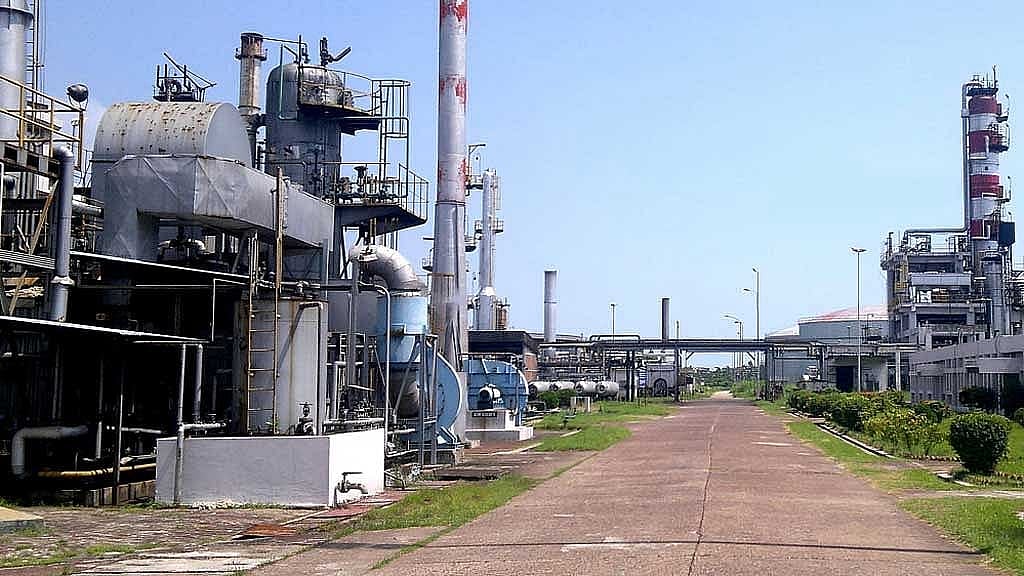
Tuku pointed to India, where state-owned Indian Oil operates alongside private company Reliance in the fuel business.
Asked about the furnace oil experience, the minister said the proposed system would not mean that the government would automatically supply fuel to private companies whenever they needed it.
How such situations would be handled would be set out in the policy, he said.
Asked whether the policy had been finalised, Tuku said: “It has not been finalised.”
When might it come into force? “Work is under way,” he replied.
Concerns Over Supply to Remote Areas
BPC’s concerns go beyond the possibility of private companies cutting imports when international prices rise.
The corporation also fears that businesses could concentrate on the most profitable markets.
Large quantities of fuel can be sold relatively cheaply in Dhaka, Chattogram and major industrial areas. Supplying remote and difficult-to-reach parts of the country costs more.
BPC believes private companies could reduce supplies to areas offering lower profit margins.
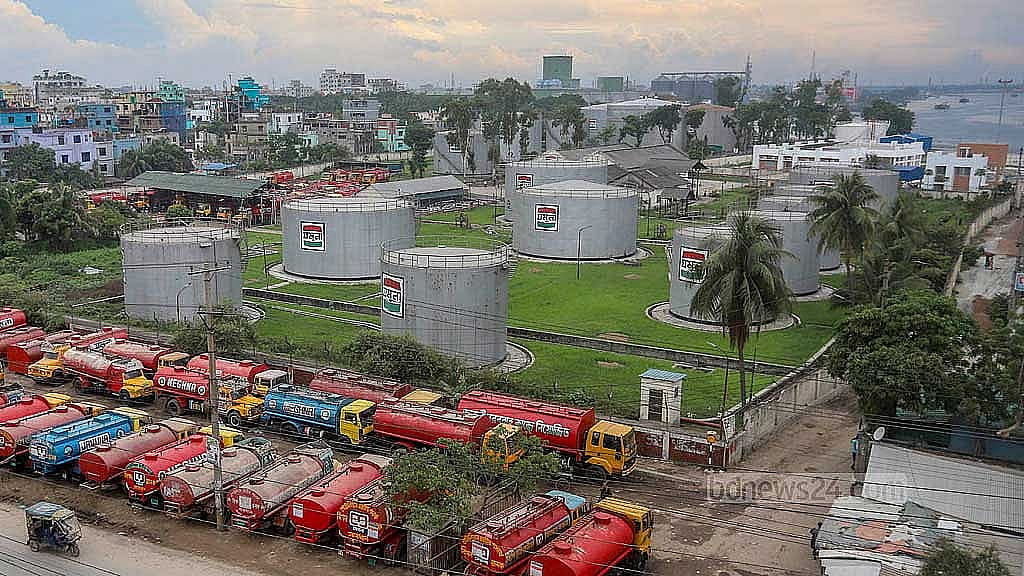
Under the current system, BPC and its subsidiary oil marketing companies are required to maintain fuel supplies across the country.
It is not yet clear whether private importers would face the same obligation.
BPC also sees potential risks involving control of supply and stocks.
If companies expected international prices to rise, the corporation fears they might hold back fuel in anticipation of higher profits.
A company in dispute with the government over policy could also reduce supplies and put pressure on the market, it says.
What If BPC’s Capacity Shrinks?
BPC is also worried about what would happen to its own capacity if private companies came to dominate a large share of the market.
The corporation plans imports according to Bangladesh’s annual fuel demand and maintains storage facilities, manpower and transport capacity on that basis.
If private companies captured a substantial share of the market, BPC’s business would decline.
That could eventually reduce the need for state-owned infrastructure and staff.
The danger, in BPC’s view, would emerge during a major international crisis.
If private operators then cut imports, responsibility for covering the shortage could once again fall on BPC.
But if its capacity had already been reduced, bringing in and distributing enough fuel at short notice could prove difficult.
BPC has also raised concerns over the potential impact on the businesses of its state-owned marketing companies Padma Oil, Meghna Petroleum and Jamuna Oil.
How Will Public Interest Be Protected?
M Shamsul Alam, energy advisor to the Consumers Association of Bangladesh (CAB) says an effective regulatory structure must be in place before private companies are allowed to import refined petroleum products.
If Bangladesh’s energy regulators are not strong enough, he says, private operators could cut supplies during a crisis in an effort to increase profits.
Alam sees BPC’s experience with furnace oil as an example of that risk.
He also warns of the possibility of an “oligopoly” if a handful of large companies come to control much of the market.
Such companies could exploit shortages or supply disruptions to increase profits, while weakening the government’s ability to control the market, the CAB advisor argues.
“Ensuring the supply of a strategic commodity such as fuel is the government’s responsibility,” he told bdnews24.com.
“So if there are weaknesses in the state system, handing a large share of the market to the private sector instead of strengthening that system is not the solution.”
He says the government must strengthen its ability to regulate the market, monitor prices, and guarantee compulsory supplies during crises before allowing private companies to enter.
Alam has also questioned the legal implications of the proposed policy.
He believes there should be a debate over whether such private-sector participation in the fuel market would conflict with the role envisaged for the state in production and distribution under the fundamental principles of Bangladesh’s Constitution.
Moshahida Sultana, a teacher at the Department of Economics at Dhaka University, says allowing private fuel imports could initially provide the benefit of more diverse sources of supply.
But risks could emerge later if a small number of large companies gained control of a substantial part of the market.
She points to Bangladesh’s experience with the sugar and LPG markets.
“If a few companies control a large part of the market, they may reach a position where they can raise prices together,” she told bdnews24.com.
Moshahida does not fully share the energy minister’s view that licensing several importers would necessarily create competition.
Simply issuing licences to multiple companies does not guarantee a competitive market, she argues. If most of the market ultimately falls into the hands of a few operators, the government’s ability to control prices could weaken.
Referring to BPC’s furnace oil experience, Moshahida said private companies would inevitably prioritise profit.
If profit margins fell, they could change their decisions about imports or supplies.
During a crisis, Moshahida said, the government could ultimately find itself responsible for ensuring that fuel remained available.
She also raised questions about the future of state-owned energy infrastructure.
She pointed to plans for a second unit at Eastern Refinery and said allowing large volumes of refined petroleum products to be imported directly by private companies could affect the market and financial prospects of expanded state refining capacity.
On the existing legal framework, Moshahida said the current system does not explicitly provide for private companies to import and market refined petroleum products directly — which is why the government is now seeking to frame a new policy.
“The fundamental responsibility of state-owned energy institutions is to protect the public interest and ensure energy security,” she said.
“If necessary, they can maintain supplies even at a loss. Allowing private companies to control a large part of the market without imposing the same responsibility on them could conflict with the public interest.”
Bashundhara Application Brings Issue to Fore
The debate over allowing private companies to import and market refined petroleum products directly resurfaced after an application from Bashundhara Group.
Bashundhara Oil and Gas Company Ltd sought government permission on May 24 to import diesel, octane, petrol and furnace oil directly and market them through its own network.
The company proposed importing between 1.5 million and 2 million tonnes of diesel a year.
It also sought permission to import 200,000 tonnes of octane, 150,000 tonnes of petrol and between 800,000 and 1 million tonnes of furnace oil.
At the maximum proposed volumes, Bashundhara was seeking permission to import and market 3.35 million tonnes of refined petroleum products a year.
According to BPC, Bangladesh’s annual petroleum demand is about 7.4 million tonnes.
In the 2024-25 financial year, BPC imported about 4.61 million tonnes of refined petroleum products.
Bashundhara’s maximum proposed volume would therefore be equivalent to about 45 percent of the country’s current annual fuel demand.
BPC formed an 11-strong committee on Jul 14 to examine the application.
The committee was asked to assess its legal aspects and proposed import volumes, as well as Bashundhara’s storage and distribution capacity.
It was also told to examine the potential impact on the market share, revenue and business of Padma Oil, Meghna Petroleum, and Jamuna Oil.
Energy security, diversification of supply and the prospects for maintaining a competitive market were also included in the review.
On Aug 6, the Energy and Mineral Resources Division instructed BPC to prepare a draft “Policy for Private-Sector Import, Storage, Transportation, Distribution and Marketing of Refined Fuel Oil 2026”.
BPC was told to submit it to the Energy Division by Aug 10.
But a senior BPC official told bdnews24.com on Monday that he had not heard of work beginning on the policy.
To his knowledge, no draft had yet been prepared.