Home
+
Published : 29 Jun 2026, 01:49 AM
Shrines and Sovereignty: Battle for Shahjalal’s Bounty
Tradition sealed: Sylhet officials lock the iconic donation cauldrons, sparking fury over the erasure of ancient spiritual customs
Hereditary rights: Custodians slam the state's sudden financial takeover as a lawless assault on centuries of ancestral lineage
Legal fault line: A landmark 2014 High Court ruling protects custodial rights, making direct government control legally fraught
Shrine in limbo: With funds frozen in a state account, daily upkeep relies on charity and wage workers go completely unpaid. (112 chars)
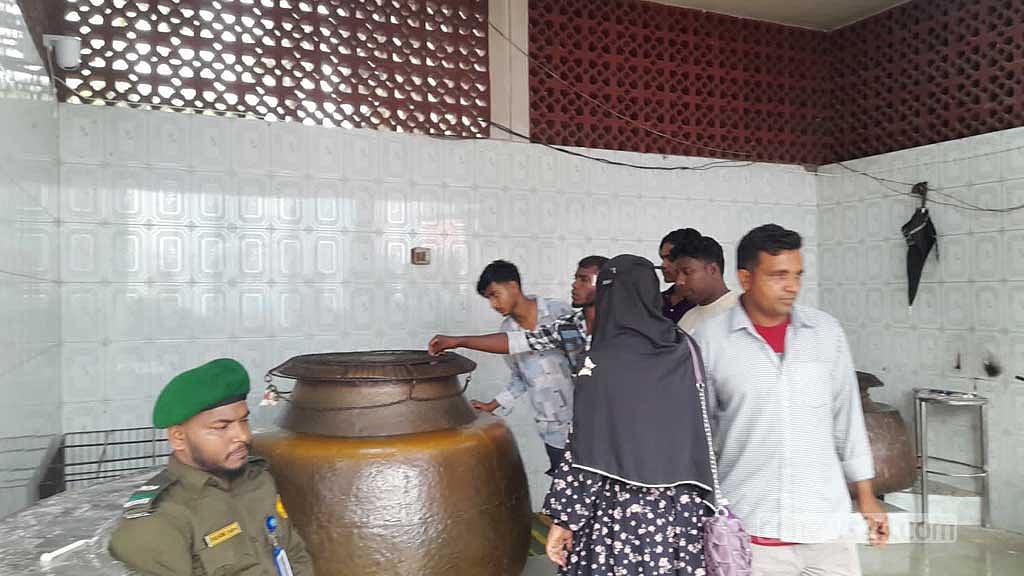
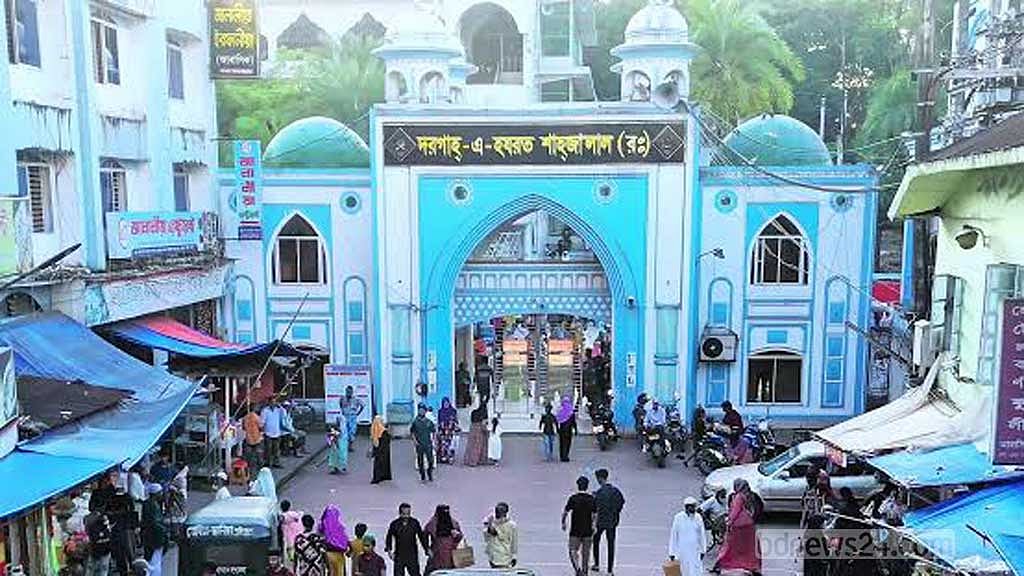
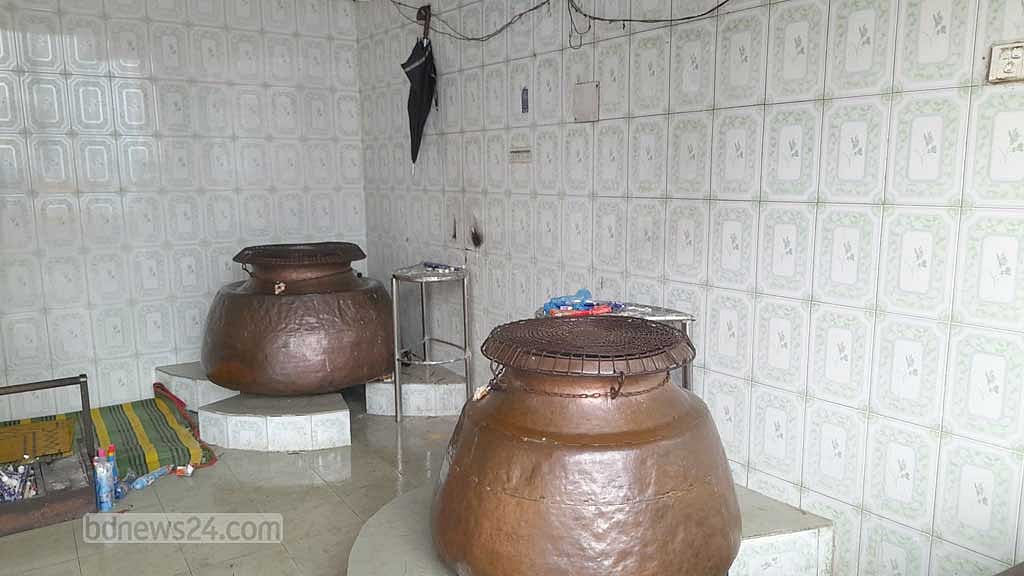
For generations, devotees visiting the shrine of Hazrat Shahjalal (R) in Sylhet have dropped their offerings into giant metal cauldrons known as deg -- a ritual as enduring as the shrine itself.
Now those cauldrons have been sealed, thrusting one of Bangladesh's most revered shrines into a dispute over who controls its donations.
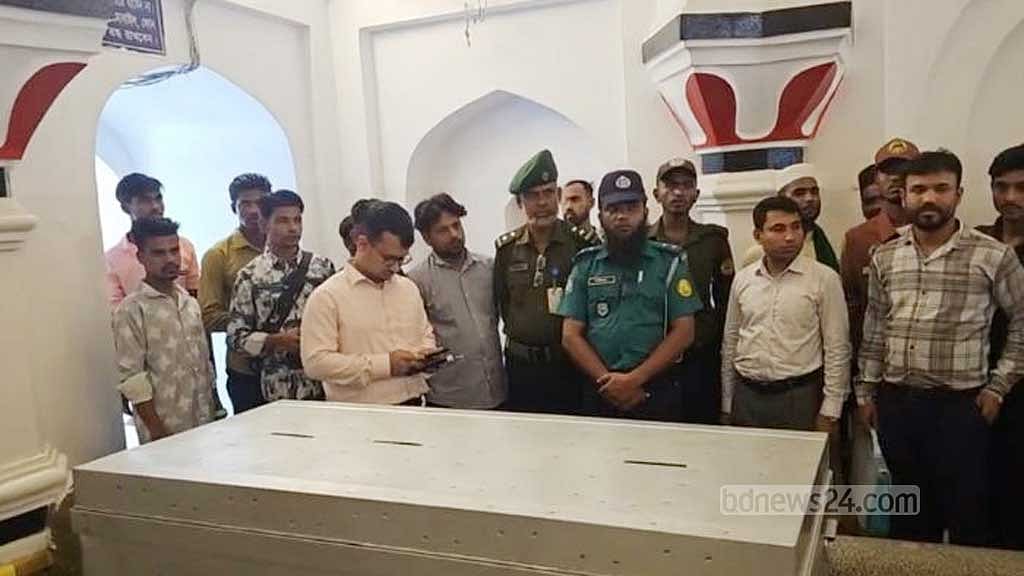
The Sylhet district administration has sealed the traditional deg, installed official donation boxes and opened a dedicated bank account, saying the move will improve transparency and accountability in managing funds at the waqf property.
Shrine authorities insist they were neither consulted nor informed. They argue the decision breaks with centuries of tradition, undermines hereditary rights and conflicts with a landmark High Court ruling delivered in 2014.
Officials have formed a committee to oversee the funds and say they intend to coordinate with shrine authorities. But the controversy has revived a longstanding question: who has the legal right to receive, manage and spend devotees' offerings?
The Ruling at the Centre
The debate has brought renewed attention to the 2014 High Court judgment in Mufti Abdus Salam and Others vs Administrator of Waqfs and Others, which examined whether the hereditary baridari rights of the shrine's Khadems could be curtailed through administrative orders.
Rather than treating the shrine's Waqf status and the custodians' hereditary rights as incompatible, the court held that the two could coexist.
Baridari -- derived from the Persian words bari (turn) and dar (holder) -- refers to the rotational system under which members of hereditary custodian families take responsibility for the shrine.
Khadem Mufti Raihan Uddin Munna said the custodians first learned about the government's new arrangements through media reports.
"We heard a bank account had been opened in the shrine's name, but none of us was involved or even informed," he said.
Jaman Chowdhury, chairman of devotees' organisation Aashiqeen-e Awlia Bangladesh, voiced similar concerns, saying shrine representatives had not been included in the process and had no clarity over how the money would be spent.
Additional Deputy Commissioner (General) Saeeda Parveen said the Sonali Bank account is jointly operated by the district administration and a Waqf official. Shrine authorities can apply in writing to withdraw funds when needed or seek reimbursement for expenses already incurred.
She said the account currently holds Tk 2.27 million, including Tk 500,000 deposited by the district administration alongside donations collected from the new boxes.
The Legal Fault Line
The dispute dates back to Dec 18, 1968, when the Waqf administration issued an order regulating Nazar, Niyaz and donations at the shrine.
The hereditary Khadems argued the order infringed their centuries-old baridari rights, claiming their families had long served the shrine, cared for pilgrims and received offerings as part of hereditary duties recognised by custom and earlier court rulings.
After losing in the lower courts, they appealed to the High Court, which delivered what lawyers still regard as the defining judgment on the issue in 2014.
Barrister Riashad Azim Adnan, who specialises in Waqf litigation, said the ruling remains the most important legal document governing the shrine.
"Any attempt to resolve the current dispute while ignoring that judgment will simply not work," he said.
He warned that disregarding court-recognised hereditary rights would deepen divisions rather than resolve them.
"We Sylhetis may or may not visit the shrine or make donations, but it remains part of our history, heritage and identity. That is why this dispute goes far beyond a donation box."
What the Law Says
Barrister Adnan, who specialises in Waqf litigation, said the Shahjalal shrine dispute has reached the courts several times since the 1860s, but the defining legal authority remains the High Court's May 27, 2014.
"The 2014 ruling is the single most important legal document for understanding the dispute," he said. "Any attempt to resolve it while ignoring that judgment will not work."
The court drew a distinction between different types of donations.
It recognised that the Khadems are not ordinary employees but descendants of the shrine's original custodians, whose hereditary baridari rights have developed through centuries of service. It also recognised their customary right to receive Nazar and Niyaz offered personally to them.
But the ruling stopped short of saying every donation belongs to the custodians.
According to Adnan, offerings made directly to khadems in recognition of their religious services may fall under hereditary rights, while donations intended for maintaining the shrine, mosque, madrasa and other institutional purposes belong to the shrine itself.
"Not all donations are the same," he said. "The key question is who the money was intended for."
He said the judgment also limits the Waqf administration's powers, ruling it cannot issue orders that undermine the custodians' recognised hereditary rights or replace the shrine's traditional management with direct state control.
"If sealing the traditional donation cauldrons and altering the long-established management system interfere with those rights, serious legal questions arise," he said.
"Transparency is important, but it must be pursued within the framework of the law and with all stakeholders involved."
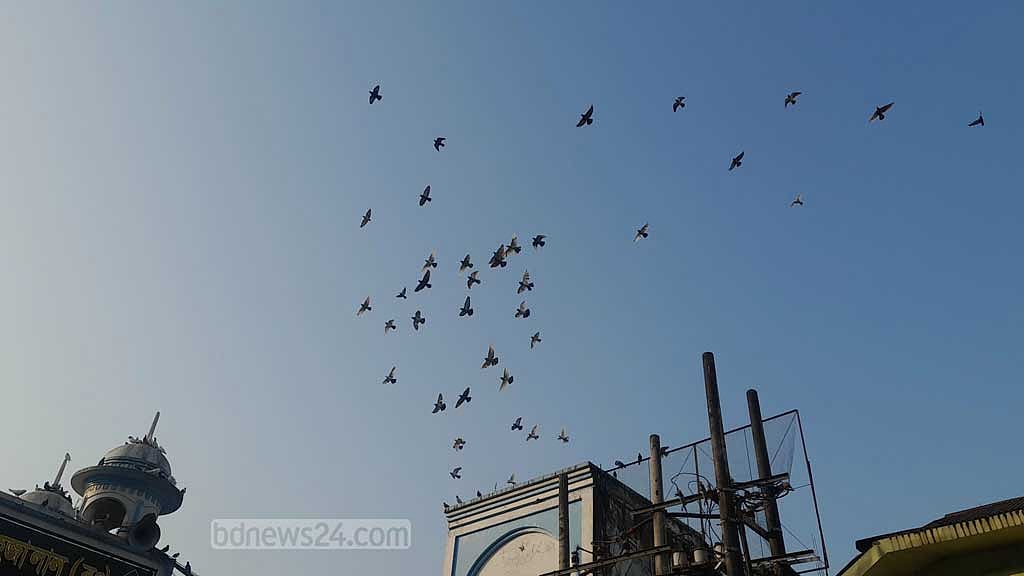
How donations have traditionally been used
Public interest in the shrine's finances has intensified after authorities counted more than Tk 1.75 million from newly installed donation boxes in just four days.
Khadem Mufti Raihan Uddin Munna said the current system traces its origins to Shahjalal's lifetime.
According to shrine tradition, Shahjalal arranged for part of the shrine's income to support the household of his nephew. That practice, he said, continues today through about 300 descendant families from the Sarwakum, Mufti and Syed lineages.
Under the traditional baridari system, one member takes charge of the shrine each day, overseeing maintenance, staff salaries and the langarkhana, or community kitchen. Any remaining money is treated as an honorarium for carrying out those responsibilities, while charitable donations are distributed among eligible recipients.
"We have never asked people to donate," Munna said. "People come here and give out of devotion."
Jaman Chowdhury, chairman of Aashiqeen-e Awlia Bangladesh, said daily collections fluctuate from Tk 20,000-25,000 on quieter days to Tk 100,000-150,000 when visitor numbers peak.
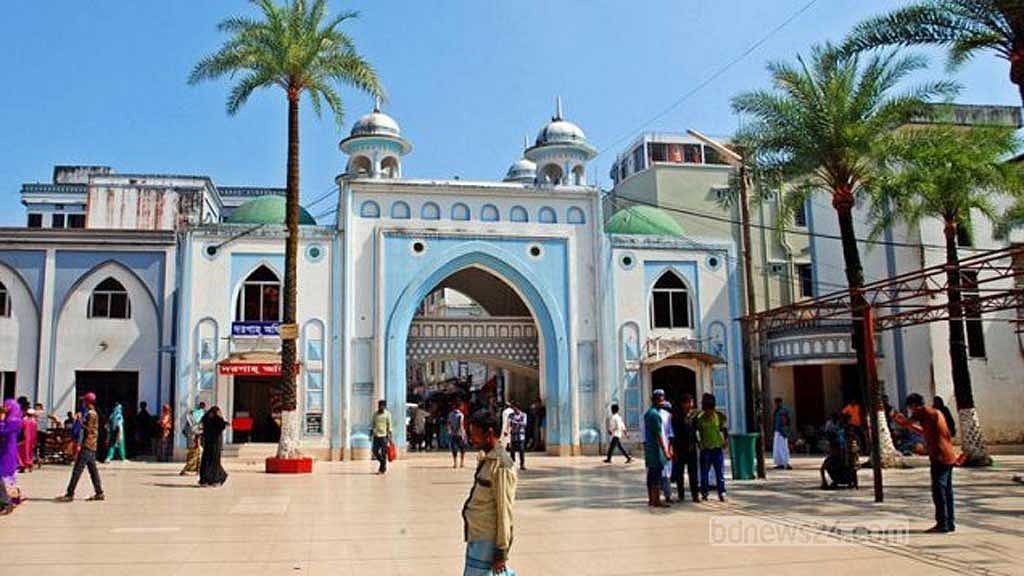
A Shrine Operating under Uncertainty
Despite the dispute, daily religious activities continue largely unchanged.
Khadems say the designated custodial family still performs its traditional duties, but they are no longer allowed to collect donations themselves. Routine expenses are instead being met through personal contributions.
Jaman said the shrine's drinking water pump recently remained out of service for two days until a donor paid for repairs.
"Many people are volunteering, but daily wage workers are no longer being paid," he said. "We don't know how long this can continue."
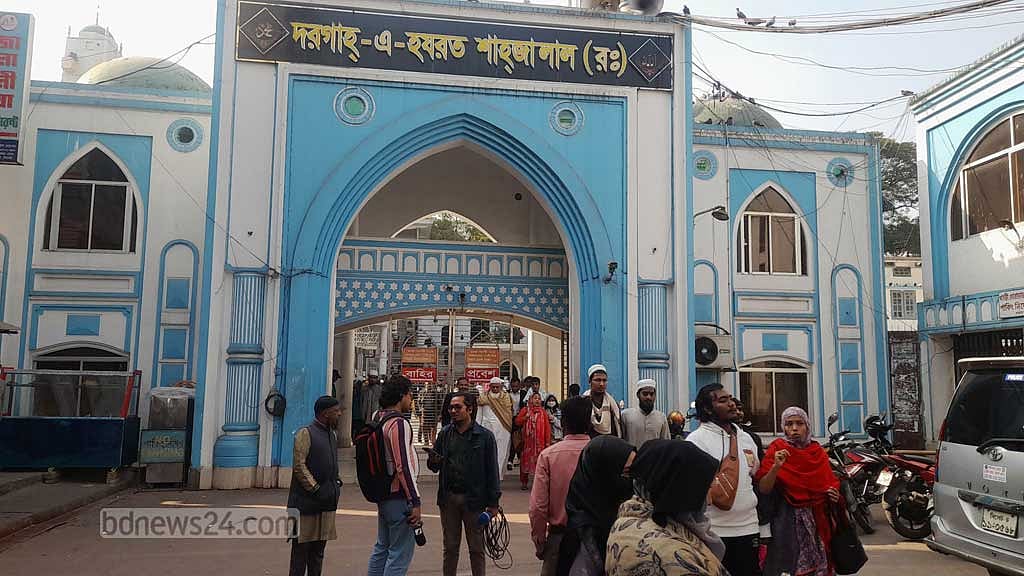
Heritage or Reform?
Civic activist Abdul Karim Chowdhury Kim believes much of the debate ignores the shrine's history.
Long before hotels existed in Sylhet, he said, pilgrims relied on the custodial families for food and accommodation, often bringing fruit, vegetables and livestock rather than cash as offerings.
The practice of donating money through the shrine's deg, he said, dates back two or three centuries.
"People discussing the deg on social media should first understand its history," he said.
Kim argued the administration's intervention has widened divisions between shrine devotees and followers of the Qawmi tradition.
"What we are seeing is no longer just a dispute over donations," he said. "It has become a debate over history, identity and how centuries-old traditions should coexist with demands for greater transparency."
As officials push for tighter oversight and custodians invoke a High Court ruling protecting hereditary rights, the future of one of Bangladesh's most revered shrines may hinge on whether those competing claims can be reconciled.