Published : 06 Sep 2025, 05:46 AM
Updated : 21 Aug 2026, 01:45 PM


For over a decade, lifeguards in red and yellow uniforms have patrolled the popular Cox’s Bazar beach, rescuing hundreds of tourists swept away by powerful currents. But the service may be halted this month as funding dries up, sparking fears of more drownings on the world’s longest sea beach.
The “Sea Safe Lifeguard” project began in 2012 and was later funded by the UK’s Royal National Lifeboat Institution (RNLI).
Since then, 27 trained guards have worked in shifts across the 120km beach. Over the past 10 years, they have saved 807 lives and recorded 65 deaths. In the last year alone, 11 people drowned and 78 were rescued.
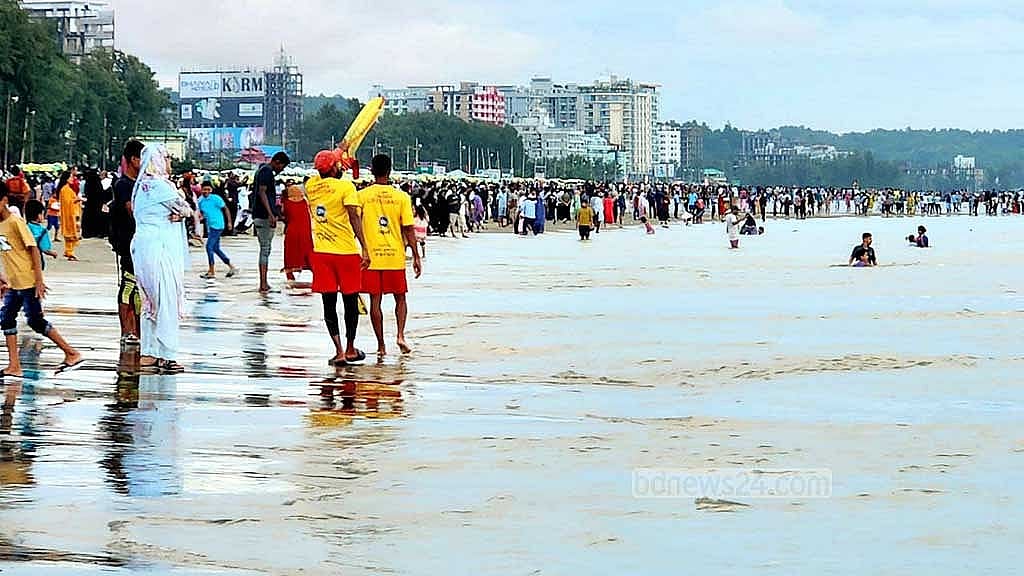
Project field manager Imtiaz Ahmed said the programme officially expired in December 2023, but was extended twice by the district administration — first to June, then to September.
“Our budget only covers operations until the end of this month. Without funds, the service will stop,” he said. Annual costs are Tk 16 million, with staff paid between Tk 20,000 and Tk 40,000 a month.
For the lifeguards, the job is both livelihood and vocation.
“Most of us have families of five to seven members and no other income source,” said senior guard Md Osman. “If this ends, our families will face a crisis too.”
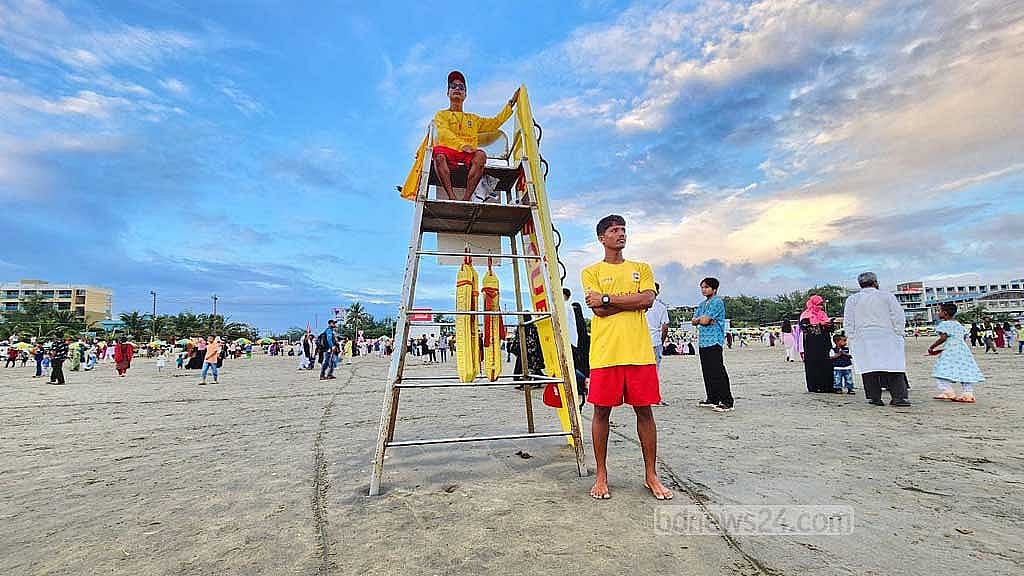
Another, Abraham Tripura, who joined from the hill region of Lama, said: “No one knows how much risk we take to save lives. If our work stops, there will be no one left to stop the deaths.”
Tourists also voiced alarm. “We go into the water only because we know lifeguards are there,” said visitor Injamamul Haque from Noakhali.
“If they are gone, we cannot risk it with our families.”
Authorities acknowledge the danger. Tourist police chief (ADIG) Apel Mahmud said, “This service is vital for tourist safety and must not be stopped.”
District officials say they are lobbying Dhaka to secure government support.

But critics question why such a crucial public safety service depends on donor projects at all.
Cox’s Bazar lawyer Abdul Mannan said, “It is unacceptable that an essential service runs on NGO funds and faces closure every few years. The government and the Parjatan Corporation must take permanent responsibility.”
Until then, lifeguards remain on duty, watching every wave, unsure if this month will be their last.