Published : 06 Oct 2025, 08:47 AM
Updated : 21 Aug 2026, 01:53 PM


Bangladesh officially lists 1,415 rivers in government records, yet a recent study paints a bleak picture: at least 81 of them are already dead or dying.
Despite frequent discussions about protecting rivers, which are vital for livelihoods, transport, agriculture, ecological balance, there has been little in the way of effective government action to save them.
Bangladesh, celebrated as a riverine country, is criss-crossed by three major river systems: the Ganges-Padma, Brahmaputra-Jamuna, and Meghna.
These mighty waterways meander across the country, feeding over 405 other rivers and streams before emptying into the Bay of Bengal, shaping the nation’s deltaic landscape.
Each of the three major rivers has numerous tributaries and distributaries.
In April this year, the Ministry of Water Resources, the Ministry of Shipping, the Water Development Board, and the National River Conservation Commission jointly compiled an inventory of rivers with help from the district administrations, divisional commissioners, and local river activists.
That list confirmed 1,415 active rivers, with the note that new ones could be added if discovered.
However, there is no updated government data showing how many of these rivers are dead or nearly dead.
In contrast, a report published by the River and Delta Research Centre (RDRC) in April this year found that at least 81 rivers have completely dried up or are facing an extreme crisis threatening their very survival.
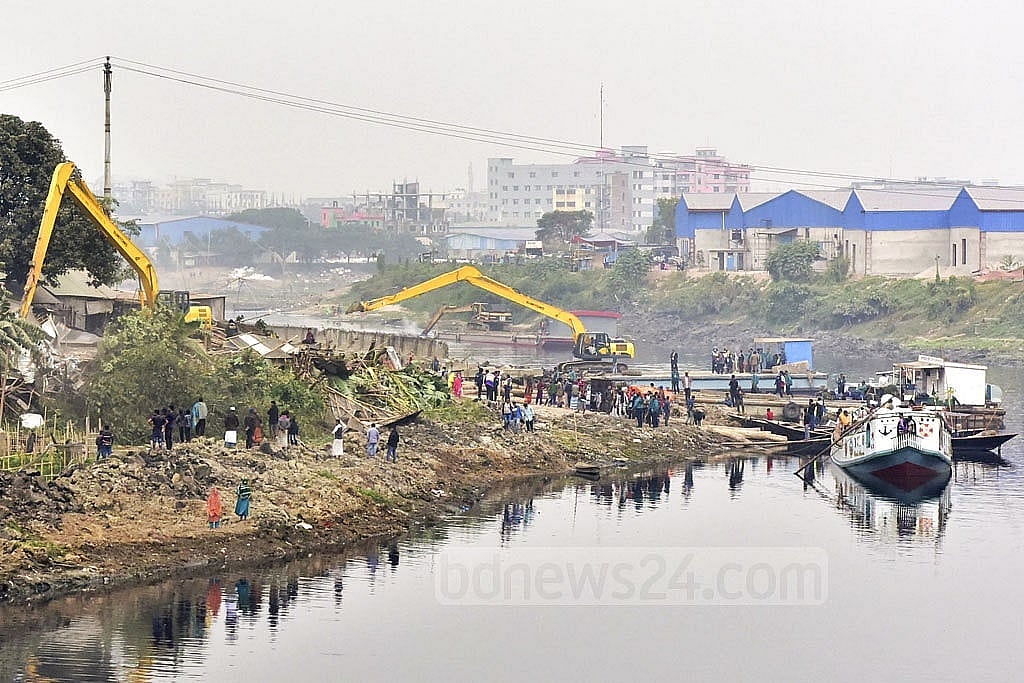
Drawing on government data, research papers and media reports between January 2023 and December 2024, the study titled “Dried-up Rivers of Bangladesh” warned that the rivers face an “ecological emergency”, endangering millions of lives, livelihoods, and biodiversity.
According to the RDRC report, Bangladesh’s rivers are under “severe ecological stress”, jeopardising not only the environment but also the livelihoods, agriculture, and biodiversity of vast river-dependent regions.
DEAD AND DYING RIVERS
According to the RDRC, rivers in Khulna, Satkhira, Rajshahi and Kushtia are the worst hit -- plagued by pollution, sedimentation, unplanned urbanisation, and disrupted floodplain connectivity.
Its findings show that the highest number of dead or critically endangered rivers are in the Khulna Division with 25, followed by Rajshahi with 20, Rangpur 15, Chattogram six, Mymensingh five, Dhaka four, and Barishal and Sylhet with three each.
Researchers cite rampant pollution, excessive sedimentation (silt, mud, pebbles, and sand accumulation), rapid urbanisation, and the loss of natural basin connectivity as the main drivers behind the decline of river flow and the drying-up process.
Although authorities occasionally conduct eviction drives to remove illegal encroachment from riverbanks, no sustained or effective action has been taken to restore dying rivers to life.
Among the dead and endangered rivers are: Alai, Atrai, Begboti, Bangali, Baral, Betna, Bhairab, Bhodrabati, Bhola, Bhuli, Bilas, Burikhora, Chandana, Chandrabati, Chiknai, Chitra, Chuna, Dhalai, Dhaleshwari, Dharla, Dhepa, Dudhkumar, Fotki, Galghesia, Gangina, Ghaghat, Gomti, Goneshwari, Gorai, Gumani, Hanu, Harihar, Hisna, Hoja, Hurasagar, Ichhamoti, Jamuna, Kahua, Kakshiali, Kaliganga, Kalapani, Karatoya, Katakhali, Khakdon, Kholpetua, Kohelia, Kapotaksha, Kulik, Kumar, Kushiyara, Mahananda, Manas, Mathabhanga, Mohishaban, Morichchap, Mayur, Muhuri, Muradia, Nabaganga, Nagar, Narad, Narsunda, Padma, Pagla, Punorbhaba, Sandhya, Shitalakhya, Shibsa, Shoilmari, Shuk, Someshwari, Sonai, Sukhdaha, Surma, Tangon, Teesta, Titas, Tulsiganga, and Lenga.
Many of these rivers have been silent witnesses to the country’s social struggles, cultural transformations, and political upheavals -- from the British colonial era to present-day Bangladesh.
WHY ARE RIVER ROUTES SO VITAL?
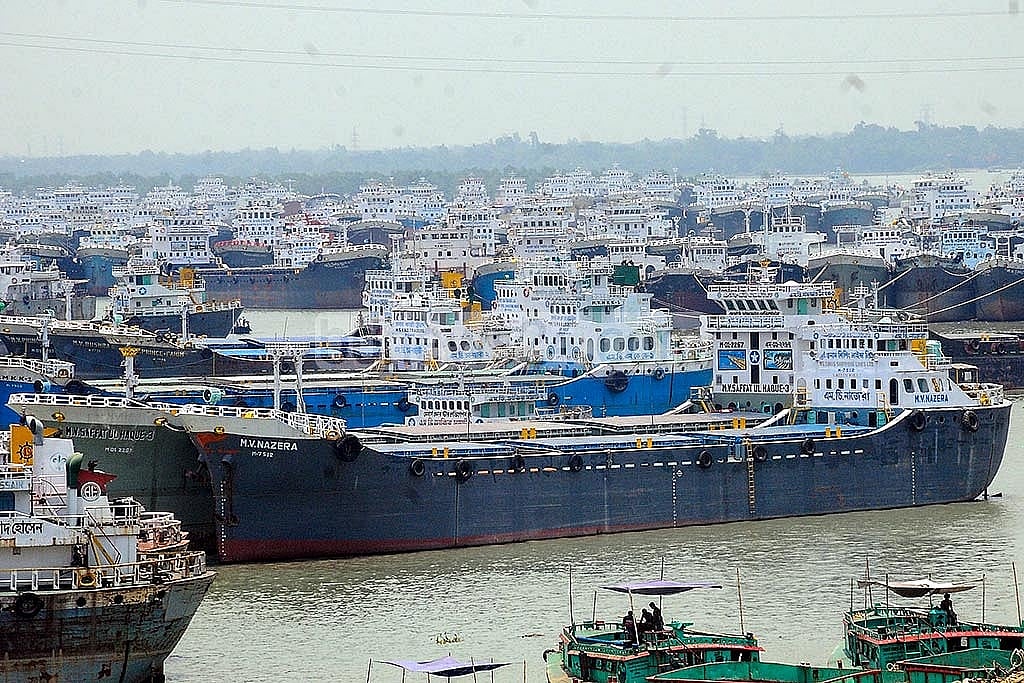
In its latest study, the RDRC notes that Bangladesh’s inland waterways form the backbone of the country’s trade, goods transport, and passenger networks.
The country is home to one of the world’s longest natural river systems, stretching over 24,000 kilometres of rivers, canals and water bodies.
During the monsoon, around 6,000 kilometres of these waterways remain navigable, but in the dry season, this shrinks drastically to about 3,800 kilometres.
According to the RDRC, river transport is far more cost-efficient than road or rail. The boats used in river freight consume much less fuel than vehicles on roads or trains on rails.
The study estimates that the average cost of moving one tonne of goods per kilometre is Tk 2.81 to Tk 3.51 by road, Tk 1.96 by rail, but only Tk 1.12 by river, with minor variations depending on season and cargo.
Each barge can carry the equivalent of several dozen trucks, sharply cutting unit transport costs.
River routes also avoid the chronic traffic congestion of highways, meaning goods arrive more reliably and on time. Moreover, water transport is considerably more eco-friendly than road or air transport.
For the country’s southern and north-eastern regions, many of which are remote or difficult to access, riverways remain the only practical means of transport. They are therefore essential not only for the movement of crops, coal, construction materials, and industrial goods, but also for sustaining fishing, agriculture, and local trade.
WHY THE RIVERS ARE DYING?
The RDRC identifies a series of interlinked causes behind the drying and deterioration of rivers across Bangladesh:
● Upstream barrages, dams, and other structures have sharply reduced natural water flow, leaving downstream rivers starved of water and accelerating their drying.
● Lack of regular dredging has led to excessive sedimentation, reducing depth and navigability. This makes flooding worse during the monsoon and leaves rivers parched during the dry season.
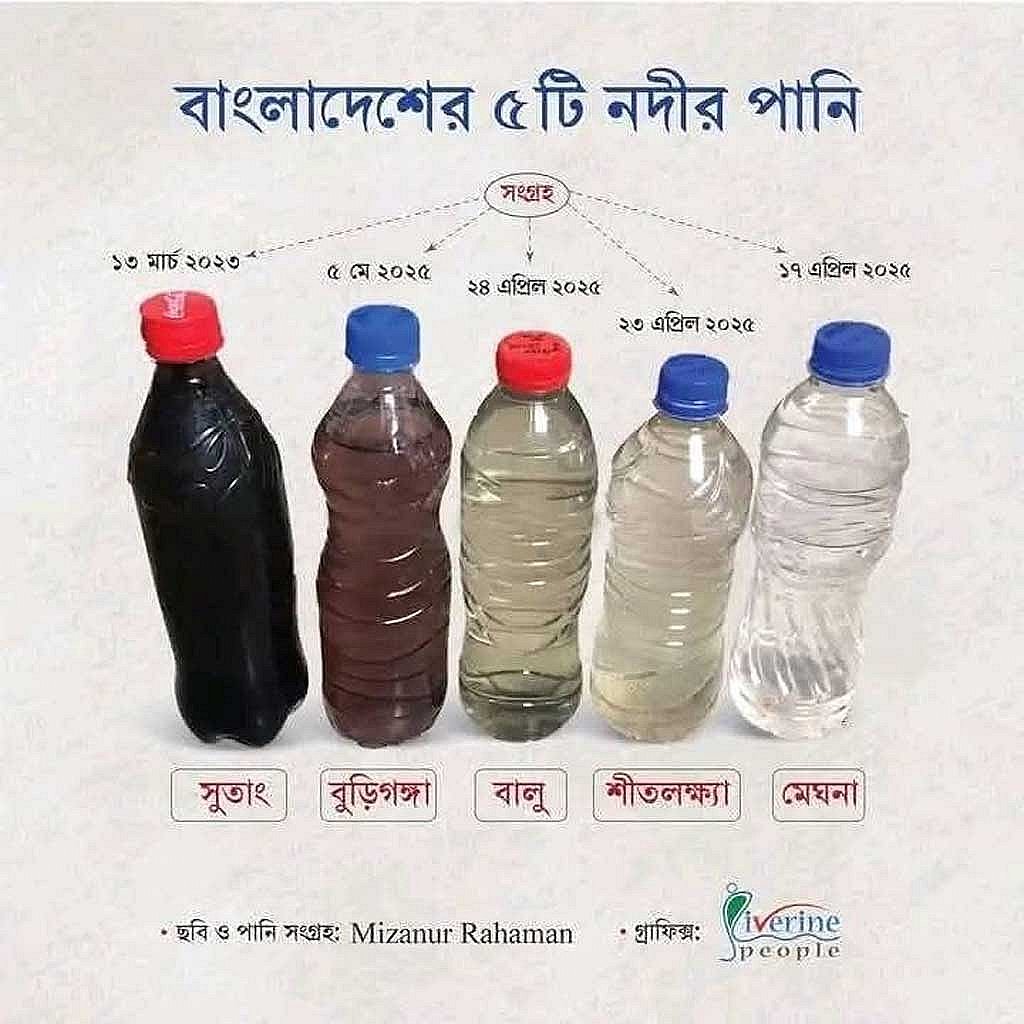
● Industrial waste, household sewage, and agricultural runoff, including chemical fertilisers and pesticides, are contaminating the rivers at an alarming rate. The release of toxic chemicals and untreated effluents has degraded aquatic ecosystems and destroyed biodiversity.
● Unplanned urbanisation and agricultural expansion have intensified riverbank encroachment. These activities have constricted natural flows and disrupted channels, becoming one of the major reasons rivers are drying up.
THREE WAYS THE RIVERS HAVE DIED
When the RDRC carried out its study, its chair was Mohammad Ejaz, now administrator of Dhaka North City Corporation. He told bdnews24.com: “To maintain a regular flow, these rivers need dredging which simply isn’t happening. In the Barind region, the Farakka Barrage has dried up many rivers. And then there’s encroachment.”
According to interim government’s Environment, Forest and Climate Change Advisor Syeda Rizwana Hasan, rivers in Bangladesh are dying for three main reasons: upstream dams on transboundary rivers, harmful infrastructure, and pollution from encroachment.
“When the flow declines, people encroach on the riverbanks to the point that rivers dry up or disappear altogether,” she said.
“Influential people are behind much of it. Then there’s pollution. A massive volume of industrial waste is being dumped. If you take 100 factories, except maybe 10 percent, all others discharge untreated liquid waste directly into rivers or canals. The result: they become biologically dead. No life can survive there.”
She added, “In many places, bridges are built over rivers only 10 feet wide, and the bridge takes up half of that. The riverbed gets filled in, and the flow is reduced. That’s how our rivers are dying.”
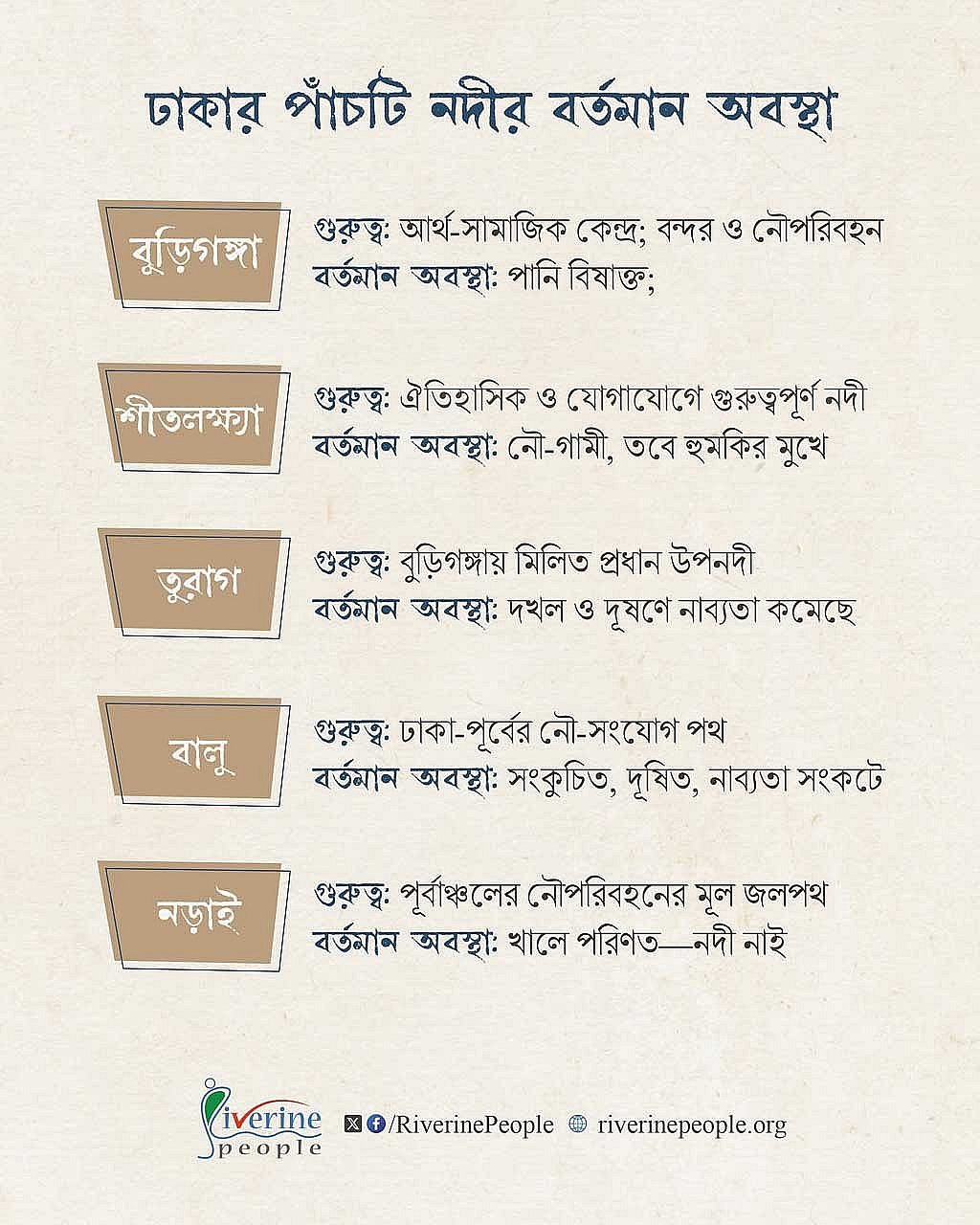
Water resources and climate change expert Prof Ainun Nishat explained that rivers die in three ways -- physically, biologically, and chemically.
“Physically, a river dies when you block it or narrow its banks over time. Many rivers in the north now flow only in the monsoon. In winter, they’re bone dry because their catchments are dead. Then comes the chemical death through pollution. When a river loses its flow, its life force, and becomes chemically degraded, it’s effectively dead.”
He cited the Buriganga as an example, saying: “That river’s life is over.”
WHAT CAN BE DONE
Asked what the government is doing to save rivers, Rizwana said: “Under the 2013 Water Act, not a single meaningful step has been implemented. What’s needed is a comprehensive, coordinated plan involving all relevant ministries -- agriculture, fisheries, environment -- with the environment at the centre.”
She noted that the government has begun limited work on 20 rivers, including three of the most polluted -- Lobonnodoh, Haridhoa, and Sutang, which have received approval for dredging under the Climate Change Trust Fund.
Nine other projects are pending with the Planning Commission, while detailed work is under way for four rivers around Dhaka, with talks ongoing with the World Bank and ADB for assistance.
“We’re trying to act on several fronts: improving coordination, increasing investment, and beginning restoration projects,” she said.
“We need a comprehensive eco-restoration plan. We’ve identified harmful hydraulic regulators that reduce flow and have started opening them. This government may not have time to finish everything, but it will start the process, making key policy and legal changes.”
Acknowledging time constraints, she said: “We’re an interim government, a one-and-a-half-year administration. We can’t do everything, but we can change the development paradigm of river management.”
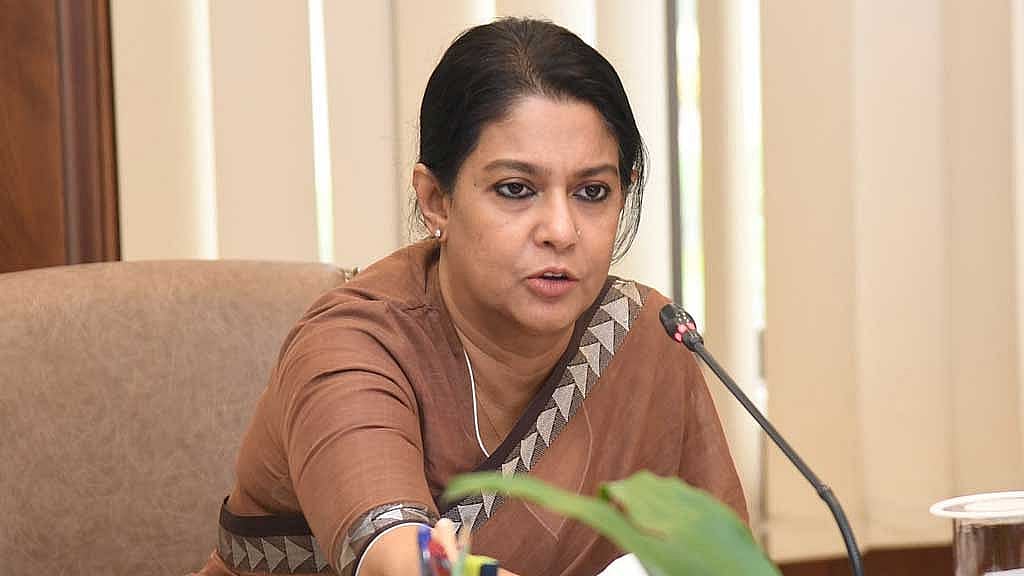
Mohammad Ejaz agreed, stressing that inland waterways must be developed with long-term planning.
“We need systematic, phased work to clear sediment and maintain flows. The sediment load in our rivers is enormous, it must be studied and managed regularly.”
Prof Tuhin Wadud, river researcher and director of Riverine People, a civil society movement to restore and conserve rivers, said at least half of Bangladesh’s rivers are in critical condition.
“The official list is incomplete. There are many more rivers beyond it. We need a dedicated agency to manage rivers, with magistracy powers and offices at district and divisional levels.”
He insisted, “Encroachments can be reversed if the government acts decisively. All rivers can be freed, pollution reduced, and flows restored -- if not fully, then substantially.”
But Prof Nishat is less optimistic about revival.
“People have built fixed structures across riverbeds, cutting off flows. Those obstructions must be demolished,” he explained.
“Water must be allowed to flow freely again. Physical shape must be restored, catchments protected, and blocked links reopened.”
He warned, “Bangladesh’s population keeps rising. To make space, people are clearing forests, filling wetlands, floodplains, and riverbeds. Unless this habit changes, it will be impossible to revive these rivers.”
Fatema Rokhsana, chief scientific officer at the River Research Institute, agreed with the overall diagnosis.
“The three reasons cited are accurate. Many rivers are in crisis, but with effort, we can reduce the damage,” she said.
“Around 90 percent of water in our transboundary rivers comes from outside our borders, so we have limited control. During the dry season, feeder channels dry up, and pollution makes matters worse.”
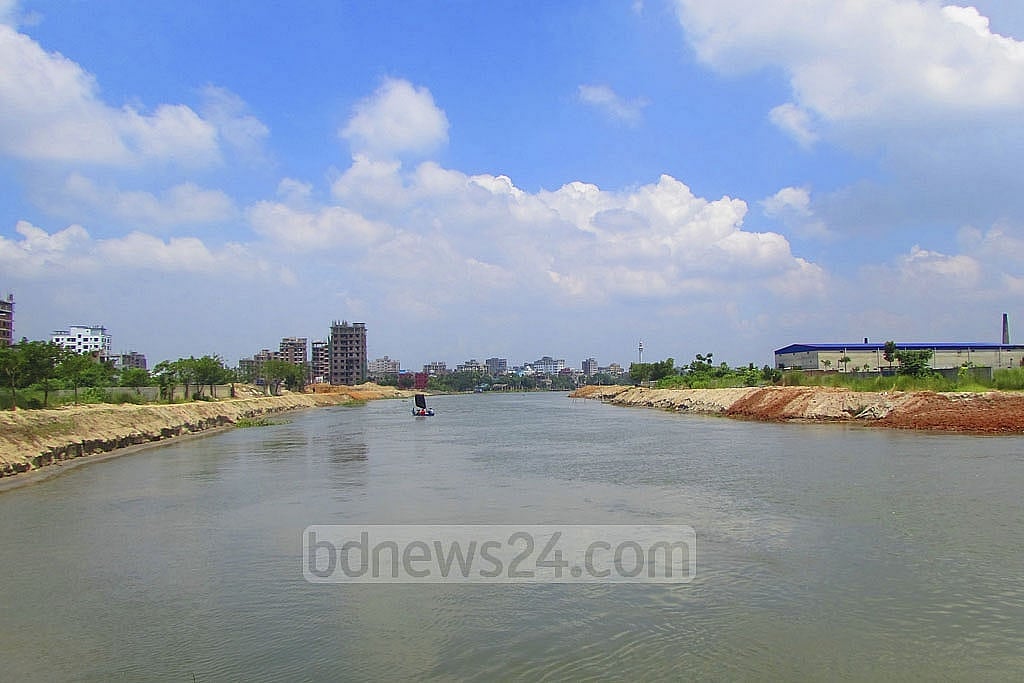
She added, “Unregulated infrastructure and waste are severely harming river ecosystems. With greater awareness from the government and enforcement agencies, this can be contained. We have a project to address endangered rivers, it’s still in the early stage.”
National River Conservation Commission’s (NRCC) newly appointed Chairman Maksumul Hakim Chowdhury told bdnews24.com, “I’ve just taken charge. There’s a long list of mandates. We’re identifying issues, and some work has already started. I’m reviewing everything and will move forward soon.”
RDRC’S RECOMMENDATIONS
To revive dying rivers, the RDRC proposed several key measures:
● Launch large-scale dredging of major rivers to remove excess silt, restore natural flow, and ensure long-term navigability with regular maintenance.
● Enforce strict waste-management rules for industries to prevent toxic discharge. Mandate treatment plants and promote eco-friendly operations.
● Engage local communities and stakeholders in river conservation for sustainable results.
● Strengthen transboundary water agreements with upstream nations to ensure fair water sharing and cooperative river-basin management. Build transparent and equitable long-term frameworks for shared rivers.