Published : 24 Mar 2026, 08:56 PM
Updated : 21 Aug 2026, 03:30 PM


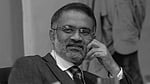
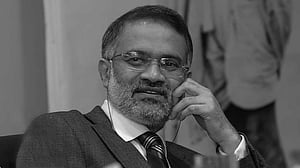
Masud Uddin Chowdhury, a retired three-star Army general who rose to prominence during the 2007–08 caretaker government, has been detained by police detectives in a late-night raid on his home in Dhaka.
“Yes, we have arrested him,” said Deputy Inspector General Shafiqul Islam, who heads the Dhaka Metropolitan Police’s Detective Branch (DB).
“There are at least five cases against him,” he told bdnews24.com early on Tuesday.
The top detective, however, could not provide details of the charges against the former general.
Police said Masud was detained from a house in the Baridhara DOHS area.
Masud served as general officer commanding (GOC) of the Army’s 9th Division in 2007 with the rank of major general. After the political changeover sparked by the events of Jan 11, 2007, he was promoted to lieutenant general.
Masud subsequently played a key role in the 2007–08 military-backed caretaker government’s hunt for “criminals” of various kinds. He acted as chief coordinator to a powerful government committee dealing with “serious crimes”. The committee was chaired by retired major general MA Matin, the then advisor in charge of the home ministry.
During the military-backed caretaker government, he served as coordinator of the much-discussed National Coordination Committee on Combating Serious Crimes. But it was widely believed that Masud, working from behind the scenes, controlled and directed the activities of the joint forces, led by military officers who detained and interrogated top politicians and businesspeople and charged them with corruption.
After the BNP-Jamaat coalition government stepped down in late 2006, political tensions escalated when then president Iajuddin Ahmed assumed the role of chief advisor to the caretaker government himself.
The move triggered a fierce protest campaign by opposition parties led by the Awami League, which also announced a boycott of the national election.
The violence and unrest that had spread across the country appeared to subside on Jan 11, 2007, when Iajuddin declared a state of emergency.
At the same time, he stepped down as chief advisor to the caretaker government, and the national election scheduled for Jan 22 was cancelled. The chain of events surrounding that day later became widely known as “1/11”.
BNP leaders believe they would have returned to power through the election had “1/11” not occurred. Opposition parties, however, alleged at the time that Iajuddin had been trying to pave the way for exactly that outcome.
Masud, according to various accounts, was one of the key military officers instrumental in the declaration of the state of emergency and the installation of the military-backed caretaker government headed by Fakhruddin Ahmed.
A close associate of the then army chief lt gen (later four-star general) Moeen U Ahmed, he virtually ran the National Coordination Committee on Combating Serious Crimes that ordered the detention of senior politicians from both the BNP and the Awami League, as well as some of the country’s top businesspeople.
Former prime ministers Khaleda Zia and Sheikh Hasina, as well as current Prime Minister Tarique Rahman, were also arrested at the time and charged with corruption.
There have also been allegations that Tarique was tortured while in custody.
During that caretaker government, allegations also arose that there had been an attempt to reshape the political landscape through a so-called “minus two formula” by replacing the top leadership of both the Awami League and the BNP.
Although all forms of political activity were banned at the time, efforts were also launched to form a new political party called the Nagorik Party under the leadership of Muhammad Yunus.
After months of manoeuvring, Yunus — although backed by a section of civil society activists — abandoned the political project.
About a year and a half into that caretaker government, Masud was sent to Australia in June 2008 as Bangladesh’s high commissioner. The Awami League government that came to power in 2009 also kept him in that role. When his retirement approached, his term in service was extended until Dec 31, 2012.
Masud began his career in the 1970s in the Rakkhi Bahini. When the force was disbanded in 1975, he was among many others who were absorbed into the Army.
After retiring from the military, the former Army officer opened a five-star-standard hotel in Dhaka and entered business. He also began operating in the manpower export sector.
In 2018, he joined the Jatiya Party led by HM Ershad. He was later elected to parliament from Feni-3 on the party ticket.
During the previous interim government, in March 2025, the Anti-Corruption Commission named Masud in a graft case alongside the wife and daughter of former Awami League finance minister AHM Mustafa Kamal.
They were accused of embezzling and laundering Tk 11.29 billion by charging workers extra money through a syndicate to send them to Malaysia.
In August 2025, the Criminal Investigation Department also filed another case against Masud, his wife and daughter on allegations of money laundering.
The complaint said Masud and his manpower export company, Five M International, in collusion with other accused, sent a total of 9,372 workers to Malaysia between Aug 18, 2016 and May 30, 2024 through fraud.
“During this period, evidence was found that they charged Tk 150,000 extra per person on top of the government-fixed fee of Tk 78,990. Evidence was also found of an additional Tk 36,500 being collected for passports, COVID-19 tests, medical checks and clothing.”
The case alleged that a total of Tk 1.01 billion had been laundered through these “irregularities”.