Published : 25 Sep 2024, 04:14 AM
Updated : 28 Aug 2026, 01:12 AM


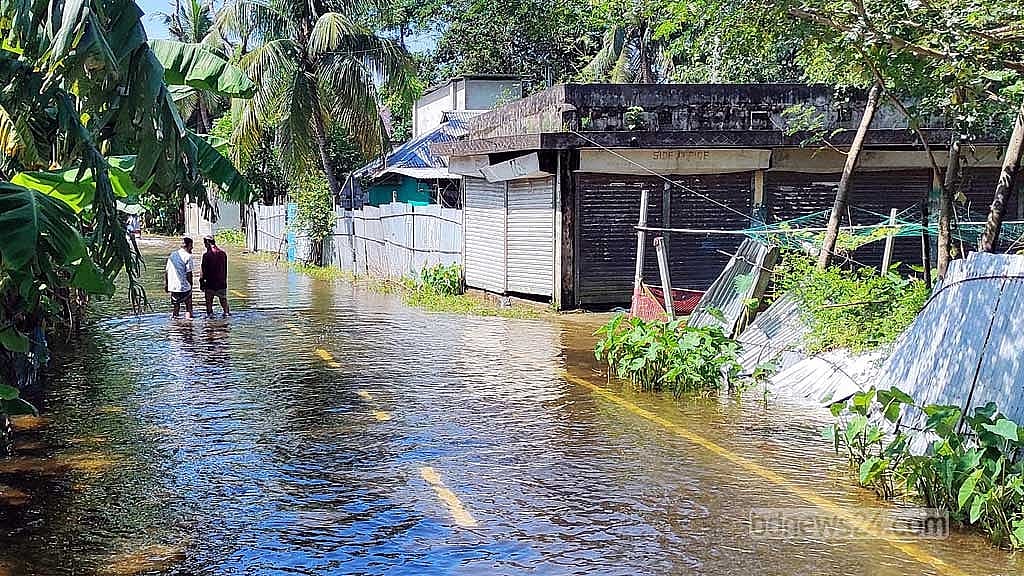
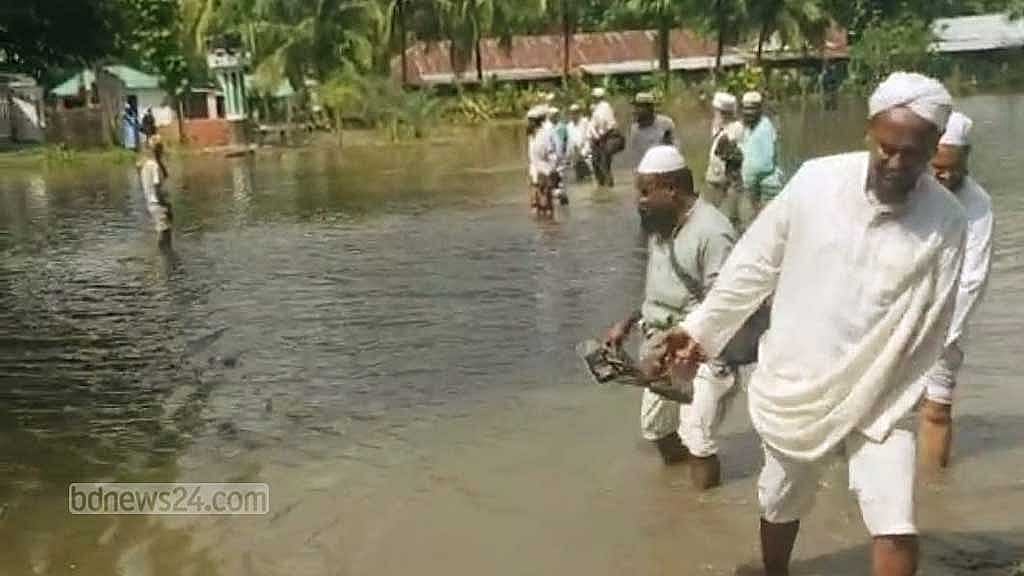
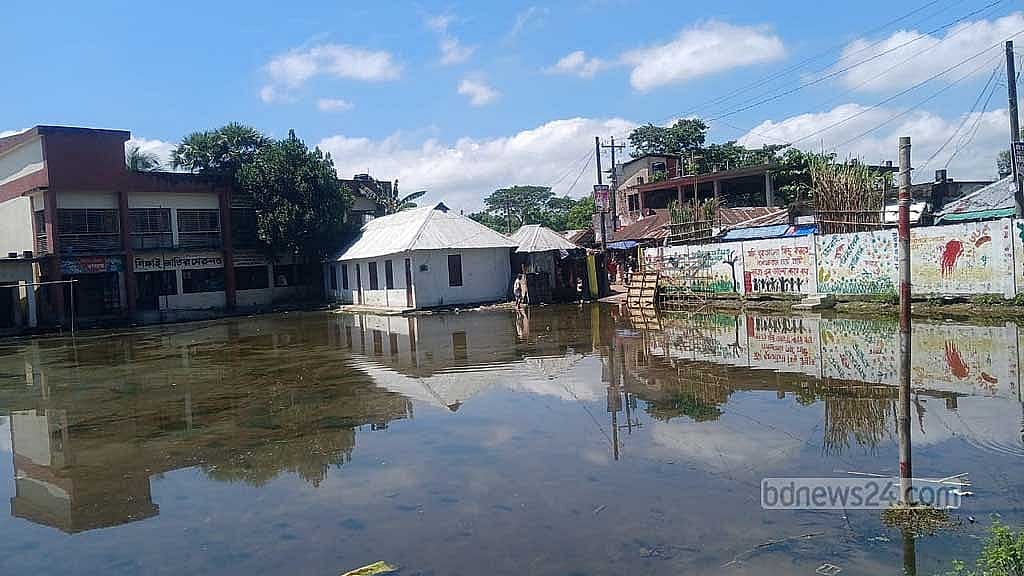
The devastating floods that recently swept across 11 districts in eastern Bangladesh, including Feni, Cumilla, and Noakhali, are still causing damage, with floodwaters yet to recede entirely.
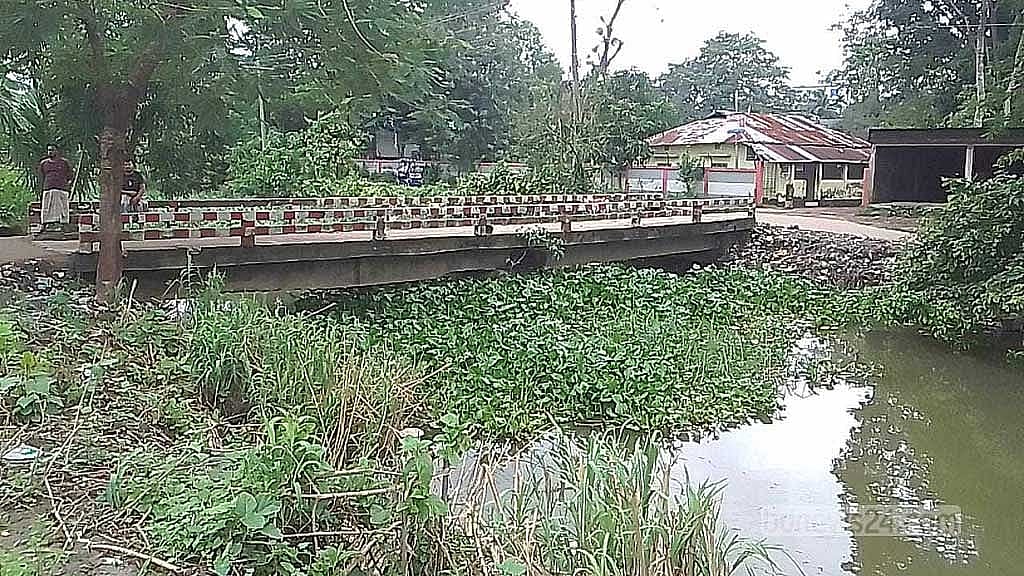
Most canals, reservoirs, and branch rivers in these regions remain encroached upon, blocking water from draining naturally, even after more than a month.
The scars of destruction are evident across these 11 districts. The affected people are trying to recover with the aid they can get from both government and non-government sources.
However, the full recovery could have been faster if the water had receded by now.
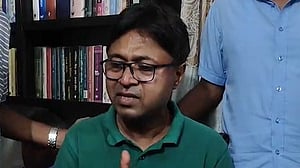
Prof Adil Mohammed Khan of Jahangirnagar University's urban and regional planning department told bdnews24.com: "Floods have always occurred. What is unusual this time is that the floodwater hasn't drained. The main reason is the loss of natural water flow and interconnections among reservoirs."
Flood-affected residents also believe prolonged waterlogging results from filled canals and disrupted reservoir connections, causing greater damage than expected.
Disaster Management and Relief Advisor Faruk E Azam, provided an overview of the damage on Tuesday. The recent floods have caused losses amounting to Tk 142.69 billion in 11 districts.
A total of 942,821 people have been affected, with 74 dead and 68 injured. Crops worth Tk 23.08 billion were completely destroyed, while another Tk 7.18 billion worth of crops were partially damaged.
Moreover, 28,386 homes were completely destroyed, with an additional 319,219 homes sustaining partial damage. The financial loss is estimated at Tk 42.61 billion and Tk 198.11 billion, respectively.
A total of 2,232.92 kilometres of paved roads were entirely destroyed, and 3,984.34 kilometres were partially damaged. The losses are estimated at Tk 16.69 billion and Tk 18.73 billion, respectively.
The stagnant floodwaters remain a significant barrier to the rapid recovery of affected areas. Water drainage paths remain obstructed, exacerbating the situation.
FENI'S CANALS AND RIVERS THREATENED BY POLLUTION, ENCROACHMENT
In mid-August, 29 people perished in Feni's worst floods in memory. The district administration’s estimates show extensive economic losses, affecting public health, infrastructure, education, agriculture, health services, communication, electricity, mobile towers, mosques, and temples.
The flooding’s root cause is partly due to the pollution and encroachment of at least 244 canals and branch rivers across Feni’s six Upazilas, which exacerbated the impact. Around 1.7 million people were affected by this year's floods in the district.
The damage from yearly floods, worsened by heavy rains and waters from upstream in India, extends beyond homes to include farmland, ponds, fisheries, and livestock.
Despite efforts by the Water Development Board and municipal authorities, local residents say that the illegal structures along canals and rivers remain largely untouched, further hindering drainage efforts.
In Feni’s main city, encroachment continues unabated along Daudpur and Paglichhara canals, where garbage is regularly dumped, leading to pollution and reduced water flow.
Nazir Ahmed, a local resident, said: "A few years ago, the Water Development Board and the municipal executive magistrate dismantled some illegal structures along the canal’s banks. But no efforts were made to dredge out the waste from the canals. As a result, even minor rainfall now floods areas like Petrobangla, Arambagh and west Ukilpara. During the recent flood, Petrobangla was submerged in nearly 7 feet of water."
Similarly, Fakhruddin Ali Ahmed from Godown Quarter said: "What was once a long canal is now no more than a drain. Last year, the municipality installed RCC slabs along the Gazi Cross Road portion, converting it into a drainage system, which has slowed the water flow. Even light rainfall now submerges the low-lying Academy area."
Rajapur Union in Daganbhuiyan Upazila was also submerged for days. The once-vital ‘Datter Khal’ near Rajapur Bazar is now nearly lost due to encroachment and pollution. The canal’s flow has almost ceased.
Shahjalal Bhuiyan, a local madrasa teacher, said: "Rajapur Bazar is an important market, but the lack of daily waste management has led to plastic and other waste being dumped into the canal, further blocking the water flow."
Another canal, 'Dadna Khal' in Daganbhuiyan, has suffered a similar fate. The 19-kilometre canal has been mostly encroached upon by powerful local figures, with its width reduced from 65 feet to as little as 10 or 15 feet in places.
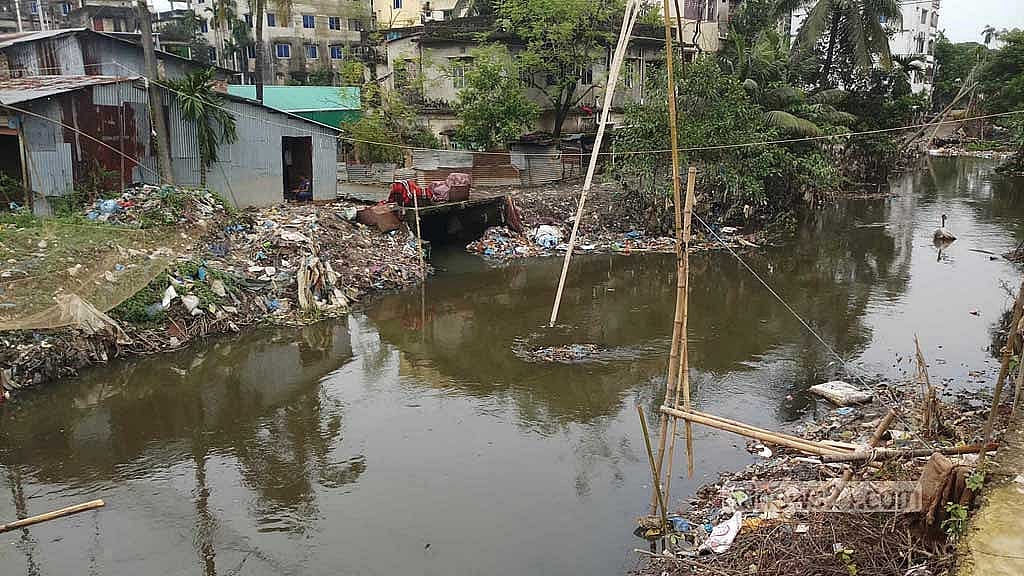
Local resident and Unani doctor Alamgir Noni said: “Farmers from 30 nearby villages used the canal's water for agriculture. But now, due to man-made issues, the canal has lost its normal water flow.”
The Daganbhuiyan Upazila Executive Officer Nibedita Chakma, said: “The issue of Dadna Khal falls under the responsibility of the Bangladesh Agricultural Development Corporation, not the municipality. However, we always take a firm stance against illegal encroachment.”
Besides Dadna Khal and Datter Khal, multiple other branch canals connected to the small Feni River have lost their navigability, slowing down the recession of floodwaters.
To resolve the issue, local schoolteacher SM Yusuf Ali suggested dredging the canals urgently to restore their natural flow.
ENCROACHMENT BLOCKS WATER FLOW IN NOAKHALI, WORSENS FLOODING
In Noakhali, nearly 1.3 million people have been stranded in floodwaters for a month. Forced to leave their homes, about 50,000 people sought shelter in educational institutions. Many have been unable to return home as the water has yet to recede.
Locals blame the encroachment of rivers and canals for worsening the flooding. Many of the canals that once drained water into the Meghna River have been encroached upon, with illegal structures built over them.
Kafil Uddin, a resident of Bhabani Jibanpur village in Begumganj Upazila, said, “Floodwaters entered our home on Aug 18, and they haven’t gone down yet. We still have knee-deep water inside."
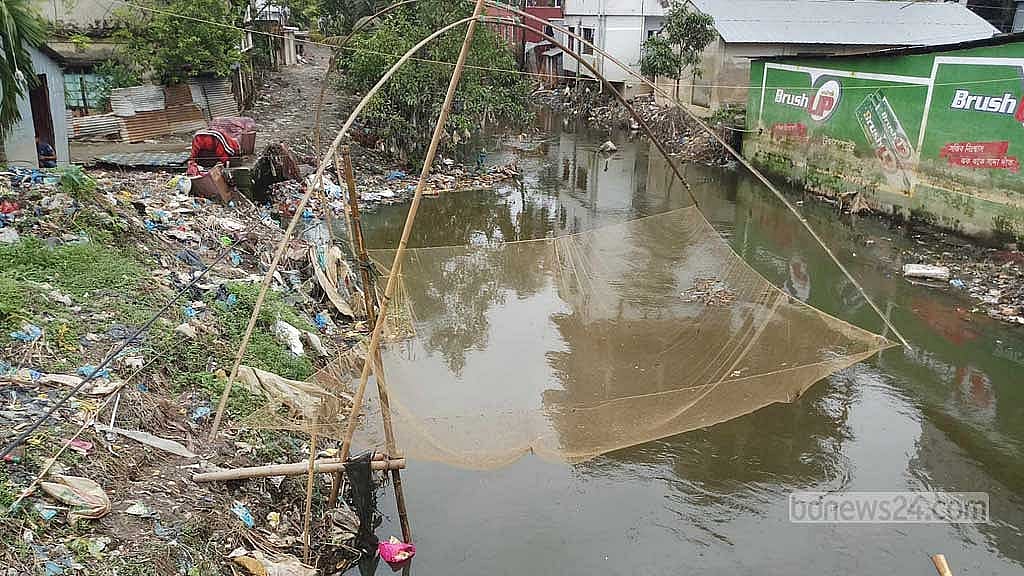
He added, “Near Jibanpur village, a canal known as ‘Gabua Khal’ connects to the Meghna River through Begumganj, Lakshmipur, and Basirhat. But a sluice gate was built three kilometres away 10 years ago, making it difficult for water to drain. Now the floodwaters aren’t receding."
In Senbagh’s Bor Sardarpur village, roads have remained submerged for a month, with most canals filled up or encroached upon. Residents urge local authorities to clear the canals to prevent future flooding.
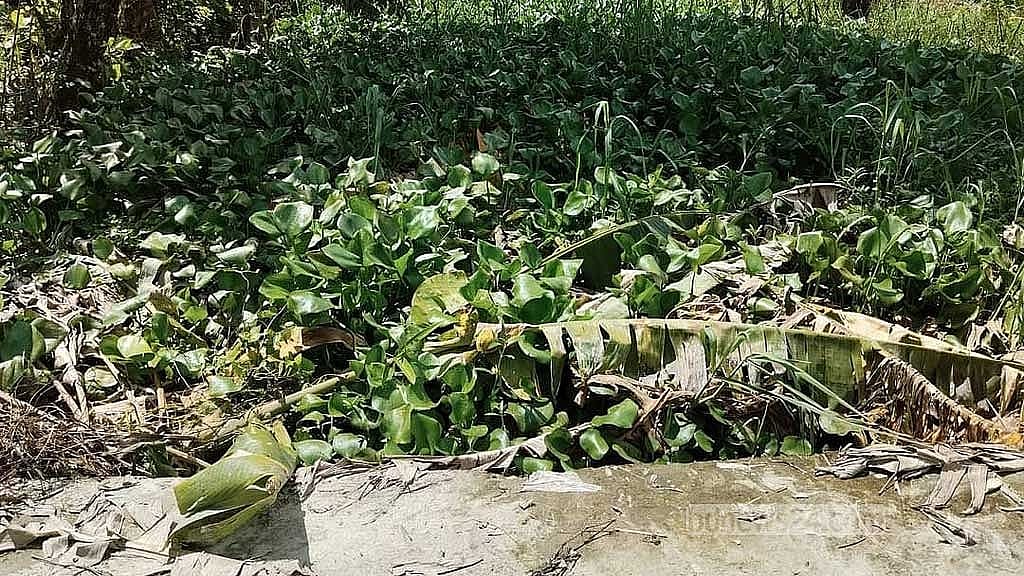
Editor of the local weekly Chalti Dhara, MB Alam, said: “The Islamia Canal in Noakhali Sadar’s western region is choked with water hyacinth. It drains the water from Maijdee Court and other areas, but due to lack of maintenance, water isn’t flowing out quickly."
The once-mighty ‘Mahendra Khal,’ which used to connect Meghna-Dakatia, is also nearing extinction due to encroachment and pollution.
During conversations with locals in Chatkhil, residents said the existence of the canal is on the verge of extinction due to encroachment in the area.
The canal in the Chatkhil municipal area has become filled with waste under the bridge at the entrance to the Chatkhil market, affecting several areas including the Chatkhil municipal area, Dashghoria market, and Kochua market.
Local inhabitants have complained that influential individuals have occupied the canal and constructed buildings for rent from various points along the southern side of C&B Road, near the 11th Bridge in Chatkhil.
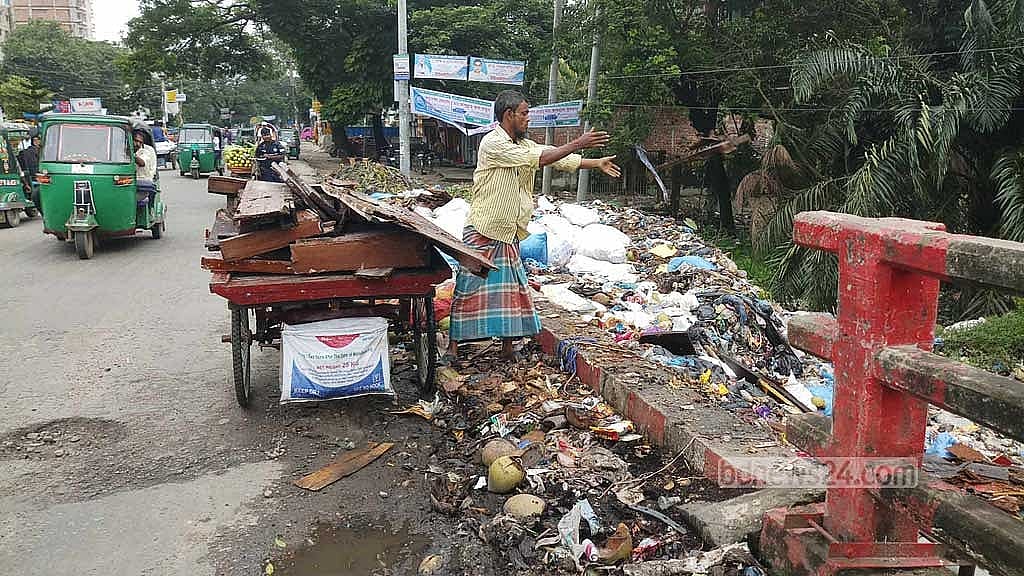
This has negatively impacted agriculture and farmers. Due to the canal being filled, there is either waterlogging or drought on the farmland, leading to a decline in soil fertility. Farmers are also unable to irrigate their crops in a timely manner due to the canal being blocked.
Abdul Awal, executive director of Noakhali Rural Development Society, said: “In Noakhali, hundreds of ponds were previously excavated to retain rainwater. There was a natural drainage system, with canals like Noakhali, Begumganj’s Abda Canal, and Buluwa Canal. The interconnections among these canals have been destroyed. The flow of water has been obstructed due to encroachment for fish farming. As a result, the downstream flow of water has no path left.”
“Today's Maijdee Court city has developed on the canal. This canal was called the Chagalmara Canal, which was adjacent to Noakhali. These canals are now in existential crisis due to encroachment.”
To find a permanent solution to the existing problems, Awal urged the identification of the water pathways in the region via satellite over the next month, followed by the removal of obstacles accordingly.
Munshi Amir Faisal, executive engineer of the Noakhali Water Development Board, said: “The water from Chatkhil, Sonaimuri, Begumganj, and the Sadar Upazila flows into the Meghna River through the Rahmatkhali Canal in Lakshmipur district.
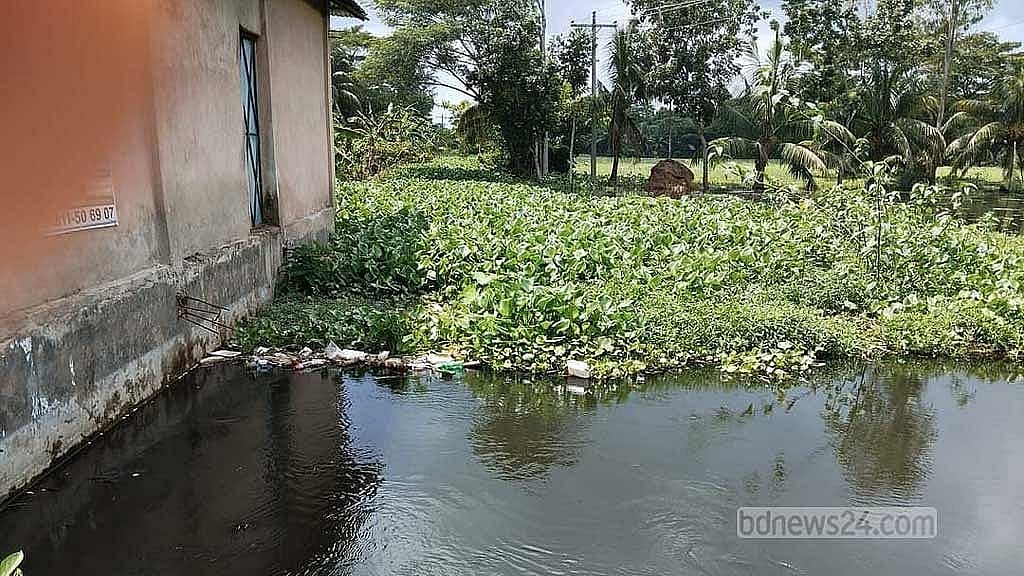
However, the Lakshmipur section of Rahmatkhali Canal has not been excavated for a long time, resulting in sedimentation and reduced navigability. Water is draining slowly.”
He added that during the 2019-2020 fiscal year, 161 kilometres of canal were excavated in Noakhali Sadar, Kabirhat, and Begumganj Upazilas through the Bangladesh Army. In 1964, a cross dam was constructed from Mannan Nagar in the Sadar Upazila to Atakpalia (Haris Chowdury Bazar) over a 16-kilometre area. While this protected 71,000 hectares of land in Subarnachar from being inundated, the cross dam has raised the area of Subarnachar Upazila above that of Sadar Upazila, making it difficult for water to drain from the Sadar.
DISASTER FROM ENCROACHMENT AND POLLUTION IN CUMILLA
“I am nearly 110 years old. In my long life, I have never seen such a large flood or such water. I have never even heard of such a terrible flood from my father. For the past 12-13 days, almost all houses in our area have been submerged. People are suffering greatly, and there is still a cry of distress all around,” said Arifur Rahman Majumdar, a centenarian from Pipadda village in Cumilla’s Nangalkot.
Cumilla is among the 11 districts grappling with a catastrophic flood. Flood situations have arisen in 14 of the 17 Upazilas in the district due to breaches at various points in the Gomti River embankment. However, unlike previous years, the water is not receding quickly.
Arifur Rahman added, “For the past few days, the water has begun to recede somewhat, but the rate at which it is decreasing suggests that people's suffering will not end easily. In the past, powerful individuals have freely occupied rivers and canals. Many have unwittingly filled canals, damaging the environment. These actions have narrowed the drainage pathways, causing the water to recede slowly.”
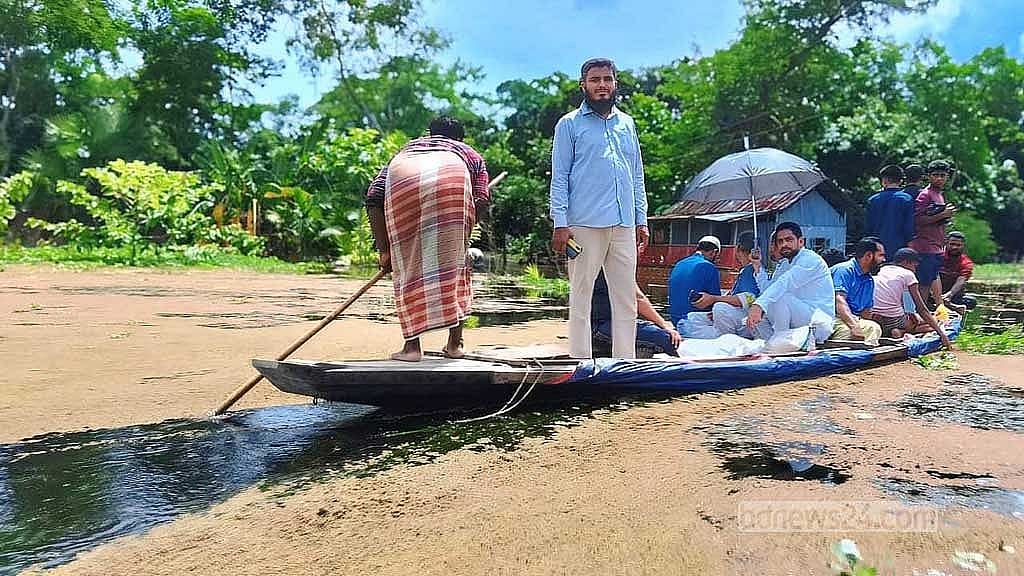
Compared to other Upazilas, the water in the southern three Upazilas of Cumilla – Monohorgonj, Laksham, and Nangalkot – has not receded significantly. Over 500,000 people remain trapped in floodwaters in these three Upazilas.
During a visit to these flood-affected regions, conversations with locals revealed that individuals linked to the ruling party and influential people had encroached upon the Dakatia River and its tributary canals that flow through these three Upazilas.
While the Dakatia River is supposed to be 220 feet wide, in many areas of the region, the river's width is now less than 30 feet. Many influential individuals have also encroached upon and filled rural canals, and in several places, roads have been constructed with cross dams blocking the canals. Certain people are also fishing using nets by obstructing rivers and canals, further narrowing the drainage pathways and slowing the flow of floodwaters.
Not only political figures and influential individuals but also various government agencies have contributed to the destruction of this region by filling canals instead of maintaining them.
The Cumilla Road and Highways Department has been engaged in what can only be described as a disastrous act—filling in the centuries-old Berula Canal without following any rules since the start of the 2020 four-lane project on the Cumilla-Noakhali regional highway.
The Berula Canal was nearly 60 kilometres long, originating from the Fatehpur area near the Doulatganj market of Cumilla’s Laksham, flowing through Laksham, Nangalkot, and Monohorgonj before merging into the Noakhali Chaumuhuni Canal and subsequently draining into the Bay of Bengal.
However, due to the filling, there is a severe issue with water drainage from this region. The filling of the canal has resulted in the devastation of thousands of acres of agricultural land and farmers, along with complaints from flood-affected people that the floodwaters cannot drain away.
Abul Kalam, a resident of the Laksham municipality, said: “The Dakatia River is supposed to be 220 feet wide. But in the area near the Doulatganj market, the river's presence is barely 40 feet. All has been occupied for constructing shops. The truth is that due to the encroachment and filling of rivers and canals, there are floods in the rainy season and drought during the irrigation season. There has not been much action from the administration against those who have occupied the rivers and canals in the past. This is why today's situation has arisen.”
Harunur Rashid, a resident of Monohorgonj Upazila, said: “Unplanned development has also slowed the receding of floodwaters. There were culverts at several locations along the Monohorgonj-Hasonabad road, including Latsar and Shaktalas, but during recent road renovations, those culverts were destroyed and the canals filled, leading to issues in drainage for several unions. As a result, the flood situation is not improving significantly.”
Ujala Rani Chakma, the Upazila executive officer of Monohorgonj, said: “This Upazila has always been a low-lying area. During this time of year, there is always rainwater present here. It is true that the occupation of rivers and canals and the use of dams for fishing have made drainage somewhat problematic. However, we have been conducting mobile court operations in every canal and river. So far, more than fifty dams have been removed in an effort to maintain normal water flow. If the weather remains as it is, we hope the flood situation will improve quickly.”
Nangalkot Upazila Executive Officer, or UNO, Suraiya Akhtar Lucky said: “This year, the entire Upazila has been flooded due to the severe flood. Currently, the flood situation is improving and water is beginning to recede. We are regularly conducting operations in places where dams have been built for fishing in the rivers and canals. However, it is also true that the past encroachment of rivers and canals has caused some drainage issues. We are working on these matters.”
EXPERT OPINIONS ON SLOW WATER DRAINAGE
Sardar Uday Raihan, executive engineer of the Water Development Board, said: “The rate of water reduction can be described as slow to moderate. Compared to previous sudden floods, the rate of water receding is slower this time.”
When asked why the water is not receding even after such a long time, Institute of Planning and Development Director Adil told bdnews24.com: “Bangladesh is a riverine area. Floods have occurred here before; this is not uncommon. However, what is uncommon is that the water is still being held back so long after the flood. The main reason for this is the destruction of the natural flow or interconnection of water bodies. This is due to encroachment and pollution. The existing water channels are in the same situation regarding water drainage.”
“And those who have filled these channels are often politically supported. Over the past decade, the severity of floods across the country had decreased. However, encroachment and pollution have brought it back. We have seen that our water body conservation laws and environmental protection laws exist only on paper. Thus, whatever has happened has happened.”
So, what is the solution now? Bangladesh Institute of Planners President Adil said, “The solution is clear: we need a comprehensive master plan for at least five years. This plan must focus on reclaiming old channels, even if it requires demolishing permanent structures. We must create interconnections between water bodies.”
He further stressed the importance of taking legal action against encroachers: “Those who have illegally occupied waterways must be brought to justice. This initiative needs to start now to ensure sustainability. The River Protection Commission already has a list of offenders. If we fail to implement these measures promptly, we risk facing further disasters due to flooding in the future.”
[Writing in English by Arshi Fatiha Quazi]