Published : 05 Jan 2026, 07:24 AM
Updated : 28 Aug 2026, 01:35 AM


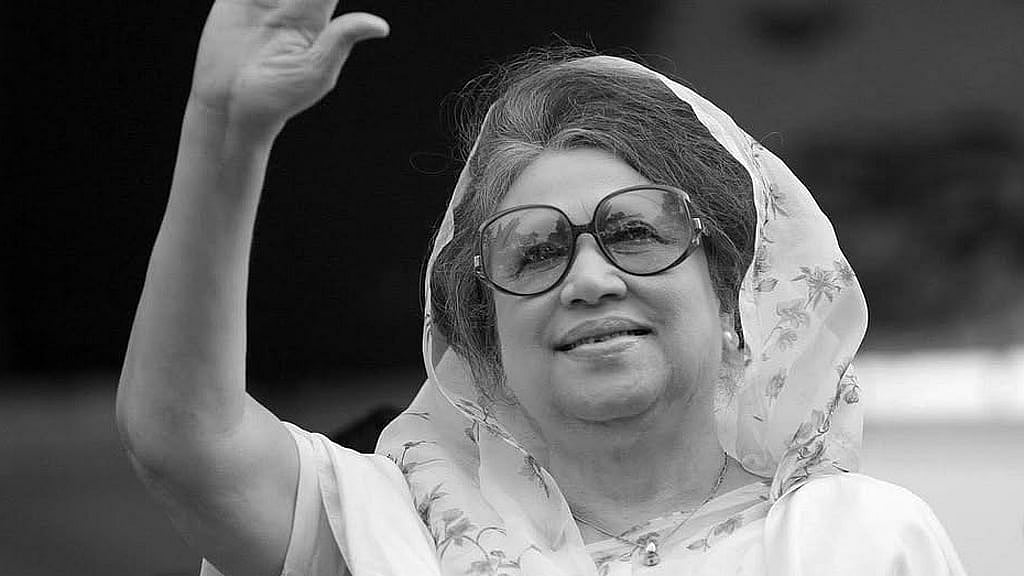
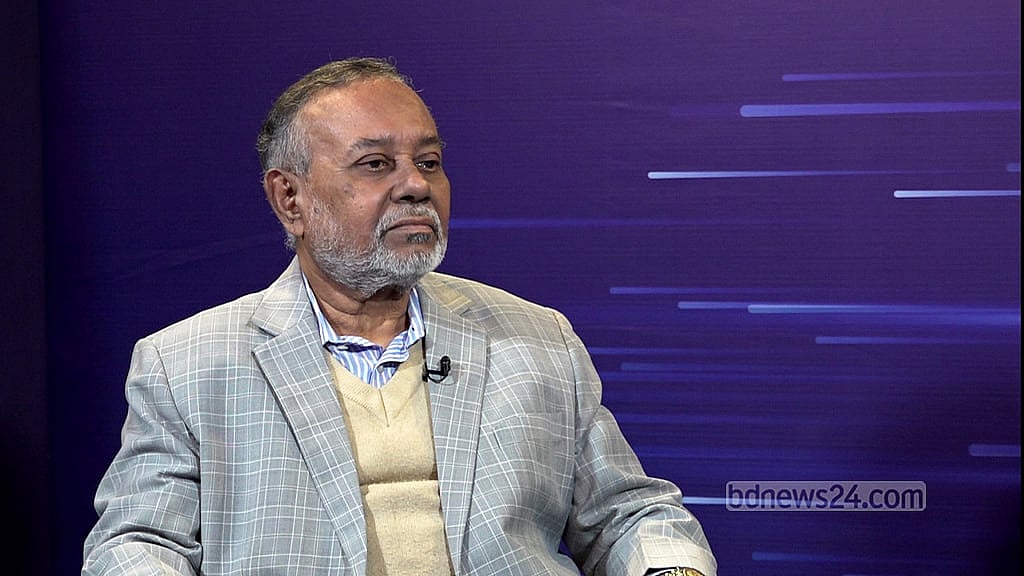
India appears to have begun a cautious push to mend ties with Bangladesh after the death of former prime minister Khaleda Zia, according to former ambassador Munshi Faiz Ahmad.
Speaking on bdnews24.com’s discussion programme Inside Out, Faiz said relations between the two neighbours had fallen to “almost at the bottom”, but New Delhi’s recent outreach suggested an attempt to ease the diplomatic chill.
He argued that India’s gestures were aimed less at the interim administration, which is close to ending its tenure, and more at the country’s “future leadership” ahead of the February elections.
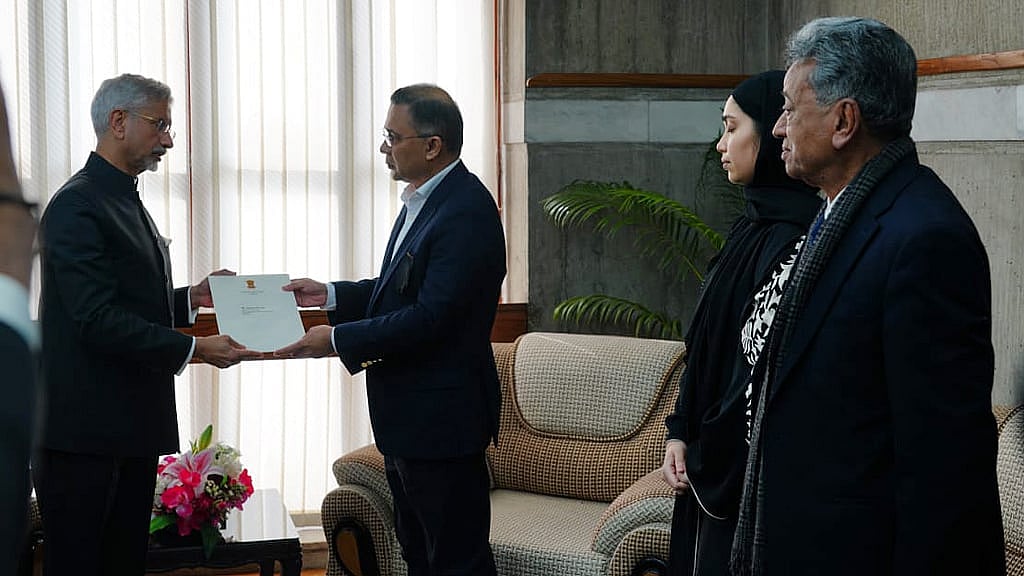
Faiz pointed to the visit to Dhaka by India’s External Affairs Minister S Jaishankar and a written condolence message from Prime Minister Narendra Modi to BNP Acting Chairman Tarique Rahman as signs of what he described as a strategic reset.
“They have tried to reach out to the future, future leadership and the people of Bangladesh. That is, I think, very significant,” he said.
He said the diplomatic overtures followed months of strained exchanges, in which comments by politicians in one country were often “reciprocated” by the other, pushing relations “further down and down”.
“No real serious steps have been taken by either government… to stop that spiralling down tendency,” he said.
The latest moves offered, in his words, “this light beyond the tunnel”, and placed the onus on the next elected government in Dhaka to respond constructively.
On recent public unrest, he said street protests in Bangladesh, and related incidents in India, did not appear to have been “orchestrated” by either government.
“I don’t think it was a deliberate pressure tactic from any side, but they were just allowing the promotions on the streets to play out a little,” he said.
Turning to sports, he described Bangladesh bowler Mustafizur Rahman’s exclusion from the Indian Premier League as “collateral damage”, and said both governments had a responsibility to ensure similar incidents did not happen again.
DOES INDIA WANT BNP IN POWER?
Faiz brushed aside the view that India’s outreach meant a desire to see the BNP return to power.
“I don’t agree with that completely,” he said, warning against “putting wrong words into some people’s mouth”.
He said foreign governments were responding to political realities on the ground rather than trying to shape outcomes.
According to him, the scale of public response surrounding Khaleda’s death suggested that the BNP was currently enjoying strong public support.
“All these tend to suggest that the BNP is at the highest level of its popularity with the common people,” he said.
Faiz said that if there was a “more or less fair election”, the BNP was “very likely” to come back to power, a scenario international actors were factoring into their diplomatic calculations.
“That is not what they want to see. It is a question of what is likely to happen,” he said.
DIPLOMACY
Faiz further said it would be incorrect to assume that India -- or any foreign country -- conducts its diplomacy by backing a single political party.
“Most foreign countries, when they manage relations with another country, do not support one particular party,” he said. “They have to maintain relations with all kinds of parties and political actors.”
He rejected the perception that India maintained ties only with the Awami League over the past 15 years, saying that while extensive engagement was inevitable because the party was in power, contacts with other parties never ceased.
He pointed out that BNP delegations had visited India earlier this year, while delegations from Jamaat-e-Islami had also travelled there, underscoring that political outreach flows both ways.
“It is not only that India reaches out to political parties,” he said. “Other parties also reach out to India.”
HOW FOREIGN MISSIONS OPERATE
Faiz said this approach is standard diplomatic practice, not unique to India.
Countries such as China and Russia, he noted, also maintain wide-ranging contacts across Bangladesh’s political spectrum.
He explained that one of the core responsibilities of foreign missions in Dhaka is to understand political dynamics, public sentiment and emerging shifts within the country.
“If you keep relations with only one party or one group, you cannot understand how politics really works,” he said.
Foreign missions, he added, engage with diverse political actors not only to protect trade, commerce and strategic interests, but also to assess how people think, how politics is evolving, and whether significant changes are underway.
That, Faiz said, is why engagement with the BNP should be seen as a reflection of political realism, not foreign endorsement.
“It is not right to say that India or other countries want the BNP in power,” he said.
“They feel the BNP is the most likely to be the next party in power -- and they are acting on that assessment.”
‘NORMAL COURTESY’
Faiz said he largely agreed with Foreign Advisor Touhid Hossain that India’s recent actions should not be over-interpreted for political meaning.
He said the advisor was responding to a specific question about recent developments, including Jaishankar’s visit to Dhaka, Defence Minister Rajnath Singh’s visit to Bangladesh’s High Commission in New Delhi and Modi’s written condolence message.
“These were acts of normal courtesy,” Faiz said, referring to Khaleda Zia’s stature as a three-time prime minister who had shaped foreign policy and maintained engagement with India and other countries.
“At that level, such gestures are expected, and one should not read too much political nuance into them,” he said.
Faiz, however, said the context of severely strained bilateral ties gave the gestures additional significance.
“With relations now almost at the bottom, this also signals India’s wish to bring a thaw,” he added.
At the same time, he pointed to restraint in India’s engagement with the interim administration.
Faiz noted that Jaishankar did not meet Chief Advisor Muhammad Yunus, though it remains unclear whether this was due to scheduling or choice.
“It appears neither side was keen to make a show of courtesies with the present interim government,” he said, adding that contacts were kept to a minimum.
According to Faiz, the approach reflected a focus on the future rather than the present.
“It recognises the past and prepares for what lies ahead,” he said, “but there is clearly a gap right now.”
LACK OF ‘SAGACITY’
Critiquing the performance of the current administration, the former ambassador to China remarked that unlike previous political governments, the interim government has struggled to manage diplomatic ties.
“There has always been a problem in relations with India because most of the political parties, they have some kind of a message for the consumption of the people inside the country,” he said, adding that while parties often adopt "contrary tendencies" for votes, they usually become rational once in power.
“The only exception was the interim government that we have right now. They have not shown that kind of sagacity. They have not shown that kind of experience or expedience. So, they have let the relations go down the drain.”
He noted that despite the political chill, people-to-people movement and business continue out of necessity, though not at the levels possible under a healthy relationship.
STREET PROTESTS NOT ‘A PRESSURE TACTIC’
Faiz dismissed claims that the recent diplomatic tensions and street protests were part of a pressure strategy by Delhi.
“If we go by the chronology of events, we cannot say this was a pressure tactic by the Indians,” he said.
He said protests targeting Indian missions occurred first in Bangladesh, with groups attempting to approach the Indian High Commission in Dhaka and the consulate in Chattogram, followed by stronger reciprocal reactions in India.
“There was reciprocation, and many-fold increased reciprocation,” he said.
Faiz said the protests on both sides were not orchestrated by governments, but reflected public reactions amid “deteriorating relations” since August 2024.
He said both governments appeared to allow crowds to approach diplomatic missions before stepping in.
“In India, they allowed people to come very near, then stopped them and arrested some,” he said, adding that Bangladesh also took a “slightly lenient” approach before intervening.
Faiz said the unrest was fuelled by longstanding anti-India sentiment and heightened by reports of violence and repression affecting minorities in both countries.
“The governments stayed back to an extent and then stopped things from going beyond control,” he said.

IPL ROW ‘COLLATERAL DAMAGE’
The former envoy described the exclusion of Bangladesh cricketer Mustafizur from the Indian Premier League as “very unfortunate”, calling it a case of collateral damage arising from “poor” bilateral relations.
He said public anger on both sides had spilled into sport, affecting individuals with no role in political disputes.
“Some of that anger is being taken out on a very innocent person like Mustafiz,” he said.
Faiz said such developments should not occur and placed responsibility on both governments to prevent a repeat.
He noted that governments normally stay out of sport, but in tense situations they have the ability to both enable positive outcomes and stop actions that deepen hostility.
“That is something they are not doing properly -- on either side,” he said.
Faiz said stronger intervention was needed from both Dhaka and New Delhi to ensure political tensions did not continue to affect sporting ties.
“I think they should do a little bit more in this regard,” he said.
BNP RECORD ON INDIA TIES
Munshi Faiz said popular perceptions of Bangladesh’s foreign policy were often misleading.
“There is a common feeling on the streets that when the BNP is in power, relations with India go down and relations with China go up, and vice versa under the Awami League. But that is completely wrong.”
According to him, whichever party is in power, the government pursues the best possible relations with all countries -- India, China, Russia, Japan -- guided by national interest rather than political rhetoric.
He noted that domestic political posturing often differs from practical diplomacy. “On the streets, you may see one kind of statement for votes, but once in power, governments manage relations objectively to secure what the country needs,” he said.
Citing the 1992–1993 BNP government, Faiz said Dhaka granted India significant market access, contradicting claims of an anti-India stance. “In reality, it was a very favourable situation for India at that time.”
He added that even parties like Jamaat-e-Islami, perceived as ideologically opposed to certain countries, still maintained diplomatic contacts with India while engaging with China, showing the pragmatism of foreign policy.
“This is how diplomacy works. Public statements and political narratives may vary, but governments have to maintain relations with all countries for trade, security, and strategic reasons,” Faiz said.