Published : 14 Mar 2026, 07:21 AM
Updated : 28 Aug 2026, 01:32 AM


A worsening fuel crisis linked to Middle East tensions has thrown the Eid-ul-Fitr travel plans of millions leaving the capital into uncertainty.
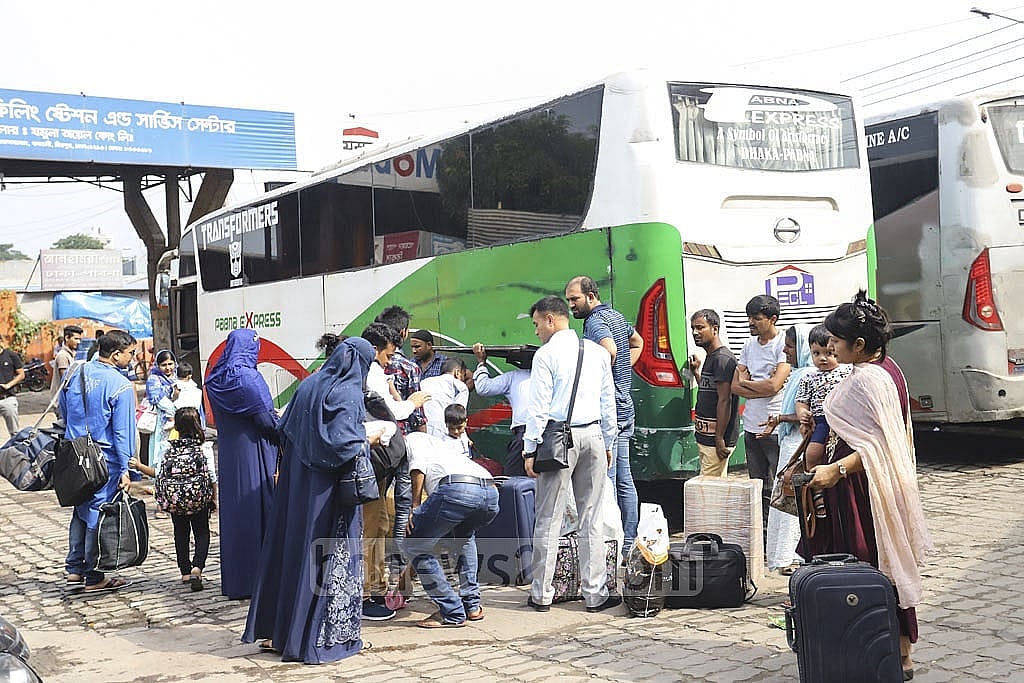
With the supply chain disrupted and rationing in effect, transport operators are already dropping hints that scheduled trips could be cancelled at the last moment, advising travellers to maintain constant contact with ticket counters for updates.
Bus operators are particularly alarmed by the massive time investment now required to top up vehicle tanks.
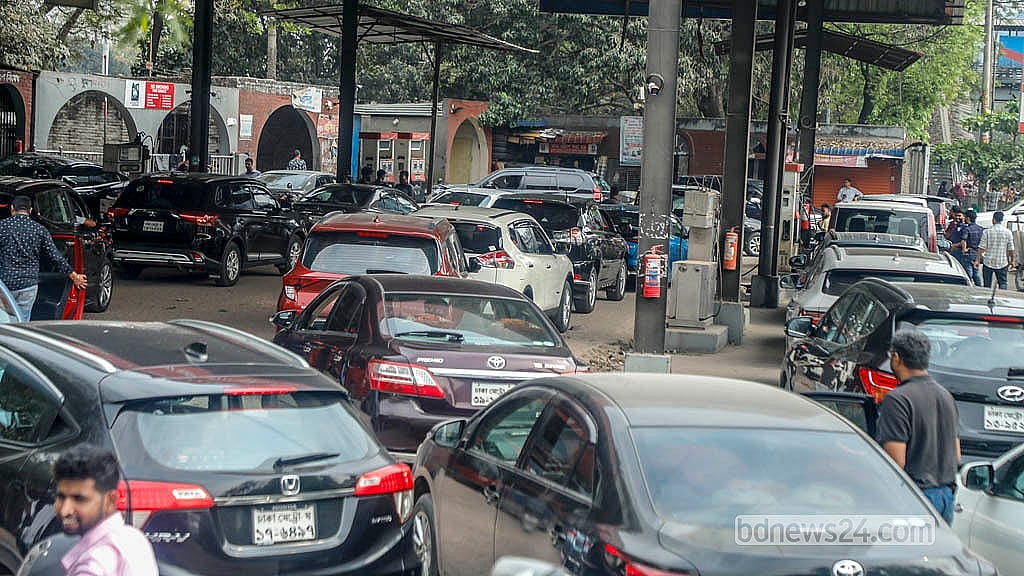
Long queues at the few operational filling stations, coupled with rationing that denies vehicles enough fuel for long-haul round trips, have left many fearing they will be unable to maintain their holiday schedules.
Abul Bashar, a driver for Haji Paribahan on the Dhaka-Haluaghat route, was found waiting in a 1.5-kilometre-long queue at a Tejgaon filling station on Thursday night.
"Petrol pumps in and around Gazipur are out of supply,” he said.
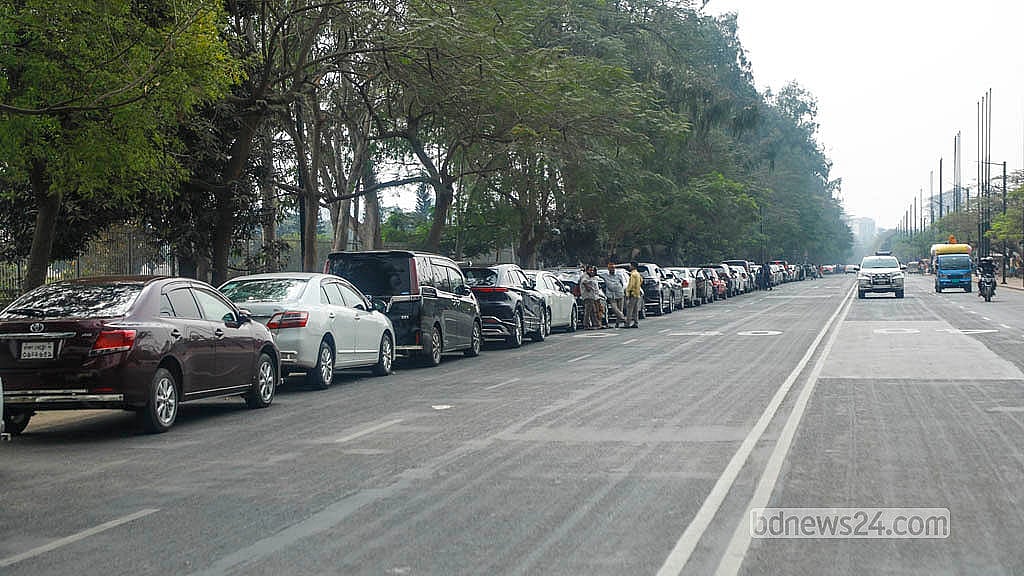
“A round trip requires at least 150 litres, but God knows how much they will actually give me after hours of waiting. You cannot make passengers sit in a fuel line for four hours," Bashar said.
Bus and truck drivers say the situation outside the capital is much worse.
According to them, many pumps are supplying fuel only to regular customers, large companies with contracts, or familiar clients, leaving others empty-handed.
Amid the uncertainty, inter-district buses and trucks are crowding Dhaka’s filling stations to refuel.
While filling station owners attribute the fuel shortage to government measures, authorities say the situation will improve soon, with regular distribution set to resume from Mar 15, replacing the current rationing system.
The government has deployed mobile courts to monitor fuel pumps after an overnight 80 percent surge in demand strained supplies across Dhaka.
What Lies Ahead for Eid Travel?
Leading operators say they are “really frightened”.
Abdus Samad, general manager of Hanif Enterprise, noted the scarcity forced them to stop selling Eid tickets prematurely.
Despite having its own petrol pumps like Hanif Enterprise, Shohagh Paribahan said it still faces insufficient fuel to operate its services.
Faruk Talukder Sohel, managing director of Shohagh Paribahan, warned that the current rationing makes it nearly impossible to meet the high demand of the holiday rush.
“If the situation persists, there are strong grounds for concern over Eid travel,” he said.
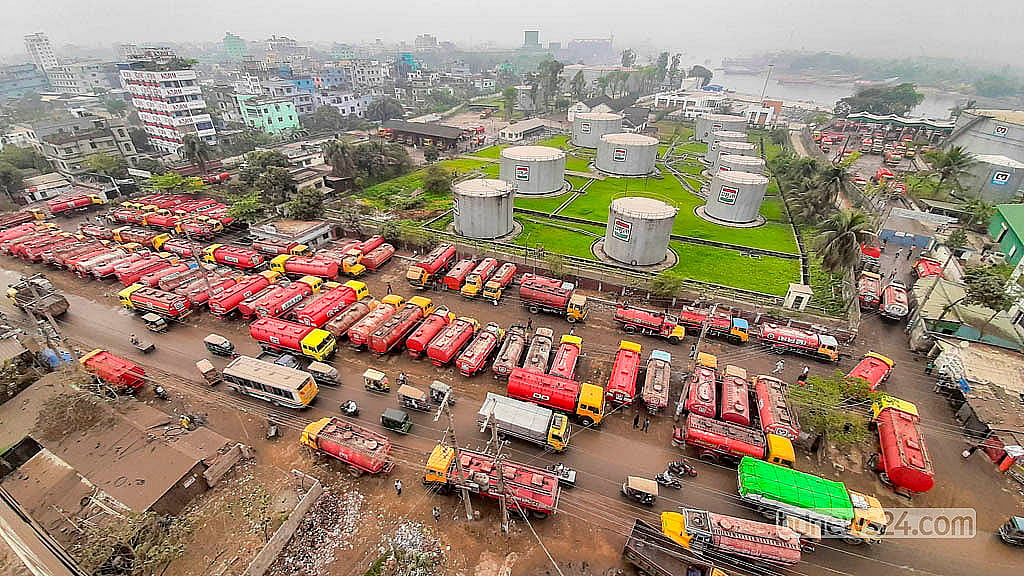
Some companies have already begun official communications regarding potential disruptions.
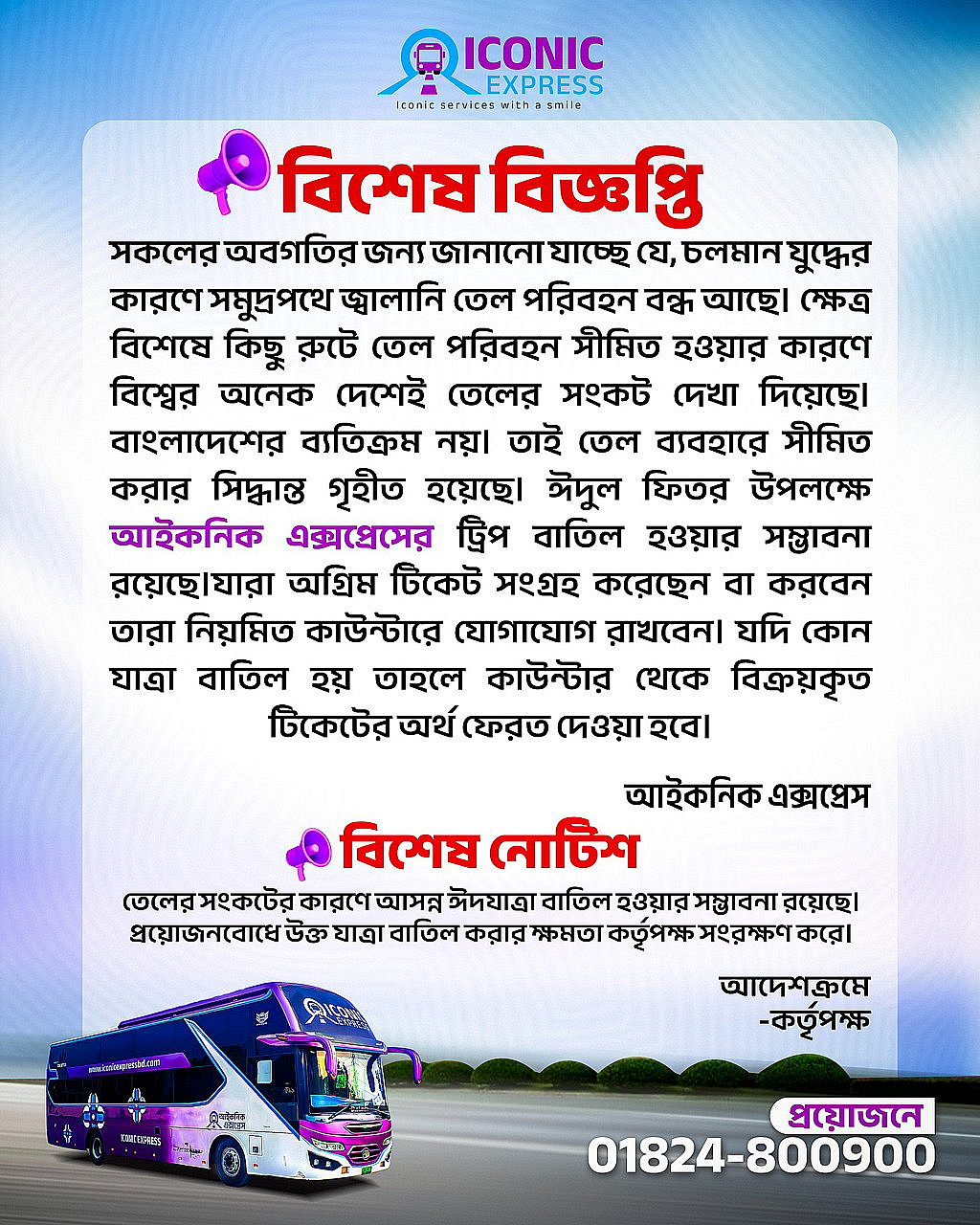
Iconic Express, an AC sleeper bus operator, issued a notice on its official Facebook page on Mar 10, warning that the "global situation" has forced it to operate under limitations.
"There is a possibility that some scheduled trips for the upcoming Eid-ul-Fitr may be cancelled,” the notice said.
“We request those who have collected advance tickets to stay in touch with our counters. If a journey is cancelled, a full refund will be provided," the notice read.
Bangladesh Road Transport Owners’ Association’s Secretary General Saiful Alam explained that buses usually "turn around" immediately after dropping off passengers to manage the rush during Eid.
"If they have to spend hours in a fuel queue instead of picking up the next batch of passengers, we simply won't be able to handle the pressure," he said.
Md Hasan, the manager of Grameen Paribahan in Kalyanpur, has already been forced to cancel one AC bus trip due to the ongoing fuel shortage.
Hasan explained that a round trip between Dhaka and Rajshahi consumes between 120 and 130 litres of diesel for newer models, with older vehicles requiring even more.
The demand is significantly higher for AC buses, which need upwards of 150 litres to complete the same journey, he said.
Only 10 Litres After Four Hours In Line
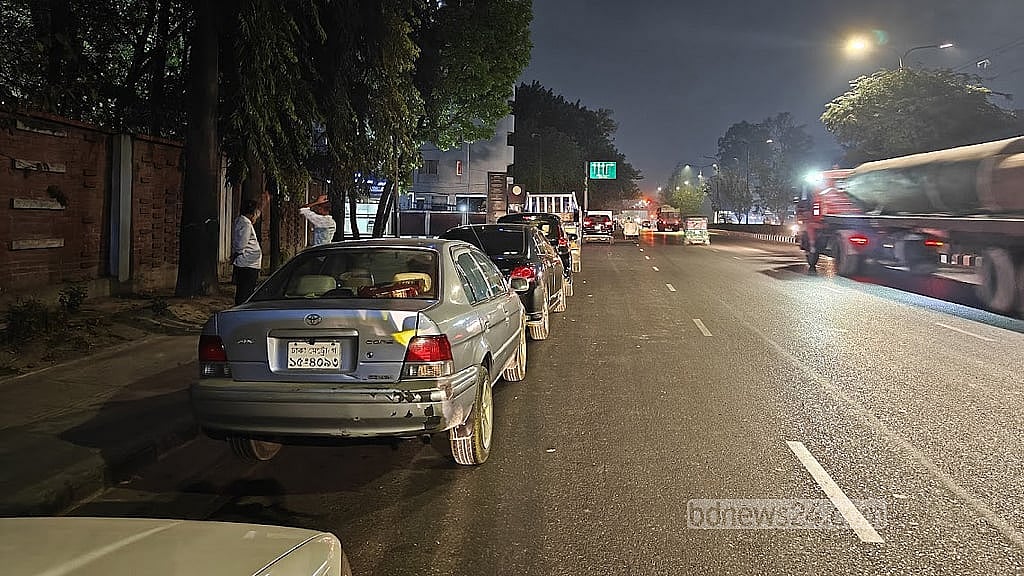
The crisis has turned routine refuelling into an ordeal, with drivers waiting overnight or for hours in long daytime queues.
Ismail, a mini-covered van driver, shared his plight after waiting four and a half hours at the Trust Pump in Jahangir Gate.
Having queued up from 3:30am until 8am on Friday, Ismail was only permitted to purchase 10 litres of diesel. He said his Ashok Leyland pickup runs about 10 kilometres on a litre of diesel and that he needs at least 20 litres to take a trip.
"They told us pickups would get 70-80 litres, but I'm not seeing that anywhere. Most pumps are just shut," he said.
On Tuesday, after spending one and a half hours in line for fuel, he found the pump had exhausted its day’s supply before he could refill.
“How does that feel, you tell me?” he exploded.
Pump Owners Blame The Govt
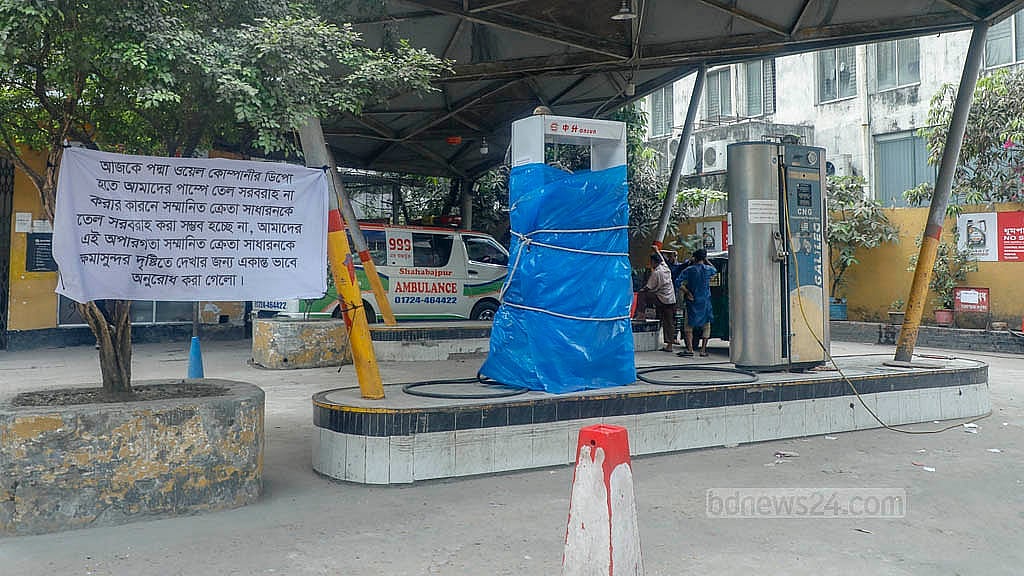
Filling station owners have pointed the finger at the government, arguing that the crisis was exacerbated by policy mismanagement.
Syed Sajjadul Karim Kabul, convenor of the Bangladesh Petroleum Dealer’s, Distributor’s Agents and Petrol Pump Owners’ Association, stated the supply remained stable until the government introduced rationing on Mar 5, six days after the US and Israel attacked Iran, drawing retaliation from Tehran on Feb 28.
"This move panicked people, leading them to hoard fuel,” he observed.
He said there is no real shortage of petrol or octane, as most of the demand is met by domestic production from the Sylhet gas fields.
The oil traders alleged recently in a media conference that while the crisis began with rumours and panic-buying, it was exacerbated by the rationing policy without consulting the stakeholders.
On Mar 6, the Bangladesh Petroleum Corporation set fuel sales limits at two litres of octane/petrol for motorcycles, 10 litres for private cars, 20-25 litres for SUVs and microbuses, and for diesel, 70-80 litres for local buses and pickups, and up to 220 litres for long-haul trucks and lorries.
The motorcycle refill limit was later increased to five litres.
Minister Sees No Travel Disruptions
Despite the visible chaos on the ground, the government maintains that the situation will normalise within days.
On Friday morning, Road Transport and Bridges Minister Shaikh Rabiul Alam told reporters at Kamalapur Railway Station that adequate fuel supply for public transport would be ensured from Mar 15.
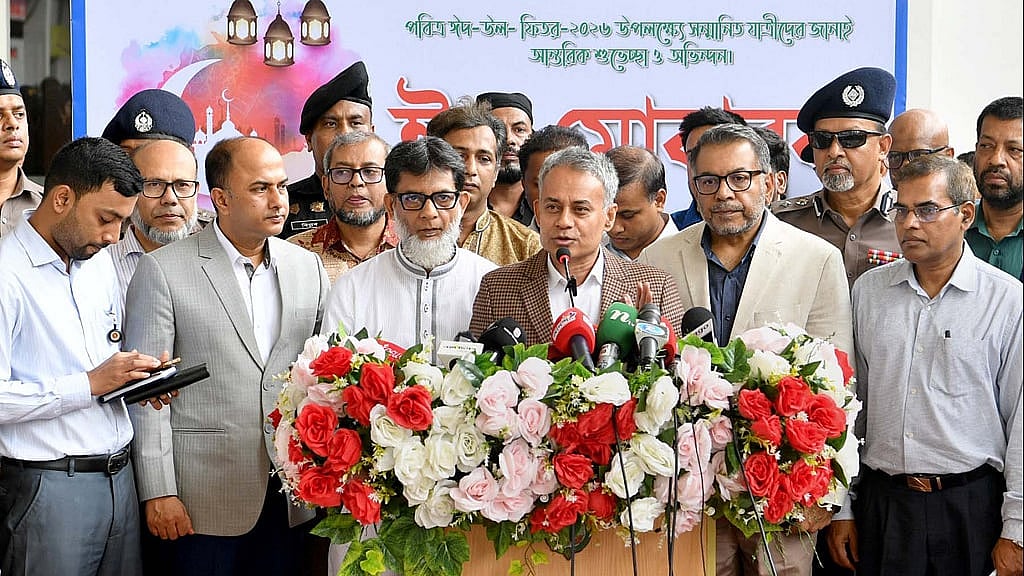
Citing the energy minister, he assured the public that prices will remain steady as well.
“The public need not worry about fare hikes, and I see no chance of fuel-related disruptions during Eid travel,” the minister asserted.