Published : 19 Apr 2026, 07:44 AM
Updated : 21 Aug 2026, 03:37 PM


A journey of one hour and twenty minutes by motorcycle from Alikadam Upazila headquarters along the Poamuhuri border road leads to Yangring Mro neighbourhood.
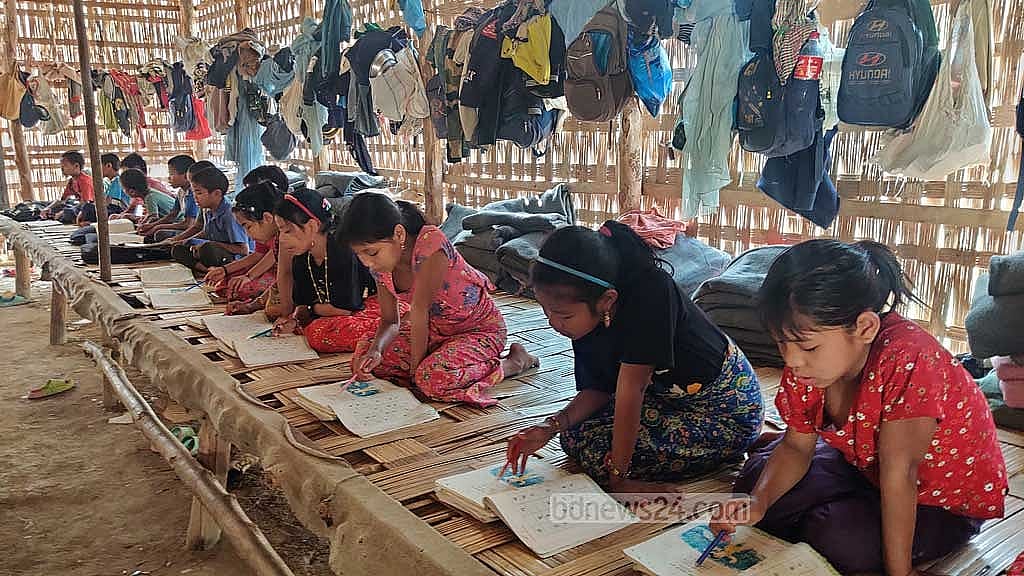
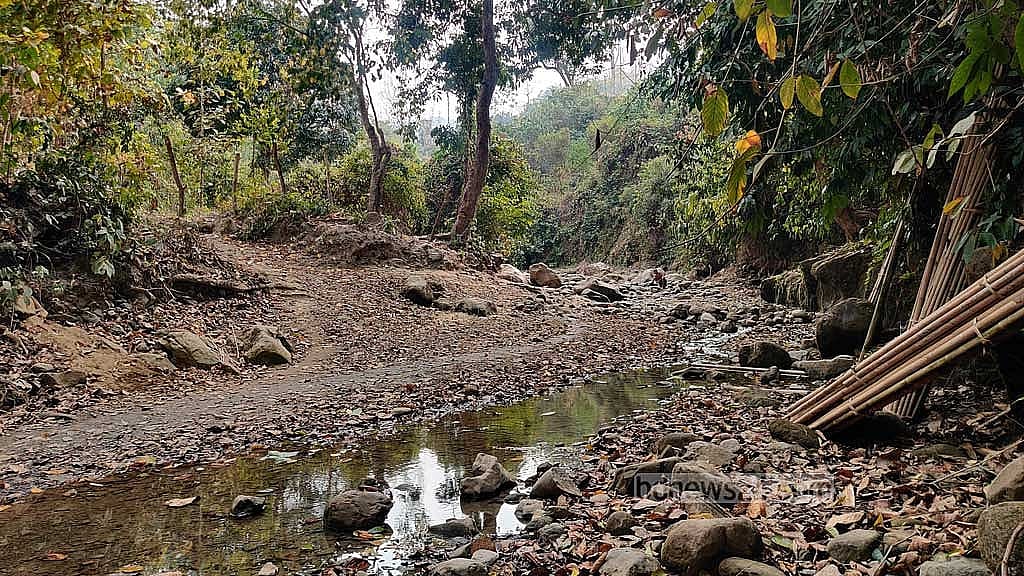
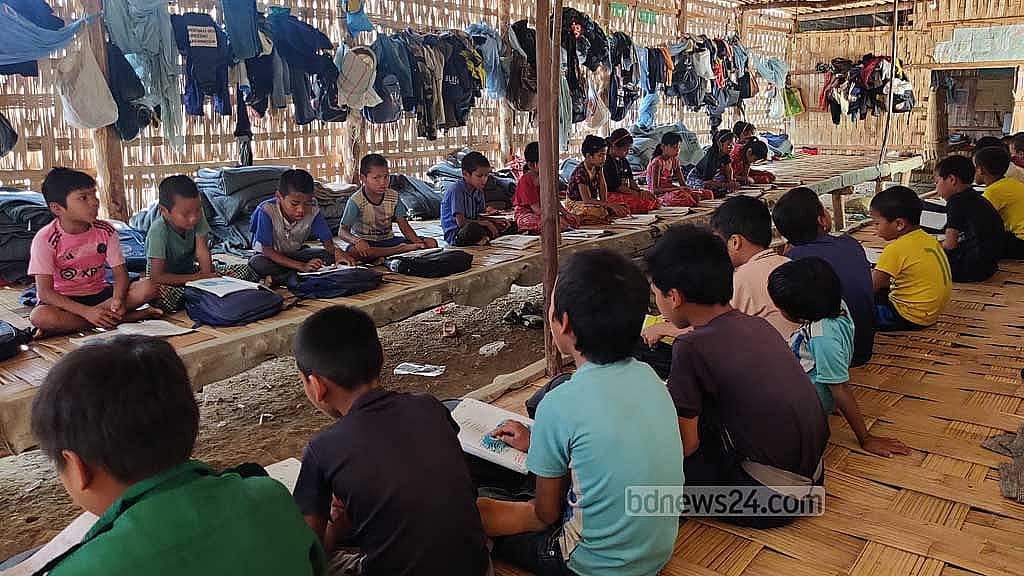
In the middle of this tidy village, beside a stony stream, stands “Prennoy Shikshalay” -- a unique student hostel comprised of three small houses and a tiny playground.
In the Mro language, “Prennoy” means "light of the country".
True to its name, the hostel has become a pioneer in bringing the light of education to the children of Jhum or shifting agriculture, farmers in the remote Kurukpata Union near the Bangladesh-Myanmar border.
This residential hostel has become a sanctuary for 144 children who, until recently, were destined to spend their lives in the jhum fields rather than the classroom.
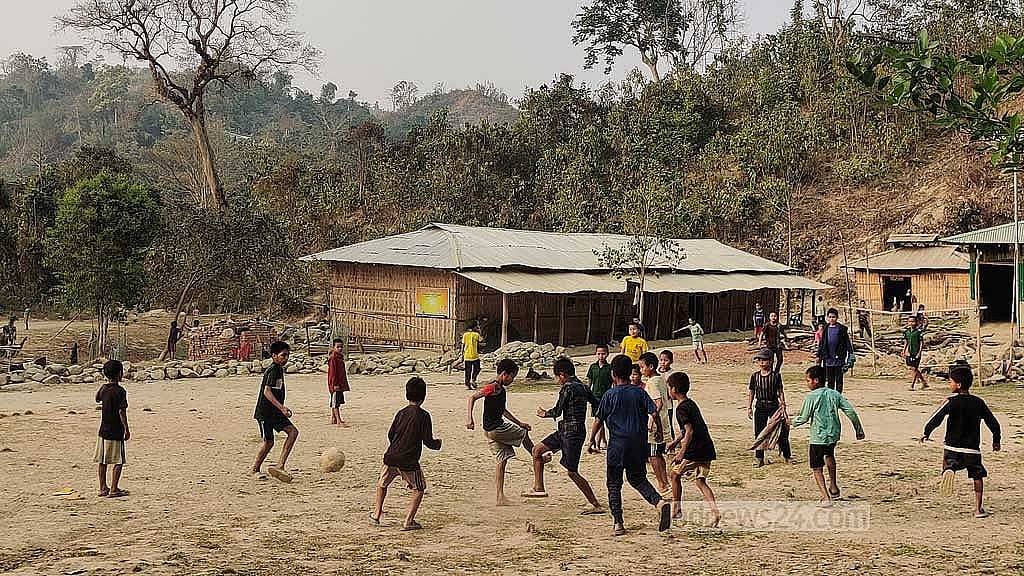
Hostel Bringing Jhum Farmers' Children Back to School
For the indigenous Mro families, survival depends on jhum cultivation.
Historically, this meant children accompanied their parents to the hills at dawn, returning only at dusk.
Exhausted and without any academic guidance at home, these children inevitably dropped out of the local Yangring Para Government Primary School.
The trend began to change two years ago when Uthoinggya Marma, a 44-year-old social activist, visited the area for emergency work.
"I noticed the adults were all away in the jhum fields, and the children were either with them or wandering aimlessly. There was no one to look after their education," Uthoinggya told bdnews24.com.
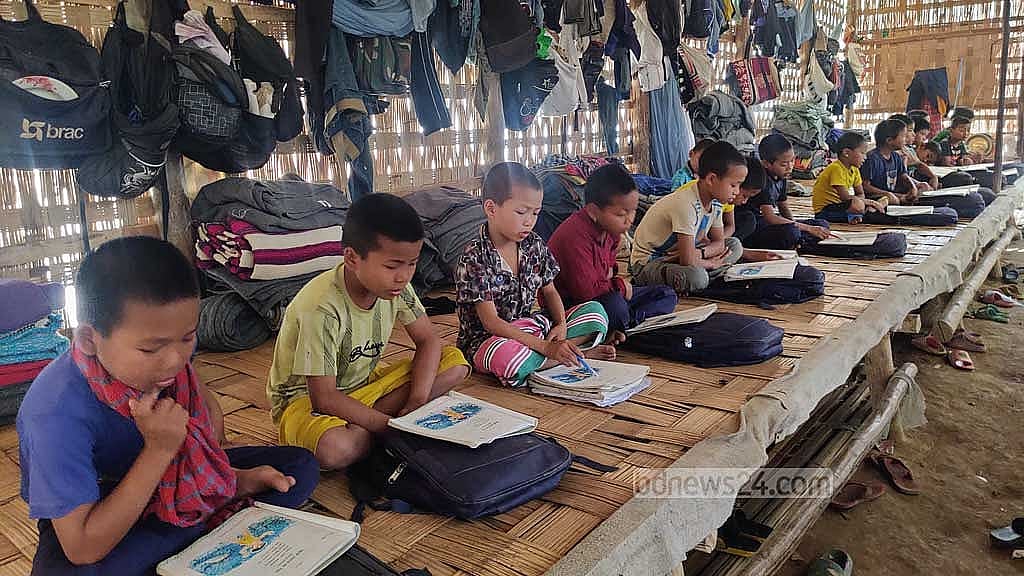
"In an area with no mobile network and extreme remoteness, even local representatives couldn't monitor their progress. I thought of keeping them in one place to prevent them from dropping out," he added.
Uthoinggya, a resident of Lama Municipality, has long worked for the education of marginalised communities.
He also operates an orphanage in Master Para for 150 children and was recognised in 2016 for his work against child marriage and land grabbing.
Determined to stop the cycle of illiteracy in an area devoid of mobile networks and extreme remoteness, Uthoinggya --who is himself currently pursuing an undergraduate degree under the Bangladesh Open University -- conceptualised a community-run hostel.
Sule Mro, a parent from the village, said, "Since the hostel opened, children are studying together. We are always in the fields and couldn't focus on their education. Now they can study regularly."
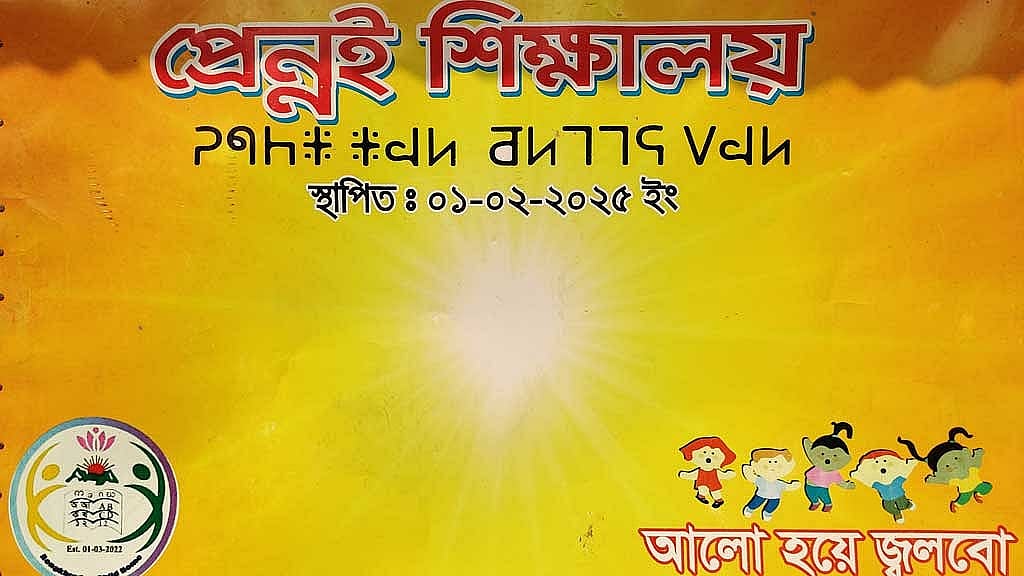
Overcoming Obstacles to Build the Hostel
The establishment of “Prennoy” was a collective labour of love.
Thirty-six neighbourhoods from Wards 7, 8, and 9 of Kurukpata Union joined forces. Each family contributed Tk 100 and ten bamboo poles, while the residents of Yangring neighbourhood provided timber and voluntary labour to build the structures.
Convincing parents took months of meetings, the organiser said.
Today, the hostel houses 106 boys and 38 girls, and their lives are governed by a disciplined routine.
"The border area is surrounded by dense forest. Moving from one para to another takes hours. Eventually, we formed a committee and started," said Uthoinggya.
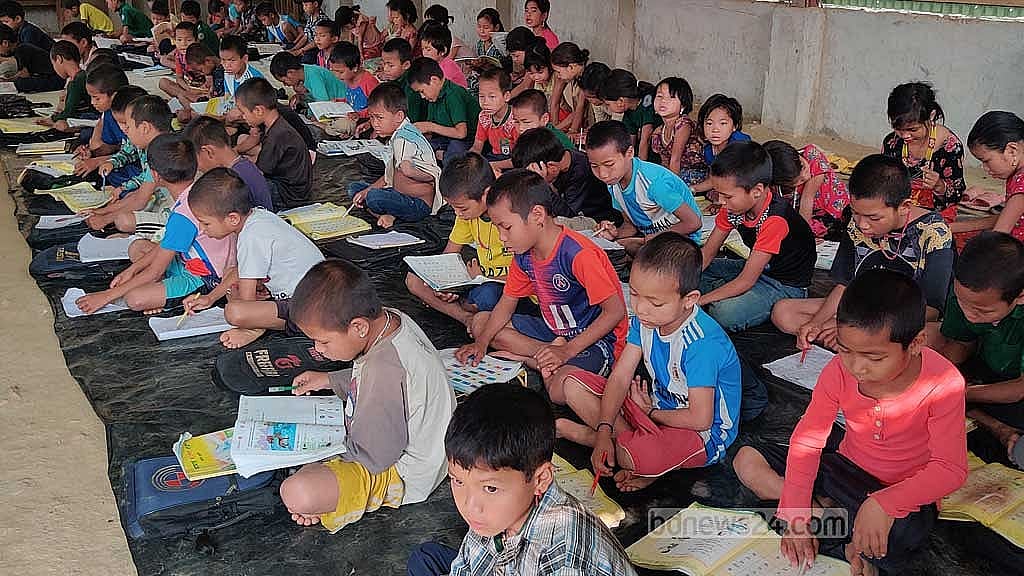
Discipline and Routine of the Hostel
The students wake up at 5:30am for prayer, followed by studying the Mro alphabet from 6 to 7am.
At 9am, they attend the local primary school.
In the evening, they take part in supervised schoolwork along with traditional learning activities.
Assistant teacher Reng Ong Mro highlighted a significant achievement.
"All three teachers here know the Mro script. We teach it for an hour daily. Recently, 80 percent of our students were able to write letters in their mother tongue -- a massive milestone for our community," he said.
Two cooks prepare three meals a day, primarily consisting of rice and vegetables like potatoes, beans, and pumpkin. Fish is served twice a month, and meat is rarely on the menu.
The impact is visible.
Sharmin Akter, headteacher of Yangring Para Government Primary School, noted that students living in the hostel have a 95 percent attendance rate and significantly higher academic performance compared with day scholars.
"Parents from neighbouring hills are now eager to keep their children here because they see the discipline and the quality of learning," she said.
Operational Deficits and Challenges
Despite its success, “Prennoy” faces an uncertain future.
The hostel operates on a monthly budget of approximately Tk 130,000, funded by a Tk 1,000 monthly fee per student.
Many families, however, are too poor to pay, and orphans are sheltered for free.
"The bamboo walls won't last forever," said Yangring Mro, the head of the hostel management committee and the Yangring neighbourhood.
"Our biggest crisis right now is water. In the dry season, the nearby stream dries up, forcing children to trek long distances just to bathe."
Kratpung Mro, chairman of Kurukpata Union Council, expressed fear that if the hostel closes due to funding or water issues, the children will have nowhere to go.
While the Department of Public Health Engineering has discussed installing a gravity flow system (GFS) to bring water from the hills, the lack of mobile connectivity makes coordination difficult.
Alikadam Upazila administrator Monjur Alam confirmed that an application for grain allocation has been forwarded to the district administration.
"If they receive the allocation, it will help with food supplies. We will also coordinate with the Department of Public Health Engineering regarding the water crisis," he said.
For the Mro community, “Prennoy” is more than just a hostel.
It is the only bridge between their ancestral way of life and a future where their children can read, write, and lead.
As local representative Khamlai Mro put it: "In these remote hills, residential schooling isn't a luxury -- it's the only way to ensure these children don't get lost to the jhum fields forever."