Home
+
Published : 05 Jun 2026, 10:01 AM
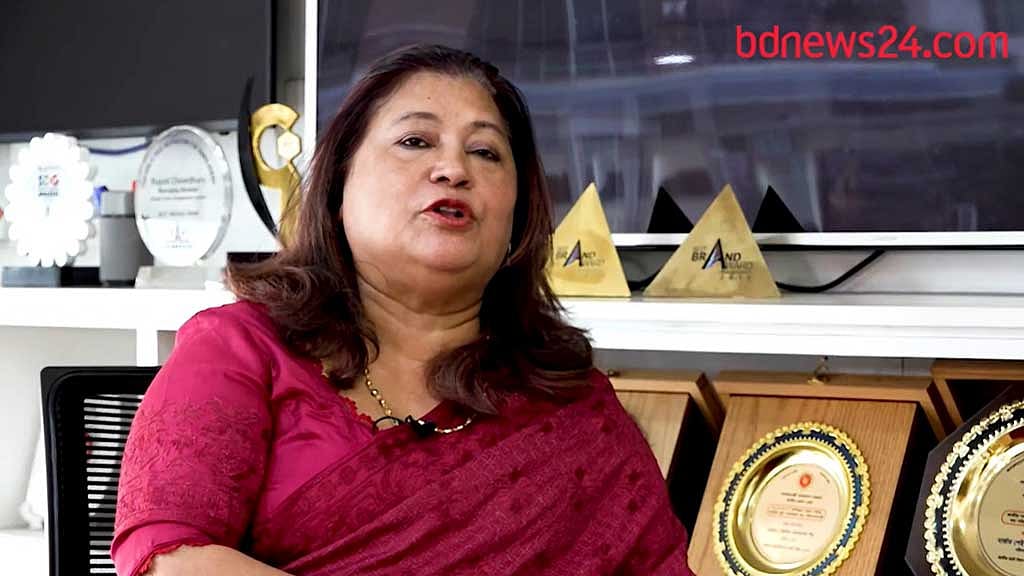
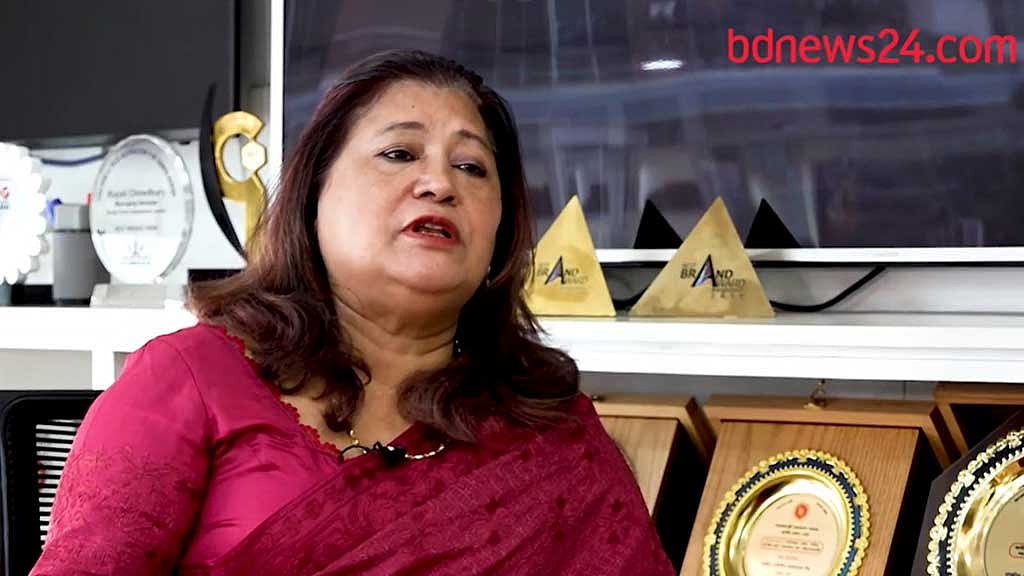
Women’s empowerment across all sectors has been placed at the centre of Bangladesh’s development push by Rupali Chowdhury, managing director of Berger Paints Bangladesh, who has led the company for nearly two decades.
She says women make up half of the country’s population and can play an equal role in national progress if given greater opportunities.
Speaking at bdnews24.com’s interview programme “Chinwag with the Chiefs”, the president of Foreign Investors' Chamber of Commerce and Industry (FICCI) discussed women’s empowerment and Berger’s role in supporting it.
She said Berger’s marketing team has been looking at ways to tap into the country’s vast female workforce, with women footballers emerging as a key area of interest.
“Large sums have been spent on men’s football over the years, sometimes with results and sometimes without. Women footballers, meanwhile, have achieved remarkable success despite limited backing.
“They have won the SAFF Championship and many have inspiring stories of overcoming hardship,” she added.

“As we are already working with women painters, why not women footballers as well?”
Rupali said Berger’s efforts to support women painters remain ongoing and form part of broader long-term plans.
“Empowering women means moving the country forward,” she added.
Rupali joined Berger Paints in 1990 as a planning manager and later worked across marketing, sales and supply chain operations.
She climbed the corporate ladder to assume the role of managing director in 2008, holding the helm for nearly two decades.
During the interview, she explained that her company aims to foster an inclusive society, aligning its Environmental, Social, and Governance (ESG) initiatives with the United Nations Sustainable Development Goals (SDGs)
Asked about Berger’s contribution to women’s advancement, she said the company would be proud if it had played any part in that journey.
“Bangladesh’s development is not possible without women. Football is one area where that contribution can be particularly significant.”
The multinational manufacturing company is currently upskilling female decorators at its proprietary training facility.
According to Rupali, women receive regular training there, with 43 currently working overseas and having completed 33 projects.
“We are creating a pipeline of skilled painters.”
She added that women painters are generally not assigned to newly constructed buildings because of safety concerns. When necessary, they are accompanied by a male colleague.
Rupali, who also serves as chairman and managing director of Jenson and Nicholson (Bangladesh) Limited, said not everyone excels academically and that people possess different types of skills.
“Our responsibility is to help bring those strengths to the surface. As a paint company, there is a natural link with painting as a profession.”
Holding a Bachelor of Science in chemistry from Chittagong University alongside a Master of Business Administration from the Institute of Business Administration (IBA) at Dhaka University, Rupali launched her professional career at the multinational pharmaceutical and chemical conglomerate Ciba-Geigy (Bangladesh) Limited before joining her current employer in 1990.
Describing the development of women painters as a long-held ambition, she said the initiative initially appeared challenging but became easier once the first group showed enthusiasm and capability.
“Women are already carrying out physically demanding work in construction. That convinced us they could succeed in painting as well.
“Painting offers good earnings. Over time, many of them can move beyond being painters and become painting contractors.”
Reflecting on her years in leadership, she said performance and employee engagement remain the key measures of success.
“Our people choose to stay. They enjoy working here and their productivity is high. Those indicators suggest the organisation is moving in the right direction.”