Published : 07 Jul 2026, 06:54 AM
Updated : 09 Sep 2026, 11:16 AM


Borderline Existence
Under death's shadow: Nine killed in one night as torrential monsoon rains trigger devastating landslides across overcrowded camps
No safe ground: Over 350,000 refugees remain stranded on fragile, deforested hillsides with nowhere else to relocate
Strained aid budgets: Critical disaster prevention efforts are being scaled back as severe funding shortages hamper camp safety
As millions watched the World Cup into the early hours, families in Bangladesh's Rohingya camps spent the night listening for the sound they dreaded: the hillside giving way.
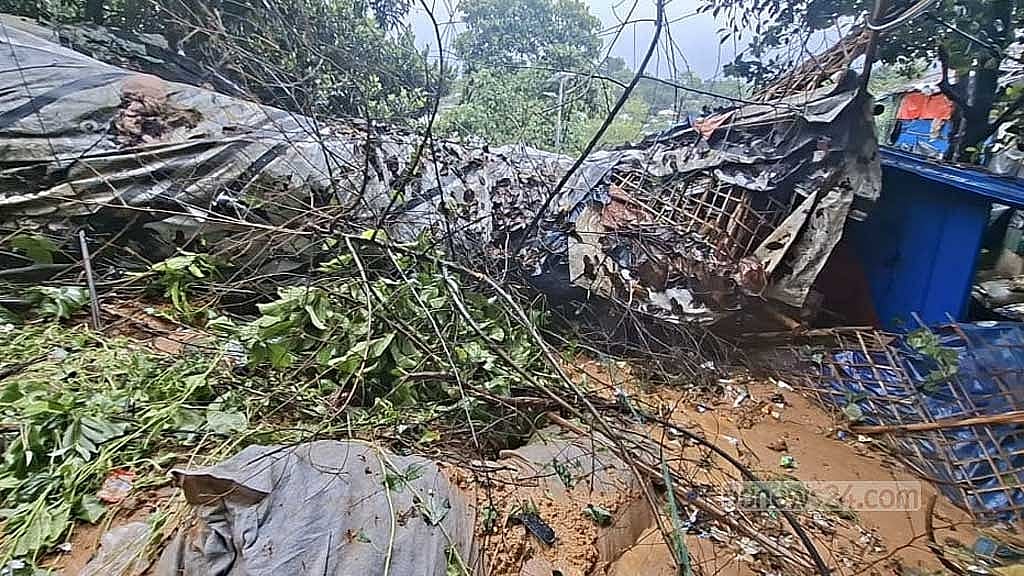
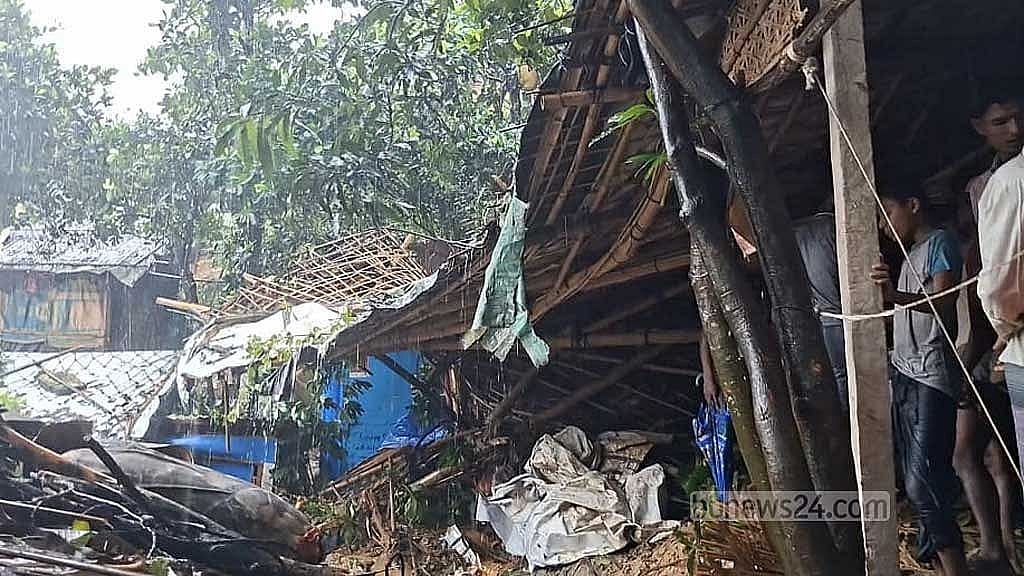
Relentless monsoon rain triggered a series of landslides across the refugee settlements in Cox's Bazar, killing eight Rohingya within three hours in the Jamtoli, Kutupalong and Balukhali camps in Ukhiya in the wee hours of Monday. Another individual died the same night in a landslide in Cox's Bazar town.
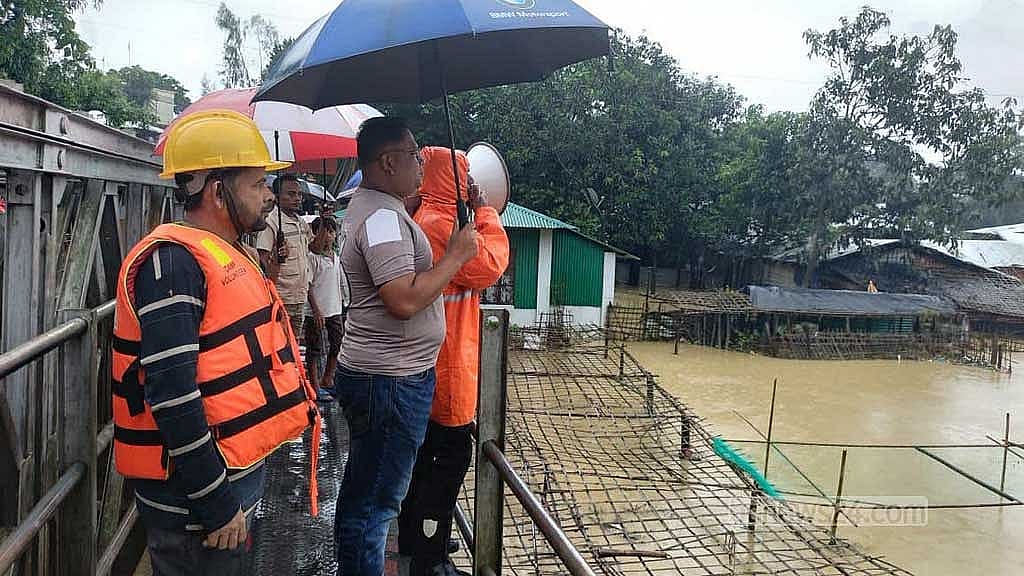
For the hundreds of thousands still sheltering on fragile hillsides, the tragedy was not an isolated disaster. It was another reminder that every rainy night is lived under the shadow of death.
According to the UN Refugee Agency, UNHCR, 371,334 Rohingya -- or 84,381 families -- remain in areas considered highly vulnerable to flooding and landslides.
The agency warns that funding shortages are weakening efforts to prepare for disasters, even as the monsoon intensifies.
'No Peace Anywhere'
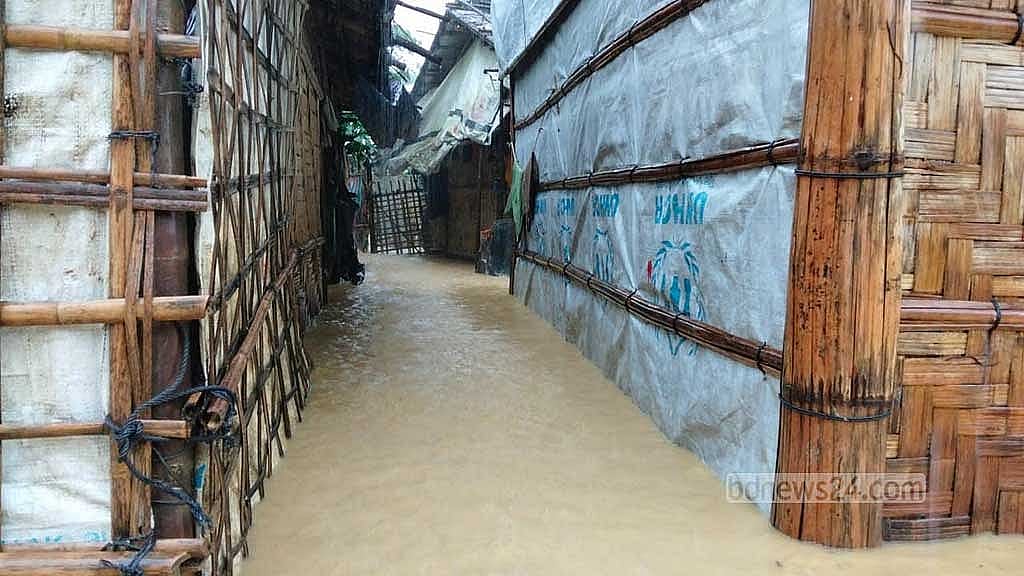
In Camp 5, where floodwater has seeped into homes despite the relatively flat terrain, community leader Dil Mohammad spoke with quiet resignation.
"When it rains heavily, people living on the hills fear the slopes will collapse. Here, we fear the water will rise. It feels as though there is no peace anywhere."
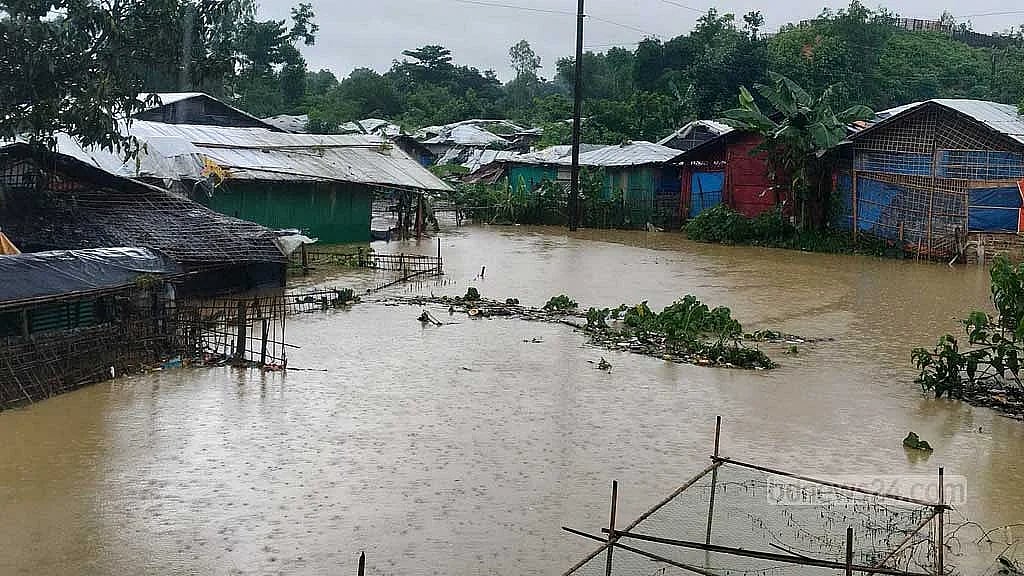
Residents say at least 200 shelters in the camp have been flooded, with the worst damage concentrated in one section. Families have piled clothes and food onto makeshift platforms, while others have sought refuge with relatives on higher ground.
"This tiny shelter is our last refuge," Dil Mohammad said.
"When disaster strikes, we have to abandon even that. Our suffering never seems to end."
Camp resident Mona Mia said sleep disappears whenever heavy rain begins.
"All night we worry about landslides or floodwater entering our homes. Our greatest fear is for our children."
For many, official warnings offer little comfort.
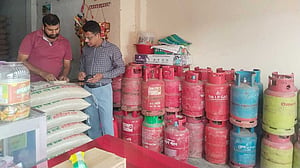
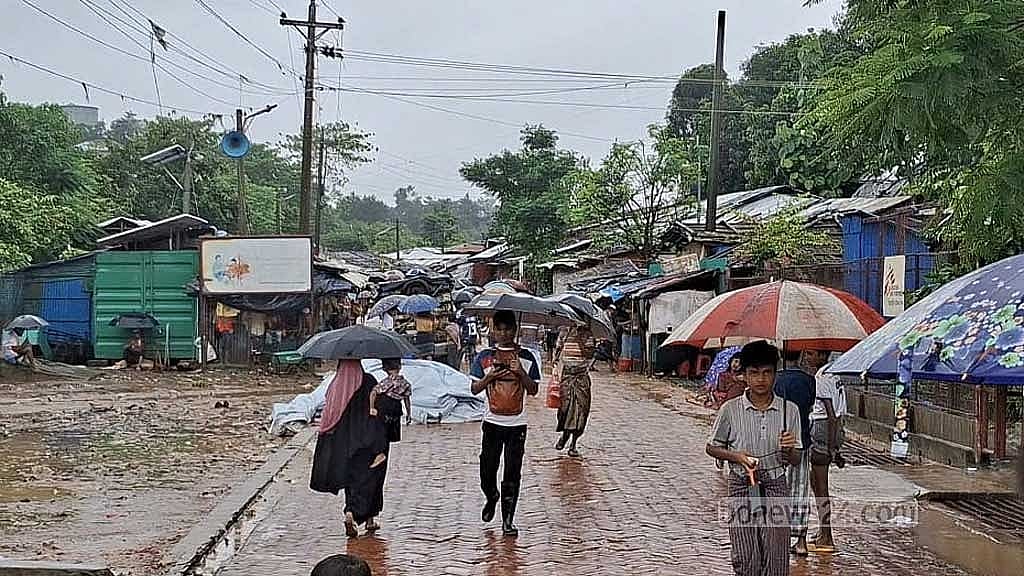
Nurul Islam, carrying an LPG cylinder back to his shelter in Balukhali Camp 11, said camp authorities regularly urge residents in dangerous areas to move to safer locations before storms.
"But the places they ask us to go are hardly any better," he said. "That's why many people don't want to leave."
Asked what assistance he wanted most, he paused before answering softly: "I just want to return to my own home in Burma, brother."
Too Many People, Too Little Safe Land
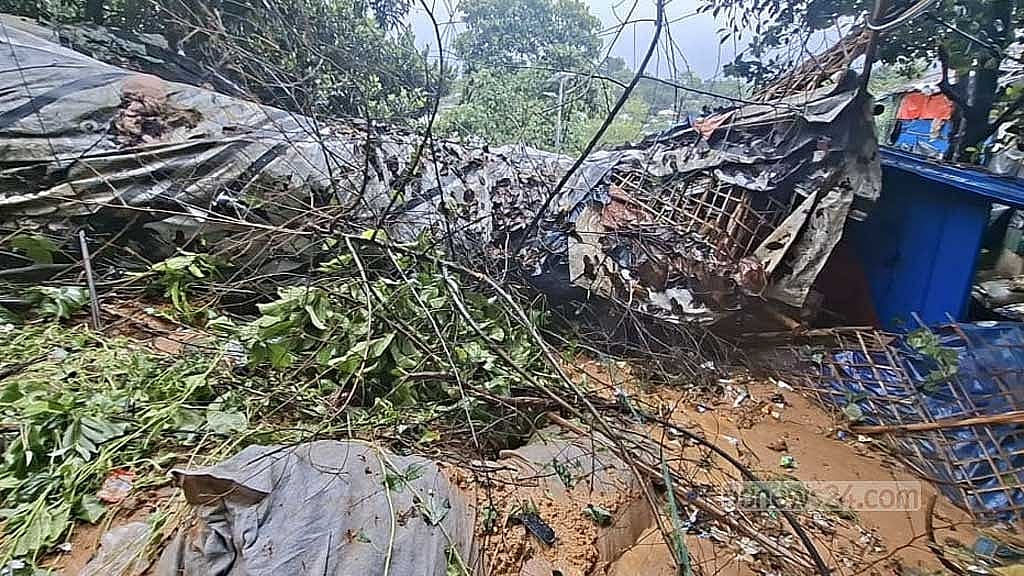
Refugee Relief and Repatriation Commissioner Md Mizanur Rahman said the latest landslides killed one child in Camp 7, four people in Camp 11 and three in Camp 15.
He estimates that between 150,000 and 200,000 Rohingya still live in the camps most exposed to landslides, including camps 9 through 15.
Authorities began relocating vulnerable families before the monsoon, but a shortage of safe land -- compounded by the arrival of around 150,000 new refugees over the past two years -- has left many with no option but to build shelters on unstable slopes.
UNHCR said humanitarian agencies recorded 76 weather-related incidents between Jul 4 and Jul 6, including 21 landslides. The disasters affected 5,249 refugees, killed nine people, injured six and forced 386 others to evacuate.
The agency says volunteers played a vital role in raising alarms, rescuing neighbours and providing first aid, but preventive efforts have been scaled back because of funding shortages.
Under the 2026 Joint Response Plan, humanitarian agencies are seeking $710.5 million to provide life-saving assistance to 1.56 million people, including 1.25 million Rohingya refugees and more than 300,000 members of host communities.
Meanwhile, Cox's Bazar recorded 338mm of rain in just 33 hours, with forecasters warning that more heavy downpours are likely.
For the Rohingya, that forecast means something more than another spell of bad weather.
It means another night spent waiting to discover whether morning will come before the hillside does.