Home
+
Published : 18 Jul 2026, 12:42 AM
At a time when the state-owned flag carrier Biman Bangladesh Airlines is planning to acquire aircraft from both Boeing and Airbus, private carrier US-Bangla Airlines has also announced a major fleet expansion.
The airline aims to compete more aggressively with foreign carriers and capture a larger share of Bangladesh's aviation market.
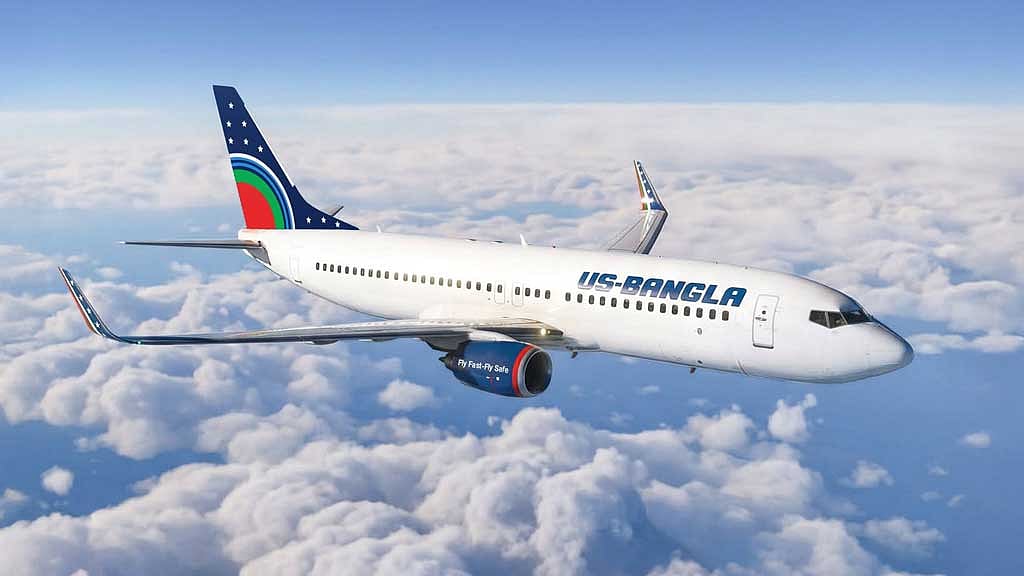
Twelve years after its establishment, US-Bangla has announced plans to invest $1.11 billion or Tk 140 billion to add 21 new Boeing aircraft to its fleet -- the largest fleet expansion ever undertaken by a private airline in the country.
At the same time, the airline has proposed operating Hajj flights at the country's lowest fare and has announced plans to resume flights to Kathmandu, a route suspended after its fatal 2018 crash.
Aviation industry experts note that only four of the 41 airlines operating from Dhaka are Bangladeshi.
More than 80 percent of Bangladesh's international passengers travel with foreign airlines.
According to industry insiders, passenger demand is so high that even airlines offering poor service continue to survive.
They argue that if local airlines -- both government-owned and private -- can expand, Bangladesh could retain more passengers and save significant amounts of foreign currency currently spent on foreign carriers.
Among Bangladesh's four airlines, US-Bangla currently operates the largest fleet with 25 aircraft, compared to 19 aircraft operated by Biman Bangladesh Airlines.
Biman recently signed an agreement with Boeing to acquire 14 new aircraft, while the government has also announced plans to purchase Airbus aircraft.
It published a tender on Thursday to lease three single-aisle Boeing aircraft on a dry lease basis.
Amid these developments, US-Bangla announced its own plan to acquire 21 Boeing 737-8 aircraft.
In a letter dated Jul 12 addressed to BIDA Executive Chairman Chowdhury Ashik Mahmud Bin Harun, the airline outlined its $1.11 billion investment.
The letter also invited the BIDA chairman to attend the official signing ceremony with Boeing and international aircraft leasing companies scheduled for Jul 29.
US-Bangla said the investment would be financed through five international aircraft leasing companies.
"Under this project, five internationally renowned aircraft leasing companies will facilitate an investment of $1.11 billion."
The airline expects all 21 aircraft to join its fleet between January and December 2027.
By contrast, Biman's ordered aircraft are expected to arrive gradually over nearly a decade, giving US-Bangla an advantage in expanding its fleet more rapidly.
Bangladesh currently has around 10 million expatriate workers, generating enormous demand for international air travel.
Many Passengers
According to Shahjalal International Airport authorities, 12.72 million passengers used the airport in 2025, up from around 12.5 million in 2024.
Of the four Bangladeshi carriers, only Biman and US-Bangla currently operate international flights.
Industry experts estimate that foreign airlines carry more than 80 percent of Bangladesh's international passengers.
In its Commercial Market Outlook 2025–2044, Boeing describes South Asia as the world's fastest-growing aviation market, driven by: strong economic growth, an expanding middle class and rapid urbanisation.
The report predicts that air traffic growth will outpace GDP growth by nearly three percentage points annually over the next two decades. Government reforms and more liberal foreign investment policies are also expected to improve airlines' access to capital.
Back in 2023, Boeing Commercial Airplanes' managing director for marketing in Asia Pacific and India, Dave Schulte, said in Dhaka that Bangladesh's air travel market would likely double within 10 years, largely due to increasing regional traffic involving India and West Asia.
Boeing forecasts that South Asian airlines will need more than 2,300 new commercial aircraft over the next 20 years, tripling the region's active fleet from around 700 aircraft today.
About 90 percent of these aircraft are expected to be narrow-body models like the Boeing 737, while the remaining 10 percent will be wide-body aircraft such as the Boeing 787.
Industry sources say this optimistic outlook has encouraged international leasing companies to invest in US-Bangla.
A Difficult History for Private Airlines
Over the past three decades, around 10 private airlines have launched operations in Bangladesh, but six shut down within a decade.
High airport charges, competition with the state-owned flag carrier, and financial difficulties contributed to their failures.
In 1995, “Aero Bengal Airlines” began operating flights on domestic routes as the first private airline in Bangladesh; however, it wound up its operations after four years. “Air Parabat” commenced flight operations in 1997 but also shut down within four years, in 2001.
“Air Bangladesh” was launched in 2005, followed by the launch of “Royal Bengal Airlines” in 2007.
These two airlines also shut down due to persistent losses. Launched in 2007, “Best Air” began flight operations in 2008; however, its operations ceased within a year.
United Airways, established in June 2005, ceased operations on Feb 5, 2016. GMG Airlines, which began operating international flights in 2004, shut down in 2012.
Regent Air, which launched in 2010, ceased operations in 2020 during the COVID-19 pandemic.
The then finance minister AHM Mustafa Kamal informed Parliament at the time that their bank accounts had been frozen due to massive debt.
Novoair, launched in 2013, remains Bangladesh's oldest operating private airline. Although it temporarily suspended operations last year before resuming, it currently does not operate international flights.
US-Bangla has now set a new benchmark by operating 25 aircraft, with another 21 on order.
Its spokesperson Kamrul Islam said the airline plans to launch services to destinations including: Kuwait, Bahrain, Madinah, Hong Kong, Penang (Malaysia), and Johor Bahru (Malaysia).
Soon after announcing the fleet expansion, US-Bangla submitted a proposal to the government to operate Hajj flights at Tk 98,000 per passenger.
For comparison, the airfare for Hajj pilgrims in 2026 was Tk 154,830 per person, making airfare one of the largest components of Hajj package costs.
Kamrul said, "Since only two Saudi airlines [Saudia and Flynas] and one Bangladeshi airline [Biman) currently operate Hajj flights, we want to provide this service at a much lower price. We are prioritising service over profit."
The airline also plans to increase flight frequencies on existing routes.
US-Bangla also plans to resume flights to Kathmandu.
The route was suspended after Flight BS211 crashed while landing at Tribhuvan International Airport on Mar 12, 2018.
The aircraft was carrying 71 people, and 51 people were killed, including 22 Nepalese, 1 Chinese national with the remaining victims Bangladeshis.
Kamrul said the airline hopes to restart Kathmandu flights around September.
Former Biman director and aviation expert Kazi Wahedul Alam welcomed the investment, saying: "No government or private airline in Bangladesh has ever undertaken such a large-scale fleet expansion at one time.
“This is undoubtedly a major achievement for US-Bangla Airlines. Expanding its international network is a positive development. It will contribute to economic growth, tourism, exports, and investment.
“Operating these new aircraft will also require a large number of pilots, engineers, and support personnel, creating substantial employment opportunities in Bangladesh."