Published : 06 Apr 2026, 07:20 AM
Updated : 21 Aug 2026, 03:33 PM


Reform Radar: Mandate vs Mechanism
Implementation standoff: Despite a 69 percent referendum mandate, the July Charter is stalled because the ruling BNP refuses to join the Constitutional Reform Council, creating a total legislative impasse.
Legitimacy debate: The government views the July Charter's implementation order as legally invalid, while the Opposition argues that standard amendments cannot satisfy the structural “mass uprising” demands.
Ordinance rollback: Parliament’s proposal to repeal or delay interim laws on judicial appointments and police oversight has triggered warnings that key institutional reforms are being dismantled.
Strategic friction: The BNP has pivoted away from the referendum process it once supported, citing concerns over legal “sophistry” and potential delays to its own governance programme.
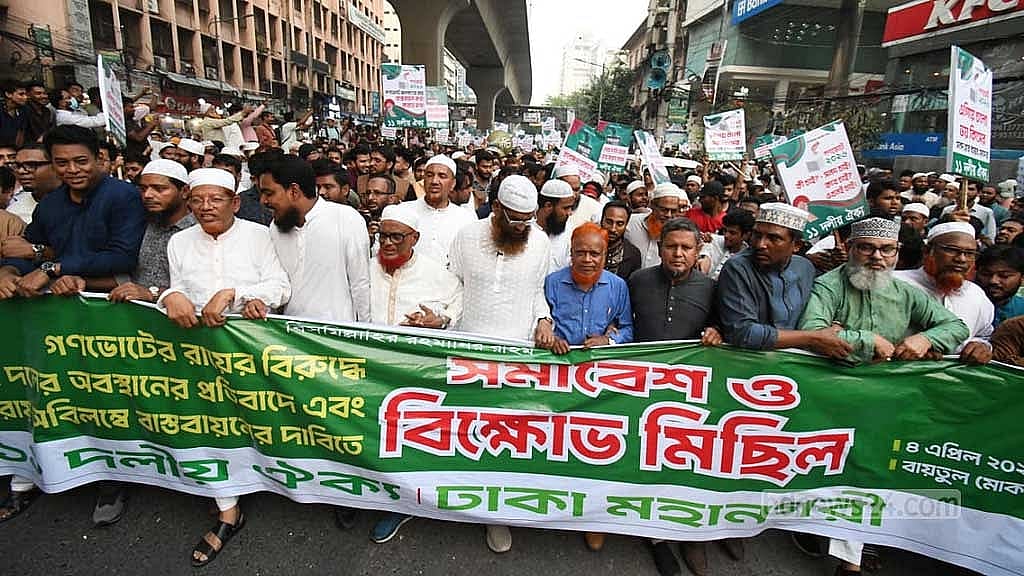
Escalating unrest: As formal channels fail, the movement is returning to the streets; the Jamaat-led 11-party alliance has mobilised nationwide protests, eying a major Apr 24 rally.
The promise of sweeping reform -- born out of a mass uprising and sealed by a nationwide referendum -- now hangs in uncertainty, as politicians struggle to agree on how, or even whether, to bring the July National Charter to life.
What began as a blueprint for transformation has instead ignited fierce disputes in parliament and beyond, spilling onto the streets in protests, ultimatums and rival claims to legitimacy.
At the heart of the conflict lies a fundamental question: can the state remake itself within the framework of its existing Constitution, or does reform require a break from it?
Last week, that question fuelled heated exchanges in parliament, triggered a walkout by opposition members, and drew thousands to protest rallies led by the Jamaat-e-Islami and its 11-party alliance demanding implementation of the referendum verdict.
State Minister for Planning Zonayed Saki attempted to clarify the division, saying the disagreement is not over the July Charter itself, but over the process of implementing it.
Yet that distinction has done little to ease tensions.
From Uprising to Mandate
The July Charter emerged from the political upheaval of Aug 5, 2024, when a mass uprising toppled the Awami League government, ending Sheikh Hasina’s uninterrupted one and a half-decade rule.
In the aftermath, an interim administration launched an ambitious reform programme targeting key state institutions, including the Constitution, judiciary, police, Anti-Corruption Commission, electoral system and public administration.
Over time, the scope expanded with the formation of five more reform commissions.
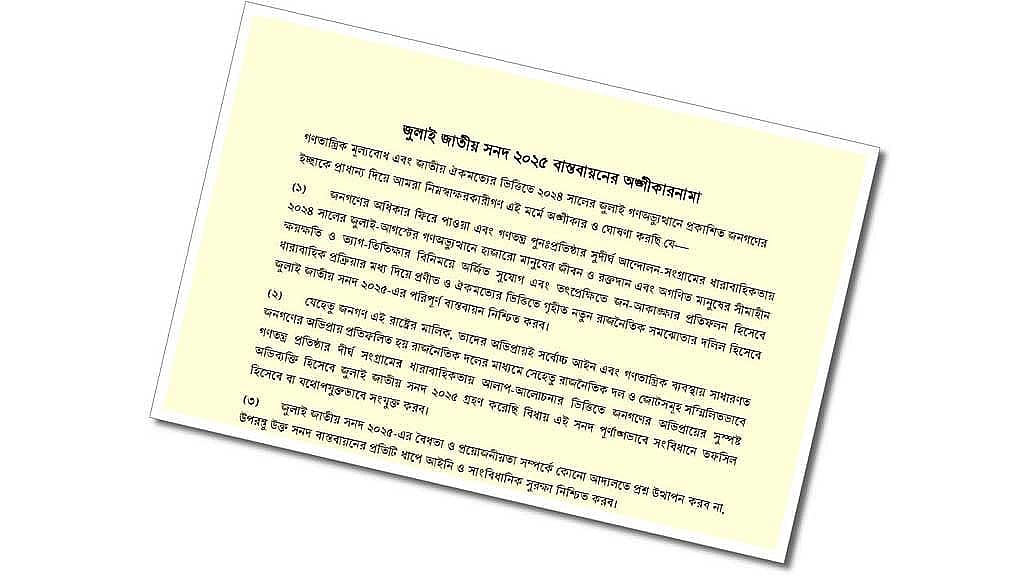
After months of negotiations, consultations and debate with political parties, the Charter was formally adopted on Oct 17 last year in the presence of interim leader Nobel laureate Muhammad Yunus.
In November, President Mohammed Shahabuddin issued the “July National Charter (Constitutional Reform) Implementation Order”, under which a referendum ordinance was introduced.
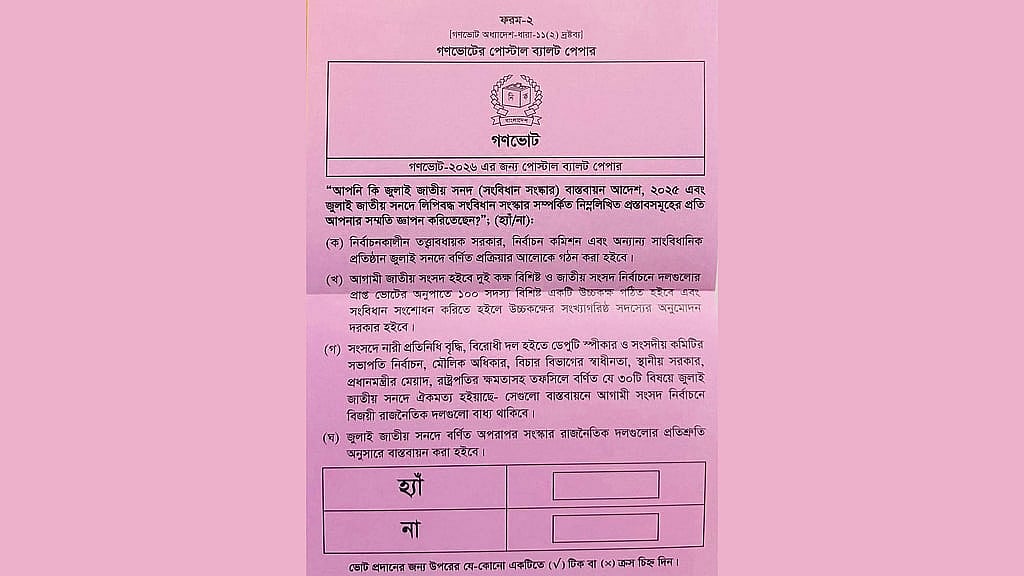
The referendum, held on Feb 12 alongside the parliamentary polls, saw nearly 69 percent of voters support constitutional reform.
Under the same order, a Constitutional Reform Council was to be convened within 30 calendar days of the announcement of election results.
But that process has stalled.
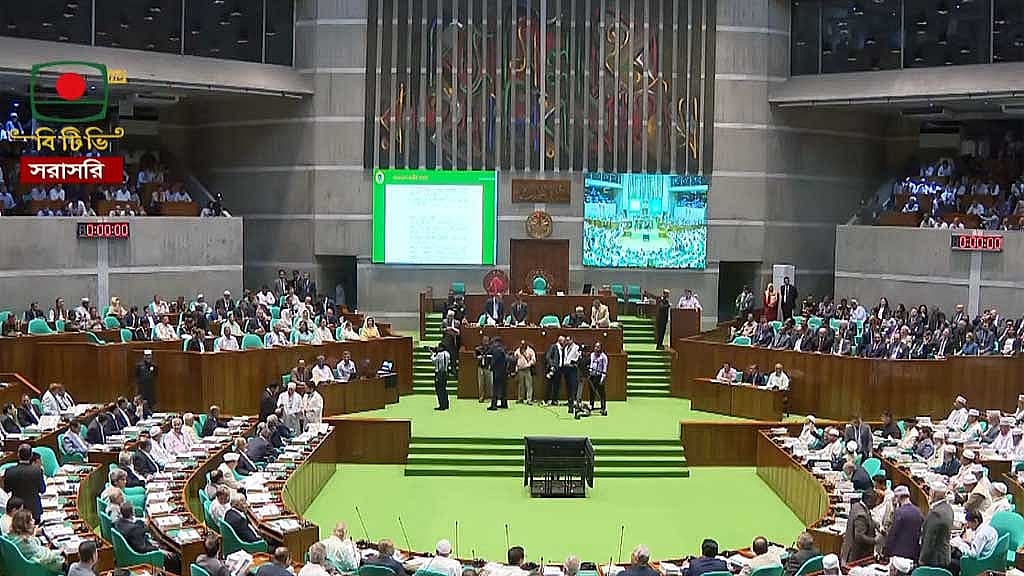
Lawmakers from the Bangladesh Nationalist Party (BNP), which secured an absolute majority with 209 seats and formed the government, have not taken oath as members of the council.
In contrast, 77 members from the Opposition alliance led by Jamaat have taken the oath.
Without BNP participation, implementation of the July Charter -- or any constitutional reform -- remains effectively impossible.
Reform Stumbles at the Start
Even before addressing constitutional questions, the reform process has encountered procedural obstacles.
During its about 18 months in power, the interim government issued 133 ordinances. To convert these into law, parliament formed a 13-member special committee on Mar 12, chaired by Zainul Abedin.

On Mar 15, the ordinances were referred to the committee for review.
The committee’s report has proven to be contentious:
• 98 ordinances recommended to be passed unchanged
• 15 to be amended
• 20 not to be enacted immediately
Of those 20, four have been proposed for repeal and safekeeping.
These include ordinances related to the Parliament Secretariat’s interim provisions, judicial appointments, the Supreme Court Secretariat and amendments to its structure.
The report notes that these ordinances were originally introduced to create interim or special institutional frameworks -- issues also reflected in the July Charter’s reform proposals for the judiciary.
Opposition members on the committee -- Mujibur Rahman, Rafiqul Islam Khan and GM Nazrul Islam -- submitted formal dissent notes, insisting that several ordinances be passed without change.
They specifically highlighted laws concerning the National Human Rights Commission, prevention of enforced disappearances, the Police Commission, Anti-Corruption Commission amendments, judicial appointments, the Right to Information Act, microfinance banks, revenue policy and the referendum ordinance.
They warned that allowing the Human Rights Commission ordinance to lapse could undermine Bangladesh’s international commitments and weaken institutional independence.
On laws addressing enforced disappearances, they argued that requiring prior government approval to investigate allegations against security forces could obstruct impartial inquiries.
Transparency International Bangladesh also expressed “anger and disappointment” over recommendations to repeal or delay key ordinances, urging immediate conversion into law after proper review involving stakeholders.
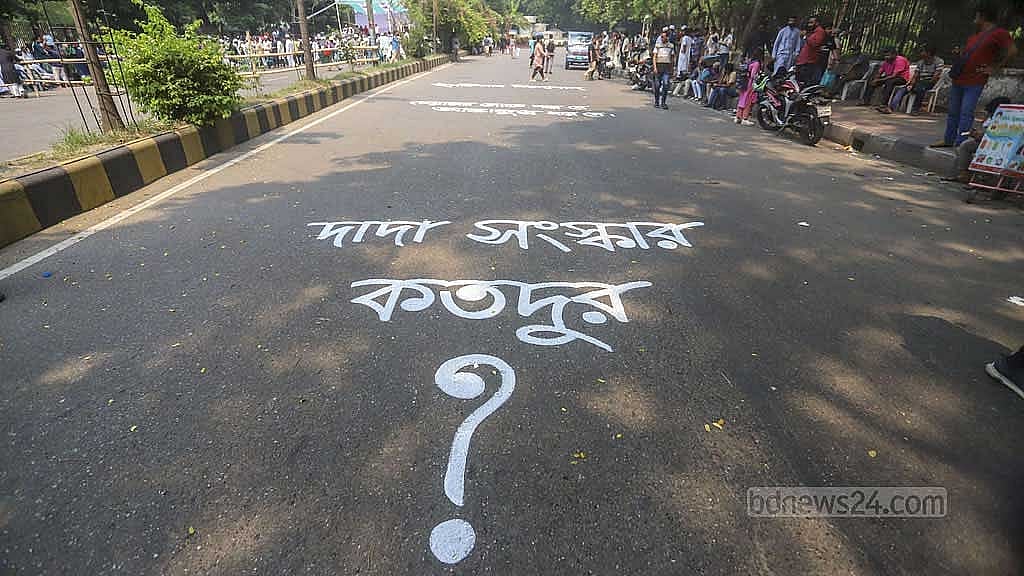
Why the Hesitation?
The BNP’s stance on the referendum ordinance has raised questions.
A senior party leader said the BNP had initially supported the referendum out of political necessity.
“Opposing it at the time would not have been accepted by the public,” he said.
He added that the party had concerns about interim head Yunus, particularly over what it saw as a possible attempt to delay or derail elections by prioritising the referendum and student-led political forces.
Mahbub Uddin Khokon, a BNP leader and member of the parliamentary committee, argued that the referendum had already served its purpose.
“The referendum has already taken place. Its effectiveness is over,” he said, adding that any more steps would require constitutional amendments.
He also criticised the interim government for not consulting political parties on the referendum’s four questions.
A Legal Dead End?
Some analysts see the debate itself as misplaced.
Badiul Alam Majumdar, a member of the National Consensus Commission which brought political parties together for reform talks, said the referendum is now legally “spent”, but remains valid under the doctrine of factum valet -- meaning what has been done cannot be undone.
“The vote has already taken place,” he said. “Now debating its validity is a distraction.”
He cited past political precedents, including the transition of 1991, to argue that popular consensus can sometimes override strict constitutional constraints.
“What we are seeing now is sophistry,” he added. “And the nation will ultimately pay the price.”
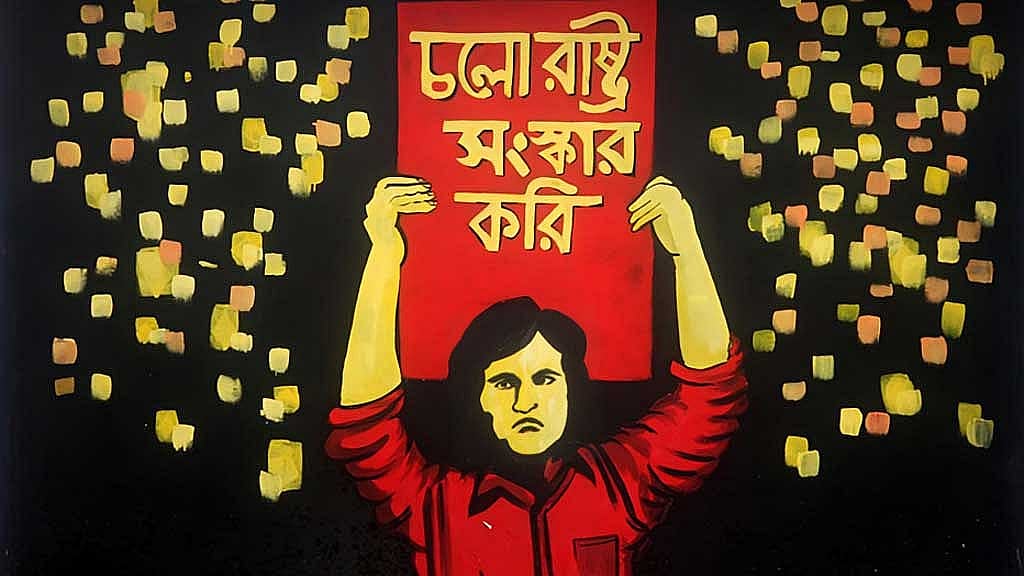
Reform or Amendment?
At the core of the dispute is a deeper divide: whether the July Charter represents structural reform of the state, or merely constitutional amendment.
Home Minister Salahuddin Ahmed rejected the legal basis of the implementation order, calling it invalid.
“This is not a lawful instrument,” he said, arguing that while presidents once had such powers, that authority ceased after 1973.
He also questioned the legitimacy of the proposed Constitutional Reform Council, saying it has no constitutional basis.
Opposition leaders strongly disagree.
Jamaat-e-Islami leader AHM Hamidur Rahman Azad argued that routine amendments cannot fulfil the goals of the July Uprising.
“This was not about minor adjustments,” he said. “It was about structural reform.”
He proposed forming a separate Constitutional Reform Council with a six-month mandate, operating alongside parliament without abolishing the Constitution.
Promises and Contradictions
The BNP itself had pledged sweeping constitutional changes ahead of the election.
Party chief, and now the premier, Tarique Rahman promised to restore “absolute faith and trust in Almighty Allah” in the Constitution, limit any individual from serving more than 10 years as prime minister, amend Article 70 to allow limited floor-crossing, introduce an upper house, and rebalance powers between the president and prime minister.
Opposition leader Shafiqur Rahman pointed to these commitments.
“You promised reforms in your 31-point plan,” he said. “Then why retreat now? Why call for a referendum and urge people to vote ‘Yes’?”
He accused the BNP of contradicting its own pledges and disregarding the people’s verdict.
Back to the Streets
With parliament deadlocked, the movement is shifting back to the streets.
NCP Convenor Nahid Islam has called on former interim leaders, including Yunus, to speak publicly on the issue.
The 11-party alliance has launched protest programmes nationwide, vowing to compel implementation of the July Charter. A major rally is planned for Apr 24 at Suhrawardy Udyan in Dhaka.
“We will continue our movement and mobilisation,” said Mamunul Haque, a key alliance leader.
“We will unite political forces and remain uncompromising in achieving the goals of the July Uprising.”
An NCP leader said implementation of the July Charter remains a top priority for the party.
For now, the July Charter stands suspended between popular mandate and political reality -- a reform vision endorsed by millions, yet entangled in legal ambiguity and partisan struggle.
Whether it becomes the foundation of a transformed state, or another unrealised promise, will depend not only on law, but on the will -- and compromise -- of those shaping the country’s future.