Published : 23 Mar 2026, 07:07 AM
Updated : 21 Aug 2026, 03:30 PM


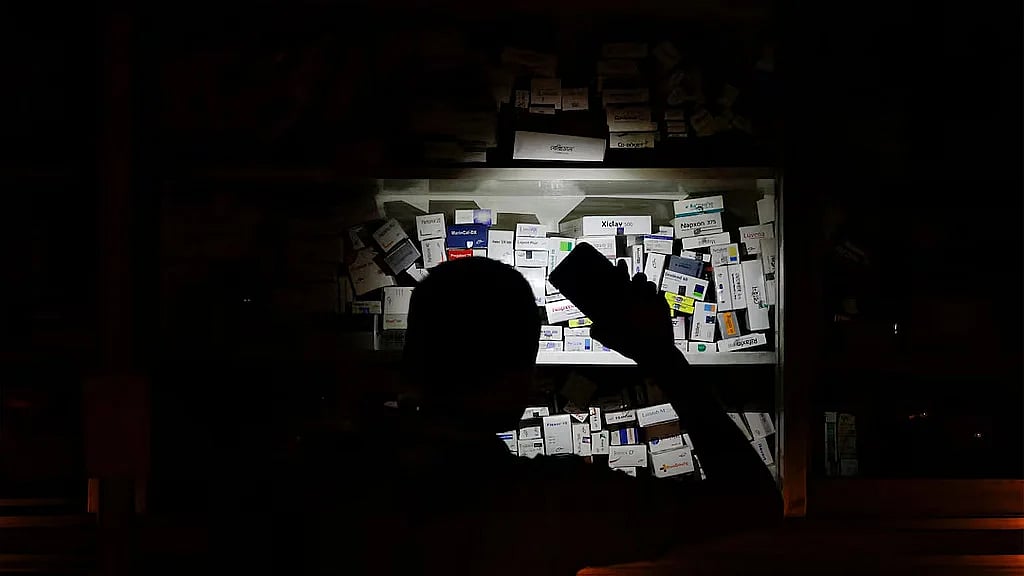
“I’m enjoying an old-fashioned Eid in the village. No electricity since afternoon. Had to buy candles for Iftar after ages -- the candlelight didn’t feel too bad,” wrote Ataur Rahman, a Dhaka-based journalist visiting his home in Shariatpur on Eid holidays.
The message was tinged with irony, but the frustration was unmistakable.
“My phone is about to die. I called the local Rural Electrification Board official -- he’s on Eid leave. Told me to call the complaint centre. No one picks up. This Eid, it’s clear -- we’re in for trouble.”
Posted on the eve of Eid, his words echoed far beyond his village. Across Bangladesh, similar accounts emerged -- of families returning home for celebration only to find themselves in prolonged darkness.
In Cumilla’s Burichang, Smriti Das arrived to spend Eid with her family. The experience, she said, was far from festive.
“I came home [day before Eid]. I haven’t had even one proper hour of electricity,” she told bdnews24.com, describing the ordeal of managing with children accustomed to city life.
Her experience was not isolated.
Where Power ‘Visits in Passing’
In many villages, electricity proved to be fleeting, unpredictable, and unreliable.
In Muradnagar’s Balighar village, resident Rashid Ahmed wrote on Facebook: “Electricity visits like a guest. Whether it’s extreme heat or storms, it doesn’t stay. Over the past three days, we’ve barely had two to three hours in total.”
Habib Bhuiyan, a businessman visiting Daudkandi from Dhaka, described a similar pattern: “There was no electricity the whole day. It came for 10 or 15 minutes a few times.”
From Barishal’s Gournadi, journalist Asif Islam Shawon reported: “Very bad. No power since afternoon. It’s back now, but earlier it came for just a few minutes at a time.”
In Tangail, Gazipur, and Gopalganj, the accounts repeated themselves -- long outages punctuated by brief, erratic returns.
Imam Hossain, visiting from Europe, fell ill in the heat.
“There’s no power since morning. It goes even before the wind starts. Last day, it was out all day. Today again, nothing. It comes for half an hour at best. I can’t even charge my phone,” he said.
For many, even basic communication became difficult.
A Mismatch of Experience and Data
Yet the official narrative tells a different story.
According to the Bangladesh Power Development Board (BPDB), there is no shortage of electricity. Demand has dropped sharply during the Eid holidays, aided by cooler weather and the closure of factories.
Just days before Eid, demand stood above 11,000MW. In recent days, it has fallen to between 6,000 and 7,000MW -- levels comparable to winter.
Officials insist supply is more than adequate.
“There is no crisis in production or supply,” said BPDB Secretary Md Rashedul Haque.
With demand low, authorities say coal- and oil-based plants alone are sufficient to meet needs, while around 3,000MW continues to come from gas-fired plants.
Concerns over fuel shortages linked to the Iran conflict, they added, have had no impact on generation.
So why are vast swathes of rural Bangladesh in darkness?
The Fault Line: Distribution
The answer, officials say, lies not in generation -- but in distribution.
Most affected areas fall under the Rural Electrification Board (REB), which supplies power to around 80 percent of rural Bangladesh.
“We don’t have a production problem -- it’s distribution,” said REB Member (Distribution and Operations) Abdur Rahim Mallik.
“Storms are happening every day. Our lines run through trees -- if a branch falls, the whole line is disrupted. It takes time to restore.”
He acknowledged disruptions in Cumilla, Sylhet, Sunamganj, Mymensingh, and Sherpur, among others.
Not the Same Everywhere
Still, the picture is uneven.
In parts of Netrokona, residents reported only intermittent outages. In Narayanganj and Cox’s Bazar, electricity was described as “normal”. Similar accounts came from Thakurgaon.
For some, the outages were within expected limits. For others, they defined the entire Eid experience.
Even Dhaka was not entirely spared. Residents in Mugda reported repeated power cuts throughout Sunday.
Numbers Tell Another Story
Official data underscores the contradiction.
Bangladesh’s installed generation capacity stands at 28,949MW -- far exceeding current demand.
Recent figures show:
Electricity sources include roughly half from gas, a quarter from coal, and the rest from liquid fuels, hydropower, solar, wind, and imports from India.
A Longstanding Weakness
Energy analyst Shafiqul Alam sees the outages as a familiar pattern.
“This situation highlights the longstanding fragility of rural electricity distribution in Bangladesh,” he said.
Much of the rural grid runs through tree-lined areas, making it vulnerable -- especially during seasonal storms.
“The current disruptions underscore the urgent need for investment in rural distribution networks,” he added, calling for broader modernisation of the national grid.
‘No Load-shedding’, Yet Darkness Remains
Officials maintain that there is no load-shedding.
“There is no shortage. The weather is cool, so there is no extra pressure,” said BPDB spokesperson Md Shamim Hasan, while acknowledging that storms may cause localised disruptions.
But for those sitting in the dark, the distinction offers little comfort.
As candles flicker across villages and phones go silent, the data tells one story, and reality another. In that gap lies a question that lingers long after Eid: if there is no shortage, why is the power still absent?