Home
+
Published : 23 Jun 2026, 09:54 PM
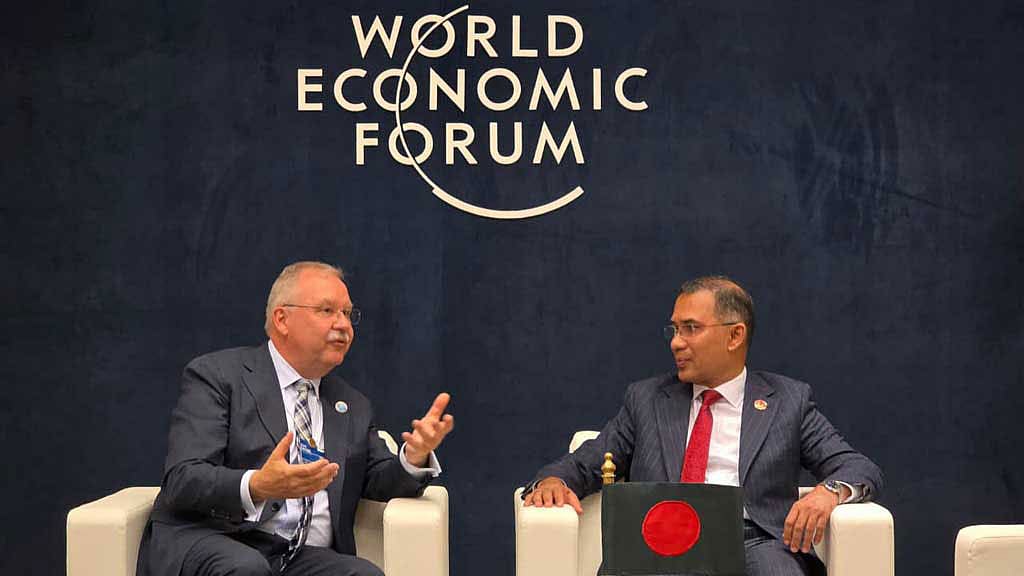
Prime Minister Tarique Rahman has said climate action should not be seen as a cost but as an investment essential for prosperity, stability and a shared future.
Speaking at the World Economic Forum’s “Climate Leadership in a Shifting Global Landscape” session in Dalian on Tuesday, he said climate resilience cannot be achieved by any country alone, and requires partnership, technology, finance and shared commitment.
“We see climate action as a much-needed investment. Together we can build a greener, safer, more sustainable and more just future,” he said.
“As we look ahead to COP31 and COP32, we wish to emphasise three priorities,” he added.
“First, the Loss and Damage Fund must move from promise to delivery with accessible and predictable support for vulnerable nations. Second, climate finance must be more accessible, concessional and responsive, accelerating technology transfer and private investment, alongside stronger mobilisation of the Green Climate Fund (GCF).”
“Third, adaptation must stand alongside mitigation. For countries like Bangladesh, adaptation is not optional, it is a necessity,” he said, adding that the UNCTAD assessment showed the $300 billion climate finance target was insufficient for developing countries.
The session brought together nearly 1,700 representatives from more than 90 countries.
Reiterating Bangladesh’s commitment, he said the government aims to become a leading climate-resilient nation with environmental protection, sustainable development and green growth at the core of its strategy.
He said Bangladesh plans to excavate around 20,000km of rivers and canals over the next five years to restore water flow and reduce flood risks, alongside major projects including the Padma Barrage and modernisation of the Teesta Barrage.
The government has also committed to planting and maintaining 250 million trees, expanding forests through nationwide initiatives involving schools and communities.
He said Bangladesh is investing in wetlands, wildlife habitats, coastal ecosystems, rainwater harvesting and greener construction practices.
A target has been set to generate 20 percent of electricity from renewable sources by 2030 through solar, wind and waste-to-energy projects, alongside promotion of green industries such as jute products and electric vehicles.
He also said plans are under way to develop a national carbon market and expand circular economy initiatives including recycling and waste-to-resource systems.
Bangladesh, he noted, now has 69 factories among the world’s top 100 LEED-certified green factories.
He said Bangladesh, as a frontline climate nation, refuses to be defined by its challenges alone. “We choose to be defined by our resilience.”
He added, “It is time to turn climate pledges into action so the world can move forward with confidence. Bangladesh stands ready to play its part.”