Published : 01 May 2026, 05:06 PM
Updated : 21 Aug 2026, 03:40 PM


Iran’s supreme leader has declared that the only place for Americans in the Persian Gulf is “at the bottom of its waters”, signalling a new era for the region’s history, The Times of Israel reports.
Ayatollah Mojtaba Khamenei, in a written statement on Thursday, struck a defiant tone while insisting the Islamic Republic will safeguard its nuclear and missile capabilities.
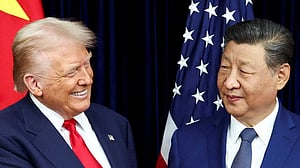
The Israeli daily noted that the address, read by a state television anchor, likely serves to establish a firm position as US President Donald Trump pushes for a broader deal to solidify a fragile ceasefire.
Mojtaba has remained out of the public eye since being reportedly wounded in the Feb 28 attack that killed his father, the 86-year-old supreme leader Ayatollah Ali Khamenei.
Though he has not appeared on video since assuming power in March, anonymous sources cited by the news outlet suggest he remains mentally sharp and conducts meetings via audio conferencing despite severe facial and leg injuries.
Other reports, however, indicate that Mojtaba may not hold the same centralised authority as his father.
Power is allegedly shifting toward senior commanders of the Islamic Revolutionary Guard Corps while the supreme leader remains under intensive medical supervision.
The defiant remarks come as a US Navy blockade begins to choke Iran’s oil industry, preventing tankers from reaching the open sea.
Thursday’s trading saw benchmark Brent crude hit $126 a barrel as Tehran maintains its grip on the Strait of Hormuz.
One-fifth of the world’s crude oil and natural gas passes through this narrow mouth of the Persian Gulf, and the ongoing disruption is piling immense pressure on the global economy.
“By God’s help and power, the bright future of the Persian Gulf region will be a future without America,” Mojtaba said in the statement.
He claimed that Iran shares a common destiny with its neighbours but warned that foreigners acting with "greed and malice" have no place in the region except beneath the waves.
The standoff over the strait has left the US and Iran locked in a tense confrontation.
While Washington aims to deprive Tehran of crucial revenue, the resulting spike in oil and gasoline prices is creating a political headache for Trump ahead of vital midterm elections.
According to the report, a recent Iranian proposal suggested delaying negotiations on the nuclear programme, even though Trump cited the denial of nuclear weapons as a primary reason for going to war.
Marking Persian Gulf Day, Mojtaba made it clear that Iran’s ballistic missile and nuclear programmes are not up for negotiation.
He described these technologies as "identity-based" national assets that 90 million Iranians will protect as fiercely as their own land and airspace.
The leader also revived the "Great Satan" slur, a staple of Iranian rhetoric since the 1979 revolution.
He hinted that Iran intends to keep the waterway closed under its "new management”.
Reports suggest Tehran has been charging some vessels up to $2 million to pass through the strait, which sits within the territorial waters of Iran and Oman.
While Mojtaba argued that Iranian control would make the Gulf more secure, the international community continues to view the strait as an international waterway that should be free of tolls.
Gulf Arab nations, led by the United Arab Emirates, have condemned Iran’s current tactics as being akin to piracy.