Home
+
Published : 10 Apr 2026, 08:34 PM
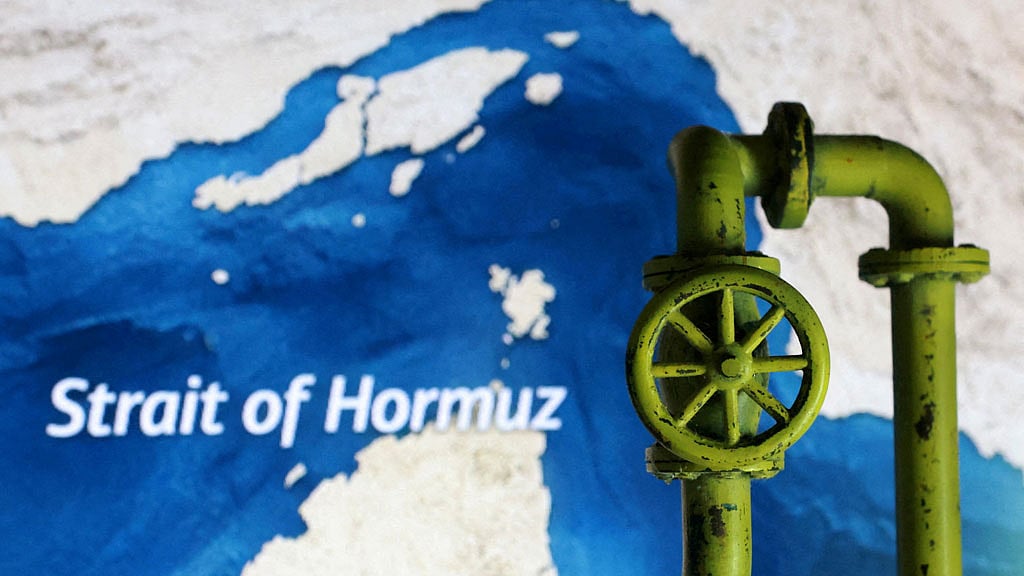
The conflict in the Persian Gulf has delivered a stark reminder of a shifting geopolitical order, with global media reports indicating that a vital global energy route is no longer effectively protected by maritime law, while the “US security umbrella” has weakened.
As the Strait of Hormuz transforms from an open waterway into a "de facto toll booth" controlled by Tehran, traditional US allies are being forced into the arms of Washington’s adversaries, the media reports noted.
The result is a strategic windfall for sanctioned regimes and a permanent fracturing of Western-led alliances, the reports said.
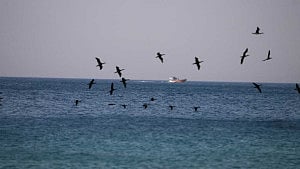
For decades, the Indo-Pacific relied on the US Navy to keep the 33-39km-wide Strait of Hormuz open.
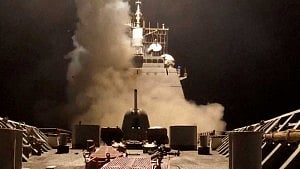
That certainty vanished when Iran effectively shuttered the passage following US and Israeli strikes in February, according to the reports.
According to CNN, the closure has exposed a "hard truth": despite years of military guarantees, Washington could not prevent the blockade of a chokepoint that handles 20 percent of global oil.
President Donald Trump has exacerbated the crisis by telling allies they are on their own.
"Those that need the oil should take the lead," Trump remarked, according to the BBC.
He has insisted that nations dependent on the Gulf’s energy must deploy their own warships or “go get your own oil”.
This ultimatum has left partners like Japan, South Korea, and the Philippines with no choice but to negotiate directly with Tehran and Moscow.
Roc Shi, a professor at the University of Technology Sydney, told CNN that allies are now "hedging” -- buying American energy where possible, but building resilience through partnerships with US rivals.
The White House now finds itself in a "trap of its own making", according to analysts cited by the Independent.
By destabilising the market while simultaneously maintaining sanctions, the US has inadvertently enriched the very regimes it sought to cripple, the report noted.
Data from Gavekal indicates that Iran’s oil exports surged from 1 million barrels per day at $45 before the war to 1.7 million barrels at prices exceeding $100, according to CNN.
Reports also suggest Iran is charging up to $2 million per vessel for safe passage.
Russia has similarly benefited, with estimates indicating an additional $3 billion to $5 billion in monthly oil revenue due to temporary US sanction waivers, CNN reported.
Tehran has replaced international law with a permissions-based system operated by the Islamic Revolutionary Guard Corps (IRGC).
Iranian Foreign Minister Abbas Araghchi has publicly identified a "friendly list" -- including China, Russia, India, and Pakistan -- whose vessels receive armed escorts.
The Independent reports that the Philippines, typically a staunch US ally, has been forced to join this list.
Manila declared a national energy emergency after fuel prices doubled, leading it to buy Russian crude for the first time in five years and negotiate directly with Tehran for "unhindered passage", CNN reported.
Similarly, South Korea has dispatched special envoys to Iran for the safety of its tankers, while Japan has seen its own vessels transit the strait only after quiet diplomatic engagement with Iran.
While the US-Asia alliance strains, China is positioning itself as the region's "energy anchor".
With vast reserves and overland pipelines, Beijing is offering energy security to neighbours like Thailand and the Philippines.
The Print notes that China’s ability to quickly coordinate with Iran has allowed its cargo to move safely while 670 vessels from other nations remain stranded.
"Diplomatic capability matters in a crisis," Robert Walker of the Lowy Institute told CNN.
As US bilateral relationships fray over the use of Russian oil, China is stepping in to provide the stability that Washington’s transactionalism has vacated, analysts said.