Published : 12 Mar 2026, 09:45 AM
Updated : 28 Aug 2026, 01:32 AM


Pulse of the War: Mar 11
Strait of Hormuz crisis: The maritime blockade intensified as three more merchant vessels were struck by “unknown projectiles”, bringing the total to 14 ships hit since the conflict began. Iran's military command issued a dire warning that global oil prices could surge to $200 a barrel if regional security is not restored, as a fifth of the world's oil remains trapped behind the narrow channel. (Sources: BBC, CNN, Reuters, UKMTO)
Mass displacement in Lebanon: The Lebanese Ministry of Social Affairs reported that nearly 800,000 people have now been displaced. With Israeli evacuation orders affecting almost the entire population south of the Litani River, the UN warned of a growing humanitarian catastrophe as over 120,000 people seek refuge in overstretched government facilities. (Sources: Al Jazeera, UN)
Global energy response: A coalition of 32 countries, led by the International Energy Agency (IEA), agreed to a record-breaking release of 400 million barrels of oil from strategic reserves. The unprecedented move aims to stabilise global markets and prevent a “catastrophe” after Iran’s blockade of the Strait of Hormuz sent prices soaring. (Sources: BBC, Al Jazeera, IEA)
Mystery over supreme leader: Conflicting reports persist about Iran's new Supreme Leader Mojtaba Khamenei. While Israeli intelligence claims he was “lightly wounded” in US-Israeli air strikes -- explaining his absence from the public eye -- the Iranian Presidency’s office maintains he is “safe and sound”, describing him as a “wounded veteran” of the ongoing “Ramadan War”. (Sources: Reuters, DAWN)
Regional retaliation: Iran launched its 35th wave of attacks, targeting US and Israeli assets across six countries. Notable strikes included drones falling near Dubai International Airport -- injuring four civilians -- and missile interceptions over Qatar and Bahrain, as Tehran demonstrates its continued ability to strike back despite heavy bombardment. (Sources: Dubai Media Office, Al Jazeera)
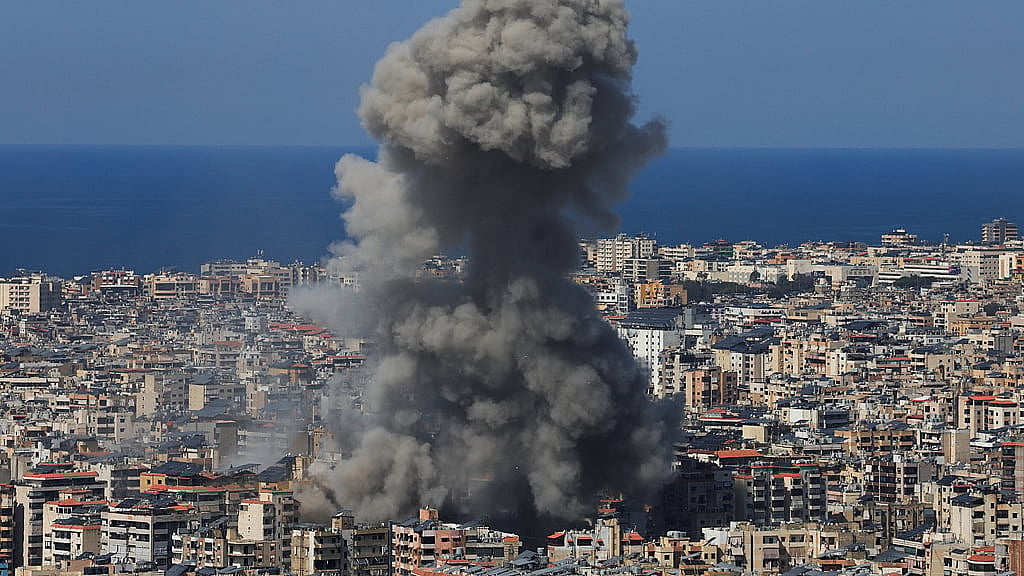
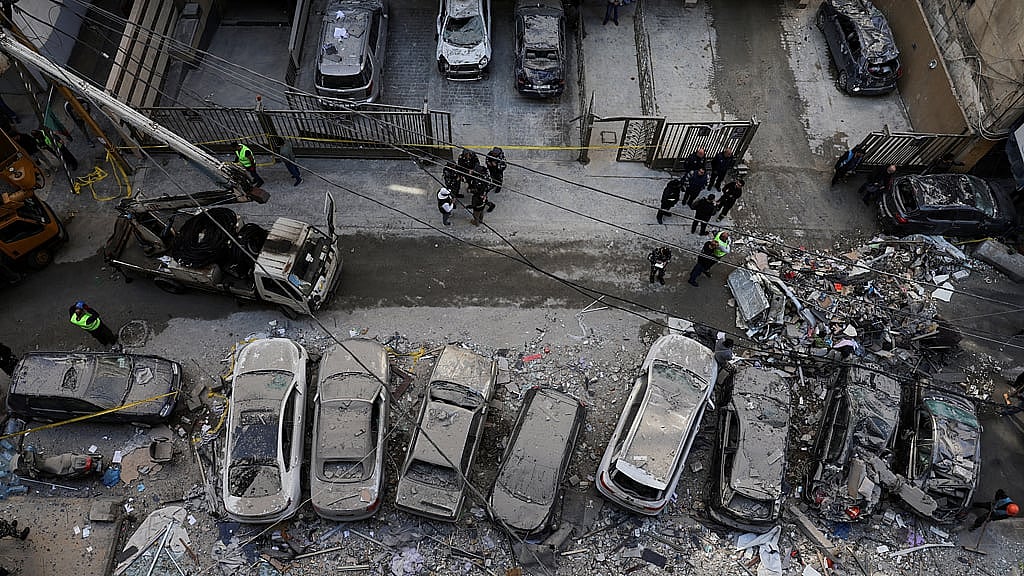
Escalation in Beirut: Israeli forces targeted a residential building in central Beirut for the first time in this phase, triggering massive fires. Simultaneously, the IDF issued urgent evacuation orders for several southern suburbs, including Haret Hreik and Burj al-Barajneh, signalling an expansion of the air campaign against Hezbollah. (Sources: Reuters, CNN)
US casualties and targets: The Pentagon confirmed that 140 US service members have been wounded in the first 10 days of the campaign. In Iraq, a drone strike hit the Baghdad Diplomatic Support Centre, a critical logistics hub for US diplomats, though no immediate casualties were reported from that specific incident. (Sources: DAWN, Washington Post)
Allegations of Russian support: Ukrainian President Volodymyr Zelensky claimed that Russia is providing Iran with drones, missiles, and air-defence systems. He warned that this military cooperation mirrors the deployment of North Korean troops in Ukraine, potentially leading to a broader internationalisation of the Middle East conflict. (Source: X/Volodymyr Zelensky)
Iran said the world should be ready for oil at $200 a barrel as its forces hit merchant ships on Wednesday and the International Energy Agency recommended a massive release of strategic reserves to dampen one of the worst oil shocks since the 1970s.
The war unleashed with joint US and Israeli air strikes nearly two weeks ago has so far killed around 2,000 people, mostly Iranians and Lebanese, as it has spread into Lebanon and thrown global energy markets and transport into chaos.
Despite what the Pentagon has described as the most intense airstrikes since the start of the war, Iran also fired at Israel and targets across the Middle East on Wednesday, demonstrating it can still fight back.
On Wednesday, three vessels were reported to have been hit in Gulf waters as Iran's Revolutionary Guards said their forces had fired on ships in the Gulf that had disobeyed their orders.
While Israel's Defence Minister Israel Katz said the operation "will continue without any time limit, as long as required, until we achieve all objectives and win the campaign," Trump suggested the campaign would not last much longer.
He told Axios news website by phone that there was "practically nothing left" to target in Iran. "Any time I want it to end, it will end," he said.
ABC News said the Federal Bureau of Investigation had warned of Iranian drones potentially striking the US West Coast, although Trump said he was not worried that Iran might launch strikes on US soil.
Trump later told reporters that US forces had knocked out 28 Iranian mine-laying ships and that oil prices would come down.
The US State Department also warned that Iran and aligned militias may be planning to target US-owned oil and energy infrastructure in Iraq and warned that militias had in the past targeted hotels frequented by Americans throughout Iraq, including the Iraqi Kurdistan region.
US and Israeli officials have said their aim is to end Iran's ability to project force beyond its borders and destroy its nuclear programme. Oil prices, which shot up earlier in the week to nearly $120 a barrel before settling back to around $90, rose nearly 5 percent on Wednesday amid renewed fears about supply disruption, while Wall Street's main share indexes fell.
Previously, stock markets had rebounded as investors bet on Trump finding a quick exit.
But other signs pointed to a continuation of fighting which has seen ports and cities in the Gulf states as well as targets in Israel hit by drone and missile barrages from Iran, adding urgency to calls from Turkey and Europe to end the fighting.
An Israeli military official said the military still had an extensive list of targets to hit in Iran, including ballistic missile and nuclear-related sites.
'LEGITIMATE TARGETS'
So far there has been no sign that ships can safely sail through the Strait of Hormuz, the now-blockaded channel along the Iranian coast that serves as a conduit for around a fifth of the world's oil.
Trump said on Wednesday that ships "should" transit through the Strait but sources said Iran had deployed about a dozen mines in the channel, further complicating the blockade.
The US military told Iranians to stay clear of ports with Iranian navy facilities, drawing a warning from Iran's military that if the ports were threatened, economic and trade centres in the region would be "legitimate targets".
With prices at the pumps already surging in some countries and Trump's Republican Party trailing badly in the polls ahead of midterm elections in November, oil prices have become an increasingly urgent element in the calculations behind the war.
The International Energy Agency, made up of major oil-consuming nations, recommended releasing 400 million barrels from global strategic reserves to stabilise prices, the biggest such intervention in history, which was swiftly endorsed by Washington.
US Interior Secretary Doug Burgum told CNBC on Wednesday US oil companies will soon announce increased production in response to "price signals."
But the rate at which countries can release strategic reserves will vary and the amount released would account for just a fraction of the supply through the Hormuz Strait.
Iranian officials made clear on Wednesday they intended to impose a prolonged economic shock.
"Get ready for oil to be $200 a barrel, because the oil price depends on regional security, which you have destabilised," Ebrahim Zolfaqari, spokesperson for Iran's military command, said in comments addressed to Washington.
After offices of a bank in Tehran were hit overnight, Zolfaqari said Iran would respond with attacks on banks that do business with the US or Israel. People across the Middle East should stay 1,000 metres from banks, he added.
At sea, a Thai-flagged bulk carrier was set ablaze, forcing the evacuation of crew, with three people reported missing and believed trapped in the engine room.
Two other ships, a Japanese-flagged container ship and a Marshall Islands-flagged bulk carrier, were also reported to have sustained damage from projectiles, bringing the number of merchant ships that have been hit since the war began to 14.
IRANIAN OFFICIAL SAYS MOJTABA KHAMENEI LIGHTLY WOUNDED
In Iran, huge crowds took to the streets for funerals for top commanders killed in airstrikes. They carried caskets and brandished flags and portraits of slain Supreme Leader Ayatollah Ali Khamenei and his son and successor, Mojtaba.
An Iranian official told Reuters Mojtaba Khamenei had been lightly wounded early in the war, when airstrikes killed his father, mother, wife and a son. He has not appeared in public or issued any direct message since the war began.
In Tehran, residents were growing accustomed to nightly airstrikes that have sent hundreds of thousands of people fleeing to the countryside and contaminated the city with black rain from oil smoke.
"There were bombings last night but I did not get scared like before. Life goes on," Farshid, 52, told Reuters by phone.
'NO TIME LIMIT', SAYS ISRAEL
Despite Trump's calls for Iranians to rise up, US and Israeli hopes that Iran's system of clerical rule would be overthrown by popular protest have not been borne out.
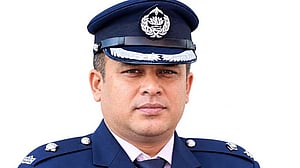
Iran's police chief, Ahmadreza Radan, said on Wednesday anyone taking to the streets would be treated "as an enemy, not a protester. All our security forces have their fingers on the trigger".
A senior Israeli official told Reuters Israeli leaders now privately accept that Iran's ruling system could survive the war. Two other Israeli officials said there was no sign Washington was close to ending the campaign.
Even so, Abdullah Mohtadi, head of the Komala Party of Iranian Kurdistan, part of a six-party coalition of Iranian Kurdish parties, told Reuters on Wednesday the parties are highly organised inside Iran and that "tens of thousands of young people are ready to take up arms" against Tehran if they receive US support.