Home
+
Published : 08 Jan 2026, 03:07 AM
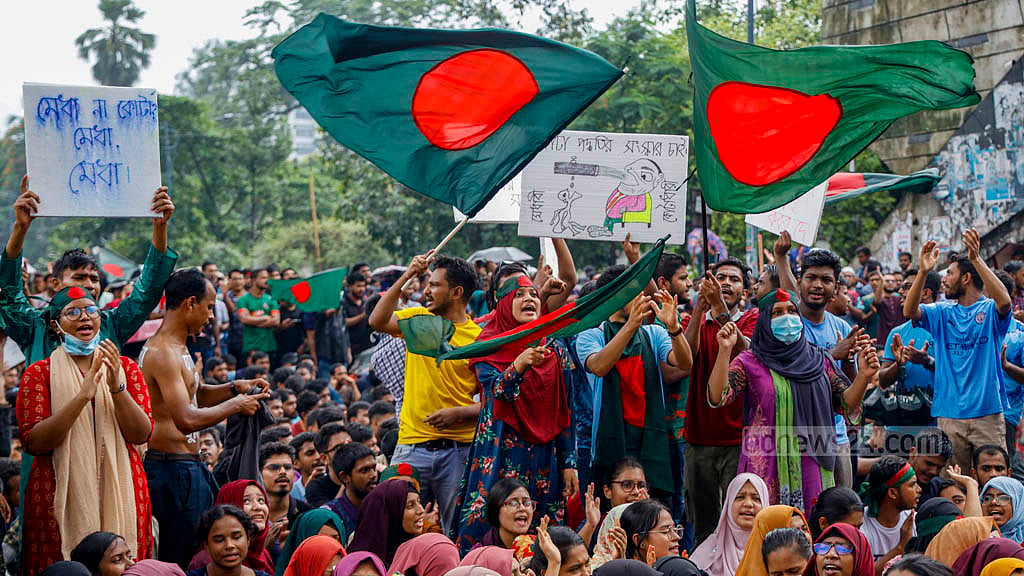
Despite women being at the forefront of the August 2024 uprising that toppled the Awami League government, political parties have largely failed to honour their pledge to nominate at least 5 percent women candidates in the parliamentary election.
Muhammad Yunus-led interim government had introduced reforms aimed at restoring democracy, including a commitment under the July National Charter that parties would nominate women in no fewer than 5 percent of the 300 directly elected seats.
Election Commission data show that while more than a hundred women submitted nomination papers, only around 65 survived scrutiny.
The final number of women contesting will be confirmed on Jan 20 after appeals.
Among the parties that signed the July Charter, the BNP nominated the highest number of women in absolute terms but still fell short of the five percent benchmark.
Despite submitting more than 300 nomination papers due to multiple aspirants in several constituencies, the BNP nominated only 10 women candidates.
The newly registered Bangladesh Socialist Party (BaSaD–Marxist) ranked second with nine women candidates. It was the only party to nominate women for one-third of its total seats.
Election Commission data show that although 51 political parties are contesting the election, at least 30 parties did not nominate a single woman candidate. These include Jamaat-e-Islami and Islami Andolan Bangladesh.
The July National Charter stipulates that political parties must continue increasing women’s nominations by at least five percent in every general election until the target of 33 percent—or 100 seats—is achieved.
National Consensus Commission member Badiul Alam Majumdar expressed disappointment over parties’ failure to uphold their commitment.
“It is unfortunate. Parties agreed and pledged to nominate five percent women candidates in the next election. Failing to do so is a breach of promise and will not create a positive perception about their credibility,” he told bdnews24.com.
“I am somewhat disappointed that political parties did not keep even this minimum commitment,” the election expert added.
Following the mass uprising on Aug 5, 2024, an interim administration took charge.
After nearly a year of discussions, dialogues and debates—along with notes of dissent—political parties reached consensus on 84 reform proposals. One of them proposed direct nomination of women candidates in five percent of parliamentary seats.
However, reluctance from Islamist parties became apparent during the dialogue process.
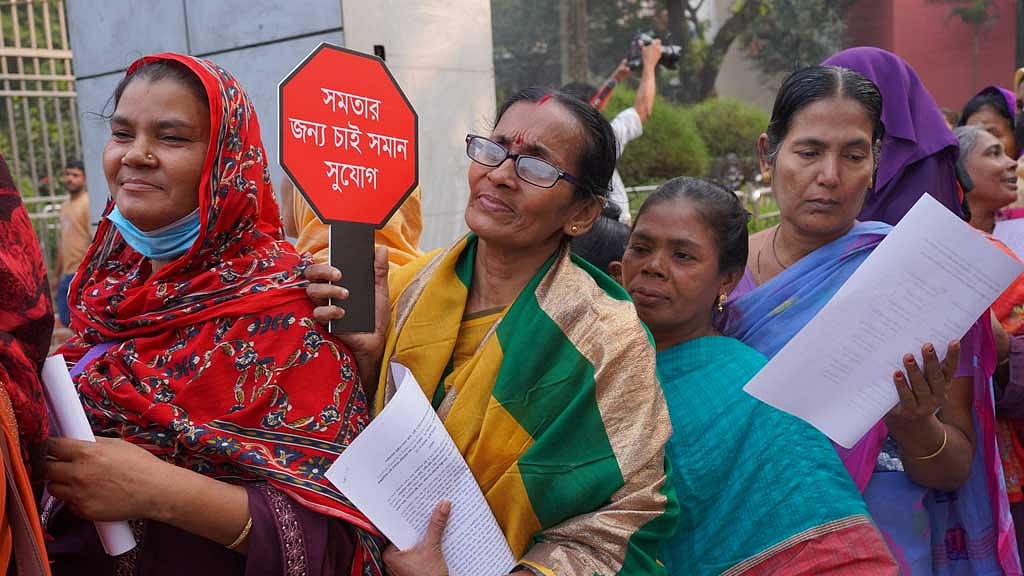
The Consensus Commission had recommended that political parties ensure one-third, or 33 percent, women candidates in direct parliamentary elections—a demand echoed by women’s rights activists, who also took to the streets in protests and rallies.
Bangladesh Mahila Parishad President Fauzia Moslem voiced concern over the lack of women in candidate lists, despite some nominations by the BNP and a few other parties.
“The progress of political parties in promoting women’s leadership is extremely disappointing,” she said. “Even the progress that has been made is not acceptable. The nomination pattern shows no serious commitment to bringing women into politics.”
On Nov 3, the BNP announced 237 single-seat candidates, including 10 women.
Party chairperson Khaleda Zia submitted papers for three constituencies, but her death meant those were excluded from scrutiny.
BNP leaders insisted the party remains committed to women’s empowerment and will expand the process in future.
At the time, BNP Standing Committee Member Salahuddin Ahmed told bdnews24.com that the party had nominated women in five percent of seats to increase women’s representation through direct elections.
After the BNP, Jamaat-e-Islami nominated candidates in 276 seats, Islami Andolan Bangladesh in 268, Jatiya Party in 224, Gono Odhikar Parishad in 104, and Bangladesh Khelafat Majlis in 94 seats.
However, party insiders said the final number of candidates may decrease after seat-sharing arrangements with alliance partners.
PARTY NOMINATIONS SUBMITTED FOR 68 WOMEN CANDIDATES
The process of finalising candidacies is underway ahead of the Feb 12 polling day.
The Election Commission completed scrutiny of nomination papers on Sunday.
The following day, aspiring candidates began filing appeals against returning officers’ decisions.
The appeal process will be settled on Jan 18.
Returning officers declared 1,842 nomination papers valid across the 300 parliamentary constituencies, while 723 were rejected.
The deadline for withdrawal of candidature is Jan 20.
Election symbols will be allocated on Jan 21, and campaign activities will begin the next day.
In this election, 68 women candidates have received party nominations from 20 political parties.
Moreover, 37 women submitted nomination papers as independent candidates, of whom five have survived scrutiny.
Among the other parties that nominated women candidates are the Revolutionary Workers Party with two, Jatiya Party five, Bangladesh Socialist Party (BaSaD) five, Insaniyat Biplob six, JSD six, AB Party three, Labour Party one, Gonosamhati Andolan four, Islamic Front one, Amjanatar Dal one, Gono Odhikar Parishad three, National Citizen Party (NCP) two, National People’s Party (NPP) one, Gano Forum two, Republican Party one, Supreme Party one and Bangladesh Muslim League one.
Election System Reform Commission member Abdul Alim expressed being “deeply” disappointed by parties’ reluctance to nominate women candidates.
“Literally speaking, I am disappointed. Women make up half of our population and nearly half of the voters. Yet out of around 2,500 nominations, just over a hundred went to women candidates. Most parties did not nominate a single woman. This is extremely disappointing,” he told bdnews24.com.
He also noted that the requirement for registered political parties to ensure 33 percent women’s representation at all committee levels by 2030 is not being met.
“We now need to think about how parties can nominate more women candidates in the next election. This process should begin with the upcoming local government elections. Parties must take initiatives now to build capacity for nominating women,” Abdul Alim said.
WHICH PARTY NOMINATED WOMEN CANDIDATES WHERE?
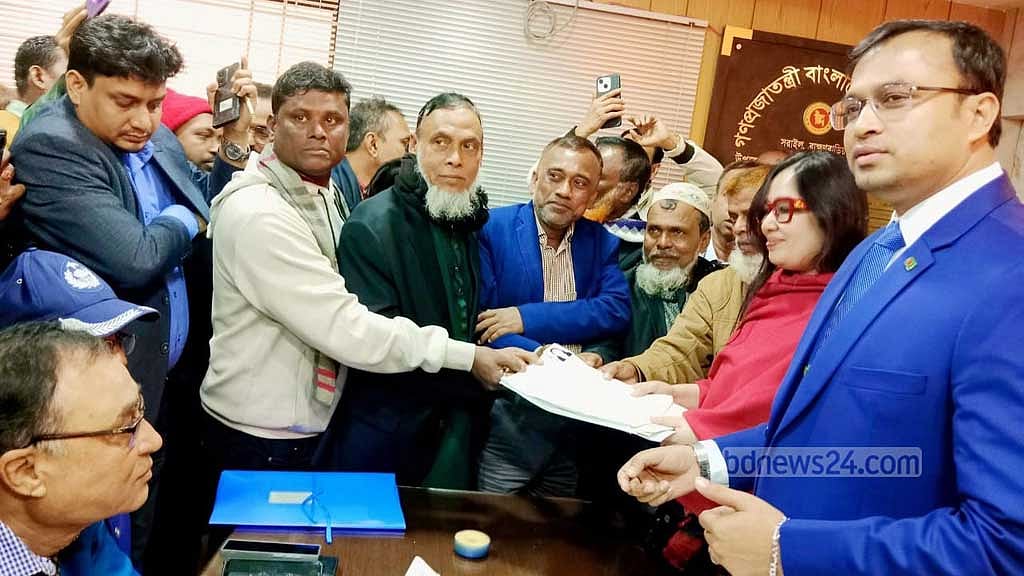
Rangamati: Jui Chakma (Revolutionary Workers Party);
Khagrachhari: Mithila Roaza (Jatiya Party);
Chattogram-11: Dipa Majumdar (BaSaD–Marxist);
Chattogram-10: Asma Akter (BaSaD–Marxist), Sabina Khatun (Insaniyat Biplob).
Lakshmipur-4: Tania Rob (Jatiya Samajtantrik Dal–JSD);
Noakhali-5: Moon Tahar Begum (BaSaD–Marxist);
Noakhali-1: Rehana Begum (JSD);
Chandpur-2: Rashida Akter (AB Party – rejected), Nasima Nazneen Sarker (Bangladesh Labour Party – rejected);
Cumilla-6: Kamrunnahar Sathi (BaSaD – rejected);
Cumilla-5: Shirin Akter (JSD);
Brahmanbaria-5: Nadira Jahan (Gonosamhati Andolon);
Brahmanbaria-3: Aysha Akter (Islamic Front Bangladesh);
Brahmanbaria-2: Sharifa Akter (Amjanatar Dal);
Moulvibazar-2: Sadia Noshin Tasnim Chowdhury (BaSaD–Marxist).
Sylhet-2: Tahsina Rushdi (BNP);
Madaripur-1: Nadira Akter (BNP);
Faridpur-3: Arifa Akhtar Baby (JSD);
Faridpur-2: Shama Obayed Islam (BNP);
Narsingdi-5: Meherun Nessa Khan Hena (Jatiya Party), Tahmina Akter (Insaniyat Biplob);
Narsingdi-1: Shirin Akter (Gono Odhikar Parishad).
Gazipur-2: Sarker Taslima Afroze (Insaniyat Biplob);
Gazipur-1: Taslima Akter (BaSaD–Marxist);
Dhaka-20: Nabila Tasnid (NCP);
Dhaka-19: Dilshana Parul (NCP);
Dhaka-18: Bilkis Nasima Rahman (Gonosamhati Andolon), Sabina Jabed (NPP – rejected).
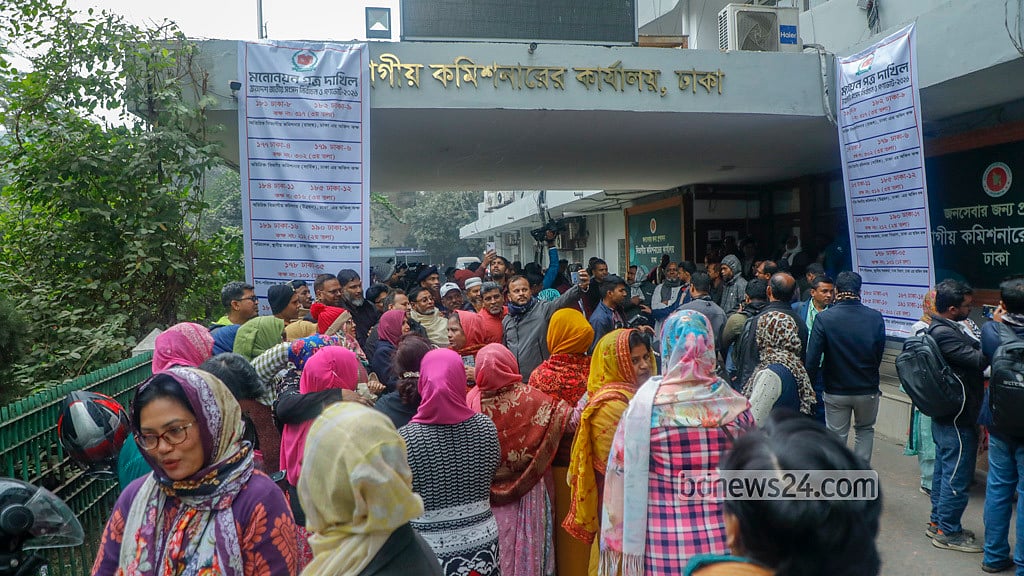
Dhaka-17: Farah Naz Sattar (AB Party – rejected);
Dhaka-14: Sanjida Islam (BNP);
Dhaka-13: Fatema Akter Munia (Insaniyat Biplob);
Dhaka-12: Salma Akter (Insaniyat Biplob), Taslima Akter (Gonosamhati Andolon);
Dhaka-10: Bohnni Bepari (Jatiya Party), Nasrin Sultana (AB Party);
Dhaka-9: Nazma Akter (Gano Forum);
Dhaka-8: Meghna Alam (Gono Odhikar Parishad);
Dhaka-7: Shahana Selim (JSD), Sima Dutta (BaSaD–Marxist);
Dhaka-5: Shahinur Akter Sumi (BaSaD–Marxist).
Manikganj-3: Afroza Khanam (BNP);
Munshiganj-1: Rokeya Akter (Insaniyat Biplob);
Netrokona-4: Joli Talukder (CPB), Champa Rani Sarker (Revolutionary Workers Party – rejected);
Sherpur-1: Sansila Zebrin (BNP);
Tangail-5: Fatema Akter (Gonosamhati Andolon – rejected);
Jhalokathi-2: Israt Jahan Elen Bhutto (BNP);
Barishal-5: Manisha Chakraborty (BaSaD).
Khulna-5: Shamim Ara Parvin Yasmin (Jatiya Party – rejected);
Magura-1: Shampa Bosu (BaSaD);
Jashore-2: Sabira Sultana (BNP);
Jhenaidah-4: Khonia Khanam (Gano Forum);
Jhenaidah-1: Monika Alam (Jatiya Party);
Kushtia-4: Rumpa Khatun (Bangladesh Republican Party);
Faridpur-3: Nayab Yusuf Ahmed (BNP);
Meherpur-1: Romana Ahmed (BNP, no party endorsement – rejected);
Sirajganj-6: Elora Khatun (JSD);
Sirajganj-1: Mallika Khatun (Gono Odhikar Parishad).
Natore-2: Tahmina Islam Tania (Gonosamhati Andolon);
Natore-1: Farzana Sharmeen (BNP);
Bogura-6: Dilruba (BaSaD);
Joypurhat-1: Taufika Dewan (BaSaD–Marxist);
Kurigram-4: Shefali Begum (Bangladesh Supreme Party);
Rangpur-4: Pragati Barman Toma (BaSaD–Marxist);
Dinajpur-3: Kibria Hossain (BaSaD), Laila Tul Rima (Bangladesh Muslim League);
Thakurgaon-2: Nurun Nahar Begum (Jatiya Party).
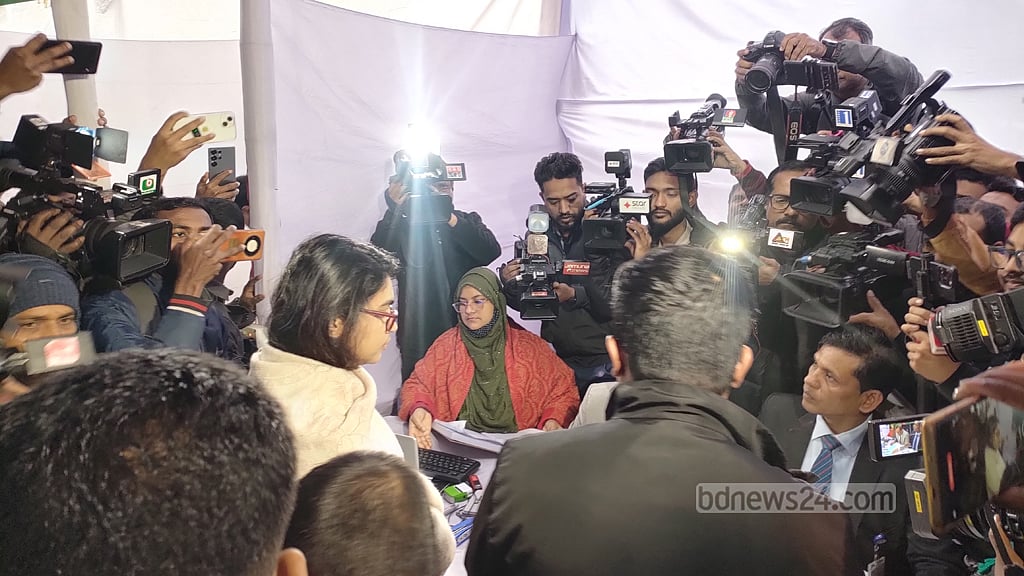
INDEPENDENT CANDIDATES WHO WERE REJECTED
Chattogram-5: Sakila Farzana;
Chattogram-2: Jinnat Akter;
Noakhali-6: Shamima Azim;
Cumilla-9: Samira Azim;
Moulvibazar-3: Rezina Naser;
Shariatpur-2: Farhana Qadir Rahman;
Gopalganj-3: Rowshan Ara;
Faridpur-1: Laila Arzuman Banu;
Narayanganj-4: Fatema Monir;
Gazipur-2: Tapasi Tanmoy Chowdhury;
Dhaka-12: Fahmida Majid;
Dhaka-11: Kohinur Akter Bithi;
Dhaka-9: Tasnim Zara (appeal filed);
Dhaka-3: Parul Molya;
Kishoreganj-4: Kazi Reha Kabir;
Mymensingh-9: Hasina Khan Chowdhury;
Jamalpur-5: Hosneyara Begum;
Tangail-3: Ainun Nahar;
Bhola-2: Taslima Begum;
Narail-2: Farida Yasmin;
Narail-1: Mahfuza Begum;
Jhenaidah-4: Murshida Khatun;
Pabna-1: Khairun Nahar Khanam;
Rajshahi-3: Habiba Begum;
Naogaon-4: Arfana Begum;
Bogura-1: Shahzadi Alam Lipi;
Joypurhat-1: Sabekun Nahar;
Rangpur-6: Takiya Jahan Chowdhury;
Rangpur-3: Rita Rahman;
Thakurgaon-3: Asha Moni;
Natore-3: Fatema Khanam.
INDEPENDENT WOMEN CANDIDATES DECLARED VALID
Brahmanbaria-2: Rumeen Farhana;
Netrokona-4: Tahmina Zaman;
Mymensingh-6: Akhtar Sultana;
Jamalpur-4: Meherjan Ara Talukder;
Natore-2: Sabina Yasmin.
HOW RESERVED SEATS REACHED 50

In 1973, 15 seats were reserved for women against 300 directly elected parliamentary seats. The number was later increased to 30 seats in the second, third, fifth, sixth and seventh parliaments. Due to the absence of a legal provision, there were no reserved seats for women in the fourth parliament, nor at the beginning of the eighth parliament.
In 2004, the number of reserved seats was raised to 45 through the 14th amendment to the Constitution, which continued in the ninth parliament. The 15th constitutional amendment in 2011 added five more seats, raising the total number of reserved seats for women to 50.
WOMEN’S PARTICIPATION IN ELECTIONS HAS ALSO INCREASED
In the fifth parliamentary election in 1991, 39 women contested, with five elected to parliament.
In the sixth election, eight of 36 women candidates were elected; in the seventh election, six of 38; and in the eighth election, 19 of 59 women candidates won.
In the tenth parliamentary election, 18 of 29 women candidates were elected.
In the eleventh parliamentary election, 68 women contested in 69 constituencies, with a record 22 elected directly to parliament.
In the most recent election on Jan 7, 2024, for the twelfth parliament, 94 women candidates contested, including 26 independents. A total of 14 political parties nominated 68 women candidates.
Of the 19 winners in that election, 15 were from the Awami League, while the rest were independents.
[Writing in English by Arshi Fatiha Quazi]