Published : 08 Jul 2025, 09:39 AM
Updated : 28 Aug 2026, 01:22 AM


Following a landmark court verdict that revived the path for restoring the caretaker government system in Bangladesh, political parties are now debating its future shape, broadly agreeing on its return but differing on its structure, mandate, and duration.
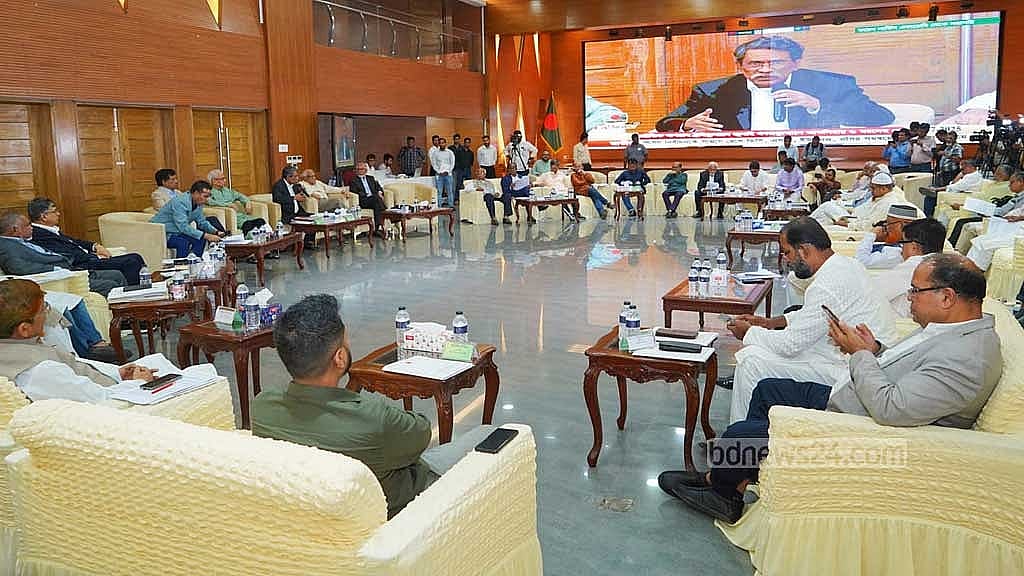
Formed to spearhead structural reforms to the state, the National Consensus Commission is holding its second round of talks with parties on the framework of an election-time administration.
Monday marked the 10th day of discussions in the second phase of the talks.
Based on recommendations from reform commissions, these discussions began in March. Several issues were resolved during the first phase.
The second round is addressing fundamental structural questions. The commission aims to finalise discussions by July and unveil a National Charter of consensus.
After the eighth day of the second phase of talks on Jul 2, Consensus Commission Vice-Chairman Ali Riaz spoke of a broad political agreement on reinstating the caretaker system.
The current phase focuses on the composition, structure and tenure of such an administration.
The Constitution Reform Commission has proposed a 15-member interim government, including a chief advisor, with a 90-day tenure. It also outlined the process for appointing the head of the administration.
In contrast, the Electoral System Reform Commission has suggested a broader 20-member caretaker government with a four-month mandate.
A High Court verdict on Dec 17, 2024, invalidated parts of the Fifteenth Amendment that had scrapped the caretaker system during the Awami League government more than a decade ago, effectively opening the door for its restoration.
In its observations, the court stated that the entire Fifteenth Amendment was not being nullified, and any changes to the remaining provisions must be made through public consultation and parliamentary procedure.
Following the ruling, Attorney General Md Asaduzzaman said the judgment effectively repealed the constitutional change that abolished the caretaker provision, restoring the previous system by default.
HOW CARETAKER SYSTEM BEGAN
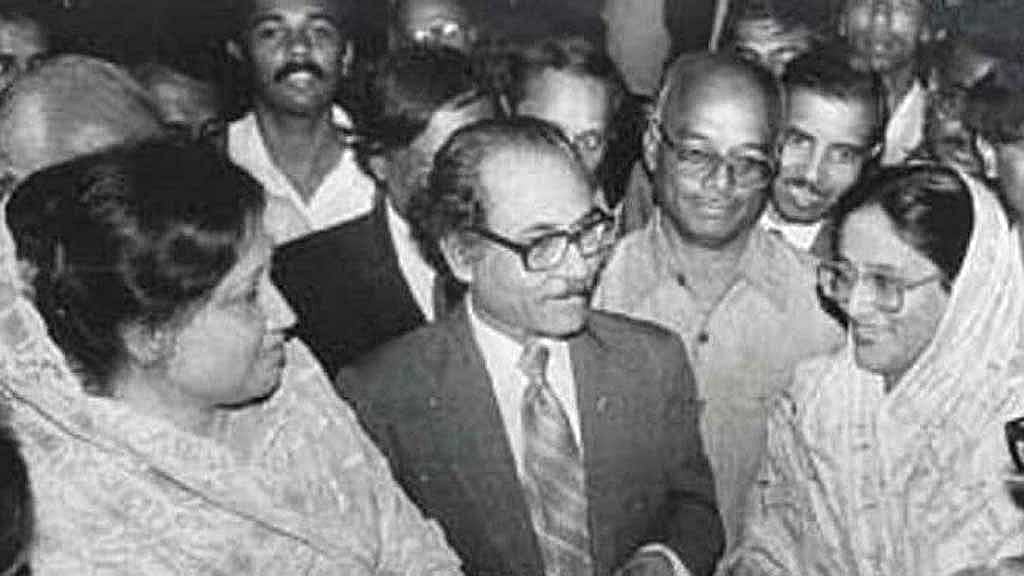
The citizens first encountered a caretaker government in Bangladesh more than thirty years ago, during another turbulent period.
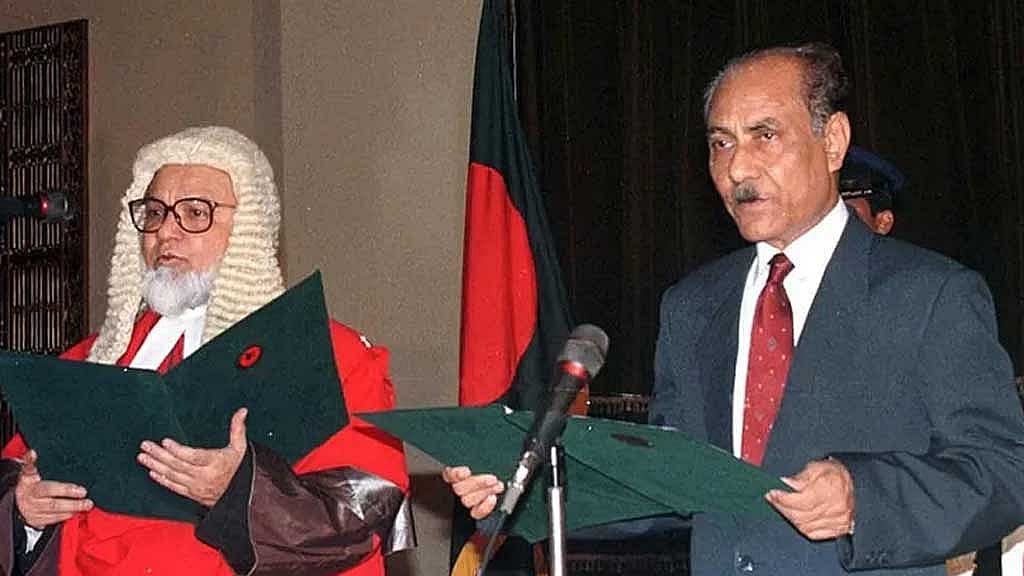
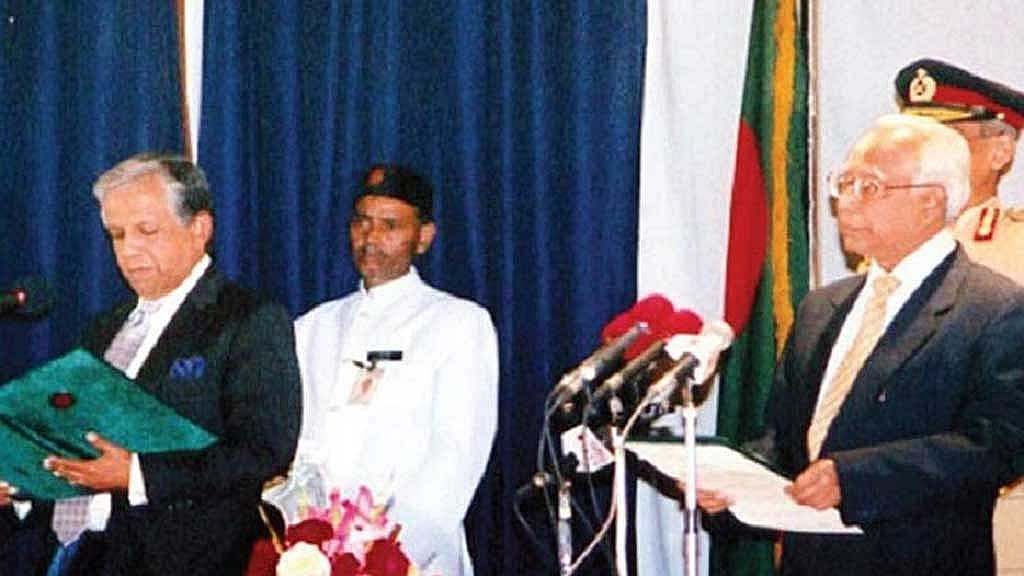
Following the fall of military ruler Hussein Muhammad Ershad, a neutral interim government was installed under the erstwhile chief justice Shahabuddin Ahmed to oversee the fifth general election.
He was appointed head of government by consensus among political parties opposing Ershad. At that time, Bangladesh had a presidential system. When the then vice president Moudud Ahmed resigned, Shahabuddin became vice president, and then president after Ershad stepped down.
Under his leadership, the Bangladesh Nationalist Party (BNP) came to power in the 1991 election. However, amid boycotts and unrest, a sixth general election was held under a partisan government.
Mounting pressure from the opposition, led by the Awami League, forced the BNP government to pass the Thirteenth Amendment in 1996, establishing the caretaker government provision in the Constitution.
Three parliamentary elections -- held in June 1996, 2001, and 2008 -- were conducted under caretaker administrations.
According to the Thirteenth Amendment, a caretaker government could be formed in two situations: either within 15 days of the dissolution of parliament, or within 15 days after the natural end of its tenure.
It capped the number of advisors at eleven -- one chief advisor and up to 10 others, advisors were to be non-partisan, aged under 72, and not contesting the upcoming election. They were to be appointed by the president in consultation with the chief advisor.
The last retired chief justice would be made the chief advisor. If unavailable or unwilling, the most recent predecessor would be considered. Failing that, the most recently retired Appellate Division judge would be approached.
If none were available or willing, the president would consult political parties to nominate a non-partisan individual. As a last resort, the president himself would assume the role in addition to his duties.
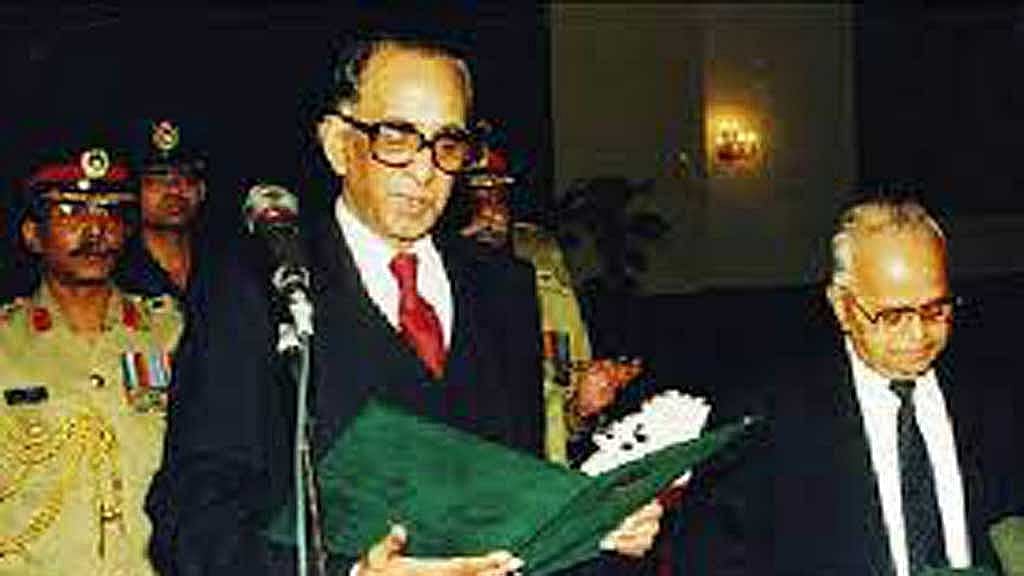
While elections under this system in 1996 and 2001 were generally accepted, a crisis erupted in 2006 over the appointment of then chief justice KM Hasan as chief advisor. Political opposition refused to accept him, leading to chaos. President Iajuddin Ahmed then assumed the role of chief advisor.
This was followed by the military-backed caretaker government led by Fakhruddin Ahmed, which stayed in power for nearly two years.
In the Dec 29, 2008, general election under that regime, the Awami League-led coalition won 263 seats and formed a government.
In 2011, the Supreme Court declared the caretaker system unconstitutional. The ruling Awami League government abolished it through the Fifteenth Amendment passed by the ninth parliament on Jun 30 that year.
The BNP and its allies boycotted the 2014 election in protest. Though they participated in the 2018 election, they claimed it lacked credibility.
The 2024 general election held under the Awami League government was again boycotted by the opposition.
Seven months into its fourth consecutive term, an unprecedented mass uprising led to Sheikh Hasina stepping down and leaving the country. A new interim government subsequently assumed power.
WHAT BNP WANTS
BNP Standing Committee member Salahuddin Ahmed said his party supports a 90-day tenure for the caretaker government.
“This has been the traditional practice. We’ve proposed a maximum of 90 days, with provision for a one-month extension in exceptional circumstances,” he said.
He added that reinstating Article 58, which enshrined the caretaker provision, had long been one of BNP’s key demands.
“The court has ruled, effectively restoring the old system.”
However, he pointed out that since there is still a pending Supreme Court review on the issue, the outcome remains undecided.
“We hope the review will favour the people. If it does, the caretaker system will be restored exactly as it was under the Thirteenth Amendment.”
Referring to the current discussions under the National Consensus Commission, he said: “The debate now is what amendments, if any, parties want within that restored system.”
“We believe certain amendments are necessary. Solely giving the judiciary the power to select all advisors may not be appropriate. Most parties seem to agree on that.”
He added that further discussions are needed, saying, “We haven’t yet fully tabled all proposals. Parties will submit alternatives for discussion.”
JAMAAT FOR JUDICIARY-LED MODEL
The Jamaat-e-Islami wants a retired chief justice to head the caretaker government, sticking to the judiciary-based selection model.
“We’ve reached consensus on restoring the caretaker system. But there are differences over its formation. We’ve proposed the chief justice. If not available, then another justice,” said Nayeb-e-Ameer Syed Abdullah Mohammad Taher.
He invoked the 1991 appointment of Shahabuddin as a model for fallback selection through political consultation if a judge is unavailable.
Some proposals, including those by reform commissions, suggest empowering the president to lead the caretaker government if no consensus candidate emerges. Jamaat opposes this.
“We believe involving the president could replicate past complications,” said Taher, adding that the party would present a more detailed framework later.
Jamaat supports a four-month term for the caretaker government and wants both national and local elections held under it.
BNP, however, objects to the inclusion of local elections.
“Local elections are not covered in the original caretaker provision. Any such proposal is unrealistic,” said Salahuddin Ahmed. “Caretaker governments should not conduct local polls.”
NCP: VOTING-BASED APPROACH
The National Citizen Party (NCP) has presented its blueprint for a peaceful transfer of power to the Consensus Commission.
At a recent dialogue, NCP leaders argued that political parties must resolve the caretaker issue among themselves.
Their plan proposes a bicameral 11-member all-party parliamentary committee. This committee would request three nominations each from the ruling party, the opposition, and other MPs, producing nine candidates for chief advisor.
These names would be publicly disclosed. The committee would then vote to select one. Any candidate receiving an eight-to-three majority would be appointed.
If consensus cannot be reached, and a bicameral parliament is in place, a ranked-choice vote among the nine candidates could be used to elect a chief advisor.
NCP central member Javed Rasim criticised the earlier caretaker model’s reliance on the judiciary.
“The Thirteenth Amendment politicised the judiciary by dragging it into government. We oppose that.”
ELECTORAL REFORM RECOMMENDATIONS
The Electoral System Reform Commission, led by Badiul Alam Majumdar, noted in its report that the Fifteenth Amendment remains under review in the Supreme Court. The commission expressed hope that the court would restore the caretaker system.
In its report, it offered four key proposals:
• A four-month caretaker government term, during which all national and local elections are completed.
• Expanded powers for the interim government to ensure fair and credible elections, including authority to reform laws and reshuffle the administration.
• Appointment of the chief advisor and 20 other advisors by a permanent National Constitutional Council.
• If that council is not formed, a high-level committee comprising political parties, civil society, and experts should be constituted to draft the caretaker framework, which must then be implemented by the ruling party.
CONSTITUTIONAL REFORM PROPOSALS
Headed by Riaz, the Constitution Reform Commission recommends forming an interim government whenever the legislature completes its term or is dissolved, to serve until a new government takes office.
Key points include:
• The chief of the interim government would be called the chief advisor.
• The appointment of a chief advisor must be finalised at least 15 days before the end of parliament’s term, or within 15 days of its dissolution.
• The chief advisor would run the government with up to 15 advisors.
• The term would not exceed 90 days, unless elections conclude earlier.
• Eligible individuals for the position must meet the qualifications to become an MP.
Speaking on Jul 2 after talks with political parties, Riaz said: “All political parties are united on restoring the caretaker government. There is also a broad consensus on its structure and jurisdiction. Today’s open discussions brought the parties significantly closer.”
[Writing in English by Syed Mahmud Onindo]