Published : 17 Jan 2026, 08:48 AM
Updated : 28 Aug 2026, 01:31 AM


The coalition led by the Jamaat-e-Islami, meant to bring Bangladesh’s Islamist vote under one banner, has hit its first major obstacle. And it comes from the very party that helped set the process in motion.
Islami Andolan Bangladesh, long seen as the key bridge between rival Islamist currents, has refused to join Jamaat’s newly formed “11-party electoral unity”. Instead, it has chosen to go it alone, while publicly questioning Jamaat’s political and ideological direction.
The break comes just as campaigning for the parliamentary election begins, forcing a fresh recalculation: how much will this split reshape the vote maths. Especially in an Awami League-free contest where Jamaat and allied parties are expected to emerge as Bangladesh Nationalist Party's (BNP) main challengers?
Political analysts are divided. Some believe an Islamist united front could have altered outcomes in dozens of seats. Others doubt Islamist parties can generate decisive impact on their own, particularly once their vote fragments along old lines.
What is undeniable is that the idea of “one box for Islamist votes” has taken a heavy blow.
YEAR-LONG PROJECT DERAILED AT THE LAST TURN
Islami Andolan’s decision effectively ends the prospect of a combined Islamist ticket. It was a possibility that began taking shape almost a year ago after Jamaat and Islami Andolan’s senior leaders met in Charmonai, Barishal.
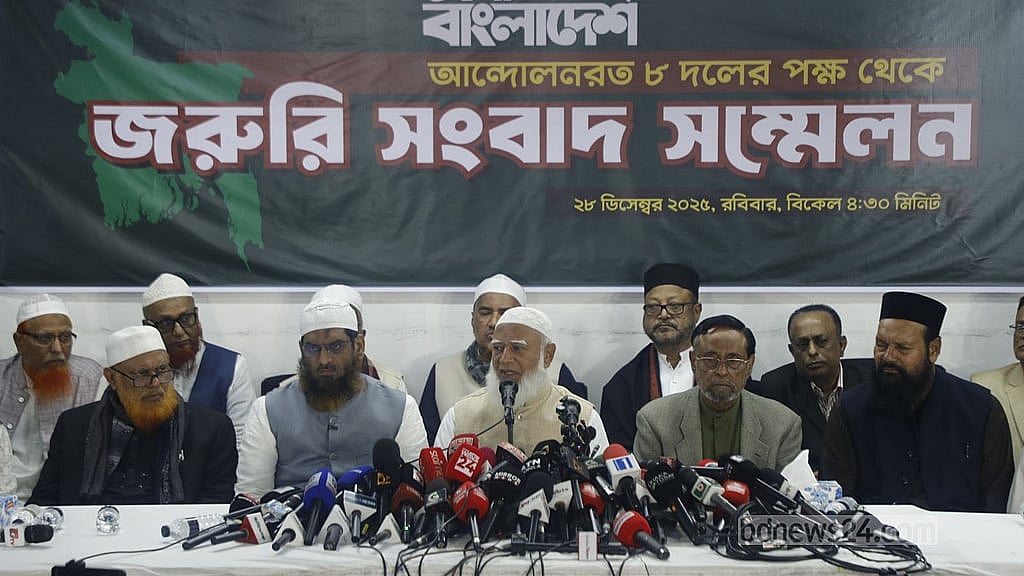
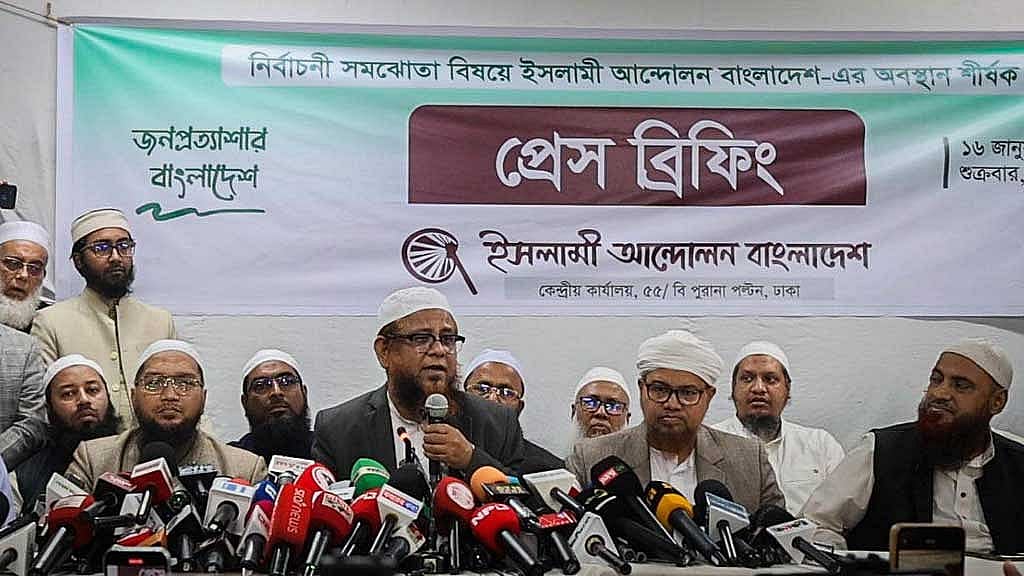
On Friday, Islami Andolan held a press conference to announce it would not join Jamaat’s alliance. A day earlier, Jamaat’s bloc had declared it had finalised seat-sharing in 253 constituencies, saying talks had stalled over the remaining 47 seats, and that it had waited for Islami Andolan before making the announcement.
But after months of tension, Islami Andolan did not even attend the alliance’s final coordination meeting on Thursday.
Its spokesperson Gazi Ataur Rahman said the party would contest 268 seats independently and support others in the remaining 32 constituencies.
In plain political terms, the Islamist vote will not be pooled. It will be split and, in many seats, split more than once.
Leaders in Islami Andolan argue the consequences will be felt nationally. They say that if the two parties had fought together, they could have created competitive contests in at least 100 seats. Particularly in constituencies where Islamist networks are organisationally strong.
A DIVIDED ISLAMIST LANE?
Since the July 2024 mass uprising that toppled the Awami League government, the electoral field has been reshaped. With the Awami League absent from the race, Jamaat and other Islamist parties had been widely viewed as the most organised force capable of complicating BNP’s path to victory.
In that context, the Islamist unity effort gathered momentum. It raised the prospect, for the first time since 1979, of a consolidated Islamist electoral push alongside Jamaat.
Historically, Islamist parties have joined alliances with larger political blocs. But a distinct, Jamaat-led Islamist coalition on its own had not taken durable form.
That is precisely why Islami Andolan stepping away now matters: the attempt to build a separate Islamist pole has been weakened before it has even been tested at the ballot box.

The alliance talks have unfolded alongside a handful of recent opinion polls hinting at a rise in religion-based parties.
Islami Andolan’s Assistant Secretary General Ahmad Abdul Qayyum cited two survey snapshots.
A Prothom Alo-commissioned survey showed 0.8 percent of voters leaning towards Islami Andolan
An Amar Desh survey suggested BNP 34 percent, Jamaat 33 percent, NCC 7 percent, Islami Andolan 3 percent.
But these figures, while politically combustible, come with obvious uncertainties. Bangladesh has not had a widely accepted, competitive election for years, and polling data has often contradicted itself.
Still, the perception of Islamist momentum has helped drive strategic decisions, including Jamaat’s push for a wider alliance and Islami Andolan’s confidence that it can go it alone.
TWO STREAMS, ONE SPLIT
Several analysts argue Islamist support in Bangladesh tends to split into at least two distinct currents.
One is rooted in Qawmi madrasa networks of students and teachers, many of whom do not vote for Jamaat, and may instead drift towards BNP or independent candidates depending on the constituency.
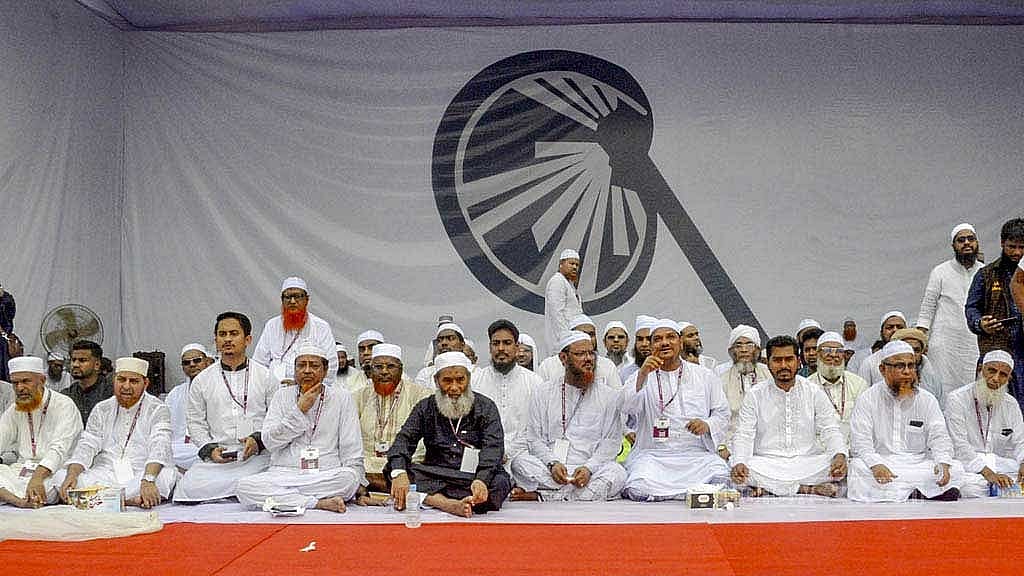
The second is a stream more likely to back Islami Andolan, a party that blends pir-based influence, grassroots committees, and an identity built around moral-religious politics rather than Jamaat’s organisational culture.
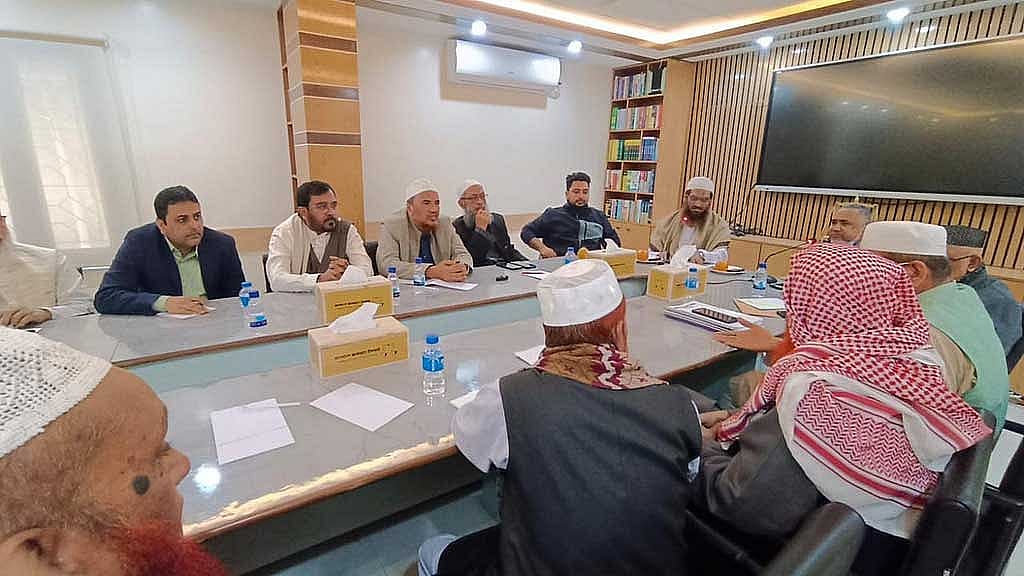
A BNP leader told bdnews24.com on Friday night that a large section of Islamist-leaning votes naturally tilt towards BNP. He claimed that even Maulana Mamunul Haque’s influence would not move Qawmi votes fully into Jamaat’s column.
He also suggested Islami Andolan’s decision may not only be about seat-sharing but about positioning for the next political equation beyond the election.
11-PARTY PACT AND ITS SEAT MAP
In the absence of Islami Andolan, Jamaat’s bloc has moved ahead with its own arithmetic.
Under the seat-sharing arrangement announced on Thursday, the alliance allocated constituencies as follows:
Jamaat-e-Islami: 179 seats
NCP: 30
Bangladesh Khelafat Majlis: 20
Khelafat Majlis: 10
LDP: 7
AB Party: 3
Bangladesh Nezame Islam Party: 2
Bangladesh Development Party: 2
Asked what impact Islami Andolan’s absence could have, Jamaat’s Secretary General Mia Golam Porwar refused to speculate.
He said political “polarisation” could shift right up to withdrawal day and insisted both sides were still in contact.
“We will wait until the withdrawal deadline,” he said. “Before that, we do not want to comment.”
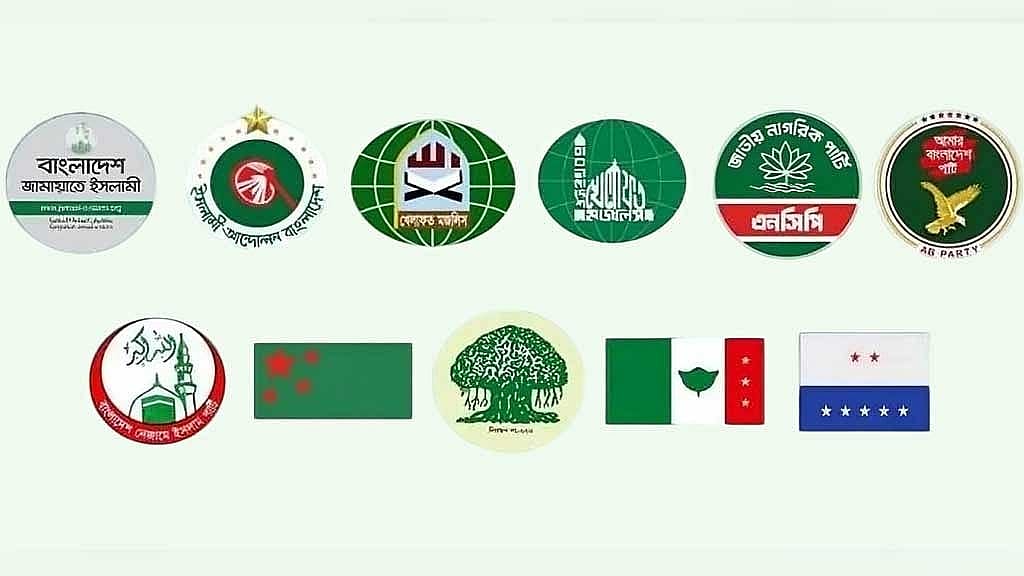
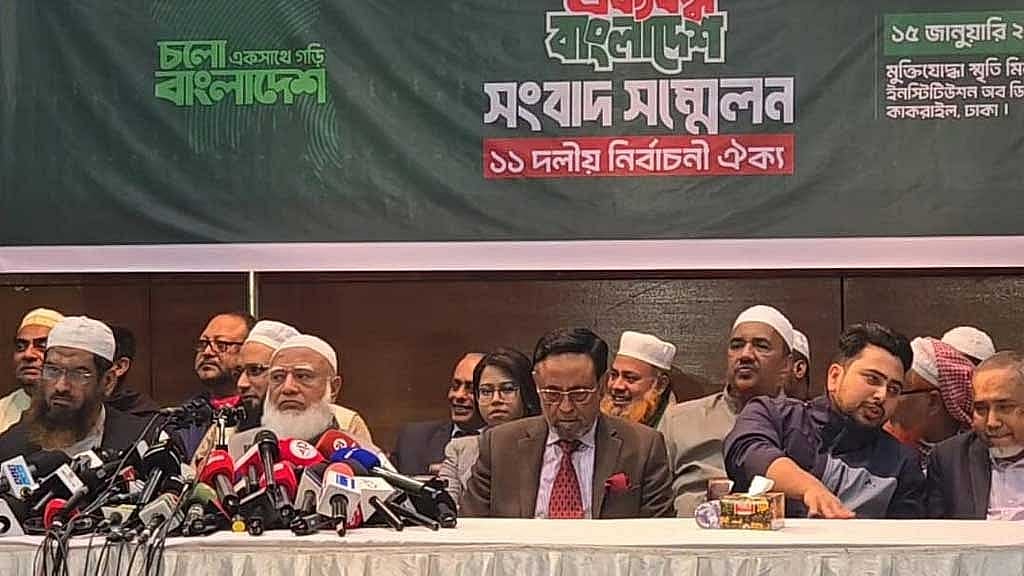
The roots of this “11-party electoral unity” lie in a joint movement by religion-based parties demanding proportional representation and a referendum before the election.
The original front included Jamaat, Islami Andolan, Bangladesh Khelafat Majlis, Khelafat Majlis, Bangladesh Khelafat Andolon, JAGPA, Nezame Islam Party, and the Bangladesh Development Party.
As the election approached, discussions began to convert that front into a formal electoral alliance. NCP and LDP joined the bloc the day before nominations closed, and AB Party followed the next day.
That is where the alliance began to strain.
Islami Andolan, Bangladesh Khelafat Majlis, and others objected to NCP joining, suggesting the bloc’s ideological coherence was being diluted. In the end, Mamunul Haque’s Bangladesh Khelafat Majlis was brought on board but Islami Andolan drifted further away.
RED LINE DRAWN
Islami Andolan’s Senior Nayeb-e-Ameer Syed Faizul Karim made it clear the party did not see this as merely a bargaining dispute. “We are not waiting,” he said. “We have announced our decision.”
He added that Islami Andolan could reconsider only if Jamaat declared a clear commitment to implementing Sharia law with no ambiguity.
When asked if the dispute was really about seat-sharing, Fazlul Karim countered: “That is your framing. I am saying unity isn’t happening for ideological reasons.”
In his view, a split will not weaken Islami Andolan; rather it will strengthen it.
“Of course our vote will increase,” Karim said. “Those who support Islam will vote. This is ideological voting.”
He estimated Islamist parties could command around 25 percent of the national vote, with Islami Andolan and Jamaat both drawing from that pool.
A central Islami Andolan leader claimed the party has committees in every village, its own loyal vote bank, and expects at least 12 percent of votes, hoping that translates into representation in an Upper House as well.
THE CEILING QUESTION: 10%? 20%? 25%?
Professor Khalidur Rahman, analysing past vote patterns and recent polling, offered a more restrained estimate.
The political analyst suggested Jamaat’s vote share in the coming election could remain between 10 percent and 20 percent. Adding the independent vote bases of its allied parties might push the bloc’s combined share up by another 5 percent, thereby putting the maximum combined Islamist vote around 25 percent.
But Prof Khalidur, who teaches statistics at the Shahjalal University of Science and Technology, warned that Islami Andolan’s absence makes that ceiling harder to reach.
“If a significant partner like Islami Andolan stays outside, the vote share could fall further,” he said.
On seats, he estimated that even with uneven constituency dynamics, Jamaat and its allies might secure up to around 50 seats at best, with similar limits on Upper House representation.
He also questioned whether the emotional force of the July uprising would translate into long-term electoral advantage, arguing that it failed to become an “effective moral and organisational force”.
And Prof Khalidur noted a fresh vulnerability for Jamaat: controversial remarks from its ranks in December regarding the Liberation War, which he suggested could blunt any “July-centred” emotional shift in their favour.
A RIGHTWARD DRIFT, JAMAAT’S ORGANISATIONAL EDGE
Badiul Alam Majumdar, founder secretary of civil society organisation Citizens for Good Governance (SHUJAN), offered a broader lens.
He said Bangladesh may be moving in the same direction as much of the world, where right-wing and religious politics have risen sharply.
Badiul pointed out that under Sheikh Hasina, the right experienced both repression and patronage, recalling her cultivation of Qawmi networks even as she cracked down elsewhere.
Many, he argued, began seeking alternatives and some found hope in Islamist parties.
At the same time, he cautioned that Bangladesh’s vote remains hard to predict after years without credible, competitive elections.
Badiul offered one striking comparison. Even as huge crowds rallied after Khaleda Zia’s death, that energy did not translate into student politics, pointing to Jagannath University’s student union election, where BNP's student front Jatiyatabadi Chhatra Dal suffered defeat at the hands of Jamaat's Islami Chhatra Shibir.
Jamaat, he added, has one major advantage its competitors envy: discipline.
It is, in his words, a “regimented organisation” with an unusually effective recruitment system. And while some surveys contradict each other, the reality of Islamist votes “cannot be dismissed”.
The general election and referendum are scheduled for Feb 12. The Election Commission is now in the post-scrutiny appeal phase, with final candidates due on Jan 20.
Between now and withdrawal day, Jamaat hopes the political weather may still shift.
But Islami Andolan has made its choice: to stand apart, brand itself as the purer ideological force, and test whether its confidence can survive the ballot test.
For Jamaat’s alliance, the setback is immediate and strategic.
Because in an election defined by the absence of the Awami League, the biggest opportunity for Islamist parties was unity.
Now, the contest returns to something Bangladesh knows well: a fragmented Islamist field and a BNP lane that suddenly looks wider.
[Writing in English by the English Desk]