
Published : 01 Nov 2025, 01:33 AM
Updated : 21 Aug 2026, 02:39 PM


As a journalist, I am often asked about the future — the future of politics, the economy, international relations, and global geopolitics. My answer rarely satisfies. I remind people that prediction is not part of a journalist’s job; it belongs to fortune-tellers. My responsibility is to analyse the present and interpret its signals, not to divine what is yet to come.
In recent months, however, the conversation has shifted for me.
Colleagues in the media, bureaucrats, politicians, academics, and civil society leaders increasingly ask me a different question: What is happening with media reform? Many assume that the interim government keeps me informed about its progress in implementing the recommendations of the Media Reform Commission (MRC). Some even think the MRC is still operational. Others, especially critics of the interim administration, use the issue to taunt those of us who served on the Commission.
The truth is less flattering. Most people asking about media reform have not read the Commission’s report, nor gone beyond the headlines. Misconceptions about the Commission’s mandate and tenure persist because of both limited access to facts and frustration over the repetition of old, familiar failures within the media landscape.
It bears repeating: the Media Reform Commission ceased to exist upon submission of its report. At the request of Chief Advisor Prof. Muhammad Yunus, the recommendations were divided into two categories — those that could be implemented immediately and those requiring long-term reform. Every single recommendation, whether executable by administrative order or legislative process, is now the government’s responsibility.
If we want to see meaningful change, we must direct our questions to the right
place — to those who hold power today, and those who will hold it tomorrow. It is futile to demand accountability from those without authority. The government must be asked, and held to answer, for its progress — or lack thereof — in reforming the media.
Since the MRC submitted its report, tangible progress has been almost nonexistent. The only visible initiative is the proposed Journalism Protection Ordinance, for which the Commission provided a draft. The government has sought stakeholder feedback on the proposal, allowing only ten days for responses, despite the MRC’s recommendation to make the process open to the public.
According to Information Adviser Mahfuj Alam, the draft ordinance must pass through 18 stages before becoming law. It is difficult to imagine that this can be achieved within the next three months, especially as the country enters an election period. Resistance to reform is not new. Vested interests — bureaucratic and corporate — continue to resist change because maintaining the status quo serves them well.
The bureaucracy remains particularly powerful. It controls state advertising allocations, defines taxation and import policies, oversees circulation certification, and holds financial control over state-run media. Their unwillingness to cede authority is predictable; what is more concerning is the interim government’s inability, or unwillingness, to restrain them. This explains the Ministry of Information’s recent enthusiasm for reviving discredited institutions like the Press Council and pushing forward the controversial Mass Media Employees (Conditions of Service) Act.
At the same time, a section of media owners, whose outlets serve personal, business, or political interests, are equally opposed to reform. Their goal is simple: to maintain soft power and protect their financial and political advantages. For them, transparency is a threat. They therefore resist reforms aimed at curbing media concentration, requiring companies to go public, and mandating the publication of audited financial reports.
Some owners have argued that the MRC’s proposed salary floor for journalists and media workers would drive their outlets to closure. This is a deliberate misrepresentation. The Commission also recommended doubling the government’s advertisement rate per column inch to adjust for inflation, a move that would substantially increase media revenues. It further recommended reducing the high corporate tax burden on media institutions, noting that excessive taxation often turns profit into loss. In fact, the MRC found that many institutions were already profitable. Verified reports submitted to the Registrar of Joint Stock Companies showed that at least 12 television channels and nearly 10 newspapers were operating in the black.
One of the MRC’s most significant recommendations was the establishment of a Permanent Media Commission. The existing Press Council, created in 1974, has long been ineffective. Similarly, the proposed Broadcast Authority — intended to regulate television, radio, and online media — was never formed despite repeated commitments from successive governments.
The MRC proposed merging these functions into a single, independent commission empowered to oversee licensing, renewals, and cancellations. Such a body would act as a safeguard against political misuse of regulatory powers and ensure that no government could arbitrarily silence a media outlet.
The Commission also highlighted the dangers of opaque ownership, undisclosed investments, and conflicts of interest. In Bangladesh, business conglomerates often own both corporate enterprises and media outlets, using the latter to protect or advance the former — for example, influencing coverage of issues like the Detailed Area Plan (DAP) to serve commercial priorities or granting state subsidies and incentives to benefit particular trade.
To prevent such conflicts and improve transparency, the MRC recommended that large media organisations be required to transform into publicly listed companies. Following international best practices, such institutions would be obligated to: Publish audited financial reports at least twice a year; Hold annual general meetings for shareholders; and Offer shares to employees.
These structural reforms would ensure accountability not only to the public but also to staff and investors, thereby strengthening both governance and credibility.
The MRC also advised the government not to take any retaliatory action against media outlets accused of supporting previous regimes. Any violations of journalistic ethics, it argued, should be addressed by an independent Media Commission, not through direct government intervention.
At the same time, it reaffirmed the importance of the rule of law: journalists who have committed genuine crimes must face legal consequences, but those wrongfully harassed or detained must be protected. The Commission drew attention to politically motivated arrests, cases without evidence, and the misuse of legal instruments to intimidate journalists — all of which undermine both justice and press freedom.
The government’s recent initiative to review baseless cases against journalists was a step in the right direction. Seventy-five applications were received, and several were verified as unfounded. However, no visible progress has been made toward withdrawing the cases, and many journalists outside Dhaka remain unaware about this process or unable to apply.
The Media Reform Commission provided a roadmap for an accountable, transparent, and independent media sector. But reports alone do not bring change — political will does. The responsibility for implementation rests entirely with the government.
If we are serious about reforming the media, the time for waiting has passed. Citizens, journalists, and civil society must ask the right questions — not of commissions that no longer exist, but of those in power who can act.
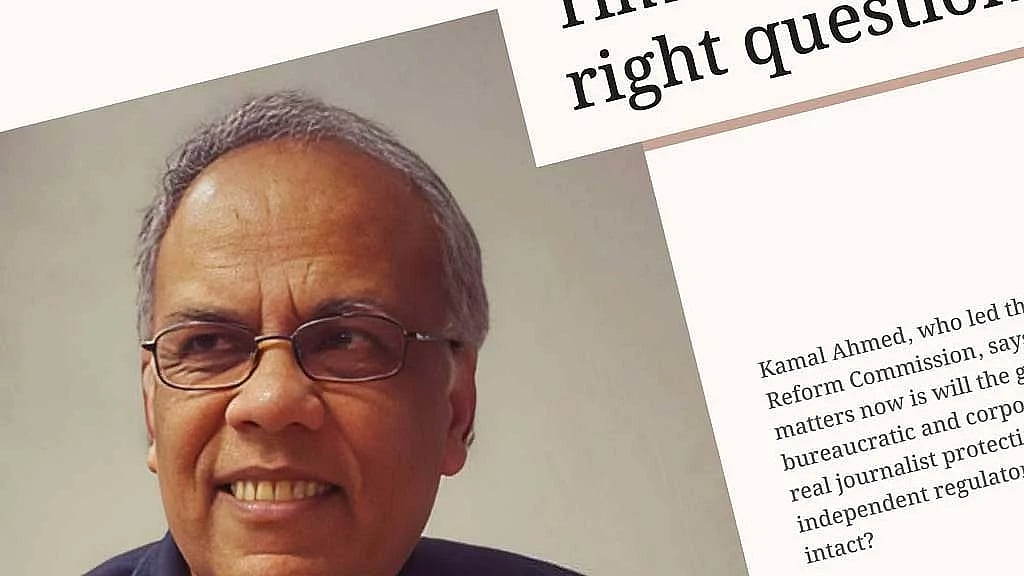
[Kamal Ahmed is a journalist who served as the head of Media Reform Commission of Bangladesh]