Published : 26 Jan 2026, 09:51 PM
Updated : 21 Aug 2026, 03:04 PM


In the run-up to the parliamentary elections, Bangladesh’s political canvas has been dramatically redrawn -- not by shifting alliances, but by absence.
For the first time in decades, the once-dominating Awami League will not appear on the ballot when voters head to the polls in February. Its iconic "Boat" symbol, a fixture of electoral politics since before independence, has vanished.
What remains is a political vacuum, and millions of voters up for grabs.
The Bangladesh Nationalist Party (BNP), Jamaat-e-Islami and the National Citizen Party (NCP) are all recalibrating their strategies, tailoring messages designed less to mobilise their traditional bases than to entice voters accustomed to voting for the Awami League.
Campaign rhetoric has softened in places, sharpened in others; calibrated to avoid alienating a bloc that could tilt dozens of seats.
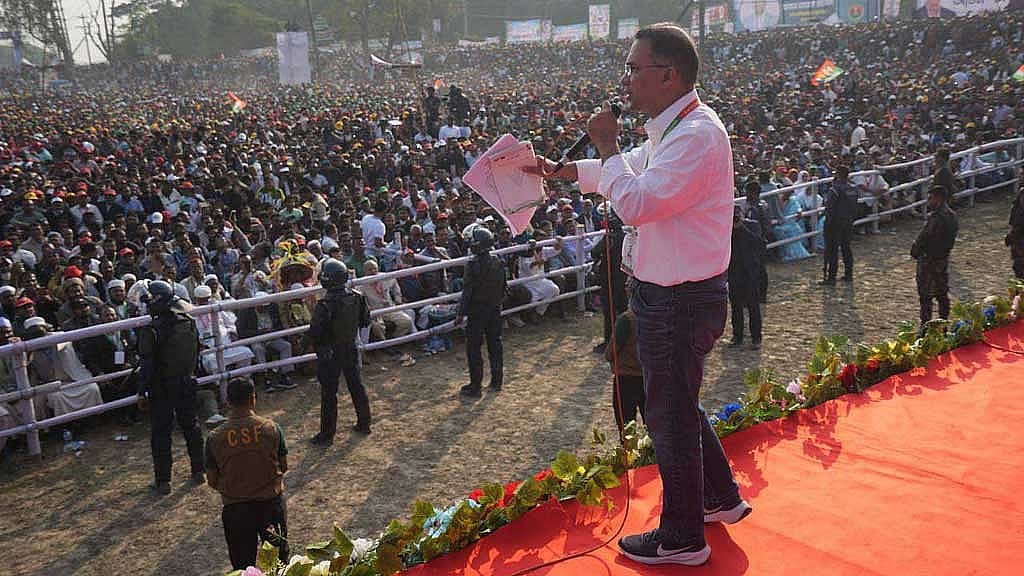
The exclusion of the country’s once-dominant party has transformed the election into a contest not only between candidates, but over the loyalty of Awami League supporters suddenly left without a political home. For rival parties, these voters represent the single largest and most unpredictable prize of the campaign.
An internal BNP analysis, compiled before the announcement of the electoral schedule, suggests that a substantial portion of the Awami League’s traditional base may abstain from voting entirely. Some will gravitate to the BNP; others to Jamaat; a smaller fraction may follow independent local figures.
“Ballot papers will carry no Boat symbol, yet the stakes remain colossal,” notes one insider, hinting at the immense influence of a party absent but not forgotten.
Since the July Uprising, the political landscape has been transformed. Sheikh Hasina, the party’s chief and former prime minister, now lives in exile in India.
Other leaders have fled or gone into hiding, while countless activists remain under threat of arrest or persecution. The interim government has banned the party’s political activities, further constraining its participation.
On Feb 12, voters will also cast ballots in a concurrent referendum. With the Awami League absent, the BNP’s principal rivals include the previously banned Jamaat and its ally NCP, whose student leadership rose to prominence during the July Uprising.
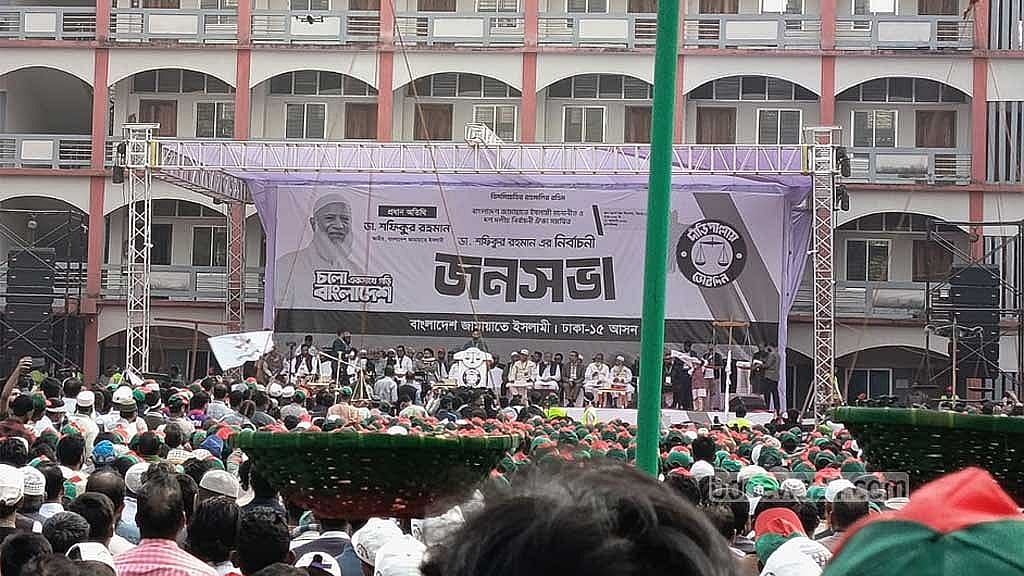
The current roster includes 288 BNP candidates, 253 from Islami Andolan Bangladesh, 224 from Jamaat, 192 from the Jatiya Party, 90 from the Gono Odhikar Parishad, and 32 from the NCP. Campaigning began on Thursday and continues until the morning of Feb 10.
BNP STUDY
Opposition parties are actively seeking AL supporters’ votes, mindful of the party’s five consecutive terms in office. The BNP internal analysis reviewed voter intentions among the Awami League’s base:
• Without Awami League candidates, a large portion of grassroots supporters may abstain.
• 45–55 percent of Awami League voters are expected to lean towards the BNP.
• 15–20 percent could vote for religiously oriented parties such as Jamaat.
• Another 15–20 percent may cast ballots for local independent candidates.
Historical data from the 1991, 1996, and 2001 elections support the projection that the Awami League’s absence could redistribute roughly 35 percent of its votes across rival parties.
Innovision Consulting’s earlier surveys in September and March indicated that:
• BNP support stood at 41.3 percent in September (slightly down from 41.7 percent in March).
• Jamaat support decreased to 30.3 percent from 31.6 percent.
• AL support increased to 18.8 percent from 14 percent.
• NCP support fell from 5.1 percent to 4.1 percent, and Jatiya Party from 1 percent to 0.9 percent.
• Islami Andolan saw an increase from 2.5 percent to 3.1 percent.
The survey further suggested that if the Awami League is absent, the BNP (45.6 percent) and Jamaat (33.5 percent) stand to benefit most, while 8.3 percent of potential AL voters may abstain.
Habiganj-4, a traditional Awami League stronghold, has candidates from the BNP, Jamaat-NCP alliance, and independents.
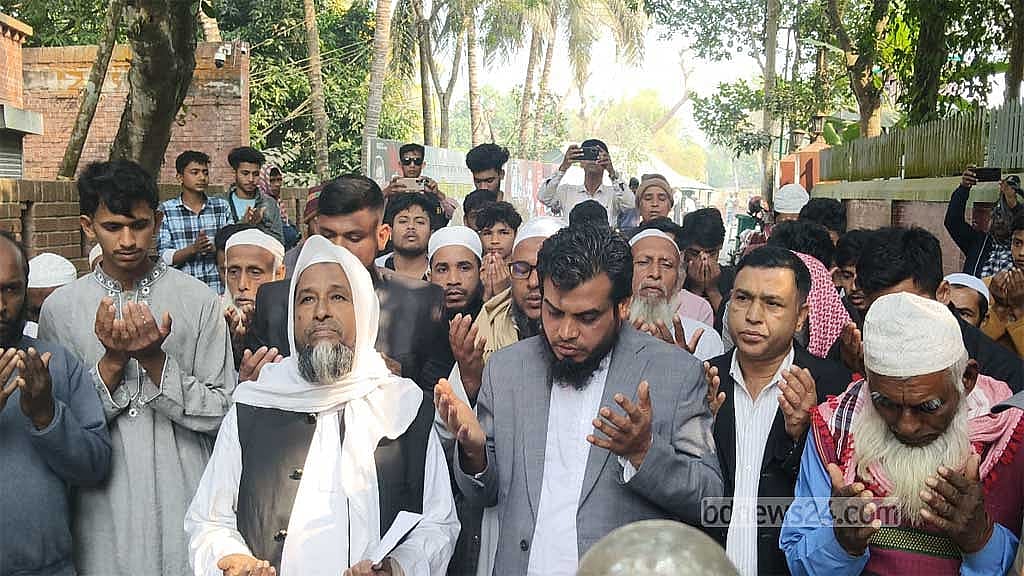
Local party sources predict that 30–40 percent of Awami League supporters may not vote, with the remainder divided among independents and BNP candidates.
Conservative voters, largely from the religious community, are also expected to abstain.
Historically, the seat has alternated: the Jatiya Party’s Syed Mohammad Kaiser won in the 1988 parliamentary elections; the Awami League’s Enamul Haque Mostafa Shahid in 1991; the BNP’s Mohammad Faisal in 1996; and the Awami League’s consecutive victories in the seventh through 10th parliaments.
Mahbub Ali won for the Awami League in 2018 and 2024. Following his arrest on Sept 15, 2024, he faces charges including corruption and involvement in killings during the July movement.
TENSION OVER AL VOTER MOBILISATION
BNP sources, including Central Committee member Iqbal Hasan Mahmud Tuku from Sirajganj-2, suggest that while many Awami League supporters did not vote in the 2014, 2018, and 2024 polls, this year participation may be higher, with voters opting for liberal candidates.
Jamaat candidates are also courting Awami League supporters.
On the second day of campaigning, Friday, in Sholtohari Kolkuthi Bazar of Debipur in Thakurgaon, BNP Secretary General Mirza Fakhrul Islam Alamgir said during a rally that they will not harm the “innocent” Awami League workers and will “stand by them”.
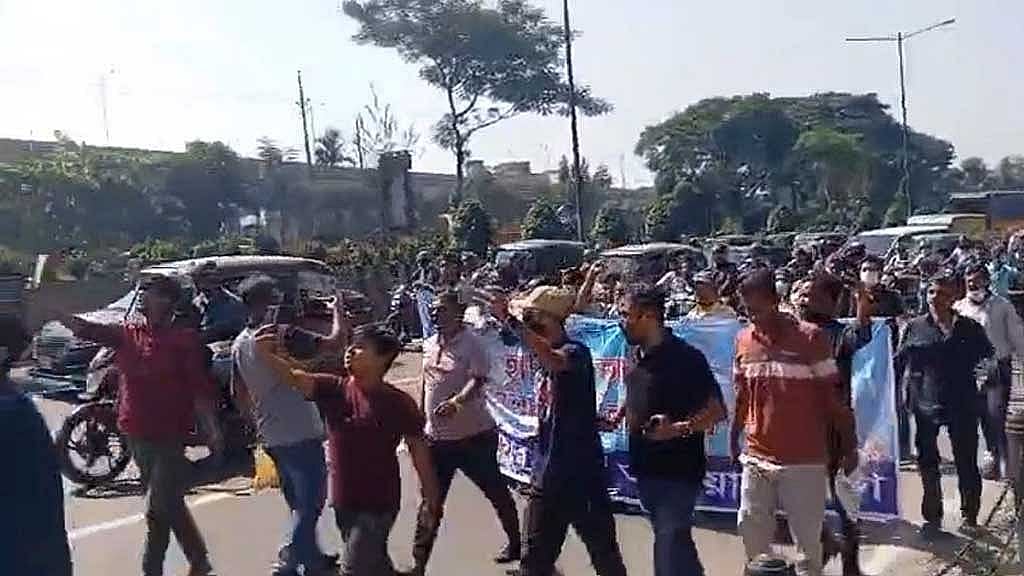
Former MP Latifur Rahman announced support for former Awami League members willing to join Jamaat, while Jamaat Ameer Shafiqur Rahman pledged not to pursue legal cases arising after Aug 5, a message broadcast widely in northern constituencies.
In Lalmonirhat’s Aditmari Upazila, reports indicate over a hundred AL leaders have joined BNP locally. Meanwhile, in Lakshmipur-2, video footage shows a BNP leader appealing directly to Awami League supporters for votes.
Jamaat’s campaign strategy includes assurances such as withdrawal of cases and return to local areas, aiming to attract Awami League voters.
However, Jamaat’s media chief Ahsanul Mahboob Zubair claims that historically only “blind loyalists” of the Awami League participated in polls during the three elections held under former governments.
The UN High Commissioner for Human Rights estimates over 1,400 people may have been killed between Jul 1 and Aug 15, 2024.
In an interview with Al Jazeera, Hasina’s son Sajeeb Wazed Joy estimated around 800 in a recent interview, questioning accountability for those killed after Aug 5, 2024.
The interim government has greenlit a landmark draft ordinance -- the July Mass Uprising Protection and Liability Determination Ordinance -- to provide a legal shield for individuals who took part in the July protests.
VIOLENCE
Since the July Uprising, Awami League leaders and supporters have engaged in multiple clashes with loyalists of other groups. Data from Ain o Salish Kendra (ASK) for January–December 2025 reports:
• 401 incidents nationwide involving 4,744 injuries and 102 deaths.
• 35 incidents between the BNP and Awami League supporters: 454 injured, nine killed.
• Five incidents between Jamaat and the Awami League: 21 injured, 1 killed.
• 33 incidents between the BNP and Jamaat: 520 injured, 3 killed.
• NCP-Awami League clashes: 50 injured, 5 killed, largely around a November gathering in Gopalganj.
Despite restrictions, the Awami League attempted local mobilisations throughout 2025, with rallies in Dhaka and other districts.
Their registration remains suspended by the Election Commission. Violent incidents occurred during November demonstrations, reflecting continued tensions with the interim government.
NCP Joint Convener Ashraf Mahdi says, “NCP has advocated reconciliation with the Awami League.
“Those who committed no crimes, who are capable and have reflected on their mistakes, can re-enter politics.
“We are working towards including such individuals, even among July Uprising supporters.”