Published : 07 Feb 2026, 07:47 AM
Updated : 21 Aug 2026, 03:07 PM


Bangladesh approaches another election carrying the weight of its own unfinished history. Manifestos have been printed, promises polished, and visions proclaimed -- but for many voters, the question is no longer what parties promise, but whether the ritual itself still holds meaning.
The Bangladesh Nationalist Party (BNP) and Jamaat-e-Islami have unveiled competing blueprints for power as the election clock ticks toward Feb 12, presenting the nation thick documents heavy with pledges.
In their manifestos, both parties outline what they say they would do for the country if entrusted with power. The language is aspirational, the ambitions broad.
Yet beneath the pages of commitments, political analysts see a familiar pattern: little to clearly distinguish one party from the other, and scant detail on how -- or when -- these promises would translate into real change.
Political analysts broadly converge on three assessments.
First, they argue there is little substantive difference between the two parties’ pledges. Second, while priorities are clearly listed, neither document explains when implementation would begin or end. Third, they point to a lack of detail on how these policies would deliver tangible improvements in people’s lives.
Analysts note that for more than five decades, elections in Bangladesh have followed the same tradition: parties release lengthy declarations of intent on the eve of voting.
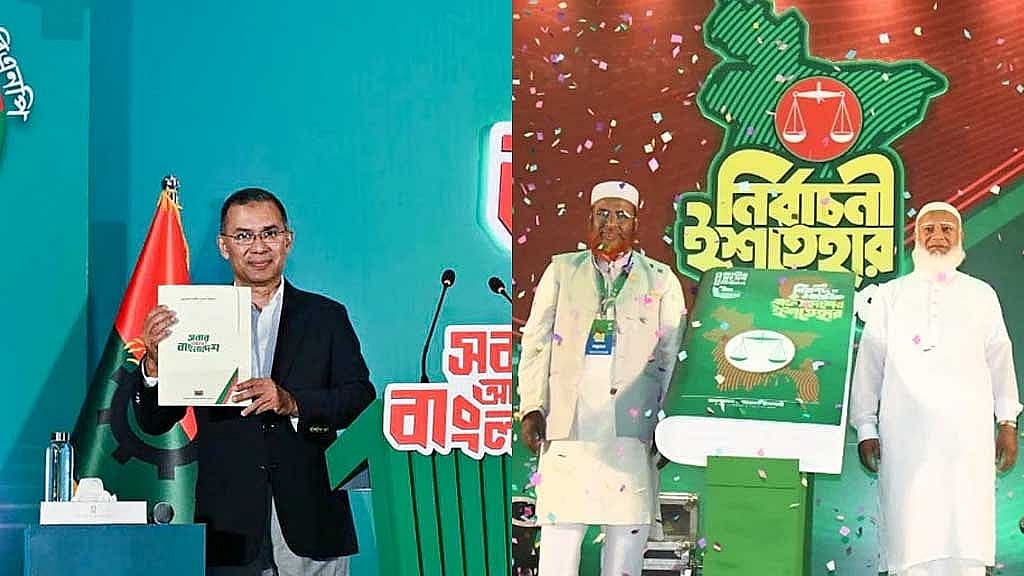
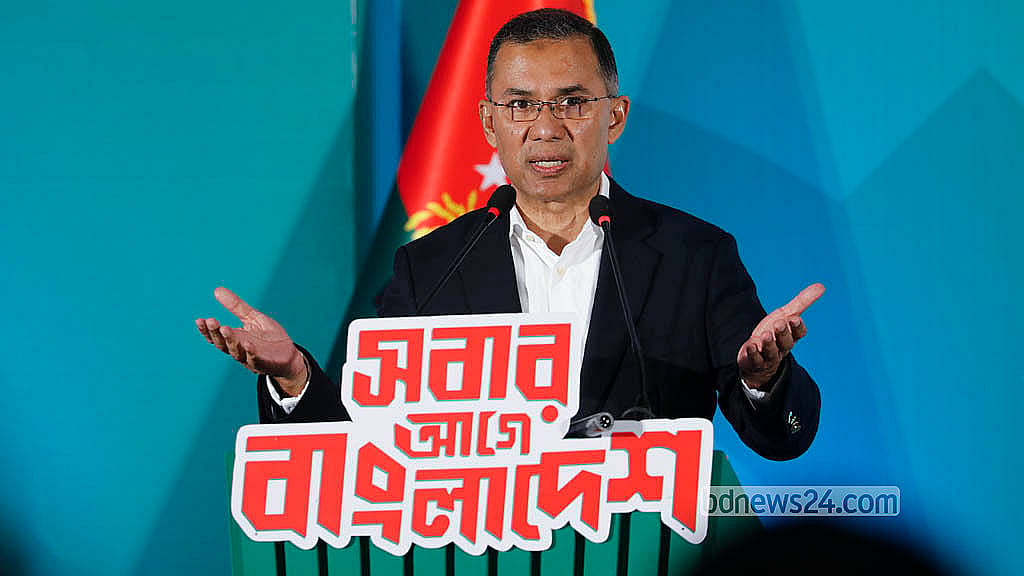
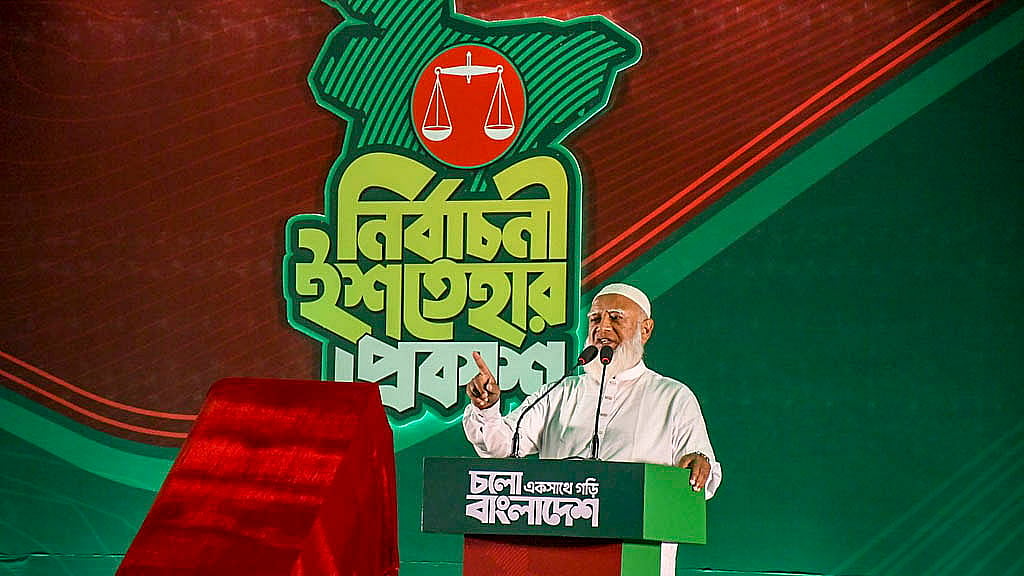
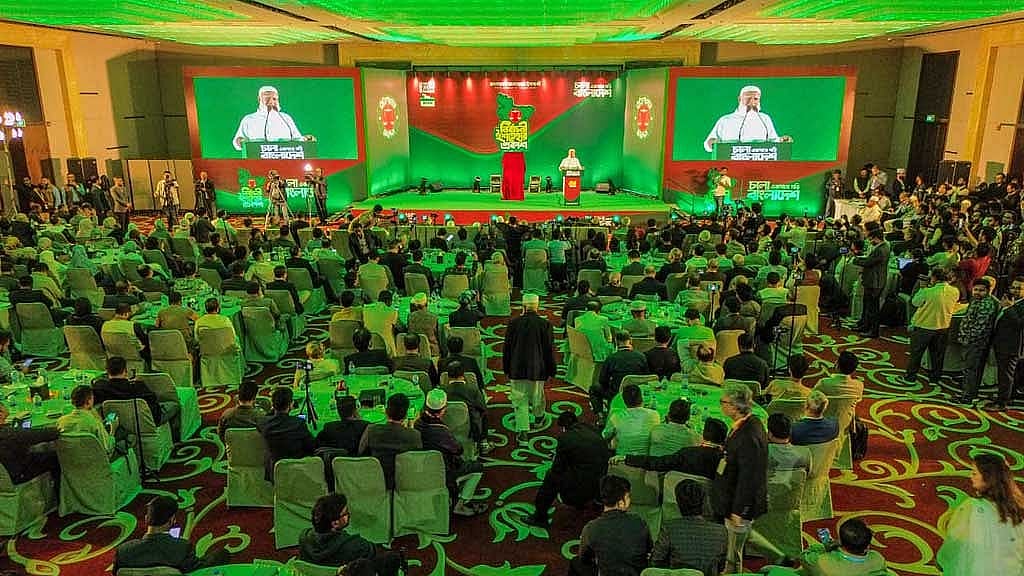
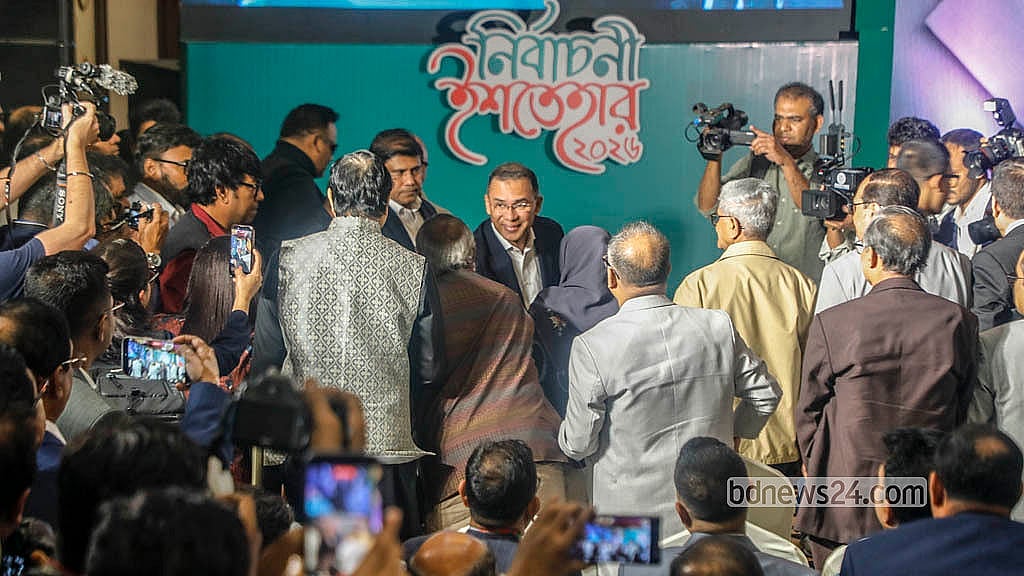
On Friday, BNP Chairman Tarique Rahman formally unveiled his party’s manifesto. Two days earlier, Jamaat chief Shafiqur Rahman had presented his own.
The election -- to be held alongside a referendum on implementing reforms outlined in the July National Charter -- follows a dramatic rupture in Bangladesh’s political history.
On Aug 5, 2024, a mass uprising led by students and the public brought an end to the Awami League’s uninterrupted rule of more than a decade and a half.
The fallen government now faces allegations of authoritarianism, enforced disappearances, killings, torture, corruption and large-scale money laundering.
Trials for crimes against humanity over the attempted suppression of the uprising are under way -- one of the interim government’s top priorities. Another has been state reform: the July Charter has been drafted and signed, with a referendum set to be held alongside the election.
COMPETING CLAIMS, OVERLAPPING GROUND
The BNP’s 44-page manifesto, structured around nine priority areas, promises the creation of a “humane, inclusive and accountable state”. Tarique described it as more than a list of campaign pledges.
“This manifesto is not merely an election promise,” he said. “It is a declaration of a new social and state contract.”
Jamaat, meanwhile, presented its platform as a manifesto for building “a safe and humane Bangladesh”, identifying 26 priority areas of governance.
Before either document was released, Jamaat’s alliance partner, the National Citizen Party (NCP), unveiled its own 36-point manifesto on Jan 30, describing it as a “realistic and reform-oriented roadmap”.
Among the three, BNP’s manifesto places the strongest emphasis on the 1971 Liberation War and the rights and recognition of freedom fighters.
Jamaat’s document refers briefly to the Liberation War and the July Uprising, while NCP’s manifesto focuses on drafting a new constitution and on political “reconciliation” involving figures associated with the former Awami League government.
Public debate has since intensified, with many seeking meaningful distinctions among the documents.
Some political leaders and analysts argue BNP’s manifesto is stronger than those of Jamaat and NCP. Others dismiss the entire exercise.
“People don’t really read manifestos,” some say.
Tarique returned to Bangladesh on Dec 25 after 17 years of self-imposed exile in London, amid fears over the health of his mother, former prime minister Khaleda Zia.
Following her death, Tarique now leads the BNP into an election for the first time as its undisputed supremo.
At the reception marking his return, he declared: “We have a plan.” That phrase became the organising principle of the BNP manifesto.
The document promises family cards and farmer cards distributed by the state, alongside reforms in healthcare, education, canal excavation and the digital economy -- pledges Tarique has repeated at campaign rallies.
Political analyst Zahed Ur Rahman said the manifesto lacked timelines.
“The initial observation is that the BNP talks about employment and funding,” he said, “but it does not specify how long implementation would take.”
In the manifesto, Tarique insists Bangladesh will not be governed from the Secretariat in Dhaka.
“The country will be run according to the will and opinions of people at the grassroots,” he said. “Solutions will be found where problems exist.”
Under the principle that “sustainable solutions are possible only through local leadership”, the manifesto pledges to empower local government institutions through accountability and meaningful decentralisation.
“A strong local administration will be built to implement people-centric programmes such as family cards and agricultural cards,” it states.
Zahed remains unconvinced.
“They talk about strengthening local government,” he said, “but not how or within what timeframe.”
WHERE THE MANIFESTOS DIVERGE
In the section titled “Fundamental Reform of the Governance System”, Jamaat promises to include “a significant number of women” in the cabinet -- despite nominating no female candidates in the parliamentary election.
For women, children and families, Jamaat pledges counselling and motivation centres, safe school programmes, mental health centres, and expanded services for children with special needs.
The BNP, by contrast, promises “Family Cards” for women, free postgraduate education, economic and political empowerment, women’s support cells, assistance for entrepreneurs, daycare centres, vending machines and breastfeeding corners.
Jamaat’s call for “radical political change” includes a proposal to allocate annual state funding to political parties contesting elections, proportionate to seats and votes won.
BNP instead promises that parties involved in past democratic movements would be included as stakeholders in governance.
Jamaat also pledges to make parliament the centre of nation-building and accountability, including amending Article 70 to allow MPs to vote independently.
BNP similarly proposes constitutional reforms, including implementation of the July Charter, amendment of Article 70 and the creation of an Upper House -- provisions already contained in the Charter.
Among Jamaat’s additional pledges are reforms of corruption-prone sectors within the first 100 days of government, and sweeping accountability measures for passport, National ID and other citizen services within the same period.
Jamaat has pledged to raise GDP growth to 7 percent and expand the economy to $2 trillion by 2040 -- an ambition analysts describe as unrealistic.
Analyst Farhad Hossain Talukder said Jamaat provided no calculation to support the target.
By conservative estimates, he said, GDP could reach about $1.53 trillion by 2040 -- well short of the $2 trillion goal.
WHAT ANALYSTS SAY—AND WHAT’S MISSING
Writer and political researcher Mohiuddin Ahmed sees little reason for excitement.
“Manifestos are a tradition,” he said. “I doubt even one percent of people read them.”
Political analyst Prof Zobaida Nasreen, who teaches anthropology at Dhaka University, also sees little novelty.
“I don’t see much new here,” she said. “The BNP and Jamaat are very close. Both are cautious.”
She added that apart from family cards and free education up to graduation, she saw little difference in commitments for women.
“These are abstract promises,” she said. “There is no concrete indication of how positive change would actually happen.”
Zahed, however, argued BNP’s manifesto is comparatively stronger.
“Tarique’s long stay in London has influenced the document,” he said. “He is more explicit on environmental issues and water management than past leaders.”
BNP’S OMISSIONS
BNP promises to end political and social divisions based on Bangladeshi nationalism.
Under “Building a United Nation”, it says it seeks to unite Muslims, Hindus, Buddhists, Christians, hill people, plain-land people, rich and poor under a single national identity.
Yet a notable omission is a line Tarique delivered on Aug 5, 2025, marking one year since the July Uprising: “We want a Bangladesh where every person -- regardless of party, belief, faith or doubt -- will live in safety.”
Asked what the manifesto lacked, a BNP standing committee member said: “It’s very detailed, but it doesn’t have a striking line.”
At the manifesto launch, Revolutionary Workers Party General Secretary Saiful Haque offered a cautious endorsement.
“If even part of what Tarique says on corruption and good governance is ensured,” he said, “we can emerge from this crisis.”
A senior journalist aligned with the BNP offered a blunt verdict: “There is nothing new in it.”