Published : 29 Jan 2026, 07:26 AM
Updated : 21 Aug 2026, 03:05 PM


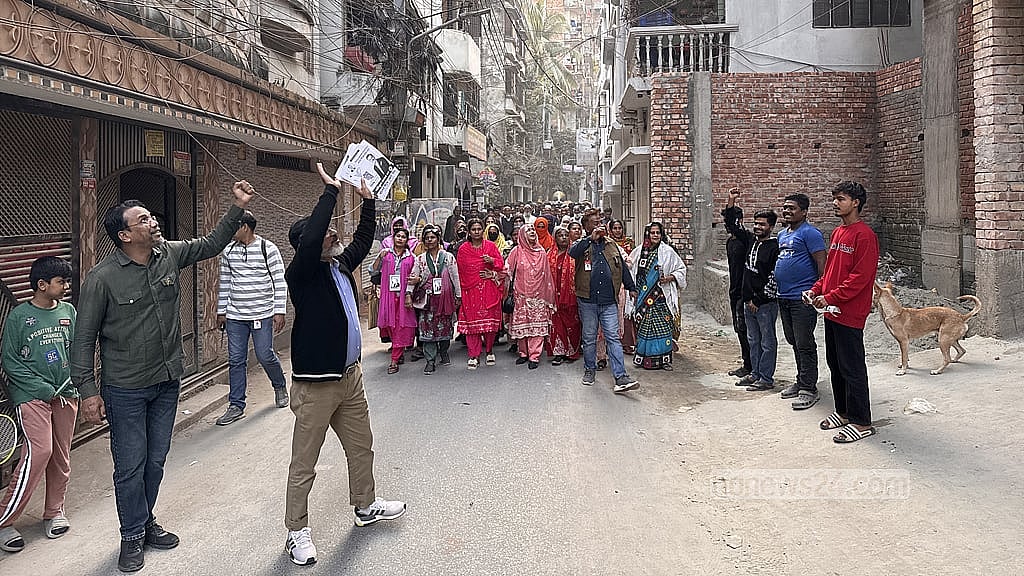
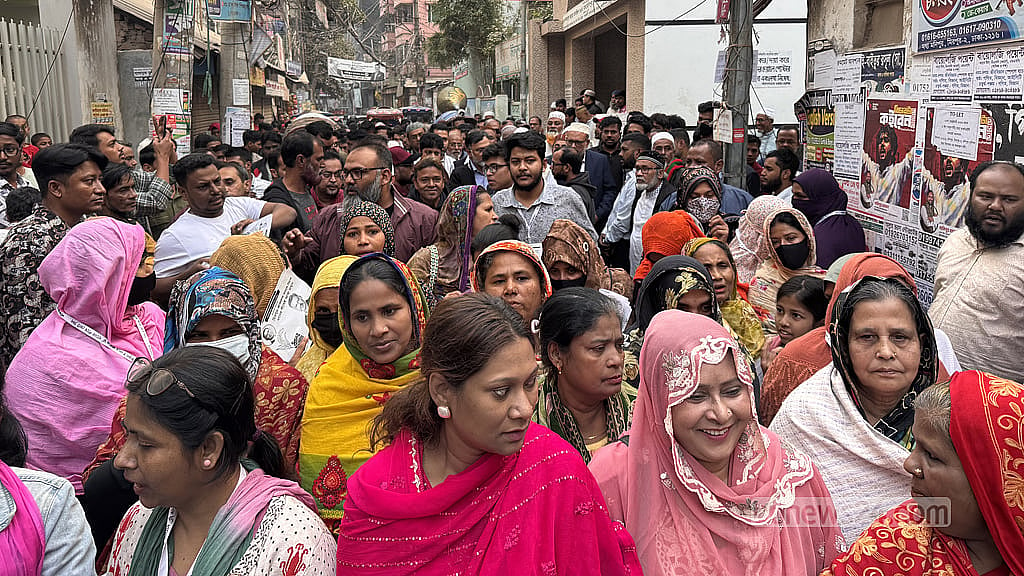
On a sunlit Tuesday afternoon in central Monipur, small groups of women activists fan out through narrow streets, knocking on doors, handing out pamphlets, and making the case for representation.
They carry the hopes of two rival political camps -- Jamaat-e-Islami chief Shafiqur Rahman and BNP’s Safiqul Islam Khan Milton -- each determined to win the confidence of Dhaka-15’s women voters, who make up nearly half the constituency.
For these women, each leaflet and conversation carries weight, influencing the outcome even before a single vote is cast.
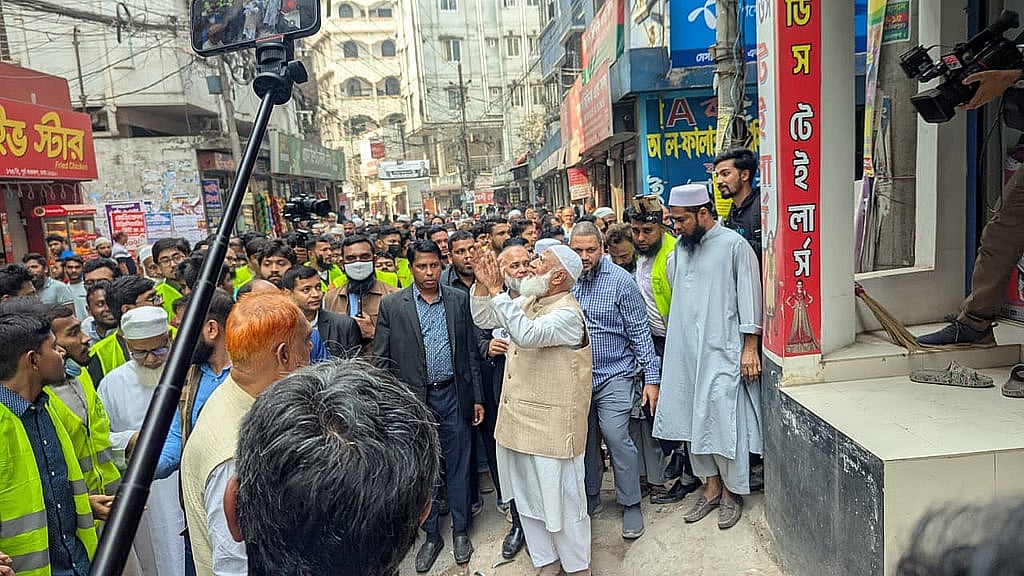
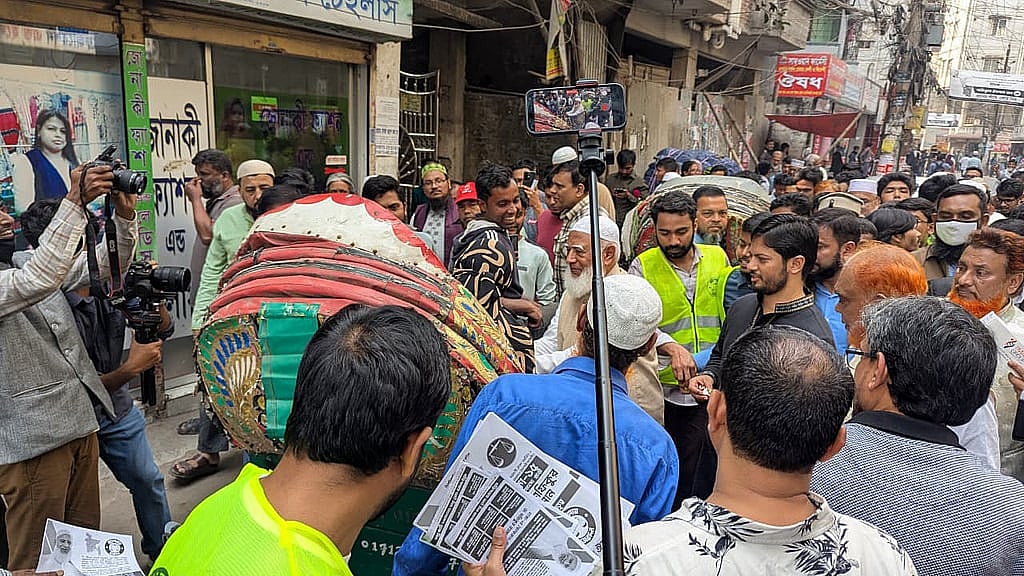
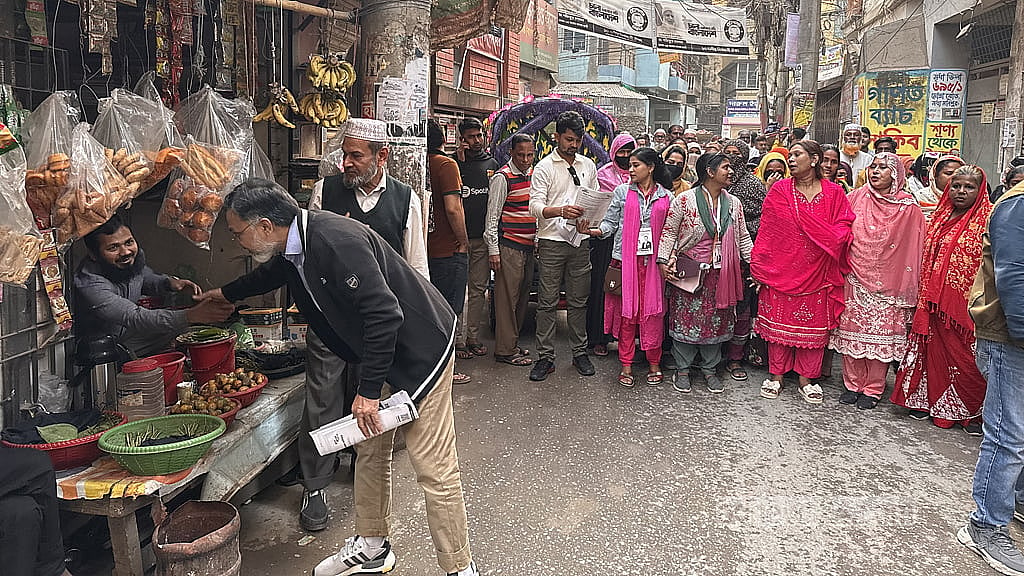
The BNP’s candidate Milton approached one such group voluntarily, exchanging leaflets and greetings.
“You give me one, and I’ll give you one,” he said, handing over his campaign manifesto.
Later, the same street saw rival groups promoting the BNP’s “Sheaf of Paddy” and Jamaat’s “Weighing Scale” symbols.
Milton shook hands with shopkeepers, waved to residents peering from balconies, and sought their votes with enthusiasm.
In contrast to the tensions that erupted during leafleting on Jan 20, when BNP and Jamaat activists clashed in Pirerbagh, Tuesday witnessed a relatively cordial atmosphere.
BNP AND JAMAAT: OLD ALLIES TURNED RIVALS
The parliamentary elections, formally launched on Jan 22, exclude the Awami League, leaving the BNP and Jamaat as major contenders in Dhaka-15.
While Shafiqur leads the party’s nationwide campaigning, Milton has capitalised on his local roots to gain traction.
Milton, a veteran BNP youth leader and former acting general secretary of the organisation, is deeply familiar with the constituency, which includes parts of Mirpur and Kafrul.
Born in Ward 13, he frequently emphasises his local roots to residents, saying: “This Ward has been a BNP stronghold since independence. I grew up here; later, I moved to Pallabi due to my father’s job. But now, being a local, people are telling me, ‘You are ours this election’.”
In contrast, Shafiqur, three-time Jamaat-e-Islami Ameer, contested in this seat in 2018 under the BNP symbol due to registration issues.
Though defeated by Awami League’s Kamal Ahmed Mojumder amid controversy, he remains a senior political figure, drawing longstanding support from local party structures.
FILLING THE GAPS
Jamaat’s strategy hinges on both Shafiqur’s intermittent presence and the continuous work of party representatives.
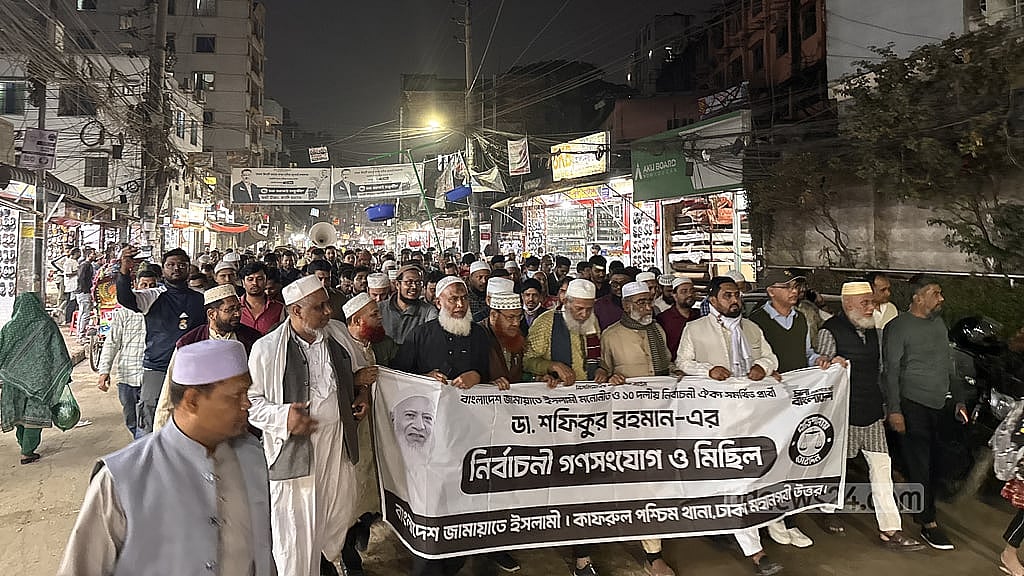
Women activists conduct house-to-house outreach, while separate evening marches cover multiple wards, advocating the Weighing Scale symbol and promoting a “Yes” vote in local referenda.
Slogans also connect to broader political causes, such as the trial of Sharif Osman bin Hadi and the anti-hegemony July Uprising, to maintain relevance.
Milton, meanwhile, exploits the absence of Shafiqur to increase personal engagement.
Touring Mirpur-Kafrul, he promises infrastructure improvements and pledges constant accessibility for constituents.
“Whatever the need, residents will always find me available,” he assures voters, moving through his birthplace, Ward 13, and into Monipur.
Laskar Md Taslim, overseeing Jamaat’s campaign in the constituency, told bdnews24.com: “The Ameer has been coming here from the beginning. Whenever he gets the chance, he will return, and he has responsibilities nationwide.
“Every party worker acts as his representative. So every voter here supporting him is, in effect, supporting the Ameer. We will continue to cover any gaps together, God willing.”
FROM CONFLICT TO CORDIALITY
Earlier disputes had sparked complaints to the returning officer over violations of campaign conduct.
Milton accused Jamaat women of collecting personal information -- ID cards and mobile numbers -- during door-to-door outreach on Jan 21, warning that such actions amounted to voter intimidation.
By Tuesday, however, those tensions appeared to have dissipated. Leaders from both parties were observed conducting campaigns amicably.
During street rallies, Milton spoke courteously with Jamaat women distributing leaflets, and no further public complaints emerged.
WOMEN’S VOTES: THE DECIDING FACTOR
Dhaka-15’s electorate numbers 351,718, comprising 179,616 men, 172,098 women, and four third gender voters -- meaning women constitute 48.93 percent of voters.
Milton highlighted the importance of female voters: “I have been active in politics here for 40-41 years. Women, especially those loyal to our late leader Khaleda Zia, hold significant sway.
“They personally support me because they know I will meet them and represent them effectively. I have spoken to many, through meetings and conferences, and their response has been consistent: they want a representative they can engage with even after the election.”
Jamaat-affiliated Bangladesh Labour Welfare Federation Vice-President Taslim reinforced this point: “Women voters are nearly 50 percent [of the electorate]. They play a vital role in nation-building.
“We respect their rights and are ensuring we engage mothers and sisters directly to earn their support.”
Jamaat’s campaign thus relies heavily on its female workers to visit households, maintain engagement, and rally women behind their candidate.
SOCIAL MEDIA FRONTS
While public campaigning has been largely cordial, the online battlefield is intense.
Supporters of both candidates manage multiple Facebook pages and groups, engaging in negative campaigning against opponents.
A supporter of Jamaat chief wrote, “The BNP’s nominated candidate in Dhaka-15 has only an eighth-grade education. How can such a major party have no qualified candidates for parliament?”
Conversely, BNP supporters have accused Jamaat of attempting voter “migration”, shifting allegiance away from Milton, reflecting the digital extension of grassroots rivalries.
OPTIMISM ON BOTH SIDES
In Monipur’s Border Bazar, Abdul Alim, a BNP activist, who had previously fled business persecution under the Awami League and returned from Malaysia, expressed confidence.
“From morning to evening, I’m going door to door. People already say they will vote for the Sheaf of Paddy.”
Jamaat’s Ward 13 President Sarwar Hossain struck a similarly positive tone.
“We are moving in groups to every household, receiving strong responses. Women particularly are supporting Ameer as a competent and honest candidate. Even voters of different faiths are responding positively.”
The duel between the two -- one a seasoned national leader, the other a young local figure -- is shaping Dhaka-15 into one of the most closely watched battlegrounds of the parliamentary elections.