Published : 18 May 2026, 11:04 PM
Updated : 21 Aug 2026, 03:44 PM


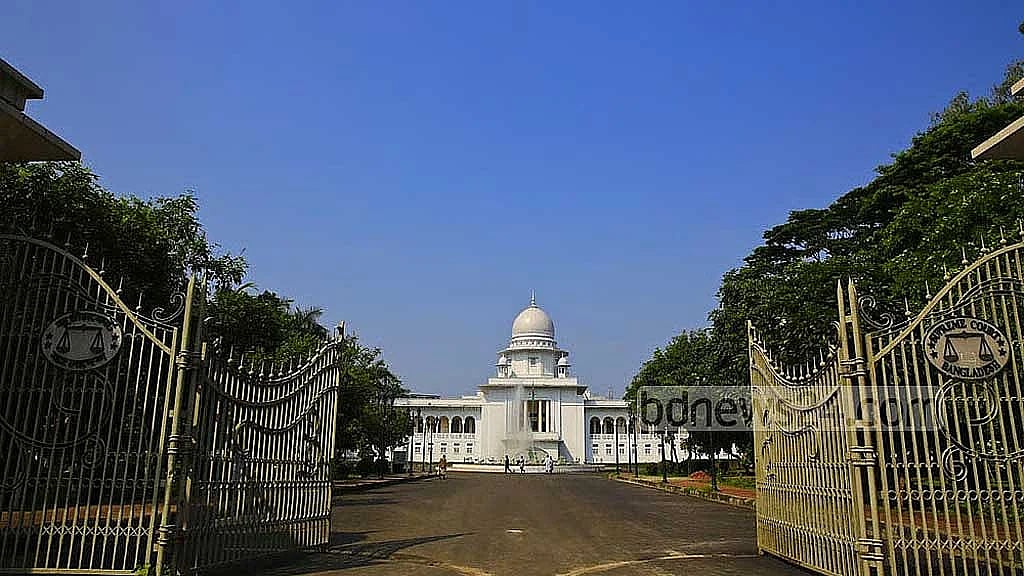
The High Court (HC) has issued a rule asking why the government’s "inaction" and "failure" to ensure universal health coverage for citizens should not be declared illegal.
On Monday, the bench of Justice Bhishmadev Chakrabortti and Justice Abdur Rahman passed the order following a primary hearing on a writ petition filed in the public interest.
The health ministry has been directed to explain why it should not form an independent committee within a month to oversee, monitor, and guide the implementation of universal health coverage.
The court also questioned why the ministry should not be ordered to submit a progress report within the next three months.
Advocate Nishat Mahmud filed the petition on behalf of lawyers AKM Maksud, Aminul Islam, Syed Mahbubul Alam, and Shima Das Shimu.
According to the petition, the state is constitutionally obligated to guarantee healthcare under Articles 15, 18, and 32 of the Constitution, but this mandate has not been effectively realised.
Citing the World Health Organization (WHO), the petition defined universal health coverage as a system ensuring all citizens access to quality healthcare without facing financial hardship.
While the government’s own plan pledges to achieve universal health coverage by 2032, actual progress remains heavily limited, the petition added.
Data from the Centre for Policy Dialogue (CPD) and the Bangladesh Institute of Development Studies (BIDS) was presented in court, showing that citizens must bear roughly 79 percent of their healthcare expenses out of pocket.
Consequently, millions of families slip below the poverty line every year due to the cost of treatment.
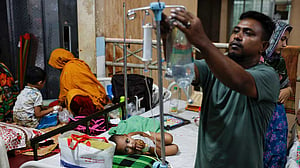
A vast number of patients suffering from non-communicable conditions like cancer, kidney disease, diabetes, and heart ailments are deprived of treatment solely due to unbearable costs.
The petition further highlighted systemic vulnerabilities, noting that budget allocations for healthcare remain critically low relative to the total budget and GDP, with a large portion of the allocated funds left unused.
The doctor-to-population ratio stands at 1:2,000, while the nurse-to-population ratio is 1:5,000, with the petition highlighted the inadequate number of healthcare providers.
Effectively rolling out universal healthcare would lower disease burdens, reduce financial strain on citizens, and give true meaning to the constitutionally guaranteed right to life, the petition argued.