Published : 14 Apr 2026, 03:40 PM
Updated : 28 Aug 2026, 01:33 AM


Chhayanaut has ushered in Bengali New Year 1433 amid a world of conflict, calling for the “right to sing without fear” and “uphold media freedom”.
At Nobosborsho’s first light, the organisation spoke of an imagined homeland “where the mind is without fear, the head is held high, knowledge is free”, and walls do not confine thought.
Chhayanaut President Sarwar Ali said the world is facing deep instability amid geopolitical tensions, adding that people across nations are now longing for peace.
“Under American-Israeli oppression, Iranian civilisation is facing a severe crisis. The world today is distressed and anxious. At the first dawn of the new year in our homeland, everyone is wishing for global peace.
"We want to hear the reassuring voice of society -- so that media workers can express true opinions without fear," Sarwar said.
He added that the goal is for everyone to “sing without trepidation, for all cultural expressions to remain unhindered, and for the Bengali people to live a life free from fear”.
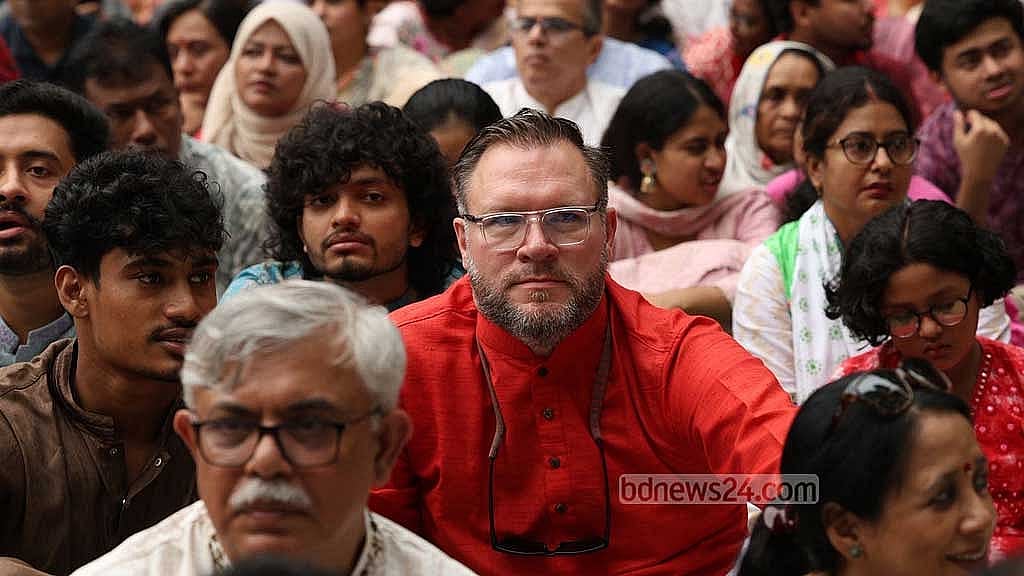
Continuing its long-standing tradition, Chhayanaut organised its celebration at Ramna Botomul under the theme “Chitto Jetha Bhoyshunno, Uchcho Jetha Shir” or “Where the mind is without fear, where the head is held high”.
The programme featured a vibrant mix of songs, recitations and speeches.
The programme began with the choral song “Jago Aloke-Logone”, performed by Mirajul Jannat Sonia, Aishwarya Samaddar, Preyantu Deb, and Samudra Shubhom.
Speaking during the final segment, Sarwar described Pahela Baishakh as a special day to celebrate Bengali culture and national identity.
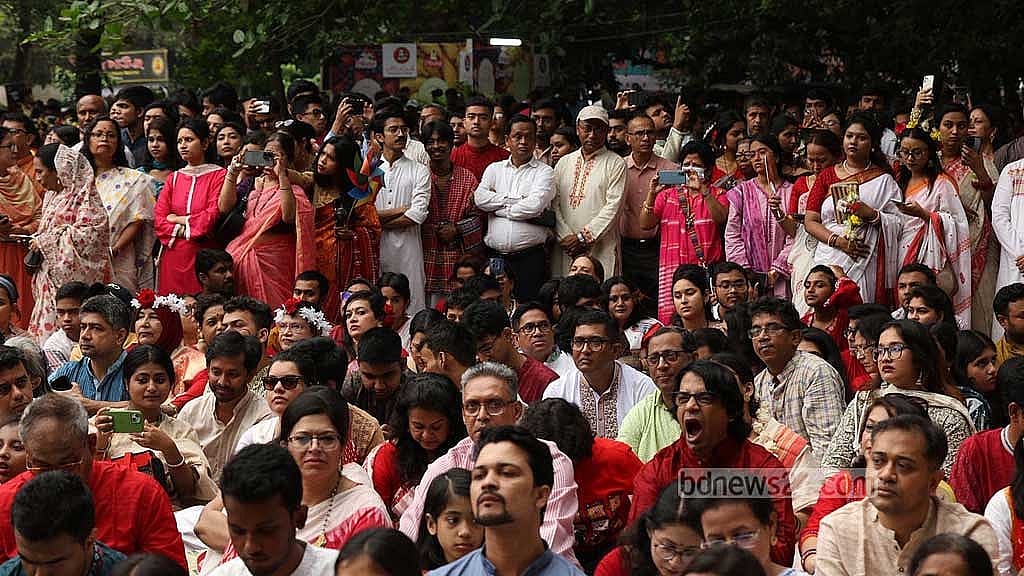
He noted that for nearly six decades, the day has served as a time to wipe away the fears and infirmities and look back on the year that has passed.
The celebration at Ramna Botomul, which Chhayanaut pioneered in the 1960s, is now a key tradition of the Bengali New Year.
Since its start in 1967, the festival has been held every Pahela Baishakh, except during the Liberation War in 1971.
The event was held virtually for two years during the COVID-19 pandemic.
Since a militant bomb attack in 2001 that killed 10 people, the event has been organised under strict security.
Sarwar recalled that while the new year was celebrated peacefully at Ramna last year, the Chhayanaut building was attacked just two days after a Victory Day event on Dec 16.
He spoke of the painful memories of broken harmoniums, Tablas, and Tanpuras at the Chhayanaut Sanskriti Bhaban, alongside the torn children's books at Nalonda High School.
That same night, two leading newspaper buildings were set on fire, followed by an attack on the Udichi Shilpigosthi office the next day.
"Only days before these violent events, Baul artistes were humiliated," he noted,
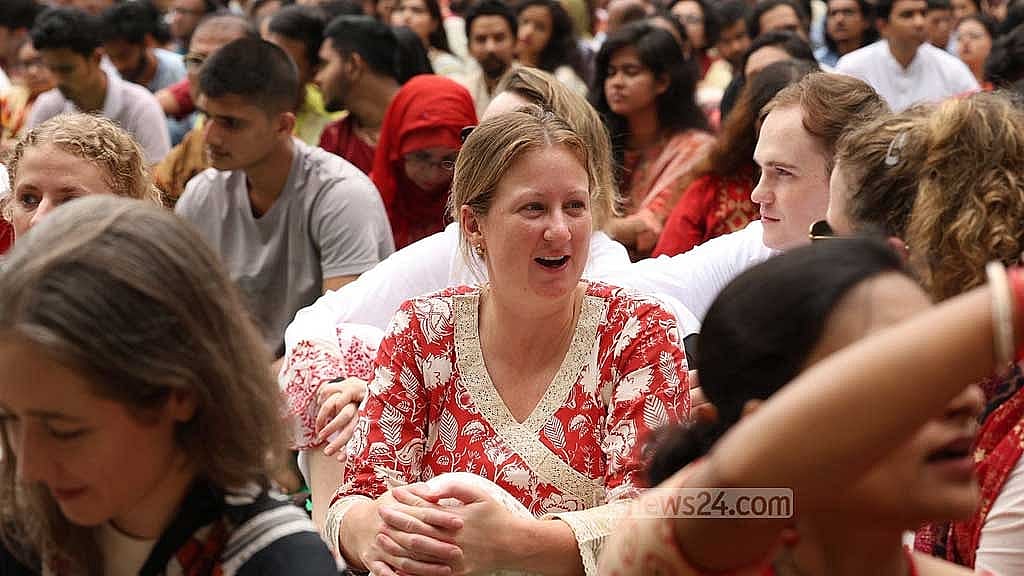
He argued that music is a companion to Bengali joy, sorrow, and struggle, serving as a pillar for achieving rights and binding people of all religions and nations together.
Chhayanaut chief warned that “evil forces are attempting to intimidate peace-loving people away from music and detach Bengali songs from their rich heritage”.
He believes that “intolerance and the fear of collective harassment for expressing personal views” are on the rise.
This year’s programme included eight choral songs, 14 solos, and two recitations, involving nearly 200 artistes.
Alongside songs of nature and patriotism, the performance featured folk tunes and tributes to anti-British revolutionary musician Salil Chowdhury and anti-Pakistan movement lyricist Matlub Ali.
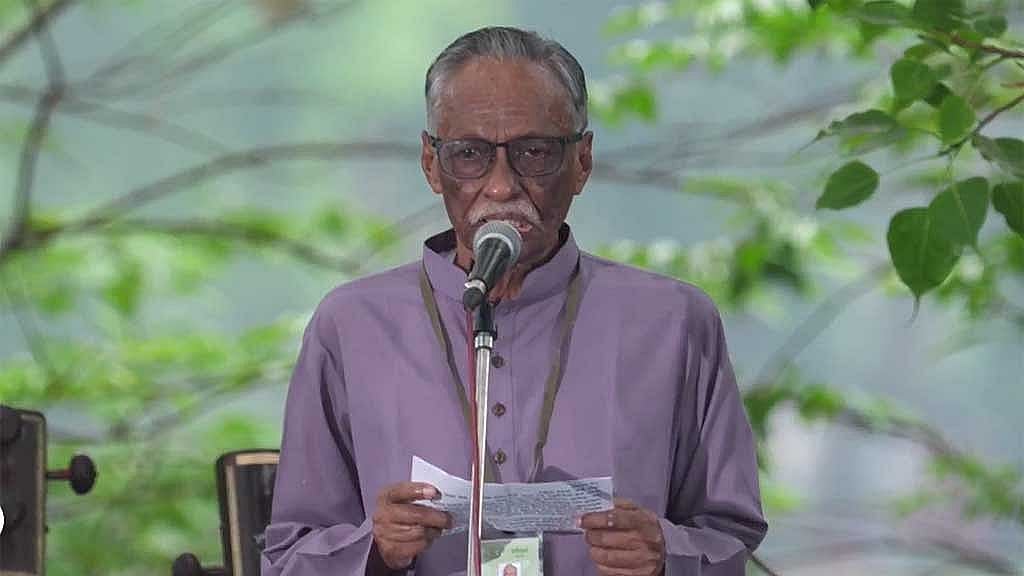
Renowned artistes performed songs by Rabindranath Tagore, including Maksura Akhter Antara, Azizur Rahman Tuhin, Sementi Manjari, Tania Mannan and Laisa Ahmed Lisa.
Renowned artistes also performed works by Kazi Nazrul Islam, while recitations included poetry by Satyendranath Dutta.
The traditional celebration concluded with the national anthem.
The two-hour programme from Ramna Park was broadcast live by BTV and Deepto TV, as well as bdnews24.com and Prothom Alo’s web portals.
It was also streamed live on Chhayanaut’s YouTube channel and Facebook page, with a delayed telecast scheduled on Channel i.