Published : 30 Mar 2026, 07:11 AM
Updated : 21 Aug 2026, 03:32 PM


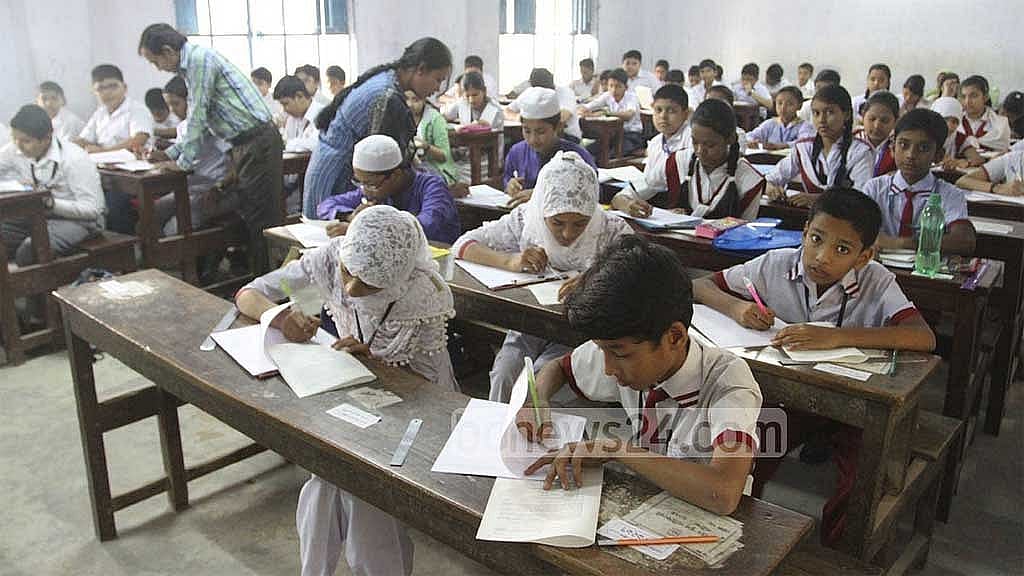
Class VI student Taiyeba of Bangshal Balika High School in Old Dhaka faces a daunting academic challenge: navigating her new Class VI syllabus while revisiting her Class V books to prepare for the rescheduled scholarship exam.
Although she has moved up a grade, she is being forced to dive back into her Class V textbooks to prepare for the primary scholarship examination, now rescheduled for Apr 15.
At the same time, her class tests for Class VI will take place in April and May, followed by half-yearly exams at the end of June.
The delay, caused by legal complications last year, has left hundreds of thousands of students facing a "double burden".
"The pressure on the child is immense," said Taiyeba’s mother Shilpi Akhter.
"She prepared for this in December, but the exams never happened. Now, four months into the new academic year, she has to revise everything from last year alongside her current studies. We are both exhausted."
Taiyeba’s father Md Monir Hossain expressed frustration at the backward step.
"We want to move forward, but the government is pulling us back. Luckily, we hadn’t given away her old books yet. But the learning styles for the two grades are different; it’s a chaotic situation for the children."
The decision to hold last year’s scholarship exam at this stage has drawn mixed reactions from students and guardians.
Many students, who were once eager, have lost interest in the scholarship after the long hiatus.
Educationists have also criticised the move, with some calling it “unacceptable” and others questioning the necessity of holding the exam at all.
Why Complication Arose
The Awami League government scrapped the primary scholarship examination in 2009 and introduced the Primary Education Completion Examination, with scholarships awarded based on top scores in that public test.
However, the exam could not be held in 2020 due to the COVID-19 pandemic and was later abolished to ease academic pressure on students.
To address the resulting gap, the government reintroduced the primary scholarship examination on a pilot basis in December 2022.
Based on its results, a list of more than 82,000 scholarship recipients was published in February 2023.
Following the 2024 mass uprising, the interim government took a policy decision to reinstate the Class V scholarship exam.
It was initially scheduled for the end of the year, but participation was limited to government primary school students.
This exclusion prompted demands to include kindergarten and private school students.
When guardians moved the court, the exam was stayed.
Although a date was announced in late December, it was ultimately not held.
After the BNP came to power following the Feb 12 election, Education Minister ANM Ehsanul Hoque Milon announced on Feb 25 that the delayed exam would be held in April.
He said the revised plan allows participation from both government and private (including kindergarten) students.
Of the total scholarships, 80 percent will go to government school students and 20 percent to those from private institutions.
Under the new framework, 40 percent of fifth graders from both streams will be eligible to sit the exam, in line with court directives and the constitutional principle of equal rights.
A total of 82,500 students will receive scholarships, including 33,000 in the talent pool category -- of which around 5,500 are allocated for private institutions -- and 49,500 general scholarships.
Of the general category, 41,250 scholarships will be distributed among government school students on a union and ward basis, while 8,250 will be allocated to private students at the upazila level.
Each union will receive five general scholarships -- two for boys and three for girls -- and one talent pool award.
Both categories include a one-time grant of Tk 225 and a monthly stipend of Tk 300.
Parents Question Logic, Minister Calls Exam ‘Optional’
The decision to hold the 2024 scholarship exam in April 2026 has drawn sharp criticism from parents, who argue the move is illogical and places an undue burden on children already adjusting to Class 6.
Raisa, a student at the Bashundhara branch of Viqarunnisa Noon School & College, is among those caught in the crossfire.
Her father Md Russell believes the government should have awarded scholarships based on previous academic records rather than forcing a retrospective exam.
"Holding a Class V scholarship test after they have already moved up to Class VI is nonsensical," he told bdnews24.com.
"Education didn't stop in 2024 when no exams were held. They could have simply evaluated students based on their Class 4 and 5 marks."
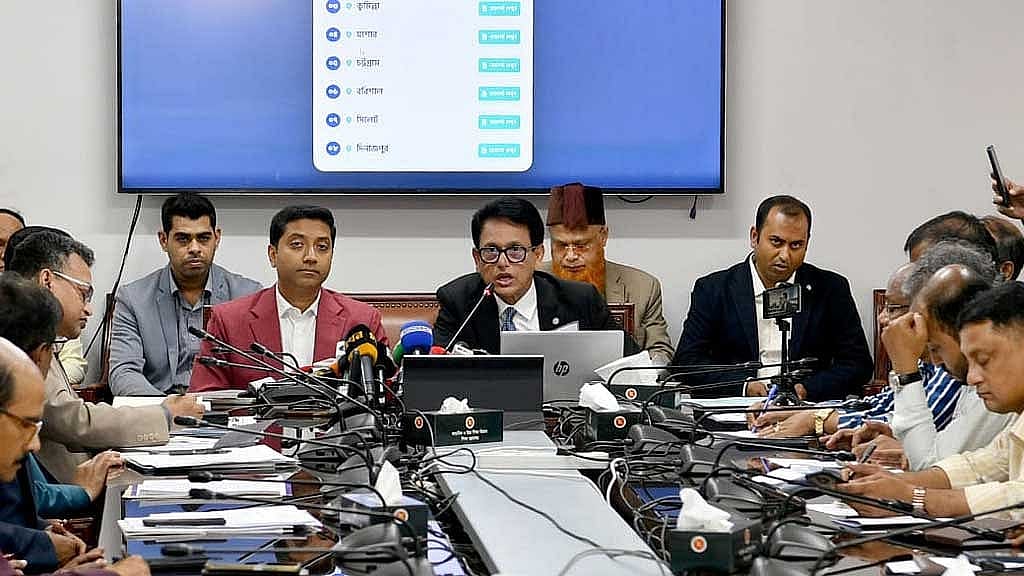
When journalists questioned the rationale behind this delayed schedule during a press conference on Mar 16, Education Minister Milon dismissed the concerns.
"“It’s not mandatory. Those who cannot sit the exam don’t have to. It’s optional," he said.
However, parents argue the "optional" tag ignores the psychological pressure on high-performing students.
“My daughter did well in Class V and prepared hard for the scholarship exam. Being left out while others take it would demotivate her. That’s why she is preparing despite the stress,” he said.
"My daughter was the top student in her class last year," said Shilpi, whose daughter Taiyeba is also appearing for the test.
"If her peers sit for the exam and she doesn't, it affects her morale. I told her, 'just sit for the paper, don't worry about the result'. But the preparation remains a massive struggle," she said.
Russell echoed this sentiment: "My daughter did well in Class V and prepared hard for the scholarship exam. Being left out while others take it would demotivate her. That’s why she is preparing despite the stress."

Student Reluctance Grows
As the rescheduled examination looms, many students and teachers are showing a clear lack of interest.
Shahinur Al-Amin, an assistant teacher at Charigram Government Primary School in Keraniganj, noted that participation is likely to plummet.
"Last year, we registered 40 percent of our students for the scholarship," he told bdnews24.com.
"But now, many are refusing to sit for it. Out of the eight students we selected, only four or five might show up. The rest have either given away their old books or simply refuse to take on the extra stress."
This sentiment is echoed in the capital.
Md Anisur Rahman, an assistant teacher at Suritola Model Government Primary School in Old Dhaka, estimated that only 30 percent of the originally selected candidates from his school would actually attend.
"Many have sold their Class V books and are fully immersed in the Class VI curriculum," he explained.
For some parents, the "optional" nature of the exam has become a welcome exit strategy.
Rowshan Ara, whose son Saimum qualified for the test from a private school, has decided he will not participate.
"Not everyone gets a scholarship, and it doesn't matter if my son misses out," she said, requesting her school's name remain anonymous.
"Subjecting a child to two years of coursework simultaneously is a form of torture. I won't put him through this for a 'stale' exam. I’d rather he focus on Class VI and stay healthy. If he wants to try for a scholarship in Class VIII, he can -- but for now, his well-being comes first," she added.

Experts Call Exam ‘Unnecessary’
The interim government’s advisory committees on primary and secondary education, both led by Emeritus Professor Manzoor Ahmed of BRAC University, had previously recommended scrapping the scholarship examination altogether.
According to the committee, such tests fail to contribute to the overall improvement of educational standards.
"Scholarship exams were common in the past, but due to complications, the PEC (Primary Education Completion) and JSC (Junior School Certificate) examinations were introduced for all students. Those, too, placed immense pressure on children. Now, this exam is being brought back through the back door," Prof Manzoor told bdnews24.com.
He argued that the government should focus on improving classroom teaching for the majority of students rather than catering to a small elite.
"Wealthy parents often push for these exams, and their voices are presented as the 'consensus'. Meanwhile, the vast majority of parents -- those in rural areas or from impoverished backgrounds -- have no say in the matter," he said.
Prof Manzoor criticised the focus on high-achieving students, noting that it yields little broader benefit.
"Improving the quality of education for everyone is a difficult task for any government. Instead of tackling that challenge, they pivot to examinations to create an illusion of progress," he remarked.
He also suggested that such policies are often driven by bureaucrats rather than educational needs.
"In policy discussions, we see officials advising ministers that exams foster competition. In reality, they do nothing to enhance the true quality of education," he said.
‘Unacceptable Child Abuse’
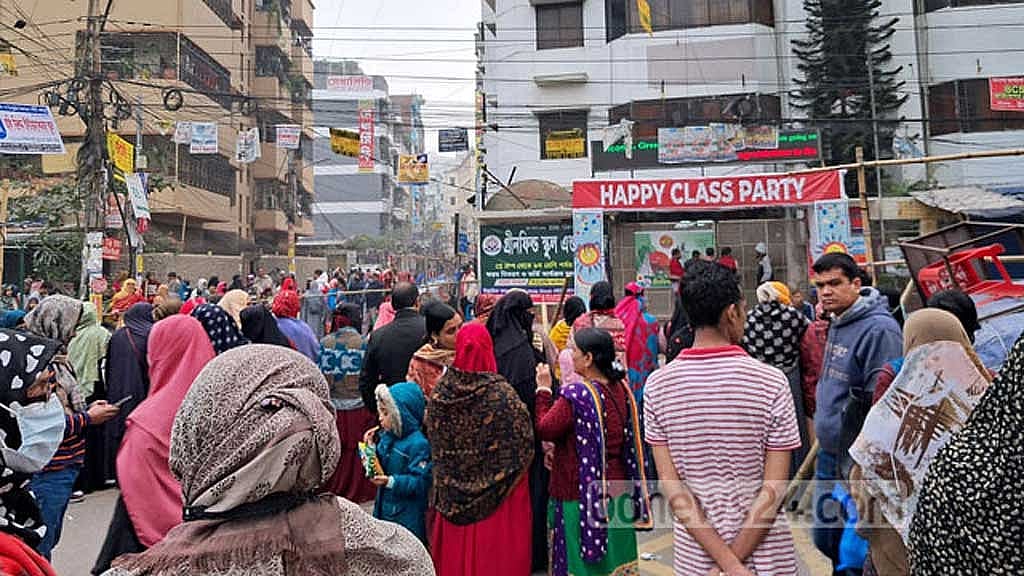
Prof Md Azam Khan, director of the Institute of Education and Research at Jagannath University, has described holding last year’s scholarship exam this year -- placing the burden of two grades on students -- as “unacceptable child abuse”.
He told bdnews24.com, “It is quite extraordinary. Students are studying class six materials, yet they are also being asked to go back to their previous syllabus. This creates significant mental pressure on a child. As a teacher, I cannot support this.”
He added, “The government did not hold the exam on time, and now the pressure being imposed on students is unjustifiable by any standard.”
Prof Azam suggested that scholarships could instead be awarded based on annual examination results.
“A student who cannot carry one load is now being asked to carry two. This is unacceptable,” he said.
“A quarter of the academic year has already passed. Imposing last year’s exam at this stage is not appropriate. If students return to court over this, it may create further complications.”
Exam Schedule
The primary scholarship examination will begin on Apr 15 in 61 districts across the country, while in the three hill districts -- Bandarban, Khagrachhari and Rangamati -- it will start on Apr 17, according to the Directorate of Primary Education (DPE).
In the 61 districts, the Bangla exam will be held on Apr 15 from 10am to 12:30pm, followed by English on Apr 16, primary mathematics on Apr 17, and Bangladesh and Global Studies along with primary science on Apr 18.
Each exam will begin at 10am and run for two and a half hours.
In the three hill districts, the schedule will begin with primary mathematics on Apr 17, followed by Bangladesh and Global Studies and primary science on Apr 18.
The Bangla exam will be held on Apr 19 and English on Apr 20, marking the end of the tests in those areas.
The DPE said an additional 30 minutes will be provided for candidates with special needs.