Home
+
Published : 09 May 2026, 01:48 AM
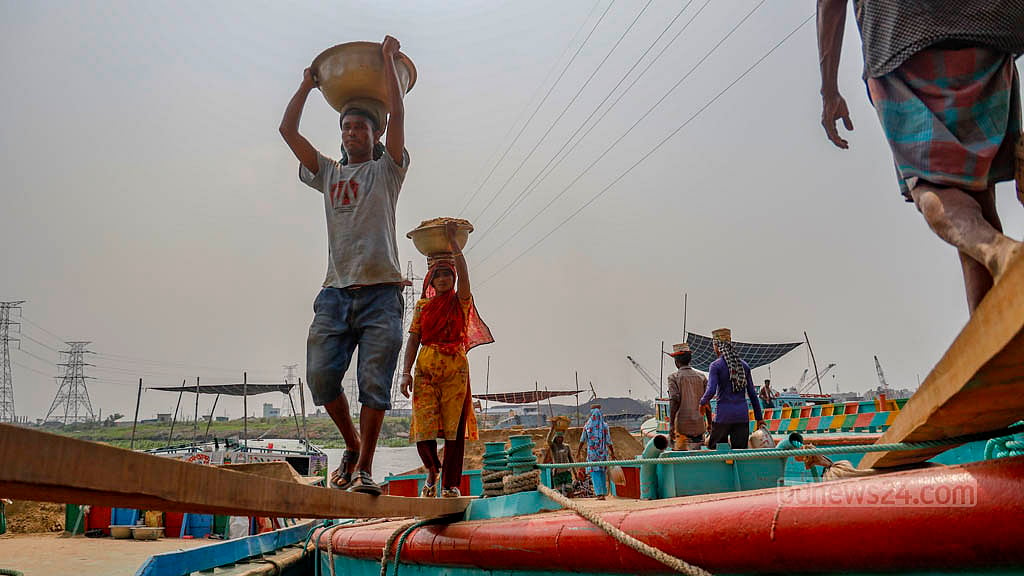
Enamul Haque, who has been driving an autorickshaw in Dhaka for five years, is now finding it difficult to provide for his family as prices continue to creep up.
At one point, he could save a small portion of his income for rainy days. Now, he is forced to borrow money to cover his family's day-to-day costs.
While travelling from Shewra to Gulshan on Thursday, the 40-year-old said that the income from his job is not particularly low - he earns Tk 3,500 to 4,000 every day. After paying the vehicle owner Tk 2,000 per day, sometimes he comes away with Tk 1,500 and, at other times, Tk 2,000.

But Enamul, who lives in a rented house in Badda with his wife and two sons, told bdnews24.com: “It’s very difficult now, sir. It’s just not working out anymore. I can’t balance my budget. It costs Tk 70 to buy a kilogram of rice. The price of every single thing in the market is very high.”
The inflation and wage index from the Bangladesh Bureau of Statistics (BBS) shows that it isn’t just Enamul who is feeling the pinch, but all the working people in the country - even those in the lower and middle class – are facing “decreasing” levels of real income.
Economic analysts say that the rising prices of daily necessities and services are straining real wages, which means the income adjusted for price inflation. This means that, even when a person’s income increases, it is not sufficient to offset the rising costs due to inflation. As a result, each worker has less purchasing power than before, and their “real income” decreases. This makes it difficult to save for the future, meet sudden emergency costs, or even provide for one’s family.
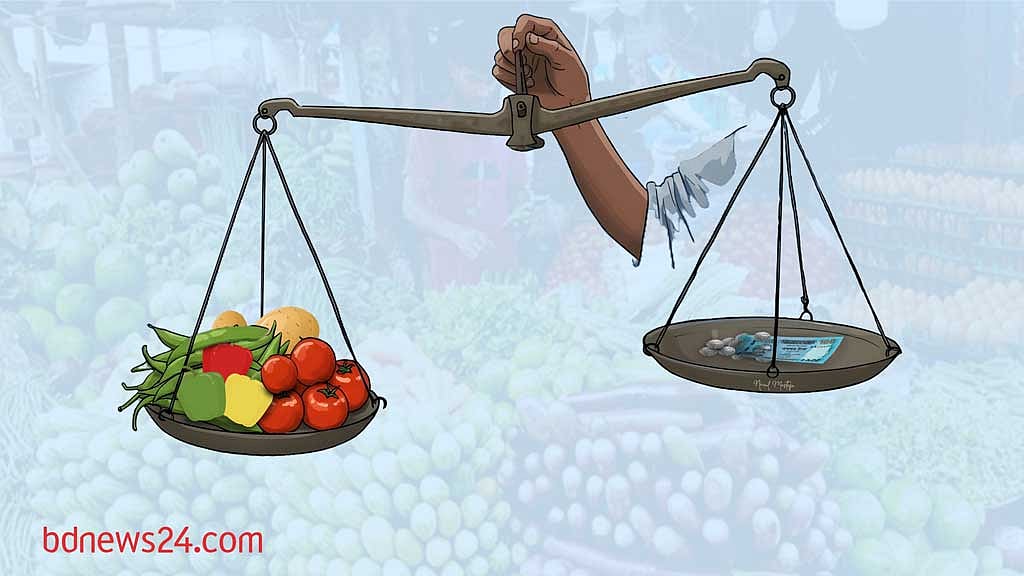
The BBS publishes the inflation and wage index by collecting the prices of various food products and services from the field level. It uses that data to calculate the inflation level and publish a price index.
Similarly, the BBS calculates the wage rate by analysing the wages, salaries and allowances of daily wage earners and workers employed in different parts of the country.
Purchasing Power is Falling
For four years and two months -- or 50 months -- the rate of wage growth has been lower than the inflation rate.
In January 2022, the overall inflation rate in the country was 5.86 percent and the wage growth rate was 5.92 percent. But in the next month, February, inflation surpassed the wage growth rate. In that month, the inflation rate increased to 6.17 percent, while the wage growth rate was 6.03 percent.
Since then, these two important indicators of the economy have been moving in opposite directions. Over this extended period, the gap between inflation and wages has remained.
This data from BBS shows that due to high inflation, daily wage earners and workers do not have the same ability to purchase goods and services, even if their income has gone up on paper. Rising prices are eating up any wage increases, leaving them worse off than before.

On Wednesday, the BBS released the inflation and wage index for April. It shows the inflation rate has risen again, once again exceeding 9 percent. On a point-to-point basis (compared to the same month last year), this important and sensitive index of the economy has risen to 9.04 percent. The inflation rate has increased in both the food and non-food sectors.
After four consecutive months on the rise, inflation hit 9.13 percent in February. In March, it fell below to 8.71 percent. But in April, it climbed up again.
The wage index rose slightly from 8.09 percent in March to 8.16 percent in April.
Usually, the rate of wage growth is higher than inflation. If the rate of wage growth is higher than inflation, people can meet their living costs with their incomes and have more left over to spend or save. However, if inflation is higher than wage growth, they have less money for their families, and either have to reduce their consumption or borrow to continue consuming at the same level.
An inflation rate of 9.04 percent in April 2026 means that if, in April 2025, the cost of living, including rice, lentils, oil, salt, clothing, house rent, transportation, and education expenses was Tk 100, then in April this year, the cost of those same things would have increased to Tk 109.04.
Let’s do the same calculation for wage growth.
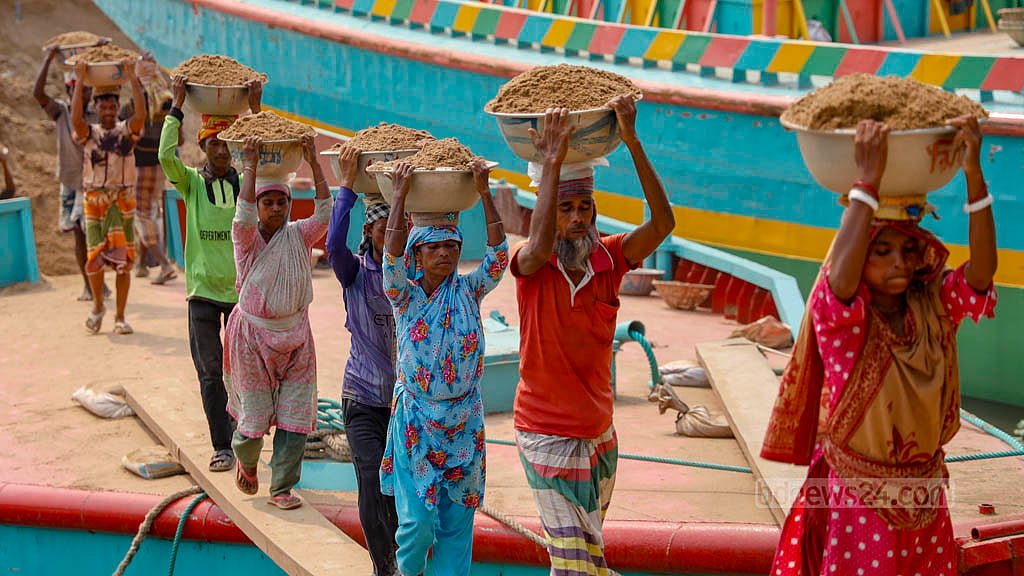
The BBS says that the national wage growth rate is 8.16 percent. This means that if someone's income was Tk 100 in April 2025, then in April it increased, on average, to Tk 108.16.
This means that, even though a person’s income has gone up, they have to spend even more money on the same goods and services.
As such, they are actually able to afford less than they were previously able to with a lower income. This requires tightening the belt even further, straining family budgets.
When the inflation rate exceeds the wage growth rate in such a way, this is called a decrease in “real income”.
Bangladeshi workers have been suffering from this additional pressure on their wallets for the past 50 months.
Economic researcher Selim Raihan, executive director of the South Asian Network on Economic Modelling (SANEM), described this situation as worrying.
He told bdnews24.com, “If we analyse the current inflation and wage index data, we can see a worrying fact. That is, inflation has put additional pressure on real wages. In other words, even though income has increased, in reality, the increase is being eaten up by higher prices.
“Wages are not increasing in line with the prices in the market. For a long time, inflation has been higher than the rate of wage growth. People’s real income is decreasing. Their ability to spend is decreasing. Many are burning through their savings. A lot of them don’t even have any savings.”
In the midst of the energy crisis caused by the Iran war, the government hiked the prices of four types of fuel oil in one go in mid-April. Although the price of fuel oil remained stable in May, electricity prices are rising, which will trigger another round of inflation.

The increase in fuel prices is likely to have contributed to inflation, says Raihan, who is also a professor at the Department of Economics at Dhaka University.
He says an increase in fuel prices increases the costs of transportation, production, irrigation, storage and distribution, which affects prices.
The economic analyst said, “The pressure on the rural economy is particularly clear in the April inflation picture. This increase is creating a major crisis for the rural poor, small farmers, agricultural workers, daily wage earners and informal sector workers. Because their income is uncertain, savings are limited, and their dependence on food and daily necessities purchased from the market is very high.”
“Therefore, to control rural inflation, special priority must be given to not only increasing food supply, but also to addressing the prices of agricultural inputs, transportation costs, the supervision of local market supervision and rural social protection programmes,” he said.
How Large is Bangladesh’s Wage-Based Workforce?
Alongside inflation data, the BBS collects monthly wage information from 44 categories of workers, including agricultural labourers, transport workers, bidi workers, fishermen, day labourers and construction workers, to calculate wage rates.
These workers generally earn low wages and are employed in low-skilled jobs. The BBS tracks only daily wages and publishes monthly wage growth figures on that basis.
Of the 44 professions included in the wage index, 22 belong to the industrial sector, while 11 fall under agriculture and services.
Salaried employees and higher-income professionals are not included in the index.
The final results of the BBS Labour Force Survey 2024, published in September last year, showed that 84 percent of employed people in Bangladesh work in the informal sector, while only 16 percent are employed formally.
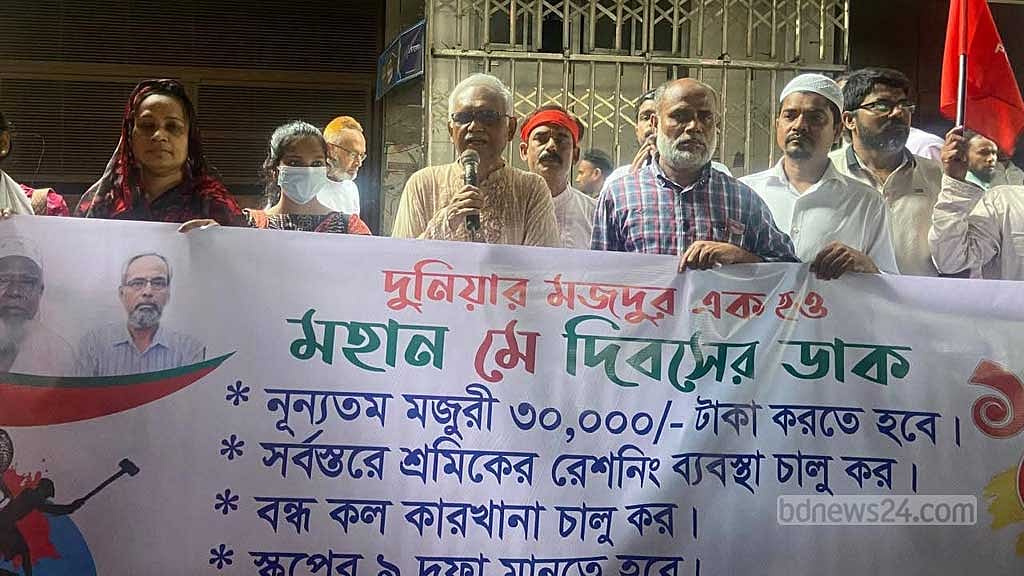
In rural areas, 87.58 percent work in the informal sector, compared with 73.76 percent in urban areas.
This means a large section of the workforce remains without protection, social security or fair wages.
Indicators Moving in Opposite Directions
Typically, national wage growth exceeds inflation. But in Bangladesh, inflation overtook wage growth in February 2022 and wages have failed to catch up since then.
According to BBS data, inflation stood at 6.17 percent that month, while wage growth was 6.03 percent.
Wages have not surpassed inflation in any month since.
Wage growth reached the 7 percent range in December 2022, while inflation crossed 7 to 8 percent and later climbed above 9.5 percent over the following months.
Inflation rose to 9.94 percent in May 2023, the highest level in more than a decade.
Amid economic strain, the protests in July 2024 demanded quota reforms in government jobs, which later evolved into a broader movement seeking the government’s removal, resulting in the Awami League government’s fall on Aug 5.
In July, the first month of the 2024-25 fiscal year and the peak of the unrest, inflation jumped to 11.66 percent. It later eased to 10.49 percent in August.
For several months after the fall of the Awami League government, inflation fluctuated between 9 and 10 percent. The year marred by unrest ended with inflation at 10.03 percent.
Six months later, in June last year, inflation fell to 8.48 percent, the lowest in 35 months. The last time the rate had been as low was in July 2022.
Although inflation rose again later, FY 2025-26 also began with single-digit inflation.
It stood at 8.55 percent in July, fell to 8.29 percent in August, rose slightly to 8.36 percent in September and dropped again to 8.17 percent in October.
It then began climbing, reaching 8.29 percent in November and 8.49 percent in December.
Inflation rose further to 8.58 percent in January this year and crossed 9 percent in February at 9.13 percent.
It eased to 8.71 percent in March before rising above 9 percent again in April.
Despite those fluctuations, the wage index never reached 9 percent.

Even when inflation neared 12 percent during the year of unrest, wage growth failed to cross the 9 percent mark and ended the year at 8.14 percent.
BBS data shows wage growth rise slightly to 8.16 percent in January 2025, before falling to 8.12 percent in February.
It increased to 8.15 percent in March and 8.19 percent in April. In May it rose to 8.21 percent before slipping to 8.18 percent in June.
In FY 2025-26, wage growth stood at 8.19 percent in July, 8.15 percent in August and 8.02 percent in September.
It was 8.01 percent in October, 8.04 percent in November and 8.07 percent in December.
The rate stood at 8.08 percent in January this year, fell to 8.06 percent in February, then rose to 8.09 percent in March and 8.16 percent in April.
BBS data shows that while inflation fluctuated sharply over the past 50 months, wage growth barely moved.
During the same period, prices of essentials such as eggs, fish, chicken, and beef rose significantly, and vegetable prices rarely declined.
Jahangir Alam, director of the Dhaka School of Economics, told bdnews24.com: “No vegetable is available below Tk 80 now. Egg prices fell briefly but have increased again. Edible oil prices have also risen. The increase in fuel prices has affected the cost of everything.”
The agricultural economist said rising rice prices were the biggest concern.
“Heavy rain and flash floods in the northeastern haor region damaged a large portion of Boro paddy. In my estimate, Boro production will decline by 10 percent this year, which may push rice prices even higher,” he added.
Inflation Persists Despite Higher Interest Rates
Bangladesh Bank has pursued a contractionary monetary policy for some time to bring inflation down to a tolerable level, but prices have yet to ease as expected.
After the fall of the Awami League government, the interim administration led by Muhammad Yunus moved to raise policy interest rates.
Between August and October 2024, the rate was raised to 10 percent.
In the monetary policy for the second half of FY 2024-25, announced in February last year, the policy rate, or repo rate, was kept unchanged at 10 percent.
The private sector credit growth target was set at 9.8 percent.
Later, in the monetary policy announced on Aug 31 for the first half of fiscal year 2025-26, the repo rate remained unchanged at 10 percent, though the private sector credit growth target was reduced to 7.2 percent.
Then-governor Ahsan H Mansur said at the time that the policy rate would not be lowered until inflation dropped below 7 percent.
On Feb 9, three days before the general election, Mansur announced another tight monetary policy for the second half of FY 2025-26, keeping the repo rate unchanged at 10 percent because inflation had not eased to the desired level.
Commercial banks borrow short-term funds from the central bank through repo operations, which serve as one of the banking sector’s key policy tools.
When the repo rate rises, borrowing costs for banks increase, leading to higher lending rates for businesses as well.
Keeping the rate unchanged signals that the central bank is not yet easing its grip on monetary supply.
Meanwhile, the National Board of Revenue has reduced or waived import duties on several essential goods to curb inflation.
But despite maintaining a 10 percent interest rate for a prolonged period and offering import concessions, inflation has remained stubbornly high.
Jahangir said stronger market oversight was needed in addition to tight monetary policy.
“To keep inflation at a tolerable level, monetary tightening alone will not work. Market monitoring must also be strengthened.”