Mamunur Rashid
and
Ashik Hossain
bdnews24.com Correspondents
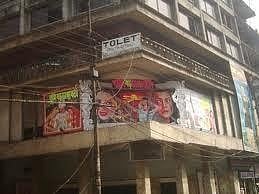
Dhaka, Aug 21 (bdnews24.com) -- Nearly two-thirds of Bangladesh's movie theatres have closed down over the last 10 years and many others are facing the same risk as most hall owners are opting to shift to the comparably profitable super market business.
Owners have dubbed continuous losses, extortion, exorbitant taxation on ticket prices, and lack of administrative support and 'quality' cinema as the key reasons forcing them to change their trade.
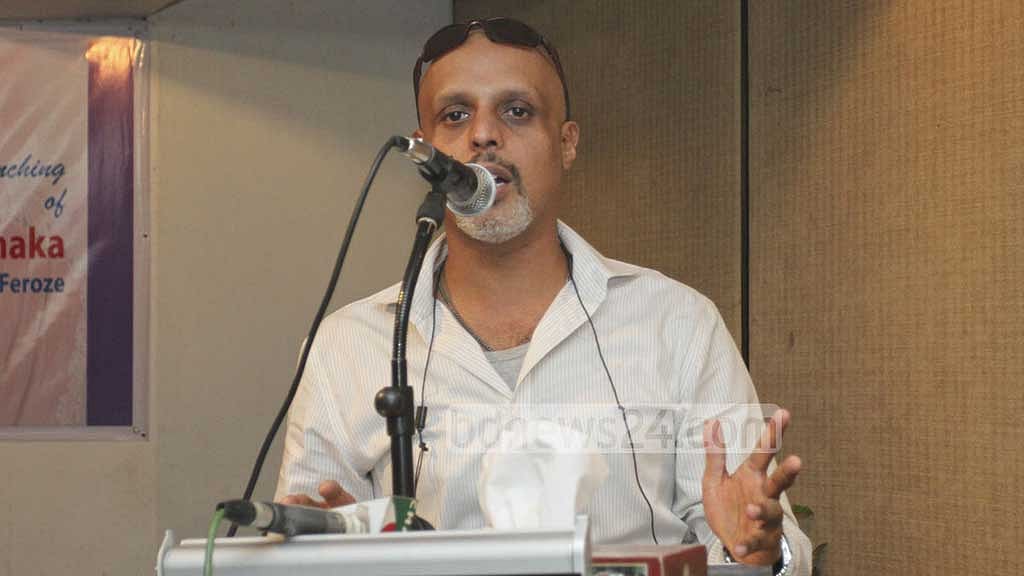
"No one is interested in holding onto a trade that has to be fed from his own pockets. We tried a lot to make it sustain…but it is not possible," Bangladesh Film Distributors' Association chief Firoz Rashid told bdnews24.com.
The largest movie theatre in the country, Jessore's Monihar, was declared shut 'indefinitely' on July 21.
The whys
"The owners were forced into the move due to continuous extortion, terrorist attacks and life threats," the theatre's Manager, Shamim Ahmed, told bdnews24.com.
He, however, added that they did have plans to reopen the venue that once hosted 1,430 film enthusiasts in a go.
Information Minister Abul Kalam Azad on June 28 expressed his concern over the shutdowns in the parliament.
"750 of the 1200 licensed cinema halls have already shut down. The owners are turning to more profitable businesses and tearing down the halls and replacing them with multi-storied commercial buildings."
Azad also blamed the closures on the ease with which people could now view satellite channels.
'Lack of Quality Film'
However, the distributors' platform chief differed with the minister and said lack of 'quality' films should in fact be blamed.
"Earlier, there would be over a 100 new releases each year. Now it's not even 25, and we are forced to choose from them as not all of them are hits. In many cases, we have to repeatedly screen the same movie," Rashid pointed out.
"On the other hand, there are no new faces on the silver screen ... people are tired of seeing Shakib Khan and Apu Biswas over and over again."
He added: "This is why we wanted permission to screen Indian films. After getting the approval, we also advanced a lot of money to book cinemas. However, the arts arena protested the move."
"They should also understand that you cannot live on talks alone. If we do not screen movies, how are we going to earn our bread or run the halls?"
Continuous losses
Sorowar Morshed, who owned Rajshahi's now-closed Lily and Bornali movie theatres, claimed, "The business does not bring returns. There is no audience. I had no option other than shutting those down after losing Tk 0.6 million over the last few years."
He also advocated for screening foreign films.
"At one time, Bengali, English and Urdu films were screened together. It was not a problem then."
"The quality, making and stories of our films are very low standard. And since the market is not competitive, the producers-directors do not have the drive to improve standards."
Morshed continued that if the people had more options, they would be more selective and the makers would be forced to improve.
When asked what was being built at the sites of his two movie theatres, he said he had sold off the property.
Apart from Lily and Bornali, five of six cinema halls were shut down in Rajshahi over the decade.
Lack of administrative support
Complications relating to the local administration saw North Bengal's oldest movie theatre, Rangpur's Lakkhi Talkies, not operating for the last two years.
The district administration shut down the cinema hall, with accommodation for 850 viewers, on Jan 12, 2010. The 73-year-old entertainment centre was once the main source of recreation for the masses of the area.
"I was running the hall on lease from the district administration. However, they suddenly cancelled the lease. We tried our best to reopen the hall but they did not help us," alleged Shafiqul Islam, proprietor of the cinema hall.
"There are screening equipment worth hundreds of millions of Taka in the hall which they are not returning to us. Equipment worth Tk 100 million have been already lost."
He added that his sources in the administration said that the property might be given to a developer. "If that happens, then a super market or an apartment complex might be built after tearing down the cinema hall."
Islam added that a case between the district administration and him is currently pending at the High Court.
Meanwhile, Fahmidul Haq, an Associate Professor of Dhaka University's Mass Communication Department and film critic, viewed the situation in a different light.
"Most cinema halls no longer have the suitable environment for cinema viewing. Even those which have, their entry costs are too high. If taxes on hall tickets are lowered, then their prices can be lowered."
"There is a 150 percent tax on each ticket in Bangladesh, which is the highest in the world," Haq pointed out.
The bow-outs
Dhaka itself once had 44 cinema halls, Chairman of Film Directors Association Mohammad Hannan pointed out. "Not even 20 are in operation now."
He continued that Bangladesh's oldest movie theatre New Picture House, which had seen a number of owner changes since its establishment during the First World War, was last called Shabistan when it was torn down to be replaced by a modern apartment and shopping complex.
The cinema hall, which initially screened silent films, was the centre of recreation for Dhaka residents at one time. No steps were taken to preserve the historic theatre.
Gulshan's Jyoti Cinema Hall, Elephant Road's Mallika Hall, Sadarghat's Rupmahal, Nababganj's Tajmahal, Gulistan Cinema Hall, Waisghat's Moon Cinema Hall, and Old Dhaka's Lion Cinema Hall and Diamond Theatres stand shut now.
Johnson Road's historic Azad Cinema Hall, which hosted the first moving picture with sound, has also been torn down to be replaced with a commercial complex.
Azad, which was initially established by Murapara's Jamindar Mukulchandra Bandopaddhay in 1928 and named Mukul, was renamed in the 60s. The special show of 'Mukh O Mukhosh' was held here on Aug 3, 1956.
Mirpur's Beauty, Postogola's Meghna Cinema, Diana and Jamuna, Farmgate's Ananda Cinema, Waisghat's Star, Tikatuli's Obhishar, Shantinagar's Jonaki and Karwan Bazar's Purnima Cinema Hall were also shut down over the last decade.
"Tongi's Anarkoli and Champakali Cinema Halls might close down any moment. Meanwhile, there are no cinema halls in Uttara, Uttar Khan or Dakkhin Khan. Other than the Sainik Club in Banani, there are no cinema halls in the whole Gulshan area," Hannan added.
"Even though millions reside in these areas, there is no way to screen films. However, movies are still the only source of entertainment of the common people."
The directors' platform stalwart also alleged that even though the administration was supposed to maintain the cinema halls, there was no initiative on its part.
Refuting the allegation, Information Secretary Hedayetullah Al Mamun told bdnews24.com, "The owners are supposed to provide maintenance. The district administration has no responsibility. However, the government is trying to restart the shutdown cinema halls."
bdnews24.com/mmr/aha/rn/nir/1148h