Published : 31 Oct 2025, 07:35 AM
Updated : 21 Aug 2026, 02:39 PM


When the government’s mandatory mobile handset registration comes into effect on Dec 16, Victory Day, Bangladesh’s thriving “grey market” will face its biggest disruption yet.
The Bangladesh Telecommunication Regulatory Commission (BTRC) says over 60 percent of the country’s handsets come through grey channels -- phones smuggled in without paying import duties. Traders in that shadow market, however, insist their share is closer to 90 percent, claiming the new rule will destroy livelihoods and drive up prices.
Government officials counter that the measure will instead boost local manufacturing and reduce prices, as domestic producers finally get a level playing field.
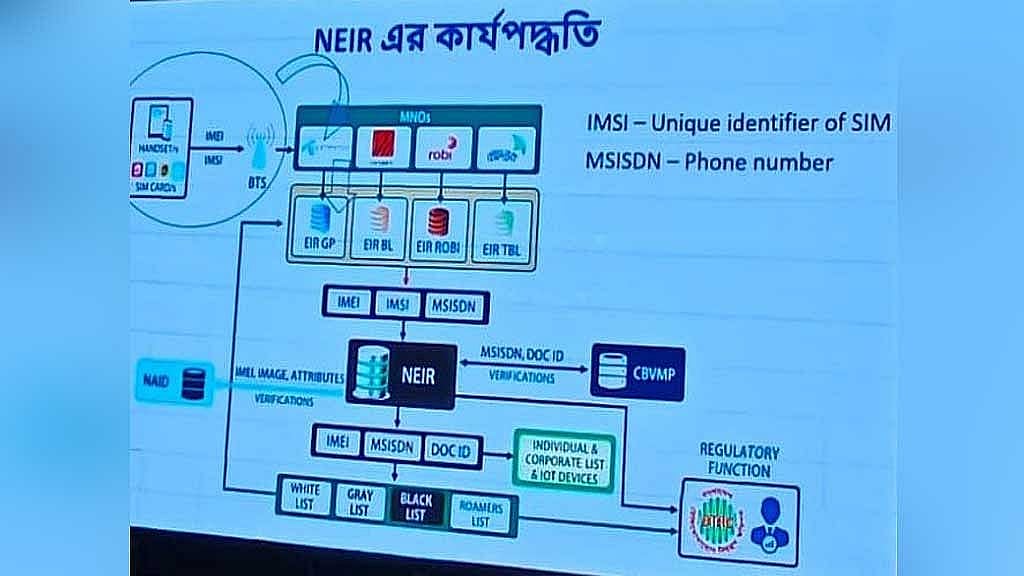
The new registration system -- the National Equipment Identity Register (NEIR) -- will bring every handset under a system similar to SIM card registration. After multiple failed attempts since 2016, the government, with funding from local phone assemblers, now says the system will officially go live on Dec 16.
At a press briefing on Wednesday, officials said all mobile phones currently active on Bangladeshi networks would be automatically registered before the rollout.
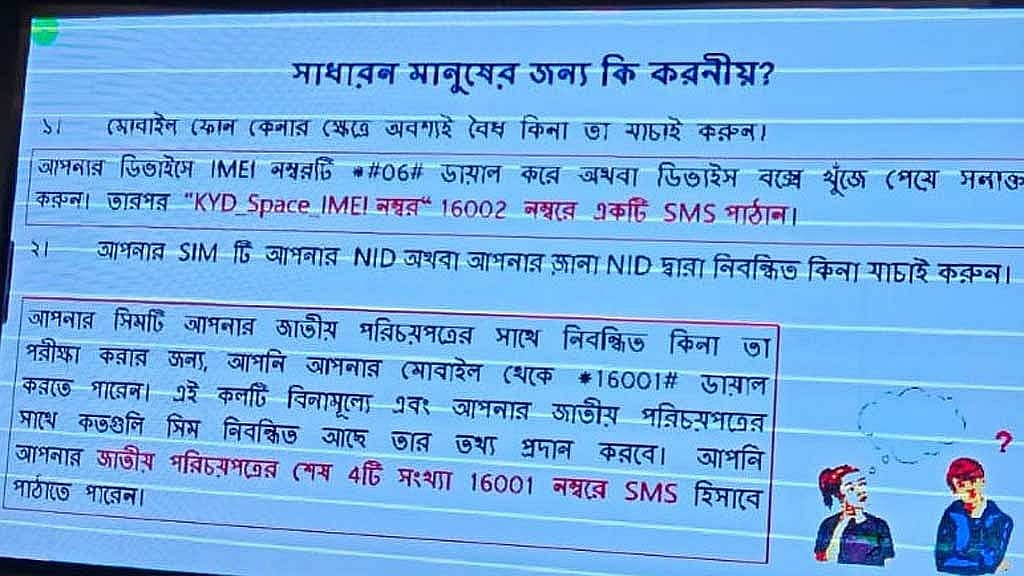
From Dec 16 onwards, however, any new handset connecting to the network must be registered, or it will be blocked. Legally imported phones will be automatically recognised, so users will not need to register manually. After that, no new illegal handsets will be registered, effectively locking out untaxed imports from the country’s networks.
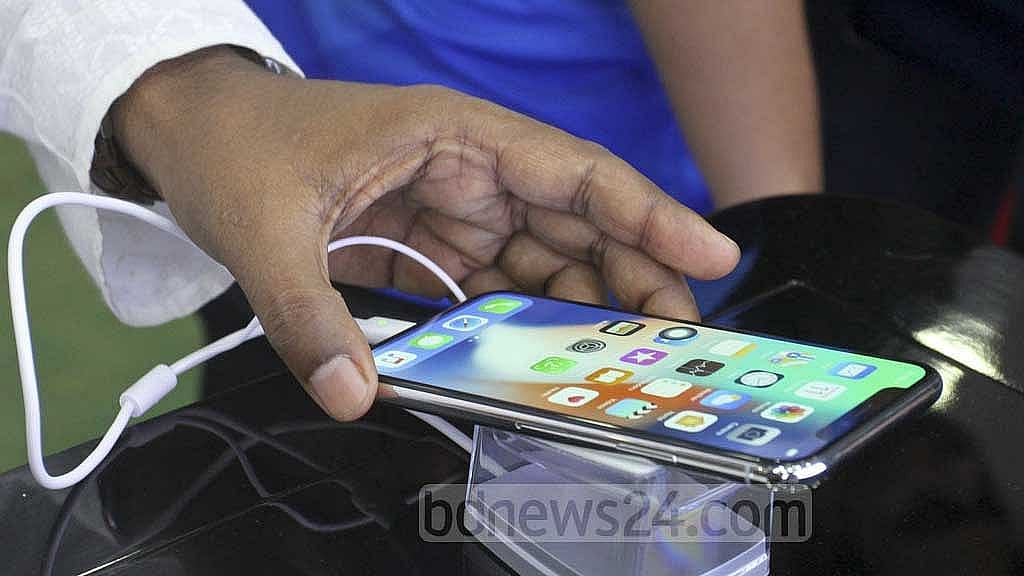
But reality tells another story.
A majority of phones now in use were brought in without tax or import clearance. The BTRC estimates that it is at 60 percent, while traders put the figure above 90 percent. Most phones now sold in shops or online are unofficial imports.
For the same model, an “official” handset -- meaning one brought in through legal channels with VAT and import tax -- often costs 1.5 to twice as much as an unofficial one. Consumers, naturally, have flocked to the cheaper alternative, allowing the grey market to balloon into a multi-billion-dollar ecosystem.
For over 15 years, since smartphones first entered the Bangladeshi market, major shopping centres in Dhaka have hosted massive showrooms openly selling such devices. Online platforms have multiplied that trade, all under the government’s watch.
Despite the booming underground market, the authorities made little visible effort to curb it -- until now. With the NEIR deadline weeks away, panic has gripped the traders who dominate this space. They are rushing to lobby influential quarters, fearing bankruptcy once their stock becomes unsellable.
The government and the regulator, however, are unmoved.
“You can’t make laws by negotiating with thieves,” a senior official said. Traders, they argue, can continue only if they pay VAT and import duties to bring in phones legally. The government also plans to use their distribution channels to promote locally assembled handsets.
Officials claim the registration drive is essential for tackling phone-related crimes, including financial fraud and theft. But traders warn it will create monopolies and push prices higher for ordinary buyers.
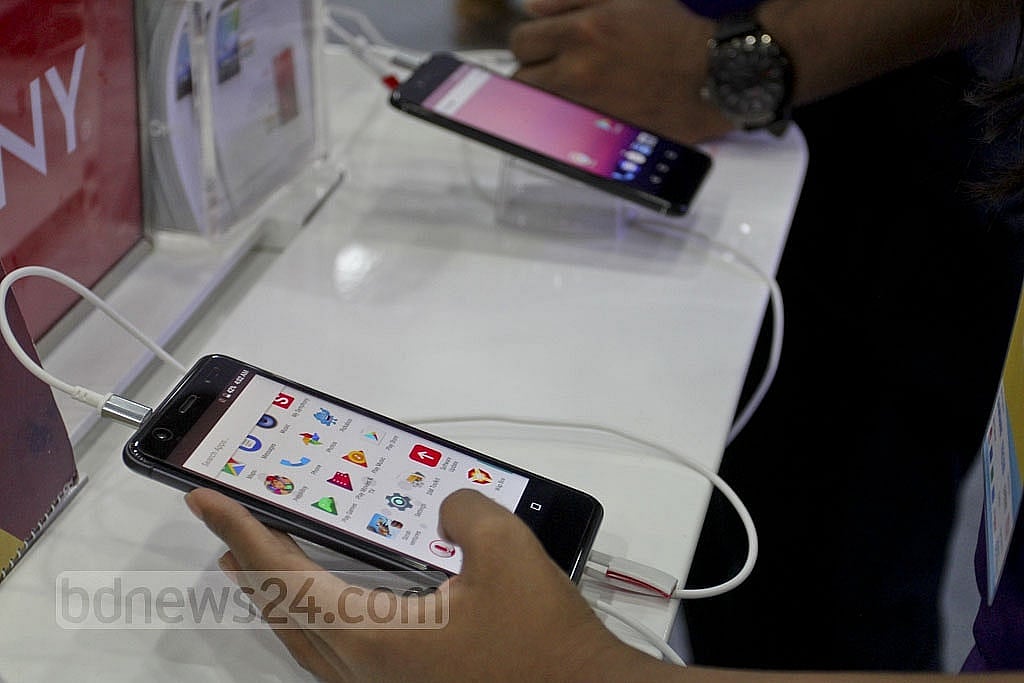
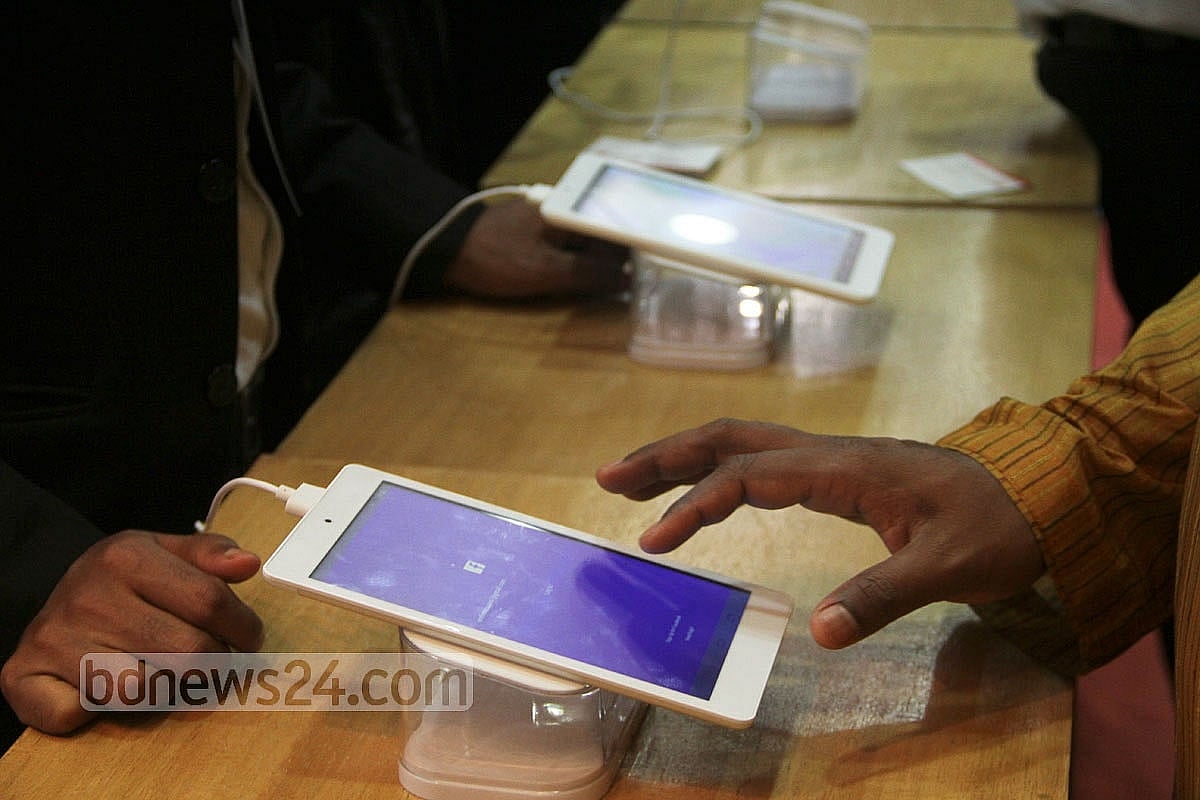
Major electronics markets like Bashundhara City, Jamuna Future Park, and Motalib Plaza in Hatirpul have become hubs for grey-market sales, where sellers often set the country’s phone trends.
Md Aslam, president of the Mobile Business Community, an association representing “unofficial” phone retailers, said: “We control 90 percent of the handset market. And the products we’ve been selling for years are suddenly being called illegal. We wanted to pay VAT and tax too -- but no one listened to us.”
He estimates between 1 and 1.5 million traders nationwide depend on the business.
“We went to the BTRC today [Thursday] and told them that 1 to 1.5 million families are involved in this trade. If this business stops, they will starve.
“The officials told us these are illegal handsets and can’t be sold. We requested them to lower import duties so we can bring in goods legally and pay taxes.”
Rased Mehdi, editor of Views Bangladesh, an online platform covering the telecom sector for two decades, says the BTRC has long struggled with indecision on handset registration.
“They never seriously tried to control illegal handset imports. That’s why the entire market is now in the hands of these traders,” he said.
He argues that when the NEIR is implemented, the BTRC should allow registration for devices already imported, rather than shutting traders out overnight.
“Six years ago, the BTRC took up a Tk 300 million project to launch NEIR. It went live but was left inactive. About three years ago, they announced its relaunch but suspended it again within a week. And now, once again, we’re hearing the same announcement.”
He believes the regulator’s inconsistency created the grey market itself.
“Those selling these handsets have trade licences. The state allowed their business. They have operated openly, not secretly. The market grew because of policy failure. Now, if these people suffer losses, who takes responsibility?”
According to Mehdi, a transitional window must be offered.
“The handsets already in the country should be granted one-time approval. You can’t just shut down an entire trade overnight that has been operating for years.”
WILL PRICES RISE OR FALL?
Mobile Business Community President Aslam warned that the NEIR rollout could push handset prices “sharply higher”. He said the government’s promise to widen mobile penetration and extend internet access to the margins would be undermined if cheap, unofficial imports are removed from the market.
BTRC Chairman Emdad ul Bari struck a different tone, saying regulators expect prices to fall if domestic manufacturers are protected and can scale up.
“Our aim is to make handsets affordable and secure,” he told reporters. “Based on BTRC guidelines from 2017, national makers began assembling phones in 2018. Today we have about 18 local handset manufacturers. Most of the demand is satisfied by domestic production.
“Yet we cannot lower prices for several reasons -- one is the flood of smuggled sets, and another is the arrival of refurbished devices we cannot always detect. With NEIR we will be able to catch them. That will provide a sustainable solution for local producers. They will be able to sell phones at competitive prices. That is our hope.”
Aminul Hoque, director general at BTRC overseeing the NEIR project, said the market distortion is stark because grey-market traders avoid paying duties and VAT.
“Every day our networks see countless low-quality refurbished handsets; we cannot control that flow. Meanwhile, investors who build phones here cannot be protected,” he said.
“Tax on local manufacture is about 35 percent, but on imports it is 54 percent. Those bringing sets through the grey market pay no tax. Legally operating firms simply cannot compete with that.”
HOW BTRC VIEWS GREY MARKET
At Wednesday’s BTRC briefing, a journalist asked why traders had not been consulted and whether the rollout could have been designed with them.
Chairman Emdad replied bluntly: “I have never heard of making laws by consulting thieves.”
“We are not banning imports,” he said. “We are not imposing restrictions on imports. NEIR is for catching those who bring sets illegally. If you want to advocate for them, that is not my concern.”
WILL IT WORK THIS TIME?
NEIR has been attempted twice before, in 2021 and 2024, and failed to stick. Asked what new challenges the commission foresaw this time, Bari admitted the difficulty of policing the cyber world compared with the physical.
“There is a difference between security in the physical world and security in telecom or cyberspace,” he said. “If someone shows up with a gun, you see the threat. If an archway is installed somewhere, you can check for weapons. But ensuring security in cyberspace is very difficult.
“If we apply even modest controls in cyberspace, it creates hardships for ordinary people. That is a major challenge. We could shut many things down from Dec 16, but the disruption to people’s lives would be enormous -- handling that is our biggest challenge.
“That is why we are starting very loosely -- very mildly. Gradually, as receipts get tightened, we will move in that direction. Our main challenge is to minimise people’s suffering.”
Faiz Ahmad Taiyeb, special assistant on telecommunications and information technology to the chief advisor, citing the National Board of Revenue, said illegal imports cost the treasury roughly Tk 5 billion a year. He argued that NEIR would reduce this loss.
“These illegal phones are brought in by dodging taxes. They are unboxed and packed in cartons to save space. We want to transform those traders without destroying them. That is why we are giving them time to stop the illegal import cycle.
He said, “Once we launch this, we will not allow grey handsets anymore. Then we will move to either black or white” -- a shift toward transparent trade.
Taiyeb thanked the local handset makers’ body, MOIB, for funding the NEIR system. MOIB President and Edison (Symphony Phone) Group Managing Director Jakaria Shahid earlier blamed the grey market for NEIR’s previous failures.
“This NEIR will harm some businesses that bring phones illegally,” he said. “They may act against it. Because of such resistance, earlier NEIR attempts were deactivated for reasons we do not know. We must ensure that no unknown reason disrupts the rollout this time.”
PRIVACY CONCERNS
The NEIR has also provoked fears about personal privacy. Rased Mehedi, who has covered the mobile sector for two decades, warned that the regulator’s power to block handsets could become “a threat to citizens’ privacy”.
“To disable my device you must take access to it. For devices already in use, there’s no opportunity to switch them off arbitrarily,” he cautioned.
Responding to such concerns, Taiyeb insisted NEIR is a standard global tool. “Most countries cover NEIR. A single IMEI number can be used to produce millions of fake phones -- most of the world solved that problem long ago. We have been late in adopting the technology.
“And handset blocking is not surveillance. Illegal handsets are being used as instruments for crime.”