Published : 29 Jun 2026, 06:29 AM
Updated : 08 Sep 2026, 11:24 AM


Bangladesh's smartphone market has defied the broader economic slowdown, with buyers increasingly opting for higher-priced devices, according to Xiaomi Bangladesh Country General Manager Ziauddin Chowdhury.
Speaking to bdnews24.com's discussion programme Chinwag with the Chiefs, he said inflation had not dampened demand while global supply chain pressures meant handset prices could rise further in the coming months.
He attributed the expected increase largely to soaring global prices of memory chips, a key smartphone component, and warned that Bangladesh's tax structure could also reduce the supply of premium devices.
The discussion, broadcast on bdnews24.com's YouTube channel and Facebook page, covered the impact of global economic uncertainty -- including the West Asia conflict -- on the technology market, persistent complaints over rising handset prices, Xiaomi's expansion into home appliances, and the company's future vehicle ambitions.
Ziauddin also said Xiaomi planned to make its entire range of household appliances, including its electric cars, readily available in Bangladesh.
He spoke about the company's vision of bringing driverless vehicles controlled through Xiaomi smartphones to the local market.
He described stable macroeconomic indicators, including the exchange rate and Bangladesh Bank's foreign currency reserves, as positive signs for the mobile phone industry.
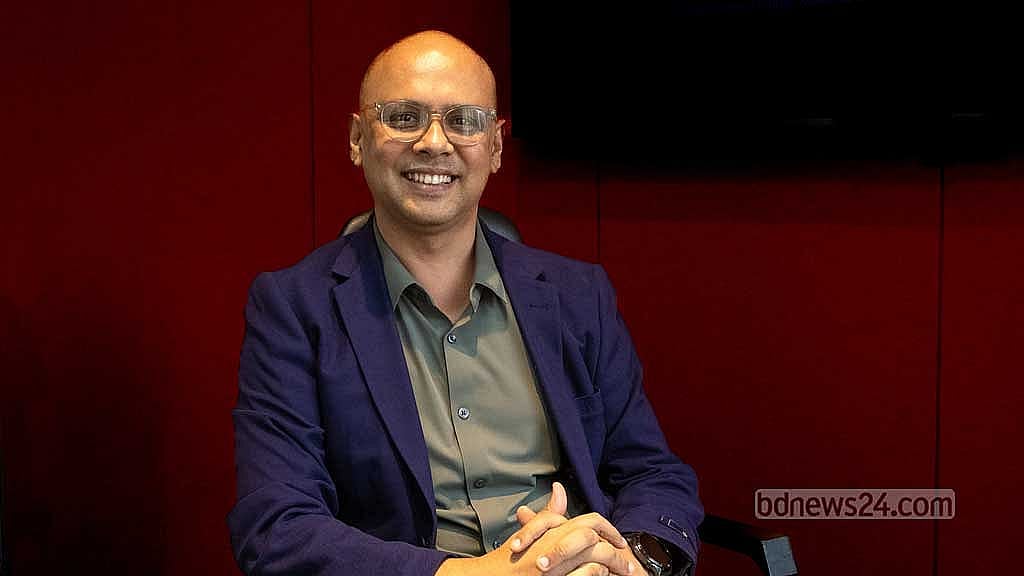
“We are seeing people gradually moving up the smartphone ladder. Someone who previously bought a Tk 5,000 or Tk 10,000 handset is now buying one priced above Tk 15,000.
“More than 50 percent of Bangladesh's smartphone market now falls within the Tk 15,000-20,000 segment. Around 20-25 percent is in the Tk 20,000-30,000 range, while phones priced above Tk 30,000 have grown from just 1-2 percent of the market to around 5-6 percent. That suggests a section of consumers either has greater disposable income or a stronger intention to buy smartphones.”
Asked whether the proposed budget's lower duties on raw materials and VAT relief would affect local manufacturing and handset prices, Ziauddin said the government's new five-year policy framework offered manufacturers greater certainty than the tax incentives themselves.
“The policies introduced in this year's budget are part of a long-term five-year plan. That long-term visibility gives us security.
“More than the VAT reduction or exemptions, the five-year certainty will help us develop long-term business plans. It will allow us to decide which product segments to manufacture and invest in, ultimately helping reduce costs. I welcome the government's decision. In my view, these measures are timely and appropriate.”
He said Xiaomi manufactures affordable and mid-range smartphones locally but imports premium models because demand for devices priced above Tk 30,000 or Tk 40,000 accounts for only 1-2 percent of the market.
Referring to government efforts to discourage imports, he warned that premium smartphones could become scarce if duty concessions on handset imports were not renewed.
“When import taxes were reduced in January, we brought in some high-end models. Phones priced below Tk 50,000 that were commercially viable were manufactured locally. If those duty benefits are not extended, we may no longer be able to import them. We will have to explore local production instead.
“The immediate impact may not simply be higher prices -- it could also create shortages of officially available premium smartphones."
Once known as the “budget king” for offering top specifications at prices affordable by regular users, Xiaomi has increasingly shifted towards mid-range and flagship devices.
Explaining the strategy, Ziauddin said: “We want to make technology accessible to everyone. Five years ago, people dreamed of owning a phone with a Snapdragon processor. Today, that's no longer enough.
“We now want to democratise the flagship experience by offering 100W charging, FHD [full HD] displays, curved screens and Leica camera phones at affordable prices.”
He said rising handset prices were driven primarily by global memory costs.

“Only two or three companies manufacture memory products worldwide, and everyone buys from them. AI companies now have enormous demand for memory and far deeper pockets. They are effectively writing blank cheques to memory manufacturers.”
He explained that AI companies require high-bandwidth memory (HBM), prompting chipmakers to prioritise those higher-margin products over the LPDDR memory used in smartphones. As a result, handset makers are paying significantly more for memory chips.
“The memory cost of a 4GB smartphone I sold for Tk 10,000 earlier this year accounted for around 15-20 percent of production costs. For the next generation, memory already makes up about 40 percent, and we expect it could eventually reach 80 percent."
On Xiaomi's expanding product ecosystem, Ziauddin said the company had already introduced televisions and washing machines in Bangladesh, with television sales almost sold out.
“We don't just want to sell home appliances. We want to build a complete smart home. Then we want to bring cars.
"It is my personal dream that one day we will introduce a car that requires no driver. Your Xiaomi phone itself will help drive your car."