Published : 02 Aug 2025, 06:20 AM
Updated : 28 Aug 2026, 01:24 AM


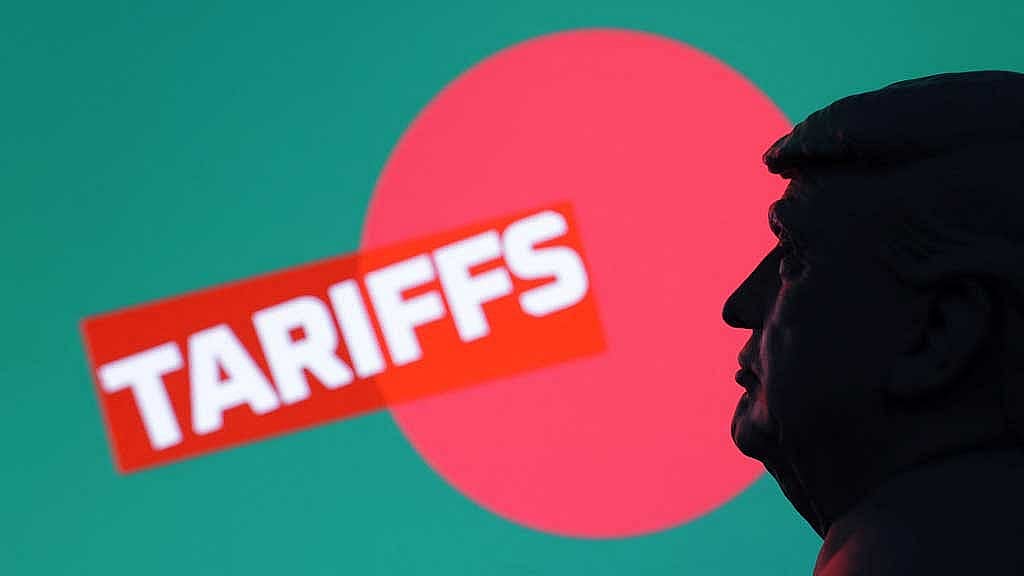
The US decision to reduce tariffs on Bangladeshi exports from 35 percent to 20 percent has triggered mixed responses across the political spectrum, with some parties praising the move as progress while others raise concerns over what may have been exchanged in return.
The BNP, Bangladesh Jamaat-e-Islami, the National Citizen Party (NCP) and parts of the Jatiya Party have welcomed the development, crediting the interim government for effective diplomacy.
But figures from the Communist Party of Bangladesh (CPB) and other Jatiya Party leaders have called for the details of the deal to be disclosed, warning that any secret or unequal agreement may undermine the country's interests.
At an event in Uttara on Friday, BNP Secretary General Mirza Fakhrul Islam Alamgir described the revised tariff as a “positive” move.
“There’s good news today,” he told the gathering. “Just days ago, the US had imposed a 35 percent tariff on our exports. That meant a Tk 100 product would cost Tk 135, making it harder to sell.
“But our foreign office and advisors managed to reduce that to 20 percent. For that, I want to thank the interim government. They’ve fulfilled a big responsibility.”
Yet within the BNP, concerns linger over the specifics of the deal.
Amir Khosru Mahmud Chowdhury, a member of the party’s Standing Committee, said at a media interaction in Gulshan: “We only know about the tariff. We don’t know the full picture of the negotiation.
“Until we understand what we had to offer in return, it’s hard to assess the real impact.”
Jamaat chief Shafiqur Rahman offered public support for the tariff cut in a Facebook post, writing: “The high tax rate announced by the United States on our export products has now been reduced to 20 percent through the active efforts of the Bangladesh government and sincere cooperation from the US.
“I thank President Donald Trump and the government of Muhammad Yunus,” he added.
“I hope Yunus, and whoever leads in the future, will uphold Bangladesh’s dignity and serve responsibly in global diplomacy.”
The US imposed the original 35 percent tariff on Apr 2 this year, as part of a broader hike targeting over 100 countries during President Trump’s second term.
Bangladesh was among the hardest hit.
In response, the two countries began talks. Bangladesh took several steps to narrow its trade gap with the US, including increasing imports of American wheat, soybean oil, and cotton, and announcing a large-scale deal to purchase 25 aircraft from US aerospace firm Boeing.
Tariff relief was later offered on more than 600 Bangladeshi products.
The deal, however, has prompted pushback from the CPB.
Speaking to bdnews24.com, the party’s General Secretary Ruhin Hossain Prince warned of the implications if the deal came with strings attached.
“Ever since Trump imposed the tariff, our representatives have been lobbying, and it seems a secret deal has been made,” he said.
“We’ve heard that we must avoid upsetting the US. But if the tariff was lowered through an unequal or anti-national agreement, it will not truly serve the people.”
Jatiya Party Secretary General Shameem Haider Patwary echoed concerns about transparency, while also welcoming the tariff reduction.
“A 20 percent tariff is good news,” he said. “But we also have a right to know under what conditions this happened. There’s no scope in our constitution for a non-disclosure agreement in state affairs.
“No such NDA has ever been signed in the past.”
A separate group within the Jatiya Party, however, praised the development in a joint statement.
Anisul Islam Mahmud, ABM Ruhul Amin Howlader, and Mujibul Haque Chunnu called the move “positive and encouraging” for Bangladesh’s export sector.
“We welcome the decision by the United States to reduce tariffs from 35 percent to 20 percent on Bangladeshi exports,” they wrote.
“This will boost our economy and create jobs. We are confident that, along with the government, the business community will seize this opportunity and further strengthen Bangladesh’s economic standing.”
The National Citizen Party (NCP) also responded favourably.
The party’s Joint Member Secretary Alaudddin Mohammad said, “Reducing the 37 percent supplementary tariff to 20 percent through discussion with the US is certainly positive.
“This is a preliminary victory, but negotiations must continue.”
Still, he warned, national interests must remain at the core of any future trade talks.
“Tariff adjustments come and go. Export lists change. But national security and national interest must always take precedence,” he said.