Home
+

Published : 05 Sep 2025, 01:54 AM
Five of Bangladesh’s struggling lenders have taken the initiative to merge and form a large, Shariah-compliant bank. But will that be enough to overcome the liquidity crunch?
Bangladesh Bank Governor Ahsan H Mansur says the government-controlled bank will be strong, customers will be able to withdraw their money promptly, and existing bank employees will not have to lose their jobs.
Many in the financial sector have expressed relief that, even if the initiative fails to reach its final goal, customers will still be able to get their money back. Currently, all five banks are facing a liquidity crisis, unable to give money to their customers as needed.
Some economists have said that if the government initiative is successful, it will serve as a positive example for the banking sector.
The banks to be merged are Exim Bank, Social Islami Bank, First Security Islami Bank, Union Bank and Global Islami Bank.
Bangladesh Bank officials said that the paid-up capital of the proposed merged bank has been set at Tk 350 billion. Of this, the government will provide Tk 200 billion as capital. The remaining Tk 150 billion may come from the Deposit Insurance Trust Fund. A proposal for the amount has been sent to the Ministry of Finance.
The central bank held meetings with the boards of directors of the five banks on Tuesday, Wednesday and Thursday to finalise the merger process.
Asked about the meetings, Bangladesh Bank Executive Director and spokesman Arief Hossain Khan said on Thursday evening that the governor had held the meetings virtually due to an illness.
“Among the five banks, Exim Bank does not want to be merged. For this, the governor sir has asked them for some explanations, which they will provide at a later time. A final decision will be taken after that.”
Asking whether the merger initiative is still on, he said, “Bangladesh Bank is still planning to merge them.”
After the Awami League government was ousted on Aug 5 last year as part of the July Uprising, initiatives were taken to reform the banking sector. As part of this, new boards were formed for the five banks in question. Before that, Exim Bank was under the control of NASSA Group Chairman Nazrul Islam Mazumder. The remaining four banks were under the control of Chattogram-based businessman Mohammed Saiful Alam.
Governor Mansur said that “millions and millions” of taka were laundered from these banks during the tenure of these two businessmen. The central bank formed a task force to reform the banks, and audits were conducted through foreign companies to uncover the “true” financial situation of these institutions.
WHAT THE INVESTIGATION FOUND
An AQR (Asset Quality Review) report was prepared on the liquidity shortage, the provision shortfall, and the decline in asset quality of the five banks in question.
According to that report, the five banks have total deposits of Tk 1.47 trillion. Against this, they had loaned out Tk 1.90 trillion. The amount in defaulted loans was nearly Tk 1.47 trillion, meaning that 77 percent of the loans had defaulted.
Union Bank is the most fragile of the banks, with 97.80 percent of its loans in default. That means that for every Tk 100 loaned out, the bank has lost Tk 97.80 to non-performing loans. The bank has a provision shortfall of Tk 238 billion.
First Security Islami Bank's rate of non-performing loans is 96.37 percent, and it has a provision shortfall of Tk 455.68 billion.
Global Islami Bank's default rate is 95 percent, and it has a provision shortfall of Tk 109.50 billion.
Social Islami Bank's default rate is 62.30 percent, and its provision shortfall is Tk 216.50 billion.
Finally, Exim Bank has a 48.20 percent default rate with a provision shortfall of Tk 151.17 billion.
According to the rules, different rates of provisions have to be deducted as security against the loans disbursed. However, in cases of defaulted loans, the provision rate is higher.
Provisions have to be reserved at a rate of 0.25 to 5 percent against regular or unclassified loans, 20 percent against low or sub-standard loans if identified as in default, 50 percent against doubtful loans and 100 percent against bad loans.
The rules for setting up provisions against defaulted loans are followed in accordance with international banking norms so that the bank does not face extreme financial risk even if loans default. In this way, depositors do not have problems in withdrawing money, those involved in bank management are held accountable, and the bank's credit rating is assessed properly.
If a bank fails to set up provisions, the bank's credit rating decreases and foreign trade costs increase. After considering the risk, depositors turn away from these banks. As a result, the banks face a cash crunch and their financial management costs increase.
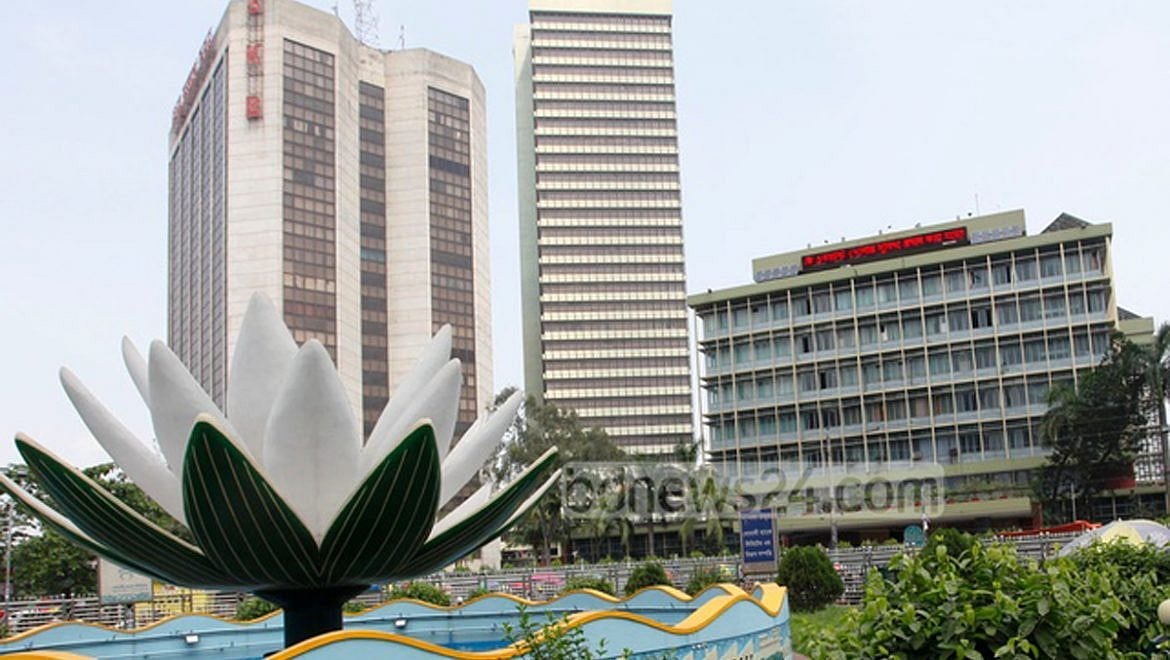
BANGLADESH BANK SAYS ‘NO’ TO MORE ASSISTANCE
The five weak banks have recently asked the central bank for more assistance. Exim Bank asked for the highest amount with Tk 50 billion. However, the central bank has not responded to that request amid the merger plan.
A member of the task force formed to oversee bank reforms said, "After Aug 5, the condition of these banks deteriorated further. Liquidity assistance has been provided by Bangladesh Bank at various times to shore them up. However, these banks have not been able to return that money yet. On the contrary, these banks are asking Bangladesh Bank for loans."
Bangladesh Bank's spokesman Arief told bdnews24.com, "Since these banks will be merged in the future, liquidity assistance will not be provided to Exim Bank anymore because it will further fuel inflation."
A senior Bangladesh Bank official said that liquidity assistance has been provided to these banks at various times for the past year, but their financial situation has not improved much. This has prompted them to ask Bangladesh Bank for liquidity assistance. Two of the banks do not want to merge.
Reiterating the reluctance to merge, Exim Bank Chairman Nazrul Islam Swapan recently told bdnews24.com: “When we review the financial situation, all the indicators of Exim Bank are better than the four banks. So, we do not want to merge with those banks. We have informed the governor accordingly.”
WHAT EXPERTS SAY
Mustafizur Rahman, distinguished fellow of the Centre for Policy Dialogue (CPD), believes that if the five weak banks are merged into one, it will lead to a comparatively better situation.
He told bdnews24.com, “Currently, the condition of these banks is very bad. If they are merged, then the condition will improve because the government will inject funds into it. Moreover, the main responsibility of the banks is to protect the interests of the customers.
“The way the banks are operating… the correct procedures are not being followed. Even though money has been printed and lent to them repeatedly, the situation has not actually improved.”
Majedul Haque, director of the Centre for East Asian Foundation’s research department, says that many countries have failed in such merger initiatives, but some others have succeeded.
“When this model did not succeed in Japan and Greece, it was discontinued. Mergers are not very successful.”
He said, “The model we want to follow is hypothetical. It has a 60 percent chance of success, which is what the governor probably thinks. If good governance can be ensured, and there is goodwill from the political government, then the results of the reforms will be good.”
Majedul said, “It may succeed, it may fail. However, after the merger, customers will get their money back.
“This is because the government is going to own the bank. So, even if it fails to achieve its main objective after the merger, the customers will get their money back.”
Zahid Hussain, former lead economist at the World Bank’s Dhaka office, said: “Even if they are merged, it will be better than the current situation. It will improve their financial situation.”

THE GOVERNOR’S PLAN
Governor Mansur told bdnews24.com that after the merger, the newly formed institution will emerge as a “strong” Islamic bank.
He says that it will be bigger than any existing Shariah-compliant bank, the financial situation will improve, and customers will get their deposits back.
Mansur said, “It will be a strong bank, a big bank, with the most capital. This will not cause any problems. Customers will get their money back on time.
"The plan we have laid out is to make it the largest bank. Its capital will be the largest at Tk 350 billion. This Tk 350 billion is paid-up capital."
In response to a question, the governor said: "After the merger, the rate of NPL (non-performing loans) will remain high. They will not go away overnight. But it will continue to decrease gradually. It will become smaller as new deposits increase."
Mansur said, "We will try to privatise the bank within two to three years of the merger. If there is value in the defaulted loans, the institutions (asset company) can buy them. Otherwise, they will have to be written off."
Stating that efforts are being made to bring in foreign investors, he said: "After the merger, it will be a bigger bank than 'Islami Bank Bangladesh'. There will be no problem with capital. Customers will get their money back on time."