Home
+
Published : 11 Jun 2026, 09:39 PM
FY2027 Education Budget Snapshot
Funding boost: Education allocation rises to Tk 1.37tn, reaching 2% of GDP, the highest share in recent years.
Long-term pledge: The government sets a target to raise education spending gradually to 5% of GDP.
Sector-wide increase: Allocations climb sharply across primary, secondary, technical, madrasa, medical education sectors.
Hope with caution: Academics welcome the increase but urge stronger oversight to ensure real improvements in learning quality.
Skills-driven future: Technical education, AI-based learning, third-language teaching, research, innovation get priority.
The proposed budget for 2026-27 has raised education spending both in absolute terms and as a share of gross domestic product (GDP), drawing cautious optimism from academics and the sector’s stakeholders.
Finance Minister Amir Khosru Mahmud Chowdhury placed the Tk 9.38 trillion budget before the parliament on Thursday, allocating Tk 1.37 trillion to education -- 14.56 percent of the total budget and 2 percent of GDP.
He said the BNP government has set a target to raise public investment in education to 5 percent of GDP gradually and in a phased manner.
In 2025-26, the education and technology allocation stood at Tk 1.11 trillion, or 14 percent of the budget and 1.77 percent of GDP.
In the revised budget for that year, it was cut to Tk 870 billion, or 1.39 percent of GDP and 11.07 percent of the revised Tk 7.88 trillion budget, the minister said.
The international benchmark for education spending is 6 percent of GDP or 20 percent of the budget.
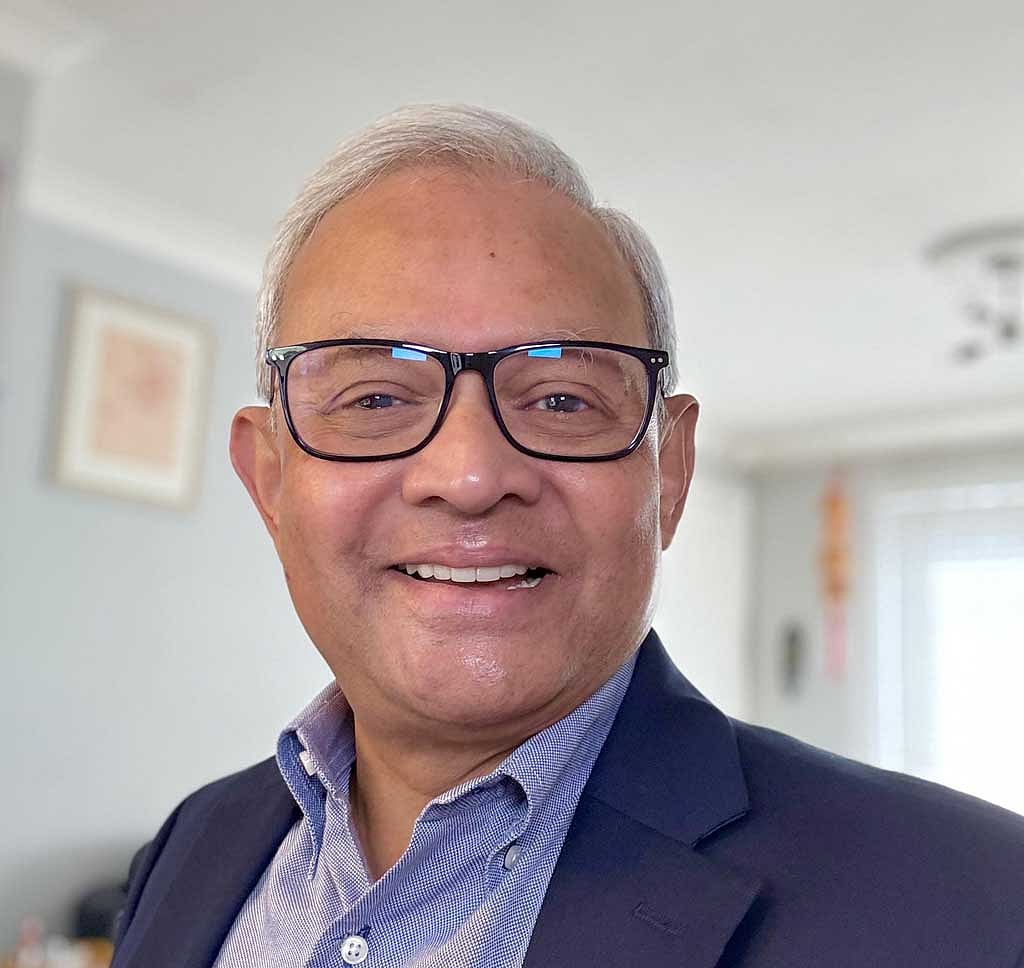
Director of the Institute of Education and Research at Jagannath University Prof Md Azam Khan welcomed the increase, calling it “a ray of hope” for the education sector.
He said improving quality requires more than words and that resources are needed to back it up.
He expressed hope the move will make a meaningful difference to education and human resource development.
"If the government can reach the 5 percent target during this term, it will be a historic step. Even reaching 3 percent of GDP would be significant enough to bring meaningful change," Azam said.
National University Bangladesh Vice-Chancellor Prof Mohammad Ali Zinnah echoed the sentiment.
The current government is an elected one and had pledged to raise education spending, and that commitment is now visible in the budget, he said.
While expecting the full 5 percent target immediately would be unfair given the economic situation, the promise of phased increases has sparked new hope, he added.
Allocation Breakdown
The budget proposes a total of Tk 1.22 trillion across the three education divisions under two ministries, up Tk 367 billion from the revised budget for the current year when the combined allocation was Tk 859 billion.
The interim government's original 2025-26 proposal for the same three divisions was Tk 956 billion.
The Ministry of Primary and Mass Education is proposed to receive Tk 467 billion in FY27, up Tk 150 billion from the revised figure of Tk 317 billion for the current year. The original allocation for FY26 was Tk 354 billion.
Secondary and higher education is proposed at Tk 573 billion, up Tk 155 billion from the revised Tk 418 billion. The original 2025-26 proposal was Tk 476 billion.
Technical and madrasa education will receive Tk 185 billion, up Tk 61 billion from the revised Tk 124 billion. The original FY26 figure was Tk 127 billion.
Medical Education and Family Welfare Division has also seen a rise, with Tk 134.66 billion proposed, up from Tk 61.21 billion in the revised 2025-26 budget.
Focus on Teacher Skills, Human Resources
Prof Azam urged the government to spend the increased allocation on improving teacher skills, raising their standard of living, and turning the next generation into capable human resources.
Physical infrastructure has improved but teaching quality and teacher welfare have not kept pace, he said.
The funds should go towards teacher training, better pay and benefits, and proper laboratories and libraries for students, he added.
Prof Zinnah also advised spending the increased allocation on improving quality and expanding opportunities for students.
Call for Roadmap, Stronger Oversight
Rasheda K Choudhury, executive director of the Campaign for Popular Education (CAMPE), welcomed the increase in education funding in the government's first budget.
She urged the government to publish a roadmap showing how spending would eventually reach 5 percent of GDP.
She also stressed the need for strong monitoring and accountability mechanisms to ensure the additional funds improve education standards.
Rasheda told bdnews24.com that while the increase reflected the government's commitment, a clear plan was needed to move towards the 5 percent target.
Without such planning, she warned, higher allocations might not be spent effectively or directed towards improving education quality.
Curriculum Reform
The finance minister said education was one of the most damaged sectors during the years of what he called “fascist” rule, and that after returning to democratic Bangladesh through the 2024 July Uprising, the government must build a country where students grow up to be “honest, capable, skilled, and responsible citizens”.
“Prime Minister Tarique Rahman, elected by the mandate of the people, is transforming the education curriculum so as to cultivate among students ethical values, a sense of social responsibility, qualities of leadership, and humane character — for he believes that education is not merely a matter of acquiring knowledge; it is the most powerful instrument for shaping people and society.”
The government wants to create an environment where students and teachers can develop their full potential through modern education, training, and opportunities, he added.
According to the minister, technical and vocational education, third-language learning, sports, culture, technology-driven instruction and "learning with happiness" will receive special attention.
He said the goal was to create a system in which students could pursue careers as technicians, engineers, agricultural entrepreneurs, researchers, artists, teachers, businesspeople or athletes with equal dignity and opportunity.
“We want to build an education system in which students acquire not only academic knowledge but also real-life competencies such as creativity, problemsolving, leadership, innovation, and teamwork.
“We believe that the path to success is not the same for everyone. We do not subscribe to the notion that everyone must become a doctor or an engineer. Rather, it is the responsibility of the state to ensure that every student has the opportunity to develop in accordance with their own talent, interest, and aptitude.
“We wish to build a framework in which a student can, consistent with their own abilities, preferences, or inclinations, establish themselves with equal dignity and success as a skilled craftsperson, technologist, agricultural entrepreneur, researcher, artist, teacher, businessperson, or in any other profession of their choosing.”
The government also plans to encourage extracurricular activities through clubs, including debates, science fairs, cultural events and literary programmes.
To support a skills-based economy, technical education will be introduced gradually for all students from Class 6.
The minister said a compulsory third language such as Japanese, Korean, Mandarin, Arabic, French or German would be added to the curriculum alongside Bangla and English.
Students seeking higher education in countries where those languages are spoken will be eligible for loans of up to Tk 1 million.
The budget also outlines plans to expand free education for girls up to undergraduate level, provide school uniforms, shoes and bags, ensure inclusive education for children with disabilities, distribute specialised learning materials, introduce midday meal programmes and strengthen sanitation and hygiene services for female students and teachers.
The finance minister also pledged to promote technology and artificial intelligence-based education through initiatives such as “One Teacher, One Tab”, multimedia classrooms, expanded free Wi-Fi, stronger industry-academia links, apprenticeship and internship opportunities, and start-up support.
He said the government is working to turn "brain drain" into "brain circulation" by connecting highly educated Bangladeshis living abroad with the country's education and research systems.
Research and innovation would receive greater support, he added, while madrasa students would gain improved access to science, mathematics, English, information technology and vocational training.