Published : 30 Sep 2021, 10:35 PM
Updated : 14 Oct 2022, 06:59 PM


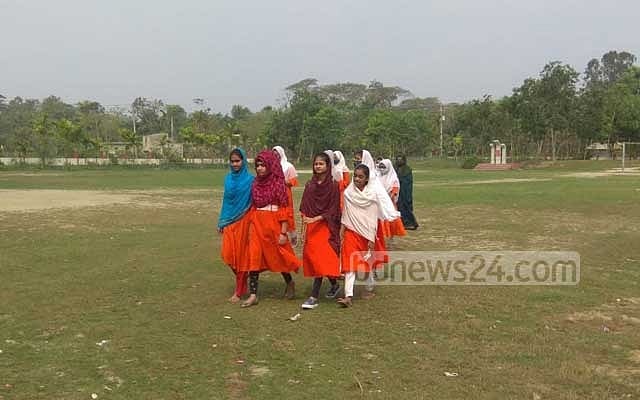
“My father asked me to study hard so that I can become a pilot. I’ll travel to many countries with my parents,” said Raisa, who lives in Dhaka's Pallabi.
She loves drawing and painting, listening to music on Youtube, reading fiction and, of course, playing with her friends.
A childhood like Raisa's, however, is far from the norm for girls growing up in Bangladesh. Despite a positive change in attitude towards girls in recent years, very few still have a decent prospect of being nurtured to their full potential in a predominantly patriarchal society.
Poverty, disparity, violence, torture, child labour and early marriage are some of the issues affecting the lives of girls across the country. The challenges they confront are, to a large extent, much greater than those faced by boys. Be it at home or outside, a girl has to overcome hurdles everywhere.
Meem, another 10-year-old girl, is living with Raisa's family as their domestic aide.
Even a few months ago, Meem had a happy life with her parents. But her world had suddenly turned upside down when her father left the family and married another woman. It compelled her mother to send Meem to work and provide for her family. She has been earning Tk 3,000 per month, all of which is spent on her family.
“I like it here. I get ample food to eat. Only when I watch TV for a long time, they scold me,” Meem said, narrating her experience of working in Dhaka.
But she misses her old life and wishes she could go back to school. “I went to school when we lived in the village, but that was no longer the case once the coronavirus pandemic broke out. Yes, I feel like studying again. Raisa sometimes tutors me. I wish I could go to school like her.”
While girls Raisa are blessed with the resources to chase their dreams, others like Meem are not as fortunate, with fate conspiring to push them into child labour.
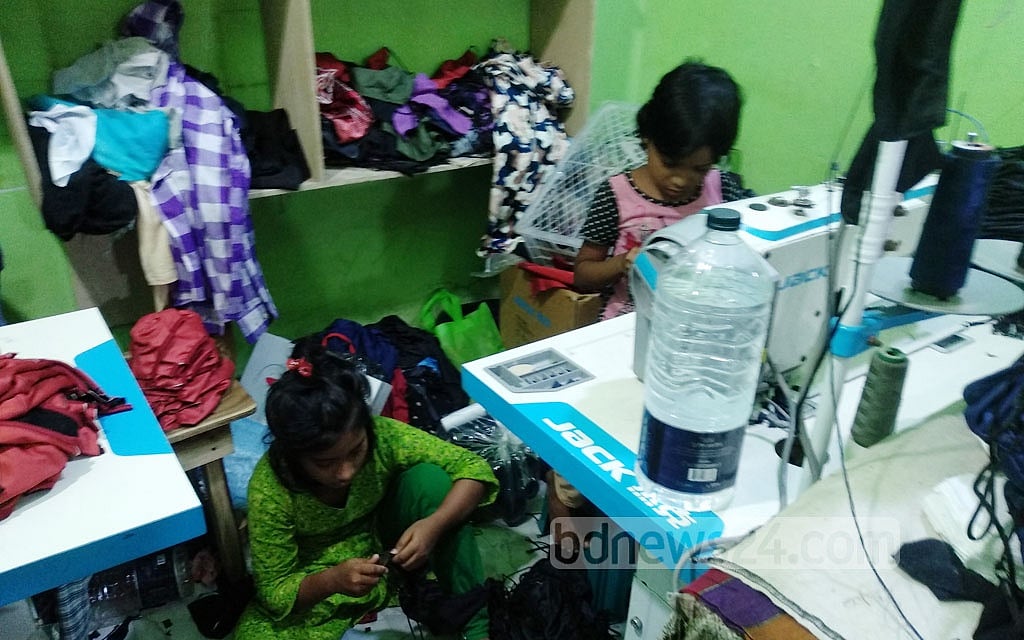
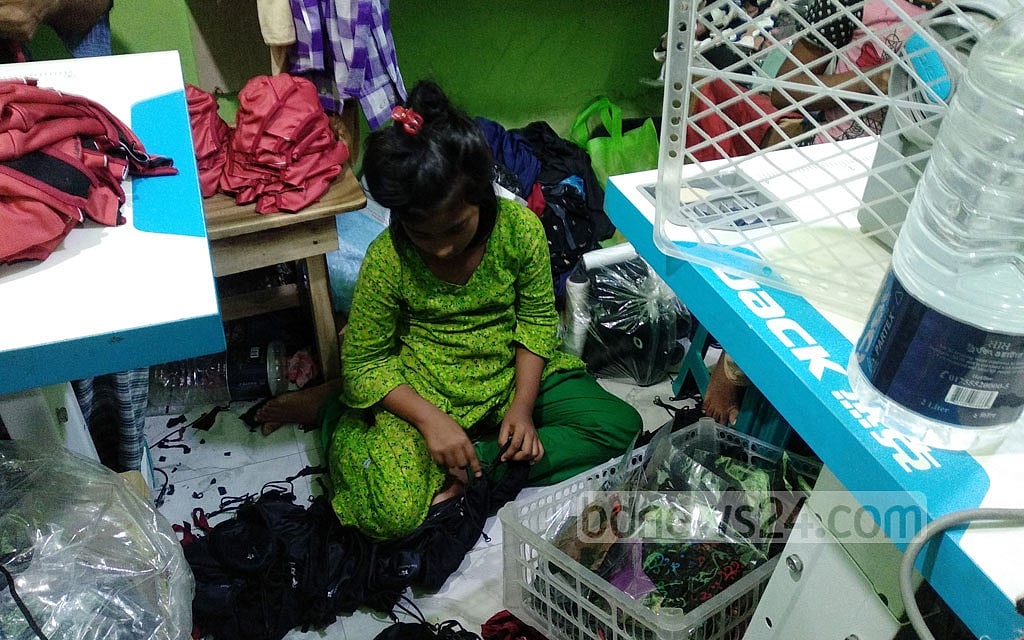
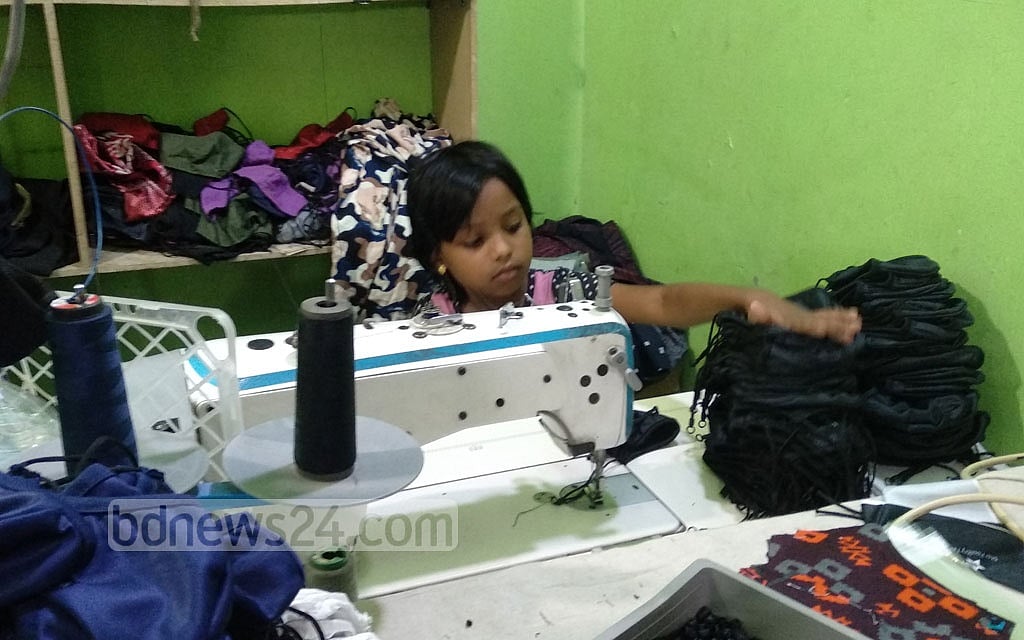
Meanwhile, in Mirpur 12, two girls are sewing masks at Bismillah Shelai Ghar, a tailor shop in a market. Both are first graders who work alongside their studies.
“My father is a rickshaw driver and my mother works in a garment factory. I give my mother whatever I earn from here,” said the seven-year-old Champa.
The other child, Rafia, was operating an electric sewing machine, which she learnt by watching others.
“I don’t do much throughout the day. That’s why father brought me here to work.”
Rafia went to school for two days after it reopened, she said.
Although she has a tough life at such an early age, Rafia aspires to become a teacher when one day. “I’ll help others to study,” she said.
But some people are striving hard to change the perception of girls in society.
Surma Begum came to Dhaka from Barishal in search of a livelihood. She now works as a domestic aide but is determined to build a brighter future for her daughter.
"I am making a living from working in other people's households. But I do this for my daughter, as I want to provide her with a good education," she said.
“I've put her in a good school and even send her to a private tutor. She won't suffer the same fate as me if she has a proper education. At least she can work in an office."
“Her teachers always ask me to continue her education as she is very sharp. She wants to become a doctor in future. The rest is God's will."
FUTURE OF GIRLS IN BANGLADESH
Girls face a myriad of risks while growing up in Bangladesh, according to women's rights activist Maleka Banu.
"They have to live with a lack of protection. These days, more of them are being married off as the schools and colleges are closed. They are the victims in two-thirds of cases involving violence."
Currently, the country is in the grip of a surge in rape cases, said Maleka, general secretary of Bangladesh Mohila Parishad.
"Girls are not safe anywhere. They are considered a commodity and always face violence," she said.
“A girl child does not enjoy the same rights as a boy in a family. She is considered a burden, irrespective of her family's financial status."
“A girl does not have the freedom of mobility, which a boy has. It is our patriarchal culture (that is responsible for it)."
Society's perception of women hasn't changed much as they continue to be deprived of the right to own hereditary assets, Maleka said.
“Men in a family dominate women in many ways. Their individual freedom, right to move or to get an education and even their personal choice, everything is hindered."
The coronavirus pandemic has worsened the situation for girls even further, she claimed. "The policymakers now cannot pay heed to initiatives aimed at preventing child marriage, ensuring access to education and encouraging early adoption for the betterment of girls."
SPECIAL FOCUS NEEDED TO OVERCOME HURDLES
Policymakers must adopt special measures to alleviate the plight of girls, Maleka said.
“If they don't focus on the issue now, girls will drop out of school and won't be able to enter the workforce. Bangladesh can never achieve its desired development goals without the participation of this vast portion of the population."
Although women in Bangladesh have taken huge strides in many aspects, they still face a lot of hurdles, according to Prof Tania Haque of the Women and Gender Studies Department at Dhaka University.
“Be it the COVID-19 pandemic or poverty, women still don't have the standing in [society] to confront these challenges like a proper human being. We are still worried about women's safety and haven't been able to create an environment that honours them. We can't just depend on the law but the family also has a major role to play."
With the support of the family, girls can go very far and the government will facilitate their progress, according to her. She said a family must perceive their daughter as a child, and not simply as a girl.
To change society's perception, Prof Tania believes the positive aspects of nurturing young girls must be highlighted,
“We must present positive examples to girls, so they are never demotivated," she said.
Prof Tania also stressed the need for speedy trials of people who perpetrate violence against women to deter such crimes.