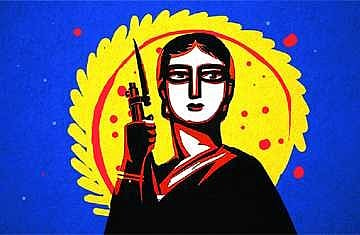
Biranganas are women who were violated during the Liberation War against Pakistan in 1971.
The International Crimes Tribunal (ICT) has found the former Jatiya Party minister guilty of crimes against humanity and ordered his hanging.
The ICT-2 headed by Justice Obaidul Hassan convicted the 74-year old leader of 14 of the 16 charges brought against him.
“We are pleased with the verdict,” prosecutor Rana Dasgupta told reporters after the verdict was delivered.
He said the verdict observed that the state should declare a compensation package for the war children.
“This verdict is a great achievement. We are dedicating it to the Biranganas and the war children,” said prosecutor Tureen Afroz.
The nation’s independence architect Bangabandhu Sheikh Mujibur Rahman had described the women who suffered in 1971 as ‘Biranganas’.
In October this year, the government recognised them as Freedom Fighters.
A Muslim League leader in 1971, Kaiser has been given the death penalty in seven charges, imprisonment until death in three, life in prison in one and 5 to 10 years in prison in another three.
Two of the charges against him were not proven.
Kaiser had raised a militia in his name - ‘Kaiser Bahini’- with 500 to 600 anti-liberation activists to support the Pakistan Army in 1971.
He guided the Pakistani troops to various villages to attack and abuse Hindus and supporters of Bangladesh’s liberation.
Kaiser went into hiding as soon as the country became free and later resurfaced in Bangladesh politics in 1978.
He contested as an independent candidate and won the 1979 parliamentary polls from the Sylhet-17 constituency.
Kaiser later joined the BNP, when it was founded by the country's first military dictator Ziaur Rahman, and became the president of its Habiganj unit.
He later shifted to HM Ershad's Jatiya Party and won from the Habiganj-4 constituency in 1988. He became the Minister for State for Agriculture during HM Ershad’s regime.