Published : 21 Feb 2023, 12:01 AM
Updated : 21 Feb 2023, 02:09 AM


Bangladeshis have begun paying homage to the heroes of the nation who sacrificed their lives for the right to Bangla as a state language in 1952, foiling a Pakistani conspiracy to destroy their culture.
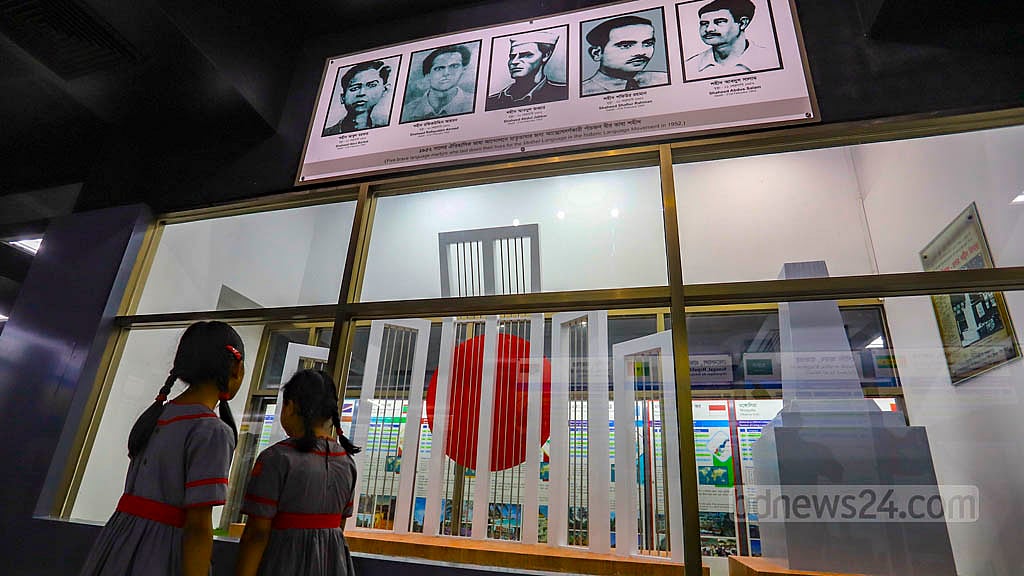
They remembered martyrs, including Abdus Salam, Rafiq Uddin Ahmed, Shafiur Rahman, Abul Barkat and Abdul Jabbar, by placing flowers at the Shaheed Minar monuments across Bangladesh at 12:01 am on Tuesday.
The day is also being observed as International Mother Language Day across the globe, making it the day for ensuring the right to all languages.
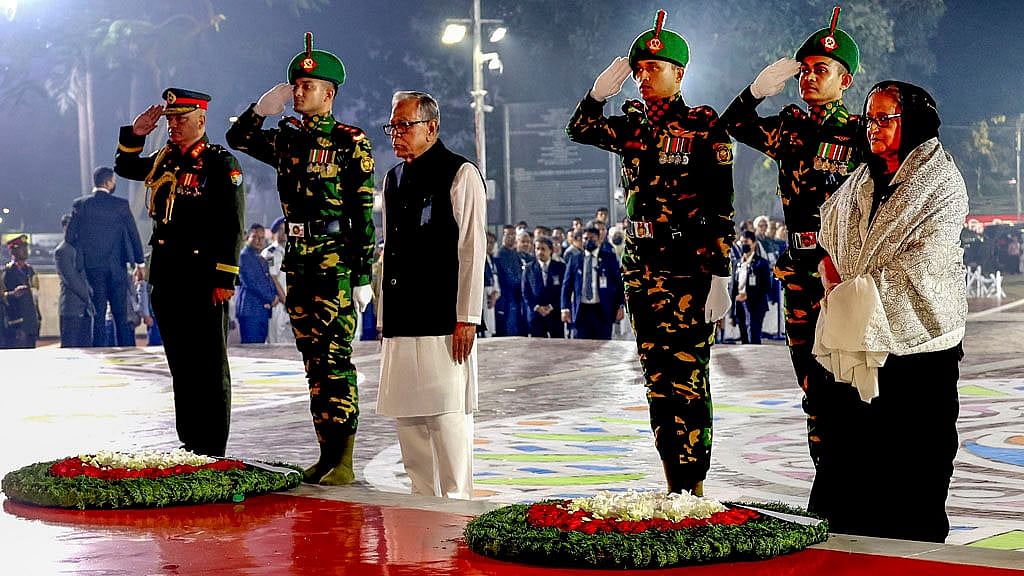
In Dhaka, President Md Abdul Hamid and Prime Minister Sheikh Hasina led tributes by placing wreaths on the Central Shaheed Minar in the first hour. In the past two years, they sent representatives to pay homage for the coronavirus pandemic.
The immortal line -- “Amar Bhaier Rokte Rangano Ekushey February, Ami Ki Bhulite Pari” (Can I forget the twenty-first of February, incarnadined by the love of my brother?) -- was on everyone’severyone’s lips.
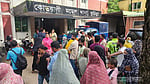
Barefooted, people lined up with flowers to pay homage to the martyrs, waiting for their turn after the dignitaries.
Thousands of others will join the morning observance with Prabhat Feri processions.
Salam, Rafiq, Shafiur, Barkat and Jabbar embraced martyrdom in police firing as they took to the street to intensify the campaign to establish Bangla as a state language of what was then Pakistan, sowing the seeds of subsequent independence movements.
Eventually, Bangladesh snatched independence from Pakistan in 1971.
Feb 21, therefore, is not only a day of sacrificing lives for the right to speak one’s own language but also a memorabilia of Bengali nationhood, individuality and cultural identity.
UNESCO in 1999 declared Feb 21 International Mother Language Day.
The day is a national holiday. The national flag will fly at half-mast in honour of the martyrs.
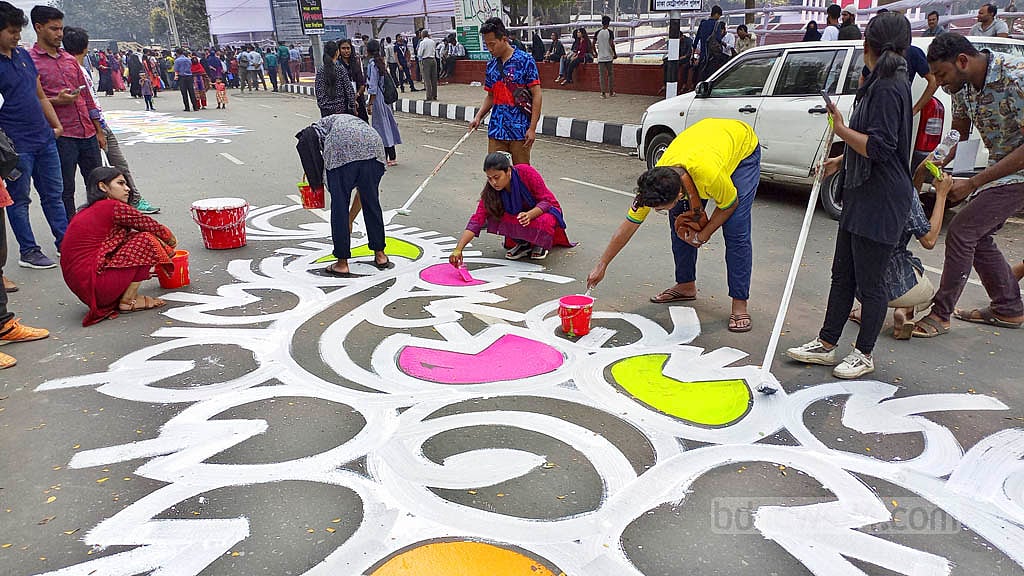
Social and cultural organisations and educational institutions will organise other programmes, including meetings, seminars, symposiums, and cultural competitions.
Bangladesh’s Permanent Mission to the UN and other missions abroad, too, will organise programmes to observe International Mother Language Day with due solemnity and fervour.
Hamid and Hasina greeted all on International Mother Language Day and paid homage to the martyrs and the heroes, including Father of the Nation Bangabandhu Sheikh Mujibur Rahman, who took part in the 1952 movement.
The president said Amar Ekushey is the “incessant source of inspiration for protecting the culture of the people of different languages across the world”.
“We have to be more attentive to practise and preserve Bengali language and culture properly,” he said in a message on the eve of Martyrs Day.
Hamid believes that the observance of International Mother Language Day will help develop and preserve “our own language as well as [build] a sustainable future through multilingual education”.
He also urged the youth to arm themselves with skills in different languages, which are recognised as international communication media, to maintain the pace of advancement of Bangladesh with the developed world.
In her message, Hasina noted the importance of the Language Movement in the history of Bangladesh’sBangladesh’s struggle for independence.
The Language Movement laid the foundation stone for a non-communal, democratic, language-based state system, she said.
“We have established the International Mother Language Institute, taken initiatives to preserve the world’s endangered languages and protect their dignity and ensured the use of the Bangla language in the ICT. Since 2017, we have been distributing Braille books for the visually impaired and textbooks in the mother tongues of the ethnic groups free of cost,” the prime minister said.
“We will transform the country into Smart Bangladesh by 2041 by building Smart Citizens, Smart Government, Smart Economy, and Smart Society.”